Art historian Noah Charney takes us on a grand tour of art theft and looting, taking in the Romans, Cosa Nostra and the man who stole the most famous painting in the world and didn’t know what to do with it.
Your first book is by a journalist who has done undercover investigation into art crime.
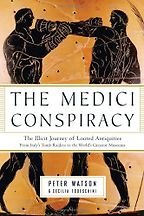
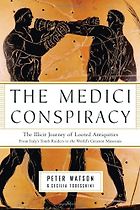
Yes. In recent years there have been a number of undercover investigative journalists who have been involved in major recoveries of stolen works of art, in particular the journalist Peter Watson. For several decades Watson has done absolutely incredible work where he goes undercover, along with the police, to try to make headway with unsolved crimes. This began back in the 1980s when he worked with Rodolfo Siviero, a star of the Carabinieri art squad, when he went undercover to try to recover the so-called “Palermo Nativity”, the Nativity with St Francis and St Lawrence by Caravaggio, which was stolen from the Oratory of San Lorenzo in Palermo in 1969. The theft prompted the establishment of the world’s first art police, the Carabinieri art squad. Watson wrote a book about that called The Caravaggio Conspiracy. And then more recently he has written, with co-author Cecilia Todeschini, another book called The Medici Conspiracy, which is an in-depth, very thoroughly researched investigation of the theft, looting and smuggling of antiquities by a chap called Giacomo Medici.
What does The Medici Conspiracy reveal about the nature of the criminal organisations of the time?
Since the 1960s most art crime has fallen under the auspices of organised crime groups. This ranges from small local gangs to large international mafias. Peter Watson’s investigation of the 1969 theft of the Palermo Nativity revealed that it was stolen by members of Cosa Nostra. And then we fast-forward to the crimes of Giacomo Medici, who could be said to have been running his own small organised crime syndicate. He was the mastermind behind a large group of tomb raiders, or tombaroli as they call them in Italy, that was stealing primarily from Cerveteri, which is an Etruscan necropolis just outside Rome. Important artefacts, which had never been seen by archaeologists, were dug up by looters and smuggled to the free port in Geneva where they would sit in a warehouse. Giacomo Medici would take Polaroid photos of them and he would show the photos, not only to art dealers, but also to the heads of major museums around the world including the Met [Metropolitan Museum of Art in New York] and the [J Paul] Getty. And the problem was that some of these major curators, including, most famously, Marion True, whose trial ended in Rome last year, knowingly purchased looted antiquities through Giacomo Medici. They didn’t sufficiently check the provenance. They looked at works that were so fantastic they seemed too good to be true and they took the word of a dealer.
Medici was really providing the cream of antiquities coming out of Italy during the second half of the 20th century. He was eventually caught in 1997 and then imprisoned in 2004. The Medici Conspiracy tells the story of this fascinating and charismatic figure in incredible detail. The scholarship is meticulous because the authors knew that they would be making serious waves in the art world, so there was the potential danger of lawsuits on the part of those mentioned in the book.
In a way, this kind of theft is a latter-day colonialism, isn’t it, with the treasures of Europe being exported to the new empire of America? But while the world of international crime has become very sophisticated in the last few decades, it has a long history. Ever since ancient times, looting has accompanied military conquest. Rome itself displayed booty from its Eastern campaigns, a tradition emulated by Napoleon. But there has surely never been such systematic looting on such a grand scale as during World War II, and I think you’ve chosen a book that reflects that?
Absolutely. The history of art looting in war is very long. When I teach the history of art crime, I actually begin with 212 BC, which is when the Roman Republic sacked the Greek settlement of Syracuse in Sicily. This marked the beginning of the Roman love affair with all things Hellenistic. The result was that the Roman army would actually divert from the strategic routes to try to seize more art. From then on really all the major military campaigns in the following centuries involved art – the Fourth Crusade, of course, the Napoleonic campaigns… And then we get to World War II.
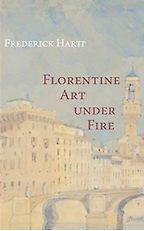
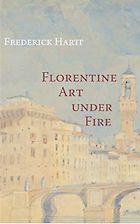
The second book I’ve chosen is Florentine Art Under Fire by Frederick Hartt. Hartt wrote six or so seminal textbooks that are read by literally thousands of undergraduate students all around the world. They led me to Florentine Art Under Fire, which is Hartt’s memoir of his time as an officer working for the Monuments, Fine Arts and Archives Commission during World War II. These officers were assigned to protect the art of Florence and the area around it from war damage, and Hartt’s book is a very dramatic and heart-wrenching account of his activities in Florence as the Allies were moving in. They were one side of the Arno river and the Nazis were on the other side. The Nazis had laid mines around Florence and there was a danger they were going to blow up most of the city as they retreated. There was some very serious fighting right in the centre of the city and the major loss was the Ponte Santa Trinita, a 16th century bridge designed by Bartolomeo Ammanati that many people consider far more beautiful than the Ponte Vecchio. The Germans blew it up. They also destroyed a section of the city just across from the Ponte Vecchio in order to try to block the bridge with debris. They were not allowed to damage the Ponte Vecchio, though, because it was one of Hitler’s favourite works.
Other than the Ponte Santa Trinita, what else was lost?
There were literally hundreds of objects that went missing during the Occupation. There was a systematic looting of works, for example from the Uffizi Gallery, which the Nazis stripped. The works were later found in an abandoned jail in northern Italy. There are certainly some works that were completely lost but there are no seminal works that come to mind. It’s more the destruction of a neighbourhood; the willingness to blow up a city of such historical import. Thankfully some of the churches and palaces in the neighbourhood that was blown up by the Germans survived. It’s quite astonishing that they did. They were really built to last. Also the idea was to create rubble in the streets to block pathways, not to proactively damage monuments. There was this strange juxtaposition between the willingness to blow up a city of such historical import and the fact that the Germans would not touch something like the Ponte Vecchio. Hitler had a passionate relationship with art and architecture having wanted to be an architect or an artist in his youth. He sanctioned incredible destruction and yet he wanted to preserve individual titbits that stood out to him. This is dealt with in other books by Frederick Hartt – the expropriation of antiquities and art by the Third Reich.
But the Nazis weren’t alone in this were they? A lot of precious objects disappeared into the Soviet Union, too.
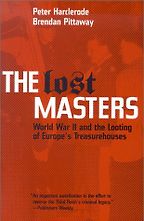
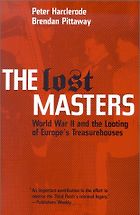
Absolutely, and that is dealt with in the next book I have selected, The Lost Masters by Peter Harclerode. It tells the story of art looting in the 20th century during war. Although it happened during World War I, it really became systematic in World War II. The Nazis had the ERR [Einsatzstab Reichsleiter Rosenberg für die Besetzten Gebiete – the Reichsleiter Rosenberg Institute for the Occupied Territories], a unit dedicated solely to the theft of art works. And in the years following the defeat of the Nazis in 1945, the Red Army was responsible for looting on a scale at least equal to that of the Germans. But we tend to skim over that because ostensibly the Russians were on our side. The Red Army considered art theft a form of reparation and stole on an absolutely tremendous scale. From Berlin through the eastern part of the former Nazi-occupied territories they stole everything they could get their hands on. But even American and British soldiers were looting, although at no point on such a systematic basis. The Lost Masters talks about what was taken, how the thefts were rationalised on the part of the perpetrators, which is very interesting, and what the repercussions were. It’s really the best book on the subject in terms of its combination of in-depth scholarship and dramatic narrative.
What impact has the way people rationalised those thefts had on the ease or difficulty in recovering those objects in the years since the war? There is still a great deal of art on display in Russia, isn’t there, which is very difficult to have repatriated?
Yes. This is a process that begins a long way back. Napoleon, for instance, said that if ancient Rome – the glorious civilisation of Rome – found it OK to steal art from its conquered peoples, then he could do it. And Hitler said, “Well if Rome and Napoleon did it, then I can do it too.” So there’s this historical rationalisation process. The Red Army believed that the objects it was taking were compensation for the millions of deaths it had suffered. Most of those objects were absorbed into museums in what became the Soviet Union.
Get the weekly Five Books newsletter
However, in recent years there have been some very high-profile repatriations. This is really thanks to the Internet age. The Internet now tells us which art works are where at any given moment. Before that you might have had to travel to a museum to find out what was in their collection – and it might not even be on display – but now it’s often online. As a result, a number of lawsuits have been brought, particularly by the descendants of Jewish art collectors, to recover works taken by the Nazis and the Russians.
For instance, the descendants of Kasimir Malevich brought a lawsuit against the Stedelijk Museum in Amsterdam to recover literally dozens of Malevich paintings that had been appropriated by Russia when Malevich was exiled. Literally scores of these sorts of cases are cropping up, thanks to the fact that people can actually locate the art. But there still isn’t a sense that there is a moral obligation to return objects, as, for example, with Italy returning to Ethiopia an obelisk that Mussolini looted. I think the Russians would still say that the millions of lives they lost entitle them to keep the spoils of the defeated party, although they don’t split hairs when the objects they stole were, in fact, first stolen by the Nazis.
You have written a novel about art theft and the trade in antiquities. Your next choice is a work of fiction, and comes from a long literary tradition that stretches back beyond World War II. Can you say something about the perennial appeal of novels about art crime?
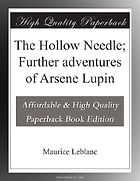
My next book is French author Maurice Leblanc’s 1909 novel L’Aiguille Creuse or The Hollow Needle. This belongs to Leblanc’s popular series of novels about an art thief called Arsène Lupin. The interesting thing about Lupin is that, although Leblanc is not considered a great literary author, he created in Lupin an archetype that has infiltrated the popular conception of what an art criminal is like. Lupin combines all the clichés that we have about the art thief – that he is a gentleman; that he is skillful, generally non-violent, dexterous and elegant; that he has aristocratic aspirations, a lovely curlicue moustache, dresses in three-piece suits and a monocle; and most importantly that he usually steals from people who maybe deserve to be stolen from. His British counterpart is, of course, Raffles. And Leblanc’s novels have a jokey relationship with the Sherlock Holmes books – Lupin’s nemesis is a comic character whose name is Homelock Shears.
Has Arsène Lupin had the same sort of media afterlife as Sherlock Holmes?
He has, yes. In the 70s there was a TV series about his exploits. And only three or four years ago there was a huge budget French film. His books are bestsellers in the French-speaking world. He hasn’t had the same impact in the English-speaking world but in Germany he became an iconic figure as a lovable villain. There isn’t that much literature in which the villain is the one you’re cheering for. Perhaps you could go back to Milton’s depiction of Satan in Paradise Lost. But in terms of popular literature, Arsène Lupin has been wildly influential and, in fact, he and the plot of The Hollow Needle inspired a real theft of art. In 1934, one of the panels from Jan van Eyck’s famous Ghent altarpiece was stolen in the night. The thieves’ method and the ensuing ransom demands were all directly modelled on The Hollow Needle. It turned out that the mastermind behind the theft, a Belgian stockbroker called Arsène Goedertier,was completely obsessed with Arsène Lupin. He thought the fact that they shared the same name was a great symbol of their connection. And he literally drew a real-life crime out of the plot of a work of fiction. I write about it in my book Stealing the Mystic Lamb. It’s an extraordinary story and, as an aside, one that really deserves to be made into a film.
Your final choice is Ben Macintyre’s The Napoleon of Crime. Is what you admire about it its popular treatment of the subject – looking at crime through the character of the perpetrator?
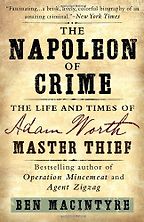
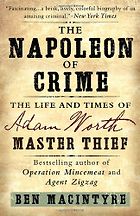
I think Macintyre is particularly good at taking very thorough scholarship and translating it into an entertaining story, so that, without realising it, you’re learning about real historical facts. His books are scrupulous in the accuracy of their detail but reading them is like eating a bar of candy. The Napoleon of Crime was the first of his books that I read. To be fair, it’s not really about art crime. It’s about a person called Adam Worth who, after Al Capone, is probably the most famous criminal in history. The term ‘the Napoleon of crime’ was coined to describe him, and he was the inspiration for Sherlock Holmes’s nemesis Moriarty. He began as a homeless pickpocket in New York and he worked his way up to running his own organised crime syndicate in London. He stole one painting – Thomas Gainsborough’s portrait of Georgiana, Duchess of Devonshire, which at the time, in 1876, was the most expensive and most famous painting in the world. And he stole it ostensibly in order to blackmail the owner, Thomas Agnew of the Agnew Gallery, into paying the bail for his criminally inept younger brother John so that Adam, who was living under an assumed identity, would not have to risk revealing his identity by paying the bail himself. But then something that he could never have anticipated happened. The lawyer he’d hired to defend his brother actually won the case and his brother was freed – and now he had already stolen the most famous and most expensive painting in the world. He had no idea what to do with it. He wound up keeping it for 25 years.
Support Five Books
Five Books interviews are expensive to produce. If you're enjoying this interview, please support us by donating a small amount.
Macintyre talks about why he might have kept the painting for so long. Apparently Georgiana looked exactly like Adam Worth’s girlfriend who ran off with his best friend. Perhaps he kept the painting because he couldn’t keep the woman that the painting reminded him of. In any event it was the first major art theft to make international headlines in the modern period. And it’s an interesting crime because it’s the kind of Victorian-era crime that inspired fictional creations like Raffles and Arsène Lupin. But the reality now is very different. Since World War II we’re no longer dealing with these charismatic, non-violent individual thieves, we’re dealing with organised crime groups. And although the theft of art might be exciting to read about, it is actually funding all manner of other more sinister crimes, like the drug and arms trade and even terrorism.
What’s next for you? Do you have another writing project underway?
Yes I do. I’ve been asked to write a sequel to my novel The Art Thief. And I’ve also been asked by a large academic press to write a definitive, but hopefully fun, textbook on art crime because one hasn’t really been written yet. So I’ll be alternating fiction and non-fiction.
September 18, 2011
Five Books aims to keep its book recommendations and interviews up to date. If you are the interviewee and would like to update your choice of books (or even just what you say about them) please email us at [email protected]
Noah Charney studied art history at the Courtauld Institute and Cambridge University. While studying for his PhD he wrote his first novel, The Art Thief, which became an international bestseller. He founded the Association for Research into Crimes against Art (ARCA), a non-profit thinktank, and has worked with the FBI, Scotland Yard, the Dutch police, the Carabinieri and many museums to study the phenomenon of art crime. He is currently professor of art history at the American University of Rome
Noah Charney studied art history at the Courtauld Institute and Cambridge University. While studying for his PhD he wrote his first novel, The Art Thief, which became an international bestseller. He founded the Association for Research into Crimes against Art (ARCA), a non-profit thinktank, and has worked with the FBI, Scotland Yard, the Dutch police, the Carabinieri and many museums to study the phenomenon of art crime. He is currently professor of art history at the American University of Rome