Jane Austen was a British novelist who died in 1817 at the age of just 41, but whose books have stood the test of time. In the 21st century, her novels continue to be not only studied in school but also read for pleasure. We asked the distinguished Austen scholar Patricia Meyer Spacks to talk us through the best Jane Austen novels and explain what it is that makes them special.
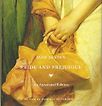
Pride and Prejudice: An Annotated Edition by Patricia Meyer Spacks
Are your choices of Jane Austen’s novels in order of preference?
No, I put them in chronological order.
Do you want to start by telling me what you love about Sense and Sensibility?
Sense and Sensibility is a different kind of choice from the others. I wouldn’t say that I loved it the best. I wouldn’t even say that I loved it as much as I loved Northanger Abbey, which I didn’t put on the list. But I’m fascinated by it, because it has changed shape over the years for me as I reread it. I am currently writing a book about rereading, so I’m thinking a lot about what happens when you reread things.
I started off with a sense of Sense and Sensibility as a rather stereotypical novel – very much like a lot of 18th-century novels that I’ve read. There is a good sister and a bad sister, and the bad sister gets reformed and everybody lives happily ever after. But as I kept rereading it, I started to realise that it is actually a very dark novel, probably the darkest of Jane Austen’s novels.
Why?
In the first place, because of the very real sense of financial danger which hovers around the characters, or at least the characters one likes. There is nothing like it elsewhere in any Jane Austen books (except the family of origin of Fanny Price in Mansfield Park, which is even more horrifying, I suppose). But thinking of the marriages at the end, there’s been a lot been written about Marianne’s marriage to a much older man, an anti-romantic marriage. But Elinor’s marriage is also not very attractive. Edward, unlike any of the male protagonists of the other Jane Austen books, appears to be a seriously depressed man. He’s a mama’s boy, he has never accomplished anything in his life and there is no sense of his having a vocation as a minister – that just seems to be what he ends up doing. One can’t anticipate a very cheery life for Elinor and Edward. As for Colonel Brandon, he is, to my mind at least, a very attractive figure. But he is certainly not the figure that Marianne would dream of and it seems as though she has willed herself to accept him, rather than accepted him out of real feeling. It’s true that Austen says that Marianne learned to love him. But, still, it isn’t a very cheery marriage. In all of the Jane Austen novels except Pride and Prejudice, at the end Austen gives you some suggestion of difficulties coming in the marriage. Usually that’s fairly light-hearted. But it’s not light-hearted in Sense and Sensibility. It seems to be a dark novel masquerading as a light novel, and I find that very interesting.
There are too many things that I want to ask you, so I think I just have to go on to the next Jane Austen book. Can you tell me what you think is interesting about Pride and Prejudice?
Pride and Prejudice is a very special case for me at the moment, because I’ve just produced an annotated edition with some 2,000 annotations. I remember in the 1970s there was a Penguin edition of Pride and Prejudice, annotated by Tony Tanner, who I think was a wonderful critic. In his introduction he points out that he has only one footnote, and explains that that is because Austen doesn’t need any annotation – she speaks to everyone across the centuries. Now I absolutely agree with that statement; it’s true. I have read Pride and Prejudice, I would guess, 40 or 50 times. I’ve taught it at every level of college, of graduate school. I’ve taught it to faculty seminars, I’ve written about it many times. And when I was asked to annotate it, I wasn’t very enthusiastic about the idea. I was finally persuaded because I thought I could annotate it out of my head – I know the book practically by heart. I was so wrong. I think it’s always been my favourite, as it’s many people’s favourite among Jane Austen’s novels. But I was always vaguely embarrassed by that as a scholar, because I didn’t think it was the best. I would say Persuasion is the best of Jane Austen’s novels. But Pride and Prejudice is the one I loved the best. I loved it because it’s a fairy tale; it’s about the poor girl growing up and marrying Prince Charming…
You say you discovered new complexities as you were doing the annotated edition. Can you give me an example?
One of the criticisms that has often been levelled at Austen is that she lived during the era of the Napoleonic Wars and she never mentions the wars in her novels. Reading through Pride and Prejudice this time I noticed something that I’d never noticed before. When Elizabeth and Jane come back from Netherfield (when Jane has been sick and Elizabeth has spent a few days with her) the younger sisters are chattering away and giving them the news. It’s typically very trivial – they report that their uncle has entertained the officers, that Colonel Foster is about to be married and that a private was flogged. I thought, how strange that she put that a private was flogged in there – what’s that doing there? And I started reading up on the matter, and discovered the extraordinary brutality of the British army in that era. I discovered the enormous class difference between ordinary soldiers and their officers, and gradually learned about the militia. The fact is that the militia doesn’t exist except when the country is at war, so the fact that a militia regiment comes to town is in itself a signal that the country is at war. In effect, nobody notices, because the life of the village, the life of that small community, is so totally engrossing, so totally absorbing to the people in it, that they not only have no perspective about what the world outside it might think, but they don’t even realise that there is danger. When Lydia goes off to Brighton, the reason the militia is at Brighton, it turns out, is because Brighton was the place most likely to be invaded from France. But nobody thinks for a moment that there might be any danger at Brighton, or that something precarious might be going on there. In short, it turns out that the war is there all the time. Part of the point of the book, part of the point about this community in which all judgements are fast and mostly wrong, is that they are simply unaware of what is going on outside. It’s not that Austen is unaware.
So that is one of many examples.
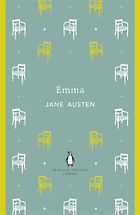
What about Emma? Why is that on your list of Jane Austen books?
Emma is great fun, I’ve taught that over and over too. Undergraduate students tend not to like it, because the young women I have taught, mostly at élite institutions, have by and large been brought up with a very precise code of conduct. The first thing they all know is that they aren’t supposed to take themselves too seriously, they aren’t supposed to brag about themselves, and so on. Emma is extremely cocky; she believes that she is right in all her judgements. She is happy to make judgements about other people and if they’re wrong she briefly repents but tends to go on and do the same thing again. The undergraduates don’t understand why she should be taken seriously and why she should be rewarded – from their point of view she should be punished for behaving the way she does. So it’s always a delight to be able to show, textually, how extremely serious Emma really is, and how seriously she thinks about ethical matters.
There is a lot of language in the book about how thoughtful she is of other people, how conscientious she is, of course, in taking care of her father. But also how conscious she is, most of the time, about not offending Miss Bates, about pleasing Miss Bates. She is generous, she is caring, she is really benevolent in impulse, all of which makes it the more shocking when she allows herself to insult Miss Bates. Miss Bates says something about saying a foolish thing, and Emma says, with great superficial politeness: ‘Ah, but the difficulty will be saying only one such thing.’ And the wonderful thing about that insult is that the reader is led on, the reader is likely to be with her all the way. We have heard Miss Bates saying foolish things one after another. Emma’s comment seems a witty and appropriate thing to say – and then, of course, we are forced to realise, what a terrible thing it is to say, right along with Emma; we’re chastened along with her.
“I would say Persuasion is the best of Jane Austen’s novels.”
The other thing that fascinates me about Emma– Austen plays this trick in other novels too, but not nearly as much as in Emma – is the degree to which she can report the most tedious possible speech and make you enjoy it. It’s not only Miss Bates nattering on and on, but there’s also a wonderful dinner-table scene where Emma’s father and her sister are talking about their respective apothecaries. It is just the essence of boredom – if you were sitting in that room, you would go crazy with boredom, and she somehow manages to make it hilariously funny. It’s pure genius.
I haven’t read Emma in a while, but you’re making me want to reread it.
It’s a great book. I taught a faculty seminar on Emma at the National Humanities Center a few years ago. We spent two weeks and four hours a day on it. The members of the seminar were assistant professors who were themselves teaching Emma in their classes – they had all taught it repeatedly. We had the most wonderful time, and together discovered so many new things. Everybody thought at the beginning that they knew all about Emma, and by the end, they realised that there was a lot more to know…
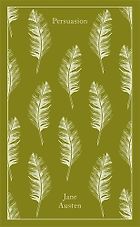
Persuasion is really the best of the Jane Austen books. As many people have pointed out, it’s different in tone from any of the others. It makes you realise that Austen was writing in the early 19th century, right along with people like Wordsworth and Coleridge, and that she was capable of having and expressing the same kinds of feeling. It’s a real love story, all the way through. You really feel it’s a romantic story – both with a small r and a big R – in which you’re rooting for the lovers to get together from beginning to end. It’s not a surprise, as it is in Emma, when the romance works out. It’s not a matter of a witty heroine being captured, as in Pride and Prejudice. It’s a woman who is practically invisible at the beginning, almost literally invisible, nobody notices her, who turns into a vivid person at the end, as a result of resuscitated love. I reread it quite recently and was very moved by it. It’s a genuinely moving Jane Austen novel, in a way the others aren’t.
Because…?
Because it’s really concentrating on love. It’s not concentrating on anything else – it’s not about wit, it’s not comic, it has very little comedy. There’s an occasional comment by the narrator which has an ironic twist that one is used to in Jane Austen books. But most of it is absolutely straight. In Sense and Sensibility there is a moment when Marianne is carrying on about the beauties of the countryside and Elinor says to her: ‘It’s not everyone who has your passion for dead leaves, Marianne.’ But in Persuasion, the protagonist, Anne Elliot, wanders around the countryside in the autumn and thinks about the beauties of autumn, and it’s taken absolutely seriously. The reader is enabled to feel the beauty of autumn and participate with her in that sense of things. There’s a lot of talk about poetry in Persuasion, and the mood is almost poetic.
Is that the general consensus among the academic community, that Persuasion is Jane Austen’s best novel?
I think for most scholars it’s poised between Persuasion and Emma. Earlier I thought Emma was the best, but I recently decided I think Persuasion is the best. I think most scholars would settle on one or the other.
Four out of your five choices are by Jane Austen, rather than about Jane Austen. I get the sense you feel that people shouldn’t be reading too much about her, but focusing on the books she herself wrote?
That certainly seems primary. You asked me for my favourite Jane Austen books, I didn’t have any particular pedagogical intention. I was saying, in effect, that I would rather read Jane Austen than about her.
But as your final choice you have a book about her, A Companion to Jane Austen. Do you want to tell me why that’s on your list?
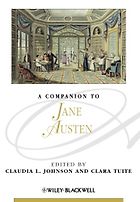
I decided I shouldn’t have a list consisting entirely of Jane Austen novels. Then, when it came to thinking of a piece of criticism, it seemed so arbitrary to choose one piece of criticism. There have been a lot of good books written about Austen, from many different points of view. A Companion to Jane Austen is a recent book, and it’s the kind of book that is becoming more and more popular now – a book in which there are essays by many different people. But it differs from many of those books in that the topics of the essays are often quite unexpected. And the scholars who are writing the essays are, without exception, among the most distinguished people writing now.
Do you want to give an example?
There is an individual essay about each of the major Jane Austen novels and the essay on Pride and Prejudice is by Michael Wood – it’s called ‘Time and her Aunt’. It’s about a line in Pride and Prejudice, when Elizabeth and her aunt and uncle are walking around the grounds at Pemberley, Darcy’s estate. Darcy suddenly appears and the phrase ‘time and her aunt’ appears in that sentence. Michael Wood writes an absolutely brilliant essay about the importance of time and of the aunt in Elizabeth’s career. Time, as he points out, is essential to this particular meeting. If they had come to Pemberley a day later, they would not have been admitted, because Darcy would have been there. If they’d come a day earlier, they would have missed him. If they’d even come earlier in the day, they would not have encountered him. They encounter him because they are there at just the right time. And the aunt, in Michael Wood’s interpretation, stands for the domestic world which is entirely female.
It’s not literally female, of course – there are plenty of men in the novel. But it’s the female world that really makes the judgements and controls the action, and Elizabeth’s aunt stands for/represents/incorporates all of that. To write something new about a Jane Austen novel that has been as much written about as Pride and Prejudice is quite a feat, and this is a really fresh and interesting essay. There are also other essays on very unexpected subjects, like Jane Austen and music, which is a record, really, of her relationship to musical instruments: her habits in practising, her conscientiousness in practising the pianoforte every morning (although she was not apparently a remarkable musician) and accounts of how she used music in her various writing. The book is full of things you would not have thought to wonder about; you learn about things before you even have a chance to wonder about them…
Do you get a good sense of her as a person, of her life from this book?
It’s not the main concern of the book, though it does come up. I would say that by the time you’ve read the book you do have a good sense of her as a person. There have been a lot of biographies. There’s one biography that I think is very good by Claire Tomalin, Jane Austen: A Life.
Going back to what you were saying about marriage, all these Austen novels culminate in a woman or even two women getting married. These novels, and all the hugely popular modern novels and films based on them – like Bridget Jones’s Diary or even Clueless– have played a huge role in shaping my own and I think many women’s romantic imagination. My problem is, what happens afterwards? I mean, once we are married?
That’s definitely not Jane Austen.
Exactly.
Pride and Prejudice is the only one – at the end of Pride and Prejudice the author really thinks that her central characters are going to live happily ever after. It’s a wonderful ending. Everybody knows that famous first sentence: ‘It is a truth universally acknowledged that a single man in possession of a good fortune must be in want of a wife.’ There are many, many things that can be said about that sentence, but the view of marriage that it implies is what I might call the commercial view of marriage. This is the view that Mrs Bennet has, and that Charlotte has – that a woman has her attractiveness, variously defined, and the man has his money, and the woman exchanges her attractiveness for his money. But the last sentence of Pride and Prejudice is about the various people who come to visit at Pemberley, and how they are welcomed. It implies a view of marriage as the centre of a community, of marriage being a community and making a larger community.
It’s a much larger and more romantic but also, in my view, a more moral view of marriage. It’s a view of marriage as a centre expanding outwards that is totally absent at the beginning of the book. It doesn’t recur in any of the other Jane Austen books. At the end of Persuasion, which I was talking about as a love story, there is a happy marriage. But there is a reminder of the quick alarms of a sailor’s life that are before Anne, because she is married to a sailor. That doesn’t mean there’s anything wrong with marrying a sailor, or the particular sailor she’s married to, but it is a reminder that she isn’t going to be nothing but happy. But at the end of Pride and Prejudice you can believe that they aren’t going to be anything but happy.
What do you think about Jane Austen herself not getting married?
It is perplexing to think about. As you probably know she was proposed to, she accepted the man, she thought about it overnight and she rejected him in the morning. One doesn’t know very much about the man – but the fact is she rejected what would have been a very practical marriage, to a friend of the family, a prosperous man, who would have taken care of her. That may suggest that she really personally had a very romantic view of marriage, and wasn’t willing to settle.
September 20, 2012
Also recommended on Five Books:
Five Books aims to keep its book recommendations and interviews up to date. If you are the interviewee and would like to update your choice of books (or even just what you say about them) please email us at editor@fivebooks.com
Five Books interviews are expensive to produce. If you've enjoyed this interview, please support us by donating a small amount.
Patricia Meyer Spacks
Patricia Meyer Spacks is Edgar F Shannon Professor of English, Emerita, at the University of Virginia. She is a leading critic of 18th century English literature and has served as president of both the American Academy of Arts and Sciences and the Modern Language Association. Her annotated edition of Jane Austen’s Pride and Prejudice was published in 2010.
Patricia Meyer Spacks is Edgar F Shannon Professor of English, Emerita, at the University of Virginia. She is a leading critic of 18th century English literature and has served as president of both the American Academy of Arts and Sciences and the Modern Language Association. Her annotated edition of Jane Austen’s Pride and Prejudice was published in 2010.