You have been covering the Middle East since 1979. What first got you interested in the region?
I had been in Northern Ireland and I knew quite a lot about sectarian war. Then I went to Lebanon just at the moment when there was the first great oil price rise, which had a tremendous economic effect on the area. So many things were happening in the area at the time. It was the beginning of the Iranian Revolution. It was the rise of Iraq. It was the assassination of the Egyptian president, Anwar el-Sadat. It really was the crucible for world politics.
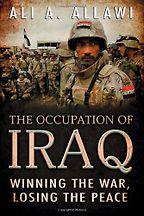
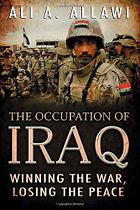
Let’s have a look at the five books you have chosen about Iraq. Your first is The Occupation of Iraq, an insider’s account of the Iraqi government following the American invasion.
Ali A Allawi combines the rigour of an historian with the knowledge of a senior politician in one of the first governments in Iraq after the overthrow of Saddam Hussein. He also kept notes while he was minister of finance and minister of defence and trade. Many insider accounts aren’t quite as insider as they pretend to be but this one really is, and it is combined with a very rigorous academic approach.
He is also very good at describing all the different factions.
Yes. He comes from the Shia side of the fence. Perhaps the most important development after the overthrow of Saddam Hussein in 2003 is that the Shia community – who are the majority of Iraqis – took over from the Sunni Arab community, which had previously been dominant under Saddam Hussein.
Is he able to be unbiased in his descriptions?
You are not going to find anyone unbiased dealing with Iraq. The question is if their bias is shallow or deep, and do they appreciate their bias? I think that more than anybody, he does.
What does he say about the transitional government, the Coalition Provisional Authority?
He is very negative about it. In fact, it would be very difficult to find anyone who was positive about it. It really was a wrecker’s yard of a government.
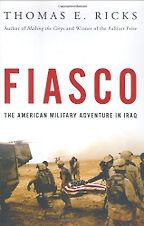
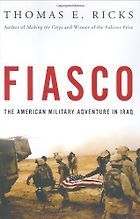
Your next choice, Fiasco: The American Military Adventure in Iraq, is by the journalist Thomas Ricks, who spent five tours in Iraq during the conflict.
This is an interesting book, which I have chosen because I think you need a book from the Americans’ side. When you read about Iraq, you need to know that it is a country more divided than almost anywhere else in the world – between groups like Kurds, Sunnis and Shias, and of course the Americans. Each has vigorous internal politics which determines what they do.
“When you read about Iraq, you need to know that it is a country more divided than almost anywhere else in the world”
This was true of the Americans, and Ricks writes fluently and eloquently about this. Sometimes he is unconscious of the degree to which he is reflecting American attitudes which aren’t Iraqi attitudes, but his book does show what the Americans thought, and what they thought the Iraqis thought.
What were some of the common misconceptions on America’s side?
They had great difficulty from the beginning, in that they wanted to get rid of Saddam Hussein and to have a friendly government to replace him with. But the only real alternative to Saddam Hussein was a Shia government, which was going to be full of co-religionists with Iran. America was always fearful that Iran would emerge the winner of an American war. That explains an awful lot of what happened subsequently.
You had the invasion, which many Iraqis accepted temporarily because Saddam Hussein had been a disastrous ruler. Then you had an occupation which was really because the Americans couldn’t think how to replace Hussein.
Many would argue that even if the Americans and British had thought through what would happen after the overthrow of Hussein, it was still a very difficult thing to manage.
I think one has to read a diversity of books to really understand what happened. The British often have this attitude of “if there had been more occupation troops” or “if things had been a bit better organised” and so forth. But actually the dilemma was very real. What communities and countries were going to be the winners and losers after the overthrow of Saddam Hussein? That was a real dilemma for the Americans, which they never really resolved.
What was it like being on the ground as a journalist?
It was very dangerous, among other things. In other places I have covered – like Lebanon during its civil war – it was rather safer to be a journalist. Even very violent militia groups gave you a pass to get through. In Iraq it was extremely dangerous to be any kind of foreigner, and particularly a journalist. But you could get around and talk to people.
I have chosen authors who talked to people, and you do need to use as a source people who were there on the ground. People who weren’t there, even if they had a previous acquaintance with Iraq, often missed what was happening because the situation changed rapidly. You had to be in the thick of it to produce a book which is worth reading.
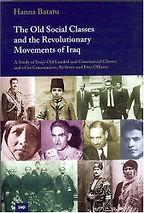
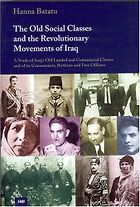
Next up is a book that provides very good background for what happened. The Old Social Classes and the Revolutionary Movements of Iraq is seen as a landmark study of Iraq’s social formation during the 20th century.
Hanna Batatu was the great Iraqi historian – a man of perception and gigantic knowledge of the social, sectarian and ethnic background in Iraq. If you read this, you will find out everything from the different sectarian communities to the growth of the Ba’ath party, which was the instrument from which Saddam Hussein rose to power. Then you will know what Iraq is all about – its divisions, its unity and everything else. This is the great classic work. It was in the past, and I think it still is.
It has recently been reprinted.
Yes, which shows that there is a demand for it. And it is right that there should be a demand for it, because it is still a wonderful work.
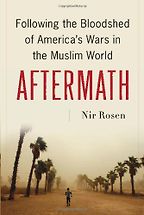
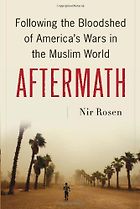
Aftermath looks at the repercussions of US involvement in Iraq and Afghanistan.
Nir Rosen is a very good reporter who spent a long time in Iraq in extraordinarily dangerous situations, talking to Sunni guerrillas fighting the Americans and the Shia government. So it is very much on the ground. It has a very good summary and understanding of what the surge – which was billed as a great military success in the US – was really like. In fact it was much more complicated than that, and this is a view from the ground as to what happened.
The reason I have chosen this book is that it gives one of the best and fairest summaries of what happened during the US occupation in the surge, and is very up to date and well worth reading. It is also good at conveying the sense of how military occupation by its very nature generates violence and local opposition.
How do you think the US involvement in Afghanistan differed from Iraq?
In Iraq, Americans became pretty unpopular fairly fast. In Afghanistan they were quite popular to begin with. The one thing that comes across in both countries is that foreign occupation armies tend to be very unpopular. If they aren’t unpopular at the beginning, they will be at the end. One should discount propaganda stuff you see on television about patrols going through villages, winning hearts and minds. In much of Iraq and much of Pashtun Afghanistan they really don’t like foreigners of any description, and tend to shoot at them.
What lessons can be learnt from the US and British occupations?
I think that there is an underestimation of the degree to which they make the situation worse in the country that is occupied. Often they are justified initially for humanitarian reasons, and the same is true of Libya. But foreign involvement often exacerbates local conflicts and deepens divisions within these countries. In all three cases, you essentially have a civil war in which foreign powers are participating. So it’s not surprising that they tend to exacerbate that civil war.
Get the weekly Five Books newsletter
With hindsight, what do you think should have happened with Iraq?
You could say they should not have invaded, despite humanitarian reasons. I would also say that they might have gotten away (I am talking primarily about the US, Britain and their allies) with an overthrow of Saddam Hussein if they had then got out. People said “but if they get out there will be turmoil and violence”. But, of course, they stayed and there was terrible turmoil and violence. So I think that in all these cases, when you look at what actually happened on the ground from the point of view of intervening powers and the point of view of the indigenous inhabitants, it would have been better if they had kept out.
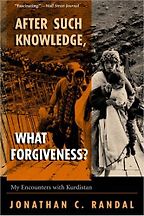
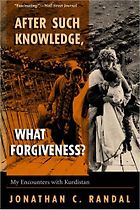
Your last book is Jonathan Randal’s After Such Knowledge, What Forgiveness?
I chose this because it is an excellent book about the Kurds. The permanent dissidence of the Kurds is right at the heart of Iraqi politics. They were in permanent rebellion from the moment that the British created Iraq after World War I, and included the northern part of Iraq which was inhabited by the Kurds. They never in their hearts accepted Iraq. They were always in a state of rebellion.
This coloured and shaped Iraqi politics over a long period – right up to today, where the Kurds are part of the Baghdad government. Because they are better organised than others, they are often more influential than their proportion of the population would suggest. One has to bear in mind that what happened to the Kurds was extraordinarily violent. And one has to know about this to understand what has happened, and is happening.
Five Books aims to keep its book recommendations and interviews up to date. If you are the interviewee and would like to update your choice of books (or even just what you say about them) please email us at editor@fivebooks.com
Five Books interviews are expensive to produce. If you've enjoyed this interview, please support us by donating a small amount.