The author of the acclaimed India: A Portrait takes us around the world’s largest democracy, from the dance bars of Bombay to Kerala crab curry on the Southwest coast. Patrick French picks the best books on India.
I thought I would go for a bit of variety. So Beautiful Thing is a memoir; India After Gandhi is a history; B R Ambedkar is a political hero of the 20th century – these are his most important writings; Pushpesh Pant’s India: Cookbook is obviously a cookbook, and 2 States is a novel.
Let’s start with the memoir, Beautiful Thing, about bar dancers in Mumbai. This really jumped off the page at me when I read some of the reviews.
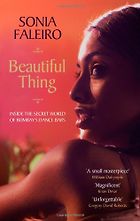
It is an unusual book. It’s a memoir, or really a piece of reportage, but it reads like a novel. It’s the story of Leela, who runs away from a small town in North India because she’s being rented out by her father. She ends up in Bombay, and becomes a bar dancer. The book is written very much from Leela’s perspective, although it’s also about the interaction between the author, Sonia Faleiro, and Leela. You’re seeing the sex trade from a woman’s perspective in a way that is very rarely written about. And you can’t really say it’s only about the sex trade, because it’s a lot more than that. It’s really about human relations, the interactions, the power play between individuals.
Leela became a bar dancer in Bombay, and at that time a bar dancer had a particular status. You were not a prostitute, and yet that could sometimes become part of what you did for your work. The book looks at the interaction between the bar dancers and their customers, and at the borderline society they live in. The nub of the book is that in about 2005 the government in Bombay decided, as a kind of a moralistic crackdown, to close all the bars. This meant the bar dancers were left with nothing, and had very bleak options before them.
It’s a shocking book?
Yes, it’s deeply shocking.
What in particular?
I think any story, or social arrangement, can be shocking when you see it from the inside. The way in which some of the people in the book are treated, the things that people do to each other, the kind of betrayals between mothers and sons, or fathers and daughters or mothers and daughters. I think that’s what makes it really shocking, and makes it read like fiction. It’s a book that someone unfamiliar with India might find a bit hard at first, but it takes you right inside that world. The voice of Leela is done very well.
“You’ve got one sixth of humanity crammed into one comparatively small land and, for all its problems, somehow it works.”
It’s the combination of the glamour and the degradation that makes it fascinating, this book. You have the momentary glamour of the dancer in the bar, and then you have the edifice that holds up that world.
So the bars are shut down. Is there a moral to the story?
You don’t know, at the end of the book, what happens to Leela. But as a bar dancer she had a certain position and status, which she was very conscious of. And you can make quite a lot of money. Your choice after that is, either you manage to move off and start a new life, or you go abroad to Dubai, or you end up in a brothel or, if you’re lucky, you end up as a madam in a brothel in Mumbai.
Is it a good book to read if you’re visiting Mumbai?
It’s more of a glimpse into Indian society. And it’s about the human condition, the relationship between men and women.
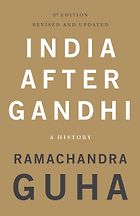
Your next choice is India after Gandhi, a post-independence history.
Yes, and the best bit of it, or the bit I enjoyed most, was the 1940s, 50s and 60s. What’s good about this book is that it’s almost like a conversational argument with the reader. It’s a very lively history. It makes you think. You’ll read one page and you’ll agree. You’ll read another page and you’ll disagree. And it gets right inside that period of the first few decades after independence in a way that I don’t think any other book does.
Do you need to know a lot about Nehru and the other important political figures of that era in order to fully enjoy it?
Not really. I think the best history books can be understood by any reader with basic knowledge, and yet they can also be stimulating and exciting to somebody who knows a lot about the subject. I’d say that this book manages to span both.
Can you give me some examples from the book, things you found really intriguing or surprising?
There are so many different things. It could be the situation in Kashmir and how and why the problem between India and Pakistan developed, or the account of the 1962 border war between India and China. There’s a level of very interesting social detail. For example, one of the things the author does quite cleverly is he goes back to the way that events were written about in newspapers at the time, and quotes from them. Or he quotes from people’s personal journals and letters. You really get a very vivid sense of how history was unfolding and, also, just how difficult a lot of the decisions were that faced the Indian leaders in the decades after independence. They had such huge things to deal with.
The book’s subtitle is The History of the World’s Largest Democracy. is that an overall theme – scepticism about whether democracy could work in a huge, poor country like India and how they succeeded?
It’s one of the themes. It’s a big book – it must be 700-800 pages – and it covers many different subjects. I do believe that even with a large country like India or China or the U.S., it is possible, if you have a good writer with an acute knowledge, to turn that into a single book which can be much more than its individual parts. It can tell you some larger truth about the country. I think that’s what this does.
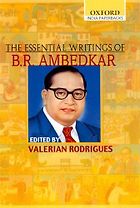
Tell me about the Essential Writings of B R Ambedkar. He came from India’s lowest caste but went on to become one of the country’s great nationalist figures.
Ambedkar was born at a time when even getting an education for somebody from an ‘Untouchable’ background was almost impossible. When he went to school, he had to sit on a piece of sacking, separate from the other children. When he wanted to get water between classes, he would have to wait for somebody to open the tap for him, since he wasn’t allowed to touch the tap himself. He managed to go from this very inauspicious background to being a legislator, a politician, an activist, a lawyer, an academic, and one of the great political figures of India in the mid-20th century.
He was the person responsible for overseeing the drafting of the Indian constitution, which is the longest constitution in the world. It’s beautifully put together; it’s a great creative work, balancing the different demands of the federal system and the state with the demands of India’s diverse people, and the need to keep the country together. The constitution also brought in democracy. At that time, no large country with a large number of illiterate people had ever tried democracy. It was a huge experiment and he was at the centre of that. But the reason I recommend his book is that he was such a good prose writer.
It does! If you read the stuff he wrote against Mahatma Gandhi – they had a long-running dispute, which Gandhi won to a large extent – the way in which he writes is forensic and passionate in the way that Orwell’s writing was.
What was the dispute about?
Essentially the Dalit community – at that time called the ‘Untouchable’ community – felt that they needed their own historically disadvantaged position to be recognised and taken seriously. For example, they wanted seats in elected bodies reserved for them and certain legal protections. Gandhi wouldn’t accept that. What he wanted was to speak personally on behalf of all the people of India. Ambedkar saw that as an upper-caste attempt to disenfranchise his people.
And because Gandhi is the figure that everybody remembers, Ambedkar’s arguments were largely forgotten for a long time. What’s interesting now is that, as people from the Dalit community gain more political and economic power in India, his importance as a historical figure, the importance of the arguments he was putting forward, is beginning to be recognised, some 60-odd years after independence. But that’s really only been in the last ten to 15 years.
It’s taken a long time.
It’s come out of democracy. It comes from the fact that those disadvantaged groups have been able to band together, slowly at first, and elect politicians from their own communities who can represent them.
Ambedkar sounds like an amazing figure.
He was extraordinary. Gandhi formed an organisation for the Untouchables or Harijans, as he called them – which means ‘children of God’, though Ambedkar saw it as a patronising term. Harijans themselves were not allowed to join the organisation, the Harijan Sevak Sangh; it was simply for upper-caste people to decide what was best for them. Gandhi said that everybody should engage in sweeping and scavenging [jobs traditionally carried out by Untouchables], as a way of cleansing Hindu society. Ambedkar writes: ‘Can there be a worse example of false propaganda than this attempt of Gandhism to perpetuate evils which have been deliberately imposed by one class over another?’
Let’s go on to the novel, 2 States.
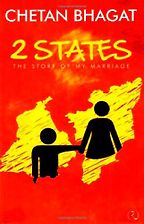
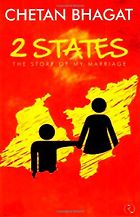
This is by Chetan Bhagat, who is one of the most commercially successful novelists in India at the moment. I find him a very entertaining and revealing writer. It’s a boy-meets-girl story, about Krish and Ananya, who meet when they’re studying at college. Krish comes from Punjab and Ananya comes from Tamil Nadu. So there is a huge cultural and social gap between the two families.
On the back cover, and this is the premise of the book, it says: ‘Love marriages around the world are simple. Boy loves girl. Girl loves boy. They get married. In India, there are a few more steps. Boy loves girl. Girl loves boy. Girl’s family has to love boy. Boy’s family has to love girl. Girl’s family has to love boy’s family. Boy’s family has to love girl’s family. Girl and boy still love each other. They get married.’
There are some great set-piece encounters between the two families.
In what way do you feel it’s revealing about India?
It’s the kind of book that, if a different writer had written it, would have been a very heavy treatise on identity. What Bhagat is doing is writing about identity in a light and entertaining way. Here’s one bit. They’re at college, and they’re at a graduation ceremony. It’s the first meeting between Krish and Ananya’s parents, so they’re obviously both dreading it. Ananya’s parents arrive ten minutes late – the contrast here is between the brash, noisy Punjabi culture and their more restrained Tamilian culture.
‘Her father wore a crisp white shirt, like the one in detergent ads. Her mother walked behind in a glittery haze. Her magenta and gold kanjeevaram sari could be noticed from any corner of the lawn. She looked as if she had fallen into a drum of golden paint. Behind her walked a 14-year-old boy with spectacles, a miniature version of the MBA men who would get a degree in the evening.’
It’s funny and there’s subtlety to it as well. I admire books which look light, as if they’re very easy to write, while in fact they’re telling you a whole lot more. Also, as a reader, you can either skim through it as a light read or you can enjoy it for the levels of knowledge that lie behind it.
When I saw the title, 2 States, I presumed it was about India and Pakistan, not about the huge cultural differences within India itself.
In India you’ve got people who look different from each other, who eat different food, who dress differently and, crucially, who speak different languages. There’s no other country in the world that is as linguistically diverse. A North Indian language and a South Indian language will often have no overlap between them at all. You’ve got one-sixth of humanity crammed into one comparatively small land and, for all its problems, somehow it works. Perhaps, in a way, this is what all of these books are about: how that seeming disorder actually does work.
Get the weekly Five Books newsletter
I think 2 States will also be interesting to an outsider who is coming to India for the first time because it shows quite well the speed of social change. In one contemporary novel, you’ve got people who are quite happy having a love marriage – getting married to the girl or the boy they want to. Then you’ve got other people, of the same age, who have arranged marriages. You’ve also got people from the older generation who are very culturally conservative, and others who are much more relaxed. In India, at the moment, you have all of those things happening simultaneously. Maybe 20 years ago you could have said India was quite a traditional society. Today that doesn’t really apply. There are parts of India that are still traditional, but there are other parts which are modern.
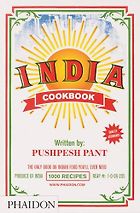
Lastly, tell me about the cookbook. This is the Indian answer to Italy’s cookery bible The Silver Spoon, is it?
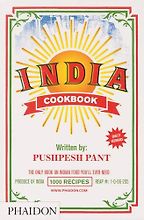
It is. It’s the first complete Indian cookbook. It’s a long book; it must be more than 800 pages. It’s rather like The Silver Spoon, in that it’s inexhaustible. It tells you everything that you are going to need to know about Indian cooking. What I can’t quite understand is how Pushpesh Pant, the author, managed to get so many different recipes from so many different places. They other thing that’s good about it is that the recipes actually work. That’s always the thing with cookbooks – do the recipes look good and do they actually produce the dish at the end?
What’s your favourite recipe?
Let me tell you about the range, and then I’ll decide which one I like best. So looking through it, you’ve got nimakai rasam. It’s got certain spices, then you’ve got ground pepper, chilli, garlic, coriander and two limes. It’s a very particular South Indian type of lime-flavoured pepper water.
Then imagine travelling 1,700 miles right up to the tribal parts of the Northeast, and the border with Burma. There’s a dish here which is called wak al galda, which is pork with sorrel leaves. You don’t get a lot of pork in India, but up in the Northeast, you’d probably be eating some kind of forest pig.
Then, zooming back down to the Southwest coast, you’ve got Kerala crab curry, made with ginger, tamarind and mustard seed – or you can go up to Hyderabad in the centre of India, and there you have stuffed green chillies. You wouldn’t get a stuffed green chilli recipe in a regular cookbook in English; it’s a family dish.
Another recipe is for green bananas in spicy yoghurt sauce. I’d tried that in Tamil Nadu, but I’d never seen a recipe until now.
OK, so for my favourite, how about mutton kolhapuri, which is Maharashtrian hot lamb curry? If you can imagine the flavours, it has turmeric, ginger, cloves, red chilli, aniseed, coconut, poppy seeds, black peppercorns, potato, lamb, tomato…
Are you a very good cook?
I’m a good cook. My wife, who is Indian, is a better cook. She can cook Japanese food superbly. I like cooking food from different parts of the world, so it’s good having an Indian cookbook which can actually tell you how to make things that you’ve tasted in the past, that you’ve never managed to make. I love the Indian cookery writer Madhur Jaffrey, but there are quite a few dishes in the Pushpesh Pant book which I’ve never seen written down before. It’s very well done. It’s for people who’ve started cooking Indian food, but want to move on from the standard things like chicken curry and want to try something a little bit different. I think that’s probably why this book has been a success.
You’ve travelled everywhere in India. For someone who hasn’t been there before, if you had to pick three places they should go to, to really get a sense of the country and its diversity, where would you recommend?
I’d say Cochin in Kerala, which is by the sea. It’s quite fun, it’s a mellow place. The culture in Kerala means that if you come as an outsider it’s not a particularly difficult region to visit. A lot of foreign travellers when they go to India for the first time go to places like Rajasthan, places like Jaipur, Udaipur, Jodhpur, and it’s usual, particularly if you’re travelling without much money, to be surrounded by aggressive touts all the time. People who travel in that way in the North often have quite a dispiriting experience. It’s only when they’ve been back to India a couple more times and have a little more knowledge of other places, that they see a bit more than you find in those tourist hotspots.
The second place I would probably pick is Mumbai. It’s a huge, vibrant, noisy, unequal city, where there is always something going on. There are people from different parts of the country who have gravitated there. It’s also a place you can travel around from. For example, you can go to the winery in Nashik, where they started making wine, which I wrote about in my book. Or you can go to Goa, or other parts of Maharashtra, the state that surrounds Mumbai. But the city itself, you’re never going to get bored in Bombay.
Get the weekly Five Books newsletter
My third choice would probably be somewhere like either Ladakh or Dharamsala in Himachal Pradesh. Dharamsala is a hill station which is also the headquarters of the Dalai Lama’s exiled Tibetan administration. It’s a mixture of Tibetan and Indian and Himalayan culture. It’s a very beautiful landscape with the Himalayan mountains rising behind it. If you think of the difference between being by the water in Cochin and then being in the mountains in Dharamsala, it’s extraordinary that you’re still in India. They’re all part of that Indian experience.
I actually tried to get to Dharamsala by climbing over a mountain pass on my honeymoon. We wanted to hear the Dalai Lama give a talk. We failed, because it was July and the middle of the monsoon. The glacier collapsed and there were landslides. I cried three times I was so scared, and the guide said we had to turn back. So it’s still on my to-do list.
You should go to Dharamsala; it’s an extraordinary place. And listening to the Dalai Lama speak is quite a remarkable experience.
He’s very impressive?
He’s personally very impressive. He probably has a greater personal charisma than anyone else I’ve met.
April 14, 2011
Five Books aims to keep its book recommendations and interviews up to date. If you are the interviewee and would like to update your choice of books (or even just what you say about them) please email us at [email protected]