The neoconservative view that the US has a special mission in the world was supercharged by 9/11. There was also a sense that 9/11 could make America better. Sadly it didn’t work out that way, says Peter Beinart
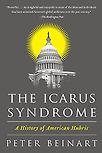
Three days after the 9/11 attacks, President George W Bush claimed, “Our responsibility to history is already clear: To… rid the world of evil.” I can recall being stunned by the scope of that assertion. Your most recent book, The Icarus Syndrome is subtitled A History of American Hubris. How did that characteristic shape post-9/11 policies?
The theory of my book, The Icarus Syndrome, is that American hubris tends to stem from American success, and so American foreign policy is most likely to over-reach after periods where we’ve had a lot of success in exerting our power to reshape the world as we want. So while others have explained Bush policy as just a response to the trauma of 9/11 or as a result of neoconservatism, I argue that a lot of what Bush did after 9/11 can be seen as an escalation of trends that started to emerge in American foreign policy in the 1990s.
You were the editor of the influential left-leaning political magazine The New Republic during the attacks. How did the events of 9/11 initially impact on the liberal intelligentsia?
For me, and most of us at The New Republic, the effort to conceptualise a response after the shock of the event was very influenced by our set of recent experiences. This is something I write about in the introduction to The Icarus Syndrome. My views about the response to 9/11 were very influenced by my experience, at a formative time in my life, of the debates over the Gulf War, Bosnia and Kosovo.
“A lot of what Bush did after 9/11 can be seen as an escalation of trends that started to emerge in American foreign policy in the 1990s.”
Like many others, I tended to see the post-9/11 debates through that prism and that was a prism that promoted a degree of optimism about the efficacy of American military power and its ability to be used in support of human rights.
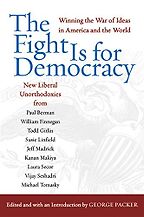
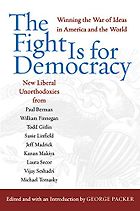
So let’s move forward to the five books you’ve selected about the post-9/11 political environment. Beginning with The Fight is for Democracy, a volume of nine essays edited and introduced by The New Yorker’s George Packer. What makes it essential reading in your mind?
The Fight is for Democracy really captures a spirit that existed in the wake of 9/11 amongst the species known as liberal hawks. I myself was one at the time. To read this book is to understand the moral and intellectual nature of this species, which helps to explain why the Afghan war was so bipartisan and why even the Iraq war had so much support from Democrats and some liberals.
In the essays you see the struggle against Al-Qaeda through the lens of a certain liberal conception of the Cold War. Liberals became more sympathetic to the whole enterprise of the Cold War after it ended and they also saw the struggle against Al-Qaeda through the prism of the war in the Balkans, which had a big impact on people like George Packer and Paul Berman and myself. The book really helps sets forth the basis of one of the important ideological strands that emerged after 9/11, this liberal-hawk perspective.
What path do these essays collectively chart for post-9/11 American policy?
They supported an active ambitious American role around the world, including openness to military force to spread democracy and human rights and an effort to combine that with a struggle for greater democracy in the United States. I think that twin vision was influenced by the efforts of people on the anti-totalitarian left in the United States, starting in the 1930s and continuing through into the first decades of the Cold War.
This book was published in 2003 and, as you said, it suggests a path for liberals seeking to re-conceptualise America’s place in the world. Your 2006 book The Good Fight seemed to take steps further down that path. Can you recapitulate its core points please?
The Good Fight was influenced by the same impulses: the effort to find a usable liberal anti-totalitarian past, to find a liberal language for expressing revulsion against what Al-Qaeda represented, and a path between what could seem like conservative neo-imperialism and a leftism that seemed to me at that point uncomfortable with the use of American power. The Good Fight outlined what the struggle against jihadist terrorism could look like from a liberal perspective, drawing from the way in which liberals thought about the struggle against Soviet totalitarianism.
The first point I stressed, as liberal anti-communists tended to stress, was that the health of American society at home was absolutely central to our long struggle against the Soviet Union. Our ability to regenerate ourselves and bring ourselves closer to our own democratic ideals, as we did during the Civil Rights movement, was crucial in our struggle to be a stronger society than the Soviet Union. So in The Good Fight I stressed the importance of America not sacrificing principles of human rights and civil liberties during the post-9/11 period. I also argued that America would not be able to sustain a long-term costly struggle against Al-Qaeda if we were not fostering a society in which average Americans were able to prosper.
The second point I stressed was that international law and international alliances weren’t a source of weakness, as they were often imagined to be by figures on the right, both during the Cold War and after 9/11. They could actually be a source of great strength in a struggle against totalitarians.
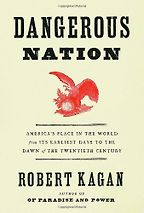
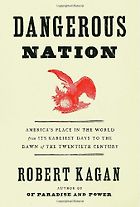
The next book you cite is Dangerous Nation by Robert Kagan. Tell us about it.
I think Kagan is the most important neoconservative foreign policy thinker of the post-9/11 era. He’s someone whom I have great respect for, even though we disagree about some things. Dangerous Nation is Kagan’s history of American foreign policy in the 19th century – it’s the first half of a two-part history of American foreign policy that he is writing.
The Fight is for Democracy is a liberal response to 9/11; Dangerous Nation is a more conservative take. Kagan suggests that the Bush administration responded to 9/11 in a way that flowed from a very deep tradition. He suggests that since America’s founding it’s been what he called “the dangerous nation”. By that he meant a nation not content to accept the world as it is, but a nation with the desire to shape the world in accordance with not only our interests but also our values. So I think that Kagan has been involved in a very ambitious and interesting project to suggest that neoconservative foreign policy and the Bush administration’s foreign policy have very deep roots, even going back to the 19th century.
Did 9/11 lead to a resurgence of belief in American exceptionalism?
American exceptionalism has always meant different things to different people. There’s a strand that suggests that what makes us exceptional is our distance from world events – that we’re not polluted by them. But what neoconservatives often take American exceptionalism to mean is that we have a special mission and that the more we are freed from international constraints on our power, the more good we will do. That idea was definitely supercharged by 9/11. That’s partly because 9/11 hit at a time when America was unusually powerful compared to other nations – militarily, economically and ideologically. And also because that belief in America’s exceptional destiny fed popular support for using American power in very ambitious ways.
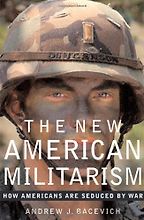
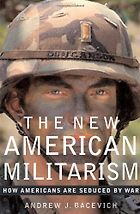
Now let’s move on to a book that warns about the perilous marriage of American exceptionalism and American militarism. Please tell us about The New American Militarism by Andrew Bacevich.
Packer and Robert Kagan have been very important intellectual voices post-9/11, and so has Bacevich. He is a West Point graduate and Vietnam veteran who spent a lot of his life in the military and who had a son who was killed in the Iraq war. Given the structure of American intellectual life, it is unusual to have a prominent figure writing about American foreign policy who has such deep ties to the American military and whose family has experienced the cost of war in such a personal way. His background makes Bacevich a singular voice.
“Neoconservatives often take American exceptionalism to mean that we have a special mission and that the more we are freed from international constraints on our power, the more good we will do.”
Like Packer and Kagan, Bacevich responded to 9/11 by trying to recover an intellectual tradition. Kagan was looking back to American history for the roots of the aggressive, what I would call neo-imperial, American foreign policy that dominated during the Bush era. Packer was looking for a democratising strain within a liberal perspective. I think Bacevich responded by recovering what you could call the anti-imperial or even neo-isolationist strain in American foreign policy, which suggests that our power and wisdom are really very limited and what makes American society so precious is endangered by the moral and economic costs of empire.
So Bacevich draws from figures like William Appleman Williams, a very important historian starting in the 1950s, who argued that American empire was motivated by economic concerns. He draws from Charles Beard, who wrote even earlier about the way in which American economic interest led to American empire, which endangered American democracy at home. And also Bacevich writes a lot about Reinhold Niebuhr. Bacevich writes about Niebuhr from an anti-imperial or neo-isolationist perspective but liberal hawks and even neoconservatives also grappled with Niebuhr.
Bacevich’s subtitle is How Americans are Seduced by War. How are they?
Part of what he talks about is the way in which the American economy has become dependent on the American military. This old point about the military-industrial complex stretches back to President Eisenhower’s famous farewell address. But Bacevich also writes about the way in which we rely on American empire and American military power to do things like make sure we have a steady supply of cheap oil because we’re not willing to do things at home that would be required to wean us off oil. He also talks about the way in which elites are insulated from the costs of military action, since we have an all-volunteer military where most of the political elite don’t serve or have children who serve.
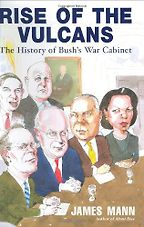
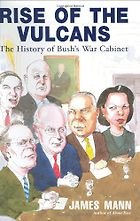
Now let’s talk about the presidency that defined the post-9/11 era. You cite Rise of the Vulcans, a history of Bush’s war cabinet by journalist James Mann. Perhaps you’d better start by explaining the title.
The Vulcans is a name given to the foreign policy advisers who advised the first Bush campaign in 2000. The book is essentially an intellectual history of the people who made Bush foreign policy – people like Dick Cheney, Donald Rumsfeld, Paul Wolfowitz, Richard Armitage, Condi Rice and Colin Powell. It’s modelled on two other books – David Halberstam’s The Best and the Brightest, which is an intellectual portrait of the advisers who got America into Vietnam, and The Wise Men, which is about the foreign policy figures who charted America’s course in the decades after World War II.
Rise of the Vulcans does a good job of showing that the trajectory for many of the figures who influenced Bush foreign policy was really an arc – in some ways similar to the arc that I try to trace in The Icarus Syndrome – that begins in the 1970s, at a time when American power is inhibited and the presidency is weak. Over the course of the careers of these figures, American and presidential confidence and power is on an upward trajectory.
But doesn’t this book argue that the six policy makers it focuses on made a dramatic break with past approaches or foreign affairs? How does that thesis square with Kagan’s Dangerous Nation and your Icarus Syndrome, which suggest that post-9/11 policy fitted well within a pattern?
I would say there was an escalation in foreign policy post-9/11. But this is precisely what a lot of these post-9/11 debates were about. Was Bush foreign policy a continuation or a rupture? And is this thing called neoconservatism a deeply rooted American tradition or does it represent a mutant strain? All of these books, particularly Kagan and Bacevich and my book, all are engaged with that question from different perspectives.
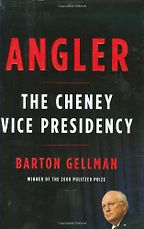
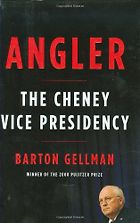
Finally, Pulitzer Prize-winning journalist Barton Gellman’s Angler documents the role of Vice President Dick Cheney in the post-9/11 era. What will we learn by reading it? And, once again, I think you’d better start with where the title comes from.
Angler was the secret service codename given to Dick Cheney. It’s a book about Dick Cheney, and particularly Dick Cheney in the White House, that details his efforts to increase presidential power. The way in which 9/11 was used to produce a dramatic increase in presidential power is an important part of the post-9/11 story. Gellman shows that amassing power for the presidency was a deep interest of Cheney’s, going back to his time in the Nixon and Ford administrations, when he saw presidential power as far too weak. Gellman shows in incredible detail the way Cheney was able to use the crisis of 9/11 to eat away at the constitutional restraints on presidential power in quite frightening ways.
How did Cheney redefine the role of the American vice presidency? And, also, under the current administration, has the office retained the power that Cheney arrogated to it?
No, I don’t think it’s retained it. I think Cheney’s was an extraordinarily, maybe unprecedentedly, powerful vice presidency. Maybe because of the experience gap between the president and vice president and because Cheney, with his wealth of relationships and experience, was able to put in key positions a lot of people who were much closer to him. While Bush was close to Condi Rice it was Cheney who was close to Rumsfeld and Armitage.
Support Five Books
Five Books interviews are expensive to produce. If you're enjoying this interview, please support us by donating a small amount.
There has been, in general, a trend towards more influential vice presidents. Al Gore was a pretty influential vice president. Joe Biden is a pretty influential vice president. Presidents have started to find it useful to think about the vice president as useful counselors. But Cheney’s relative power was an aberration.
How has the political environment shifted since Bush left office? Did the inauguration of Obama mark the end of the post-9/11 era in politics?
The post-9/11 era may have ended a little earlier, with the midterm election of 2006. By then the public lost the stomach for the wars. The Democratic Party launched a strong frontal assault on Bush foreign policy. But Bush foreign policy also just petered out. Declining violence took Iraq off front pages. There was a renewed debate about Afghanistan in the first Obama years but, given the financial crisis, we’ve moved into a much more domestically and economically focused political era starting in 2008.
“There has been, in general, a trend towards more influential vice presidents but Cheney’s relative power was an aberration.”
Since then we’ve seen a strange inversion of the post-9/11 focus on fighting Islamic threats abroad – a rise in isolationism and a more inward-looking focus. In this new isolationist era you see an almost paranoid focus on threats from home – the struggle over the construction of a mosque near Ground Zero and the conservative hysteria about sharia [Islamic law]. But, in general, I would say the salience of foreign policy and the War on Terror have dramatically declined. The Tea Party is pretty uninterested in these things.
Last question. Going back to the first book we discussed, George Packer wrote that the inspiration for The Fight is for Democracy came from a thought that occurred to him in the immediate aftermath of the 9/11 attacks: “Maybe this will make us better.” By the end of the introduction, Packer concludes that 9/11 hadn’t made us better. That was in 2003. With the benefit of greater retrospect, what do you think?
Sadly, I don’t think 9/11 made us better. It changed the direction of American public life in a way that produced some benefits. For instance, it produced an ephemeral sense of national unity that helped lessen racism directed toward African-Americans, reinforcing a trend that emerged in the 1990s. In a way, 9/11 helped to lay the predicate for Barack Obama’s election. But racist and xenophobic instincts were too often turned towards Muslims and immigrants. The opportunity to make us better was wasted.
For instance, the faith that Americans put in government after 9/11 was short-lived due to the incompetence and dishonesty that was a feature of Bush foreign policy. Although an extraordinary burden was placed on people in the American military, Americans were not called to common sacrifice. And, most profoundly, an enormous amount of American resources and focus was diverted to the War on Terror.
Get the weekly Five Books newsletter
George W Bush was wrong when he said that the War on Terror was the defining struggle of our age. It looked that way in the immediate aftermath of 9/11 to many people – including myself. But I think now it’s clear that the defining struggle of our age is not with the losers in the international system, people like the Taliban or Al-Qaeda, who have no vision of a society that anyone would want to live in. The defining struggle of our age is with the emerging winners of the international system – places like China and India that are challenging our way of life by showing they’re able to have prosperity on a pretty wide scale.
Aside from the loss of human life that has resulted from the wars waged, the greatest tragedy of post-9/11 American politics is that we were diverted from doing the kinds of things we needed to do at home – improving our infrastructure, our regulatory system and our public finances – that would have put us in a better position for the struggles ahead.
Five Books aims to keep its book recommendations and interviews up to date. If you are the interviewee and would like to update your choice of books (or even just what you say about them) please email us at [email protected]
Peter Beinart is a professor of journalism at the Craig Newmark Graduate School of Journalism and professor of political science at the CUNY Graduate Center. He is a contributor to the Atlantic and CNN as well as Editor-at-Large of Jewish Currents.
Peter Beinart is a professor of journalism at the Craig Newmark Graduate School of Journalism and professor of political science at the CUNY Graduate Center. He is a contributor to the Atlantic and CNN as well as Editor-at-Large of Jewish Currents.