You’ve started with a very prominent name in modern conservatism that oddly has not appeared on anyone else’s list, Leo Strauss. Why Strauss and his 1968 book, Liberalism Ancient and Modern?
Strauss because he is, I believe, one of our most instructive thinkers and commentators on the history of political philosophy – ancient, medieval and modern. This particular book because it contains some of his most accessible essays. Many people have opinions about Leo Strauss, but only a small portion of those who have opinions have spent much time reading his books.
He is something of a hate figure on the left, isn’t he?
Very much so. Until 2003 or so that hatred was mostly confined to university professors who taught political science and philosophy. While I was immersed in the academy, I think it’s fair to say that he was the most hated academic. But in 2003, with the run-up to the Iraq War, he became more generally hated, because articles in The New York Times, The New York Review of Books and The Boston Globe asserted that Leo Strauss – who spent most of his life studying and teaching the history of political philosophy [and who died in 1973] – was somehow the architect of operation Iraqi Freedom, the Bush administration policy in Iraq.
Which is a little bit odd if you read this book, right?
Yes, this is a book of essays, but it is characteristic. Most of the essays represent interpretations of classic works of political philosophy – of a Platonic dialogue, of Lucretius. There’s an essay on the liberalism of ancient political philosophy. What I was especially interested in for this conversation, though, were the essays on religion and his two essays on the importance of liberal education to liberal democracy.
In the book he says that liberal education consists of listening to the conversation among the greatest minds and also in reminding oneself of human excellence, of human greatness. Is that what attracts you?
I’m glad you mentioned those lines. There is much more to it, but let’s start with the important lines that you’ve selected. What does he mean by those lines, and what are the implications? He means that the history of literature, the history of philosophy and so on is really a debate. Differences of opinion about what constitutes human flourishing and how we should live our lives, what is justice, what is injustice, what are the virtues that constitute a good life and so on; studying that conversation is the essence of the highest form of education that our civilisation offers. In other words, the education that he recommends is anything but dogmatic. It’s sometimes mistaken for a canonical education but the canon he is interested in is a canon that is constituted by disagreement over these important questions.
Why is he controversial then? When you put it like that it’s almost like a ‘great books’ truism.
Great books have often been rejected by the universities, so that’s the first answer: the truism is rejected. Secondly, setting aside the Iraq War controversy, which made him nationally unpopular and gave him widespread infamy, he was unpopular in the academy because he was a critic of the left liberal orthodoxy taught in the universities. In the departments I’m familiar with, especially political science, there is often an emphasis on teaching differences of opinion. But when teaching the correct opinion, usually it’s the correct progressive opinion about this political matter or that political matter and most people don’t like to have their opinions challenged. You would think that the universities would select people who do, who live for the challenge of ideas, but that turns out not to be the case. I have to add to this that while Strauss became hated because of the way he challenged liberal orthodoxy, a crucial aspect of his thought was to bolster liberal democracy, to strengthen our understanding of what the foundations of liberal democracy are and to provide inside instruction on how to make the case for liberal democracy better. He was a critic but his criticism was designed to strengthen, not to undermine.
If someone new to Strauss wants to start, is this book a good place to do it?
It’s an excellent place to begin. I would begin with his introduction in which he says a number of fascinating and accessible things about liberalism, conservatism, communism, and then the two essays on liberal education, chapters one and two.
On the subject of liberal education, you’ve got another book about education but it’s a novel, Tom Wolfe’s 2004 book I Am Charlotte Simmons, one of very few novels to make our list. Why?
He’s on my list as a book that conservatives should read and non-conservatives should read. Everybody with an interest in sex, soul and higher education should read I Am Charlotte Simmons. Those are the great themes of the book.
This is a novel set at the fictional Dupont University as seen through the eyes of an ingénue named Charlotte Simmons, who comes expecting a great liberal education and finds things are very different?
Yes. Charlotte grows up in Sparta, Georgia, I believe, on the other side of the Blue Ridge Mountains. She comes from red America and she’s a prodigy of red America – she’s the best student that her community has seen in living memory. She wins a scholarship to Dupont College and she’s sent off with great fanfare. What Wolfe explores is what happens when a prodigiously intellectually talented young woman, raised with a conservative sensibility, is parachuted and dropped into a representative, elite institution of higher education. What happens to her beliefs, what happens to her convictions, what happens to her cultural conservatism?
Is the answer that she finds herself in a conservative’s caricature of liberal academia or is it a bit more complex than that?
It’s a bit more complex than that, though I suppose some people on the left will say that it’s a conservative’s caricature. The truth is that many people who say that are people who have been out of university for a long time and are quite lacking Tom Wolfe’s ability to reconstruct scenes and situations, people lacking his journalistic flair. The university he describes is a university that is very familiar to me. The first wave of critics of I Am Charlotte Simmons dismissed the book as reflecting the prurient interests of an old man who could not come to grips with sex on campus of the younger generation. Of course that’s nonsense. For one thing, the sex lives of today’s young students that Wolfe describes is not that different from what you and I knew on campus in the late 70s and early 80s. There’s a great deal of continuity. It’s funny to listen to today’s 40-somethings wax indignant about descriptions that really can’t be unfamiliar to them…
In Dupont University learning takes a backseat to money and sex and status – and, in your view, there is more to this than just fiction?
Oh yes.
It’s a critique of modern university life and the unmooring of traditional, liberal education values.
Absolutely. What happens on the cultural level – the sexual lives of students, the hook-up culture in which sex and love are severed, sex and marriage are severed, sex and family are severed – is something perfectly familiar to all of us who came of age post-1965. And there is another dimension of it that’s very important. The other aspect that Wolfe brings to life is that the education that the students get in the classroom reinforces the de-romanticisation of our sexual lives. He focuses on two aspects in I Am Charlotte Simmons, the right aspects I think. One is the resolute determination to reduce all human conduct to our biology: biology is fate. The other aspect is the postmodern tendency to deny that reason is capable of identifying moral standards and making authoritative moral judgments. These two lessons of the university curriculum support what happens outside the classroom.
That’s an interesting transition into After Virtue by Alasdair MacIntyre, written in 1981. MacIntyre was born in 1929. I think it’s fair to say that this is his most important or best-known book.
I think that’s right.
Five Books interviews are expensive to produce. If you're enjoying this interview, please support us by donating a small amount.
It’s very much a critique of modern liberalism, which, in his view, undermines virtue. Virtue is grounded in membership in a community and he critiques modern society as ‘a collection of strangers each pursuing his or her own interests under minimal constraints’. He says we all have too many disparate and rival moral concepts and he speaks of the new dark ages which are already upon us. ‘This time, however, the barbarians are not waiting beyond our frontiers. They have already been governing us for quite some time.’ Not a man given to understatement, and another fairly scathing critique of modern liberal individualism.
This is a sweeping book that goes from Aristotle up to today. The argument is not just the collapse of communities as you suggested, though it is the collapse of communities. It’s also about the transformation in how we think about the moral life that has purged the language of virtue from our speech and from our sensibility. According to MacIntyre’s argument, up until about 200 years ago, up until about just after Jane Austen finished writing her magnificent novels, through most of recorded human history, the moral life was discussed, thought of, experienced, in terms of the virtues. Were you courageous and self-disciplined? Generous and magnanimous? A good friend? Reliable? And so on. This is what defined the moral life, your qualities of mind and character. Round about the time of the high enlightenment, especially starting with Immanuel Kant, a new way of thinking of morality gained hold. This way of thinking about morality emphasises rules and intentions. If you could just figure out the right rules and if you have an intention to obey the right rules then you will have achieved moral excellence.
MacIntyre emerges as a critic of this view, this substance-free adherence to open-ended rules.
Exactly.
In some sense, one could argue that all three of the books you mentioned are cries of protest against modern libertarian conservatism with its notion of a completely open-ended commitment to individual freedom above all. Or is that going too far?
It’s probably true in many cases, but it might do an injustice to some libertarians because there are some versions of libertarianism which are essentially, as I understand them, philosophies of government’s relationship to the individual. After Virtue is not about the relationship between government and the individual; it’s about the individual and the moral life. In other words, I can affirm that government has a very limited role and still believe with Alasdair MacIntyre that the language in which we speak about morals has been degraded, that the virtues and language that involves quality of mind and character is the right language if we’re talking about the moral life. That this way of thinking about the moral life makes sense in a lived community, but that government doesn’t have much to do with all of this.
But you could argue there’s a fundamental tension between the anarchic anything goes mechanism of capitalism and modern liberalism and a vision of virtue rooted in community tradition and faith.
Yes, you could push back with that and you would be justified in pushing back.
MacIntyre publishes at the dawn of the Reagan era, in 1981. I came to this book sometime later, but I saw it as a first shot over the bow, that what came to be known as the religious right was reasserting some very profound questions about enlightenment, liberalism and libertarianism. It was itself starting to push back in ways that only became much clearer as the next two decades ensued.
Yes, though in MacIntyre’s case the intended target was not libertarians in America or in England but actually professors with progressive doctrines, people like John Rawls and those who follow John Rawls. But I think you’re right that the arguments that were targeted for John Rawls, and the Rawlsians of this world and other left-wing progressives, who thought that you could develop theories and that theories would provide you with instructions on the moral re-organisation of social and political life, also strike important blows at American libertarians.
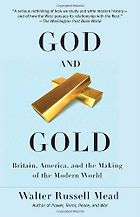
Your next two books are both very recent books, and they’re not by people who are thought of as very conservative writers. One is Walter Russell Mead, God and Gold: Britain, America and the Making of the Modern World, 2007. It’s a grand sweeping theory of history, a rumination on the history of US power which, as I understand it, argues that Americans and others in the Anglosphere keep imagining that liberalism and capitalism will bring about a day of peace and prosperity around the world, yet history keeps tripping them up. Why Walter Russell Mead?
Definitely not because he’s a conservative, because you’re right, he’s not a conservative. I think it’s important for conservatives to read books that are not by conservatives. Non-conservatives have very important things to say about the world as well. Of course in some sense Mead is very difficult to categorise. I mainly think of Walter Russell Mead as just about our smartest and most lucid commentator on international affairs without the need to impose a label on him.
What is the important insight in this book?
There are lots of important insights. I think it’s extremely valuable because the question of the meaning of American power got raised anew during the two terms of George W Bush because of the September 11 attacks. The Bush administration response was to launch a war in Afghanistan, to launch a war in Iraq and to declare, as part of American policy, the spreading of democracy and liberty abroad. The bad reaction of much of the world to that policy and the obstacles that the Bush administration confronted, the failures of the Bush administration, all of that made the question of what is American power, what is it good for, where did it come from, what lessons should we draw from history, recent history, past history, made these questions very important.
What do you take from Mead by way of an answer?
I start with Mead’s conclusion that for all of America’s errors and excesses, no country has done more to promote liberty, democracy and prosperity of human beings around the world than the United States. In other words, the United States is absolutely essential to most of the things that we prize.
He’s also got a wonderful line toward the end: ‘The triumph of liberal democratic capitalism has given new power and new energy to the forces that oppose it.’ A fascinating paradox. Is there a warning here against the notion that America can remake the world in our own image, steer history and so on?
Absolutely. On the one hand, the book is a history book. It explains that America did not come on the scene out of nothing. We inherited the liberal, capitalist, international maritime order that the British created. The Brits inherited the liberal, international, capitalist, maritime order that the Dutch created. It’s been a source of prosperity to the world and it has promoted peace. Another point that Mead makes: he speaks of ‘order’ – this Dutch, then British, then American order. What distinguishes order from a word that critics like to use, empire? It’s very important. He says the difference is that in an order, states that are brought in are themselves encouraged to eventually become free, liberal and democratic. Great Britain has an excellent record: Canada, Australia, New Zealand, Singapore, Pakistan, India, Hong Kong. Then, go back and think of other empires in history. Wherever did you have an empire that encouraged its colonies to become free and democratic? Similarly in the United States, where do you have a victorious power, in this case after WWII, which dedicated itself to reconstructing an international order and, beginning with its archest enemies – Germany and Japan – encouraging them to become free and democratic? If this is an empire that the United States has created, it’s an empire that’s unlike anything the world has ever seen before – notwithstanding America’s very serious and costly errors and excesses.
Now, having said that, we need to circle back to your question. Mead does not make the argument that America’s success has been foreordained; he makes the argument that it’s been good for the world. His complex and riveting historic account also instructs us that America has certainly also been guilty of hubris, that the world is much more complicated than American policy makers often appreciate, and that the Bush administration project itself did not sufficiently take into account the world’s resistance and recalcitrance.
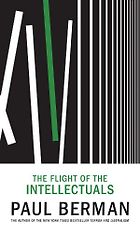
Your last book is hot off the press: Paul Berman’s The Flight of the Intellectuals, published in April. Paul Berman is someone I tend to think of as someone on the liberal side of things, though I could be wrong…
No, you’re right.
This book enters a particular debate at a particular moment. This is a moment when large numbers of Islamic immigrants are present in Europe and a debate is taking place in Europe whether there is a fundamental clash of values and whether in fact this immigration may undermine liberal principles in Europe. Where does Berman come in? Why is he on your list?
Berman is on my list because he addresses two subjects that should be and are certainly of great interest to conservatives, but should be of interest to all thinking people. Those two subjects are Islamic extremism and the role of intellectuals in our politics. As you’ve already nicely said, Europe is facing a very serious challenge in connection to the assimilation of large numbers of immigrants who are Muslim. This is true in Germany, France, the Netherlands and Britain. Moreover, the United States faces a problem because on September 11 we were attacked, and not for the first time, by Islamic extremists who have declared war on the United States, and have declared a kind of war in a way in which they ask for no return of land, no change in our government or no change in this policy or that policy, but seem to be opposed to our very existence as a free and democratic nation. Islam and Islamic extremism, which I don’t equate, are very central issues, it seems to me, for the United States and for Europe today. So that’s one reason why I am interested in Berman’s book.
The second reason I am interested in Berman’s book is because he looks at the role of the intellectuals in confronting this issue. The book, as you know, is a considerable expansion of a huge article that appeared in The New Republic a couple of years ago on Tariq Ramadan. Tariq Ramadan is the grandson of the founder of the Muslim Brotherhood, he is handsome, he is suave, he is intelligent, and he has been embraced by many intellectuals in Europe, where he grew up and where he lives, as the model of the moderate Muslim, who provides a way of reconciling the claims of traditional Islam with the politics and the morals of modern liberal democracy. Paul Berman is suspicious. The book was, as was his article, a kind of detective story which closely examines Ramadan’s statements, closely examines the doctrines and the practices of Islamic extremism in order to determine whether Ramadan is the moderate that many European intellectuals take him to be or whether he is a kind of wolf in sheep’s clothing whose ambition is to insinuate radical Islam into the very heart of European civilisation.
Get the weekly Five Books newsletter
Is there also a broader critique here of a double standard in which those advocating multiculturalism and opposing Islamophobia are given every benefit of the doubt, whereas those advocating standards of liberty are raked over the coals by intellectuals?
Well, that’s easy, yes. The final chapters of Berman’s book deal with the case of Ayaan Hirsi Ali. She was very severely attacked by Ian Buruma and Timothy Garton Ash, two distinguished journalists, as an ‘enlightenment fundamentalist’. She was dismissed as a woman who fled from one dogma, the dogma of extremism, to the dogma of enlightenment, whose attacks on Islam were extreme if not unhinged – whereas Tariq Ramadan was treated with great respect. What Berman attempts to show is that we have very good reasons to be a great deal more sceptical about Tariq Ramadan, although it’s a complicated case. People should read Berman’s book because he draws no easy conclusions about Ramadan.
Themes often emerge in these interviews and in your case, with the exception of Walter Russell Mead, four of your five books, in their very different ways, argue for pushing back against a kind of creeping relativism. They argue for regrounding classical liberalism, enlightenment liberalism as a fighting cause for certain virtues and values that we hold dear.
I would say that is what has interested me about all these books and especially in bringing them here to discuss with you. All five of these books teach us something important about how we, today, are failing to understand, appreciate and defend our liberty.
Five Books aims to keep its book recommendations and interviews up to date. If you are the interviewee and would like to update your choice of books (or even just what you say about them) please email us at editor@fivebooks.com