Philip Plait urges us to remember that “science isn’t an encyclopedia of facts to memorise. It's alive." The astronomer and author of the acclaimed Bad Astronomy blog discusses books that can't help but light the fire of interest in all things astronomical. He looks at how we can date the age of the universe, the danger of solar flares, and why Pluto is no longer classed as a planet.
You’ve made a career out of combating ignorance of astronomy. What inspired you to start?
When the Internet was new I was in graduate school studying astronomy, and a lot of people were writing web pages filled with misinformation about the universe. I thought these bad ideas presented a good opportunity to actually talk about astronomy, so I started writing about them. The name “Bad Astronomy” became obvious and I haven’t looked back since.
Before we talk about the five guides to our galaxy you have selected, please remind us what is outside our atmosphere?
What’s outside of our atmosphere is everything but the Earth – space on a scale that is hard to imagine. The Earth is huge. It would take a full day in an airplane to fly all the way around it. But the Earth’s circumference is tiny compared to the distance to the moon, over 200,000 miles away, the distance to the sun, 90 million miles away, or the distance to Neptune, billions of miles away. And that’s just our solar system.
Outside of our solar system, there is nothing but empty space for trillions of miles to the next star. There are something like 100 billion stars in our galaxy, shaped into a flat spiral disc. And beyond the Milky Way there are probably hundreds of billions of other galaxies in the universe. The scale of space is so immense that it crushes our sense of scale to dust. But we do have numbers we can hang on to. We can use maths and physics to try to understand.
What’s the difference and relationship between cosmology, astronomy and astrophysics?
The joke is: if you’re sitting next to somebody on an airplane and you want to talk to them you say you’re an astronomer, and if you don’t want to talk to them you say you’re an astrophysicist.
“The scale of space is so immense that it crushes our sense of scale to dust. But we can use maths and physics to try to understand it.”
An astronomer is someone who observes the sky. I am an astronomer. There are professional astronomers who do it for a living, and there are amateur astronomers who still have fantastic equipment and incredible knowledge of the sky. An astrophysicist applies the science of physics to astronomy. They study how planets move, how stars form or why black holes exist. Every astrophysicist is an astronomer, but not every astronomer is an astrophysicist.
Cosmologists are a subset of astronomers and astrophysicists who study the universe as a whole. They want to know how the universe came to be, how it’s changed, where it’s going and how it’s evolving. So they’re studying the universe as a whole, instead of specific things inside of it.
And, ahem, what is an astrologist?
Astrology is the old idea that the cycles in the sky somehow have an effect on Earth. In some sense, that’s true: We have seasons, the sun rises and sets and all of that. But some people believe that the planets, stars, sun and moon have a direct effect on people’s lives which can be foretold through a horoscope. That’s just not true. First: There’s no physical force that could do that. Second: Scientists have rigorously tested the validity of these claims over and over again, and it’s been shown that what most people think of as astrology is without validity. It’s a psychological effect, there’s no real science behind it.
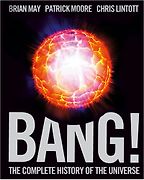
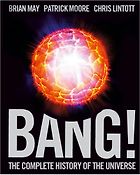
Bang! is the first book you selected, subtitled “A Complete History of the Universe”. Please give us a précis.
This book is a general overview of astronomy, and doesn’t go into detail about any one thing. It basically takes the reader on a tour of the entire universe, and tells you everything you want to know. When I was a kid, I loved books like this. I would read them cover to cover. There were so many of them out there and there have been many since. Most don’t hit me hard but I really liked this one.
It’s beautifully described, accurate and they feature fantastic photography. If you like astronomy and those Hubble pictures on the Internet, don’t know much but would love to learn more, this would be a great book for you.
It sounds comprehensive, but I can’t ignore that one of the three authors is the founding guitarist of Queen.
Patrick Moore and Chris Lintott are very famous astronomers in England from a long-running BBC series called The Sky at Night. The third author is Brian May, the lead guitarist for Queen. That may sound funny, but he has a PhD in astronomy and became a very good astronomer.
Bang! tells the birth story of the universe and even gives a birthday for the universe. How did science estimate that date?
If you were to ask me what is the single most amazing thing that science has ever done, I would say: calculating the birthdate of the universe.
There are so many different creation myths. But now we have the ability to measure things. Take the Earth: We can estimate its age through a lot of different techniques, like radioactivity, continental drift and how long it would take the Earth to cool after it was formed. All of these measures point toward an age of about four and a half billion years.
“If you were to ask me what is the single most amazing thing that science has ever done, I would say: calculating the birthdate of the universe”
Then by looking at the sky we can put an age on the universe itself. We learn that the universe is expanding, and by reversing the clock you can calculate when the universe must have started expanding. There are a lot of different ways of doing that, by studying galaxies or galaxy motion. Using radio telescopes, you can see a glow across the whole sky that is basically the leftover cooling fireball from the Big Bang. By very carefully measuring that lingering glow – using complicated but well understood physics – you can calculate how old the universe is. You get an age of about 13.7 billion years.
Your book Death From the Skies! is also an astronomy primer with an exclamation point in the title.
My book is specifically about objects in space that can damage us in some way – asteroid impacts, solar flares, black holes, galaxies colliding, stars exploding and all the fun violent stuff in the universe. I wrote it as a serious book, in that the science is as accurate and up-to-date as I could possibly make it.
But I aimed to make it like getting on a rollercoaster: It’s scary while you’re on it but then when it’s over you think, Phew! The two catastrophes that have the highest chance of happening are an asteroid impact or a big solar flare damaging our satellites and our power grid.
“The two catastrophes that have the highest chance of happening are an asteroid impact or a big solar flare damaging our satellites and our power grid”
There are preventative measures we can easily take to prepare for those. The other scary scenarios you hear, like a black hole swallowing the Earth or a nearby star blowing up, would happen too far in the future for us to worry about.
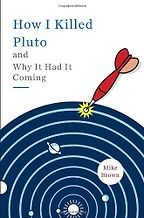
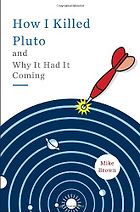
Let’s home in on our own galaxy by talking about astronomer Mike Brown’s memoir How I Killed Pluto and Why it Had it Coming.
Mike Brown is a planetary astronomer. He studies ice balls in the outer solar system. Earth is a rocky, warm planet near the sun. Jupiter is a gas giant farther from the sun. And, out past Pluto, there are gigantic balls of ice that were discovered in the 1990s. They range from very small to hundreds of miles across, and we think there are hundreds of thousands of them. It turns out Pluto looks very similar to them, so in the 1990s astronomers began to ask: is Pluto the smallest example of a planet in the solar system, or the biggest example of an ice ball?
Mike Brown was finding objects that were as big or possibly bigger than Pluto in the outer solar system. His discoveries triggered this debate about how we define what is a planet. How I Killed Pluto and Why It Had It Coming is a wonderful first-person account about his journey, and his personal life as well as his professional life. It’s a great story.
Get the weekly Five Books newsletter
Mike’s a friend of mine but the real reason I love this book is because I had wrestled with this idea of defining a planet. There was an official definition of what a planet is and I didn’t like it. No matter how people define the word planet I can always find an example of an astronomical object that looks like a planet but doesn’t fit their definition. It occurred to me as I was reading his book—maybe it’s not a good idea to have a definition of a planet. It’s a better idea to just have a concept of what one is.
What is your concept of what a planet is?
In the book, Mike talks about how a planet is something big and important in the solar system. In other words, the solar system would be substantially different if you removed a planet. That is certainly true of the Earth and of Jupiter. If you deleted either, it would change the configuration of the solar system. On the other hand, if you removed Pluto nothing much would change. There are other objects the same size as Pluto out there and there are thousands of objects that are somewhat smaller.
The decision to demote Pluto was made by the International Astronomical Union. How does that work?
It’s a society of professional astronomers from all over the world that gets together every few years at symposiums and presents new scientific findings. They’re the ones who answer the question of what is a planet. They literally voted on the definition. There was a small committee who argued back and forth.
People who observed the skies favoured one definition, dynamicists who work out the physics of motion of the planets favoured another. If you ask me, the very fact that all of these people were arguing should indicate that the definition isn’t cut and dried, and maybe it’s not a good idea to issue a rigid one.
As we’ve learned over and over again, nature loves putting things on the boundary between categories. There are objects out there that are sort of like planets but sort of like stars. People have argued about what to call these things. Is it a star or a super planet? Nature doesn’t care what you call it, and I don’t think we should either. We should let the object’s physical characteristics tell us what it’s doing, not some name that we decide to call it.
It might be impossible to define, but I still want to ask: what is a star?
We’ve tried to define what a star is and it’s not easy. When we look up in the sky, all of the stars that we see are gigantic balls of gas. The pressure in the centre has compressed that gas to the point where the very nuclei of the atoms themselves – hydrogen, helium, carbon and heavier elements – are all squeezed together. A star is defined as an object that does this, or has done it in the past.
“We’ve tried to define what a star is and it’s not easy”
There are all kinds of stars. There are stars like the sun. There are dead stars. There are proto stars. A black hole used to be a star. So, just as with planets, I think a star is more of a concept than something you can rigorously define.
The news is sometimes filled with fear-stoking stories about solar flares – planes rerouted, power grids disrupted and so on. What is a solar flare and should we worry about them?
A solar flare is an explosion on the sun, caused when the magnetic field lines of the sun get all tangled up and then suddenly burst. A flare releases huge amounts of energy, but rarely causes trouble on Earth. They launch a big wave of subatomic particles into space. When those hit the Earth they can cause aurorae, and sometimes damage satellites or even cause power grid overloads, which happened in 1989 in Quebec.
That doesn’t happen often, but I wish power companies would take the risk more seriously and plan better for such an event. That’s really the only serious risk to us on the ground – the Earth’s air stops the particles completely so they can’t reach us.
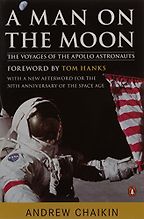
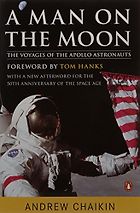
Now let’s talk about man’s attempts to explore our galaxy. We’ve gotten as far as the moon, although millions still believe we never actually landed. In Man on the Moon Andrew Chaikin documents the story of the Apollo space programme and the astronauts who manned the missions.
Man on the Moon is a fantastic book. I had so many people recommend it to me by the time I met and became friends with the author, Andy Chaikin. So I decided, I’ve got to sit down and read this book. The thing is, it’s huge – almost 700 pages. But I could not put it down when I started reading it. Andy just tells such a good story. It’s a history of the Apollo missions, telling why we went to the moon, what happened when we got there, and why we stopped going after Apollo 17. The Tom Hanks HBO miniseries From The Earth to the Moon is based on this book.
I’ve debunked the idea that the moon landings were fake I don’t even know how many times over the years. I became a bit jaded. Reading this book lit the fire under me again and made me realise that telling the true story of one of the greatest adventures mankind has ever undertaken is worth doing.
As you say, you spend a lot of time debunking myths, including the one that the moon landing was faked. Why do so many of these myths exist?
Some are fun to believe in. Some seem to make sense when you first hear them – like the idea that the moon looks big when it’s setting on the horizon because the air acts like a lens. That’s not true at all. In fact, the moon looks squishier when it’s setting. Other ones, like conspiracy theories that NASA faked the moon landing, are more difficult to comprehend why people buy into them, other than the fact that conspiracies do exist and many of us have a mistrust of government.
Get the weekly Five Books newsletter
When you read the moon landing myth sites, they show you pictures that say: why aren’t the shadows pointing in the same direction? Why aren’t there stars in the sky? You become sceptical but it turns out the shadows are pointing in the same direction, it’s just perspective that makes them look like they’re not. And you can’t see the stars in the sky because when they were taking photographs they were brightly lighting the lunar landscape, so the stars just don’t show up. You can show step-by-step that all of these arguments are wrong, but they still bamboozle people.
What do we learn about the galaxy by reading this book?
The first astronomical object you get to when you leave the Earth’s atmosphere is the moon. It is the closest cosmic neighbour we have, and you can see it with your naked eye. You can even see features on it, such as the scars of gigantic impacts. When Galileo looked at the moon 400 years ago he could see that it wasn’t a smooth world, and that the blue spots on it weren’t oceans but craters. When you look at it with a big telescope today, you can see thousands upon thousands of impacts.
“The first astronomical object you get to when you leave the Earth’s atmosphere is the moon. It is the closest cosmic neighbour we have”
Man on the Moon gives you profound insight into the history of the Earth. The fact that the moon – which is a quarter of the size of our planet – is covered in craters from impact means that the Earth must have been hit even more. We’re bigger, we have more gravity, so we would have pulled in more comets and asteroids.
The Earth’s history must have been profoundly shaped by impacts, yet we don’t see any trace of them. That’s because unlike the moon, the Earth undergoes erosion, there’s been continental drift, there’s water, wind and whipping air. Over millions and millions of years those craters have mostly been swept off the Earth. Yet the history of our planet was literally shaped by impacts; that’s the lesson of the moon.
In his own interview with us, Andrew Chaikin was optimistic about the future of space travel and predicted average Earth dwellers would orbit our planet on their honeymoon in the near future. Do you share his optimism? And could growing ranks of space travellers help demystify the universe for those who fear it?
If you have enough money you can go into space as a tourist now. Virgin Galactic, Richard Branson’s company, is already selling tickets for people to go into space, 62 miles above sea level. Those flights may start as early as this year. They’ve already sold quite a few tickets. So you have to be able to afford it, but it’s possible.
There are also companies who are talking about building inflatable habitats that orbit the Earth, and a couple of these have already been tested. So space hotels may exist not far in the future. It’s never going to be easy to get into space, but it will happen far more often and you will be seeing advertisements for honeymoons in space.
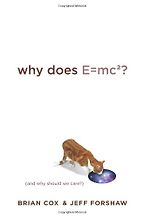
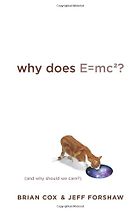
Next, you name a book that aims to explain our galaxy’s most famous equation in an accessible way. Tell us about Why Does E=mc2?
This book, written by Brian Cox and Jeff Forshaw, is wonderful. Brian, who is a friend of mine, is a physicist in England. By exploring the equation “energy equals mass times the speed of light squared”, this book helps you to understand why the universe is what it is.
It walks you through how Einstein came up with the equation, and why the universe behaves the way it does. I have a PhD in astronomy so the material was familiar to me, but Brian and Jeff do a brilliant job of walking the reader through Einstein’s equation. If you make just one assumption – that light travels at a certain speed, and you give that a number you call “c” – then everything falls into place in the universe. You find that mass and energy are two sides of the same coin. One can be converted to the other. And the amount of energy you get out of a handful of matter for some reason depends on the speed of light. If you read this book – and I’ll admit some of it is a little tough – you will understand how the universe works.
What will the average reader learn about the meaning of time and space by reading it?
That we’re not making this stuff up. Science isn’t an encyclopedia of facts to memorise. It’s alive, and it’s the process of how we expand our understanding of what goes on here on Earth and beyond. Even if the average reader doesn’t grasp every detail, they will see that there was a step-by-step way of achieving this understanding about our universe. That, to me, is the goal of teaching people about science.
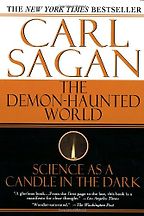
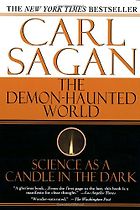
Your last book selection is by the most famous American astronomer of recent times, Carl Sagan. Tell us about The Demon-Haunted World.
Carl Sagan has written many books, and there’s not a single one I wouldn’t recommend. The way he writes, he holds your hand and shows you the wonders of science and the universe. The Demon-Haunted World, a discussion of the history of science and why it’s so important, is probably his best book. Science has shown us that it’s not demons that make thunder. Science has solved the mysteries of the universe that we once used myths to explain. The universe is not a strange, chaotic place – there are rules to it.
“Science isn’t an encyclopedia of facts to memorise. It’s alive, and it’s the process of how we expand our understanding of what goes on here on Earth and beyond”
Carl Sagan’s two gifts to the world were first, to make science fun and approachable through his television series Cosmos. And second, to show how important critical thinking is. In this book, he takes on the paranormal and talks about the myths that exist to explain the unexplained. He doesn’t denigrate people who believe in, for example, alien abduction. He shows us how to approach problems sceptically and honestly, and not to make fun of people we disagree with but just to see them as having fallen prey to a quirk of thinking that, like an optical illusion, puts them on the wrong path.
Is this the book that inspired your own efforts to debunk urban legends about our galaxy, through your blog and book Bad Astronomy?
I wouldn’t say that, but I read it around the time I started doing this stuff so it was certainly there to inspire me along the way. There are times when I’m stuck, when I don’t know how to tackle a problem or when somebody is making fun of me for thinking there’s a scientific explanation and it’s not ghosts. Those are the times I think, “What would Sagan do?” In that sense, he certainly is an inspiration to me.
What are the myths about our galaxy that you’ve taken the greatest delight in debunking?
I don’t know if I’ve ever taken delight in debunking. Most of the time it’s a pain in the butt. One of my favourites is the urban legend that toilets flush and sinks drain the opposite way in the southern hemisphere. Totally wrong. But hurricanes do spin opposite ways in the opposite hemispheres. So by debunking one myth we are led to discover the science behind what it’s like to live on a giant rotating ball, and how that effects motion. It becomes a lot of fun. I get to probe the science behind the myths and I quite enjoy that.
So uncloaking pseudoscience is a way to enlighten about real science?
Yes. It’s also a way to share my love of science and reality. Some people don’t like science because it was taught to them as a set of knowledge, instead of the exciting ongoing process it really is. Science is an adventure that never ends.
December 10, 2012
Five Books aims to keep its book recommendations and interviews up to date. If you are the interviewee and would like to update your choice of books (or even just what you say about them) please email us at editor@fivebooks.com
Five Books interviews are expensive to produce. If you've enjoyed this interview, please support us by donating a small amount.
Philip Plait
Philip Plait is an astronomer. He received his PhD in astronomy from University of Virginia, and has worked on the Hubble Telescope. On his blog badastronomy.com he debunks myths about our galaxy. Plait is the author of BadAstronomy and DeathFromtheSkies!. An asteroid was named after him in 2008
Philip Plait is an astronomer. He received his PhD in astronomy from University of Virginia, and has worked on the Hubble Telescope. On his blog badastronomy.com he debunks myths about our galaxy. Plait is the author of BadAstronomy and DeathFromtheSkies!. An asteroid was named after him in 2008