Tell us about the United States Agency for International Development (USAID).
We work with other governments, private partners and civil societies all around the world with the goal of extending opportunity to the most vulnerable and poorest people in the world. Our mission encompasses saving kids from unnecessary death due to preventable disease, preventing hunger and malnutrition in destabilising communities, and providing support for the spread of democracy and democratic institutions during unique moments in history, like the one that the Middle East is in the midst of. It’s very exciting to be a part of USAID.
Some say that US assistance is not enough relative to US GDP.
Well, we’re the largest development partner of any country in the world. USAID alone manages about $24bn in development investment annually. President Obama wants to double our commitment to foreign assistance over time. But to do more we need to convince the American people that foreign assistance generates results that create a better world with more opportunity and security. And that investing in development is far better than the alternative, which could be sending troops into harm’s way after places fall apart. We work hard to use our resources efficiently and we want to do more.
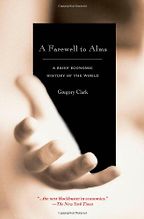
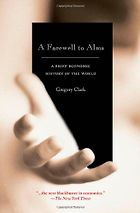
Your first book choice is economic historian Gregory Clark’s A Farewell to Alms.
Its subtitle promises “a brief economic history of the world”. Please give us a précis of the book and Clark’s guiding thesis.
It’s a very exciting book that shows how for hundreds, even thousands of years basic economic progress was largely stagnant. As economies were able to produce more food, populations grew. You didn’t have rapid compound increases in living standards until around 1800. Around then, the industrial revolution and its precursors created a massive divergence. Some countries and some societies got on a pathway towards growth – towards better health, longer life expectancy, higher income per person and more investment in education. While other countries remained on a slower-moving pathway.
That great divergence, and the study of it, is at the core of development. It is that divergence which we try to learn from and correct for. We define success in development as helping communities and countries get on that pathway towards improved health and education and greater wealth creation.
Clark concludes that some societies failed to take advantage of the availability of modern technology because their cultures were antagonistic to development.
I disagree with Clark here. With the right conditions in place, you can unlock a formidable work ethic from a range of different cultures and communities. The last 50 years have shown us that. I didn’t choose this book because I think it is the definitive story on development, but rather because I share its focus on core economic growth as the driver of divergence.
The Nobel prize-winning economist Robert Solow says that Clark discounts institutional reasons why development is difficult in some countries – cronyism, inequitable taxation, ineffectual government.
What role do these institutional factors play?
Solow is absolutely right. Institutions are very important. I keep referencing the Solow growth model, which defines the core driver of economic growth as technological innovation. We try to make science, technology and innovation a bigger part of what USAID does around the world.
How can foreign assistance be structured to strengthen recipient country institutions?
By investing in local capacity and local institutions, we can leave a legacy of economic infrastructure, strong and capable leadership and transparent, effective public and private sector institutions. USAID’s partnerships in Latin America, or with South Korea, helped country after country develop strong institutions. Unfortunately, there have been examples where aid and assistance have been provided in a manner that was not as sensitive to building lasting local capacity and local institutions. This is true for all partners, not just our agency. That’s why we’ve launched a programme called USAID Forward, to refocus on working in a way that will create durable and sustained progress.
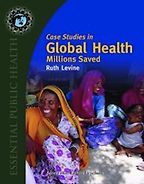
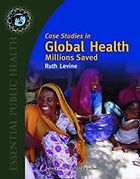
Next are the development success stories encapsulated in Millions Saved by Ruth Levine and the
What
Works
Working
Group
.
I participated in this working group. We got hundreds of examples of potential success stories, and chose those that were based on the most rigorous data and that succeeded at scale. These aren’t about saving two lives in one village somewhere, although that is important to do. These stories are about transforming the health of entire countries and reaching hundreds of thousands over time. All these projects also built institutional capacity that was sustained after the donors went away.
This book demonstrates that smart, well-constructed investments in global health can achieve widespread impact on the way people live. Some of the big successes they discuss include iron and iodine fortification, which improved the overall level of human health and nutrition. And in the field of family planning, by reducing the population growth rate, development programmes created the underlying basis for economic growth. These are very important examples and the book also defines some of the characteristics that are common across them. For instance, the success of most of these projects was attributable to working in partnership with local and regional partners. The book also highlights the need to have really strong evaluation and data collection, because often when you launch these programmes they don’t work right away – we need information to understand how they’re performing, and adapt.
Please give us an example of one specific lesson learned in the field of public health that USAID is putting to work?
In our Feed the Future programme, we have taken all of the best practices of this report and put that into how we design food security programmes around the world. We build partnerships with local institutions, do rigorous reporting and evaluation, choose projects that are scalable and design projects that can be sustained after our money ebbs away.
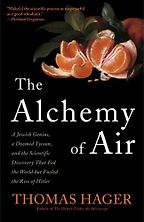
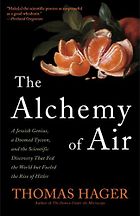
Let’s turn to an easier read, An Alchemy of Air by Thomas Hager.
What is this book about?
This book reminds us of the serendipity of scientific inquiry. It’s about the invention of fixed nitrogen fertiliser, which a chemist named Fritz Haber developed as an offshoot of World War I weapons research. That single invention dramatically improved food production, and helped support the massive population growth that took place over the last 70 years. When people think about fertiliser, “world changing” may not be the first phrase that comes to mind. When we think of dramatic inventions, we think of iPhones or airplanes. But fertiliser has made modern life possible. In retrospect, it’s one of the most important technological innovations of the 20th century.
I read that half the world is fed by food grown with the 100 million tons of nitrogen fertiliser produced annually.
I know that this discovery boosted crop yields, but isn’t the spread of synthetic fertilisers altering our ecosystem?
And how?
The application of nitrogen-based fertiliser is very, very different around the world. Where it is overused it can have significant negative consequences for local ecosystems. In some countries, like China, they use almost 160 kilogrammes of fertiliser per hectare. While in the US I think a few years ago the number was 60 or 70kg per hectare. And then there’s the countries that use virtually no fertiliser. In sub-Saharan Africa or dry-land South Asia, where most of the world’s poor farmers struggle to produce enough food to feed their families, they use about 8kg per hectare. Where fertiliser is not used, you see children going to bed hungry every night and an increase in the number of children who are stunted over 30 or 40 years ago. If children don’t get adequate nutrition their brains don’t develop, and they can’t learn and contribute to society to the extent of their capacity. So the story of the application of fertiliser and the disparities of that application tell the story of both environmental consequences and of really desperate human consequences.
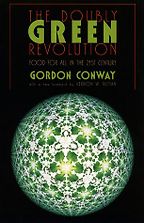
The challenge of balancing development against conservation leads us directly to your next choice, The Doubly Green Revolution by agricultural ecologist Gordon Conway.
This is a dense read by a wonderful leader in the field of agriculture who went on to become president of the Rockefeller Foundation. It’s probably one of the more important stories in human history. After World War II, it was common to suggest that hundreds of millions of people would starve to death. It was acceptable to nod in agreement with Malthus that people die because of lack of food and that’s a part of life we must accept. [The American biologist] Paul Ehrlich wrote a 1968 book called The Population Bomb which spread that notion. This is the counter-story.
It’s about how scientific breakthroughs helped countries like India become food secure and laid the groundwork for rapid economic growth. One of the stories is that of [American agronomist] Norman Borlaug, who invented a new form of wheat that helped feed the world. His invention saved hundreds of millions of people from starvation – combined with a focus on bringing farmers together with scientists, local governments and private sector partners. It’s one of the most important success stories in global development. A USAID administrator at that time used the term Green Revolution to refer to the spread of new agricultural technologies. Now we are implementing a programme called Feed the Future to replicate that kind of dramatic success in parts of Africa and South Asia.
How can foreign assistance encourage doubly green development?
The book talks about knowing your customer. In areas in most need of agricultural assistance, customers farm one, two or maybe five acres of land. They grow six or seven different crops. Most of their yield goes to feed their families. Some excess production might get into local markets, if they can get there. These farmers tend to produce a quarter to an eighth of what they could produce if they used some very basic things – fertiliser, better seeds and modern planting methods.
Foreign assistance and development partnerships can help farmers get access to better seeds and locally appropriate fertiliser. Development partners can help farmers learn how to improve their practices. They can bring private companies and other potential food buyers to those communities. By doing these simple things, we can help entire countries and entire continents become more food secure and dramatically reduce child malnutrition. That’s what we’re doing through our Feed the Future programme. And we think we can do it in a manner that is very environmentally responsible.
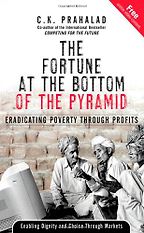
Finally, tell us about Fortune at the Bottom of the Pyramid.
CK Prahalad, who was a brilliant Michigan business school professor, argues that the billions at the bottom of the [socio-economic] pyramid can be helped profitably. He goes through a series of case studies which show that very poor people around the world often pay a lot of money for some very basic things. That means small entrepreneurs and big companies can design and sell products and services to the poor that will both improve lives and help business. To take one example, in Kibera, which is outside Nairobi and one of the largest slums in East Africa, people actually pay quite a lot for clean water. If you can invent and sell water purification systems or purification packets, you can save lives, improve the quality of life for that community and make enough money to at least sustain business operations. It’s those kind of opportunities, which people don’t normally think of, that are currently transforming parts of the poor world.
How does USAID put Prahalad’s
teachings into practice?
We’ve done a number of things. One example is that we’ve launched a Development Innovation Venture Fund to support these types of entrepreneur. For instance, people who might have a new technology that can diagnose malaria by cell phone in a cheap and effective way, or people who are developing new, accessible, off-grid energy sources that can provide light where there is no electricity architecture. We’re now funding these entrepreneurs all around the world so they can create the next set of solutions to save lives and raise living standards.
The subtitle, Eradicating Poverty Through Profits, over-promises a bit, doesn’t it?
What is the best we can hope for in terms of reduction of destitution?
The reason I like these books is that they talk about specific innovations that transformed the lives of millions within mere decades. They all give me a sense of how much can be accomplished in our lifetimes. The authors of these books probably would agree that eradicating extreme poverty and human suffering is within our reach. We all need to aim high to make the world a better place.
Five Books aims to keep its book recommendations and interviews up to date. If you are the interviewee and would like to update your choice of books (or even just what you say about them) please email us at editor@fivebooks.com
Five Books interviews are expensive to produce. If you've enjoyed this interview, please support us by donating a small amount.