In October 1911, China’s last imperial dynasty fell. The legacy of that revolution remains deeply ambiguous in today’s People’s Republic. China scholar Rana Mitter tells us about the country’s tumultuous changes from 1911 to the present day.
In October 1911 the revolution that overthrew China’s imperial dynasty began, a period that would see the establishment of a Republic and the holding of national elections. What legacy of the 1911 revolution and its vision for a modern nation can we see in China today, or have the changes of the 20th century been so dramatic that there is none?
One of the ironies a century on from the revolution of 1911 is that in some ways China is a completely different country from what it was a century ago – everything from the skyscrapers of Shanghai to the massive development of rural areas in western China – and yet many of the problems that the revolutionaries of 1911 were trying to solve are still very relevant to China today.
The questions of what is the Chinese nation state – is it an empire, a republic? – and how does the government relate to its people are questions that are very pressing at the present day, and were in the minds of the 1911 revolutionaries as well. The sense of social crisis is very real [today]. If you go out into the countryside, the growing economy has kept people at least reasonably happy in some parts of the country, but more broadly speaking it’s clear that there is a lot of social discontent and perhaps a downturn in the economy could create another social crisis for today’s government.
So in that way the revolution of 1911 has a lot of unpleasant echoes for the current regime, and I think that’s one of the reasons why – although there were celebrations marking the 100-year anniversary of the revolution in China in 2011 – they weren’t very exuberant. It’s partly because of an ambivalence on the part of the Communist Party about what that legacy actually means.
Is it also that the Communist Party doesn’t seem very keen to remind the public of a popular movement that successfully overthrew the status quo of the time?
That’s absolutely right. Clearly 1911, amongst other things, was the moment when the last emperor was forced to abdicate from the throne. Instead, China ushered in a republic – a very interesting, innovative experiment in government that didn’t go very well – but obviously the Chinese Communist Party doesn’t want to remind people that it is possible on occasion to overthrow the government.
It’s also because their own myth of legitimation comes from a different revolution, 1949, when the Communist party came out of the countryside and essentially managed to take over the entire country in a civil war. I think they would rather people looked at that revolution rather than 1911 – which has a much more ambiguous set of meanings. It’s much harder for the party to control what 1911 means, and that makes them nervous even in this day and age.
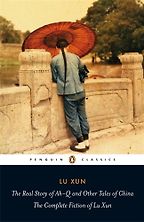
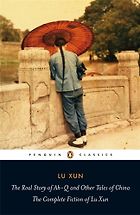
Let’s go back to the time when the Republic of China was still young, and around the time when China’s Communist Party was founded in 1921. Your first book choice is Call to Arms. It’s the first collection of stories by one of modern China’s most major and influential writers, Lu Xun. Why should everyone know the name of Lu Xun and how does Call to Arms sum up the mood of its time?
Lu Xun should be known to a wide range of readers overseas for two reasons. One – in a sense the more boring reason – is that he is politically very important. He’s always been brought up by the Communist Party as being the single most important writer of the 20th century in China. That’s partly because his message is about how China needed to radically reject its past associated with the Confucian system of ethics that underpinned the old empires, and instead embrace something more new and radical. You can see how that appealed to people involved in the Communist project.
But the real reason why people need to appreciate Lu Xun is that he was a very interesting and subtle writer. Interestingly, although the Communist party were very keen to get him on board, he never actually joined the party. I think this is because one element that runs through his writing which is absolutely core to his being is a very black, nuanced, sardonic sense of humour. Speaking of Communist literature, he once said – probably with a smile on his face – that the Communist idea of a perfect poem went as follows: “O steamwhistle! O Lenin!”
This particular collection consists of a series of short stories, most of which have very subtly – not in a way that shoves the message in your face – an underlying current of ideas about modern China. One of the most famous is “The Diary of a Madman”, homage in part to Gogol’s original in the 19th century, and based on the same idea that a public official who has suddenly gone crazy but actually sees things much more clearly than his supposedly sane counterparts, colleagues and family.
In this case, what he suddenly sees, in the light of the moon while he’s in his mad state, is that the whole of Chinese culture has consisted of cannibalism. He looks between the lines of the great Confucian classics of literary tradition, and sees that the secret message is “go and eat people”. This is clearly a metaphor for Confucian thinking – for the old-fashioned way in which Chinese society had been bound up in expectations of the past, which had almost become encrusted on society and from which they needed to break free.
These short stories were a real indictment of Chinese society as a whole. I should add though – and Lu Xun himself saw the irony – that when Call to Arms was first published, I think the first edition sold a grand total of 40 copies, so it didn’t exactly turn China upside-down on publication. Although there are many very fine English translations, the latest one from Penguin classics translated by Julia Lovell has a very colloquial, lively feel in its translation.
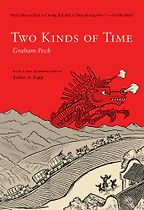
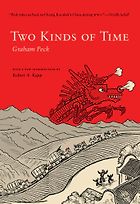
Jumping forwards to the 1930s and 40s, the two rival forces which arose after the failed promise of the 1911 revolution are Chiang Kai-shek’s nationalists and Mao Zedong’s communists. The book you’ve chosen here is an American perspective on events, Graham Peck’s Two Kinds of Time.
Two Kinds of Time is the only one of the five books I’ve chosen that’s not actually by a Chinese, but I’ve chosen it because it seems to me, of the fairly wide range of things you can read about World War Two in China, to be the single most evocative. It’s quite a long book but it actually goes by quite fast. One doesn’t have to make too much of an effort because the prose is so good. Of the many people who came to China in the 20th century and wrote about it, Peck remains one of the most fluid and sensitive.
His description of a Japanese wartime air raid over occupied China is one of the funniest passages I’ve read on China, which is actually rather odd considering the nature of the topic. This vision of people walking at first with dignity, and then deciding as the planes get closer that they’ll make a run for it and dignity be blown, is very nicely done. It’s not in any way mocking, he is someone who was a friend of many Chinese and lived amongst them. So it’s very much a story with the Chinese, rather than looking at them.
It’s also a very important book because it speaks about a very important historical moment which we’ve almost forgotten, which was the debate in cold war America about – as they put it – who “lost China”. In other words, why did China turn to the communists? Peck’s book is probably the best of those which argue that essentially America spent too long propping up the nationalist regime of Chiang Kai-shek that ruled China at the time, that became corrupt, hollowed out and ineffective – and that essentially cleared the way for the communists to take over, because the Americans clung too long to a failed leader.
The book itself is not important because of what it says about the interpretation, but rather it gives a fabulous picture of this moment when America and the West more generally and China try to come to an understanding and singularly fail, and unfortunately set the path, for the best part of a quarter of a century, for isolation from each other before things change again in the 1960s and 1970s.
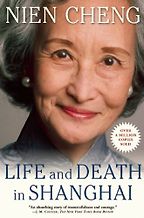
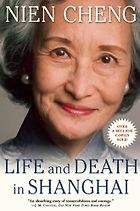
In his forward to the new edition of Peck’s book, Robert A Kapp says that when Peck died in 1968, those 20 years since 1949 when he wrote the book surely must have disappointed him. That’s an understatement of just how disastrous Mao’s helmsmanship of China was after 1949. What picture of China in the 1960s and 70s emerges through your third book choice, Nien Cheng’s Life and Death in Shanghai?
I think it’s right that Graham Peck was disappointed by the Cultural Revolution. This, of course, was essentially a revolt by Mao against his own party. Mao on one level fears that he is being sidelined by his own party, and on another level feels that the revolution had lost steam 17 years in. A new generation had been born that didn’t remember the struggles of 1949 and it was time to revitalise them and get them on the streets, to feel what a real revolution was like. That was Mao’s intention, and the results – from what we know – pleased him greatly, but they were much more explosive and wide-ranging than perhaps even he would have imagined, with terrible consequences for a very wide variety of people.
There are so many misery memoirs from the Cultural Revolution, and the period seems a bit of a Western obsession. Sometimes one can’t help but feel, “Oh God, not another Cultural Revolution book.” What is different about this book and Nien Chang’s experience that makes it worth reading?
This is a different sort of book from the perhaps overly wide range of Cultural Revolution misery memoirs that we tend to have on our bookshelves. I think a lot of these misery memoirs are published almost in a rather prurient way, as a means of trying to persuade Westerners that Chinese are really very different and “other” from Westerners, who would never do anything so irrational. I think it just takes a very brief glance at many aspects of Western history to realise that there’s plenty of irrationality there as well.
What I think makes Nien Cheng’s book rather different is it suggests a universalism about the possibility of any society suddenly turning itself upside down. That’s also true of many of the finest memoirs of the Third Reich – not that they suggest something very specific about Weimar Germany and Nazi Germany, but rather that any society given the wrong sort of stimuli could end up in that situation.
One of the ways in which the book becomes human and sympathetic is that, unlike some of the memoirs which distort the way in which the dynamics of the period operated, Nien Cheng doesn’t make herself a terribly sympathetic character. When you read through it, you won’t exactly find yourself cheering for the Red Guards, but she does take some care to show why, from the point of view of these young, relatively impoverished teenagers living in Shanghai, the lifestyle of someone with international connections and beautiful possessions might look in many ways very alien and even hostile from everything they had been taught.
In other words, the Red Guards are monstrous but she doesn’t make them into monsters. Nor does she make herself into a put-upon heroine, even though she spends a very long time in prison and clearly is treated very badly during the Cultural Revolution – her daughter is killed by Red Guards. It’s an appalling story. You don’t find in the end that it’s infused by self-pity, and that I think makes it a very powerful piece of writing. I think it’s not accidental that it was one of the first of these books to come out [published in 1987], and there was a bit more of an outpouring of these kind of things in the 1990s, so it was one of the first.
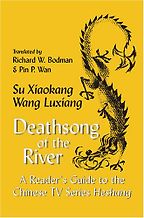
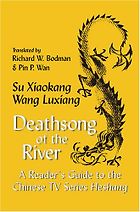
Let’s once more pull the lever on our time machine and leap forward to the summer of 1988, when a six-part documentary aired on Chinese television called “River Elegy”. As your fourth choice you’ve chosen its script in English translation. Tell us why you chose this, and what impact the documentary had on its time.
It’s basically the script for what – with a bit but perhaps not too much exaggeration – one might say was the most important television programme that has ever been broadcast in China, and maybe one of the three or four most important in the world. If you think about programmes that really made an impact on society, such as Cathy Come Home in Britain in the sixties or Roots in the States in the eighties – River Elegy is all of that but more.
Essentially it’s a sort of documentary with commentary, about why China in the 1980s – having emerged from the Cultural Revolution, and having had hundreds of years of history as a proud and confident civilisation – seems no longer to have that confidence in itself. The way in which the documentary makers look at this question is by examining the symbols of Chinese history – the dragon, the Yellow river, which have always been rather positive symbols – and instead regard them as negative.
In some ways there’s a lot of Lu Xun about this. Because once again, these are people looking at a history of revolution and essentially asking the same questions that Lu Xun and the others were asking at the end of their revolution: Why has China come so far and yet progressed, relatively speaking, so little? It was very daring. Amongst other things, it subtly – but not that subtly – attacked Mao as a false peasant emperor, and instead praised the idea of embracing the Pacific Ocean, which was code for the United States and American culture, as a way of trying to revitalise China.
In the ferment that was the 1980s this was a very powerful piece of programming. A hundred million viewers or even more, perhaps, saw it. It was very controversial after its first showing. Some members of the [Chinese] politburo actually tried to ban it. Other members insisted it must be shown again, and in fact it was. In a funny way the last showing of River Elegy, in August 1988, was one of the very last hurrahs of the more liberal order within the Chinese Communist Party, before the cataclysm that came the next year.
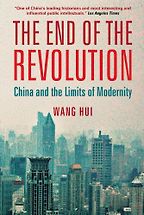
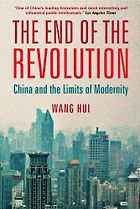
Finally we’re going to look at a contemporary book, published in 2009 – The End of the Revolution by Wang Hui, professor at Tsinghua University in Beijing. What is Wang’s central thesis?
Wang Hui is one of China’s most prominent public intellectuals at the moment, in terms of his international exposure. I think the book is interesting because it gives his very ambiguous – or ambivalent from his point of view – take on what’s happening in China today.
He is not someone who argues that the Communist revolution and what came after it has failed completely, or that there was no point in having it. That rather disillusioned viewpoint has been heard from Chinese scholars – many of them have, perhaps sensibly, gone into exile in Hong Kong or elsewhere. Wang Hui says that’s not true, there are still things that the Chinese revolution has brought in terms of progress and modernisation that we need to appreciate. At the same time, we need to understand the limitations of what that first set of revolutions was able to bring about and think about what’s realistic.
In a sense, he is also quite critical of many of the people who were part of the 1989 generation, simply because he feels that they were naïve about westernisation and what exposure to the Western world could do for China, rather than understanding China’s own social and economic conditions.
The book is also interesting because it gives an indication of how wide, and also how narrow, the parameters of this debate are in China today. It’s very clear that 20 years plus after [the] Tiananmen Square [demonstrations], China is still a very authoritarian society. It restricts freedom of speech in a variety of ways that would be unacceptable to almost any Western intellectual. On the other hand, it’s also clear that there is a very real and lively debate going on between a whole variety of different political positions – liberal, conservative, pro-revolution, anti-revolution.
Nobody is allowed to publish a book saying it’s time to overthrow the Chinese Communist Party – that’s not going to happen now or anytime soon. But discussions in another sense on the future direction of China are meat and drink for the more intellectual sorts of magazines in China, and figures like Wang Hui play a very important role in that debate. So to get something of the pulse of thinking in modern China a century after the 1911 revolution, Wang Hui is a really good starting point.
Do you feel that, as contemporary China forges its path in the coming decades, its rulers and its people are looking back at the revolutionary inheritance of the last century and trying to learn from it – or are they trying to put distance between themselves and it? After all, in China pretty much everything from the 1850s onwards is referred to as the “century of humiliation”.
I think the Chinese state, and more widely Chinese thinkers and people as they’re educated through the system, and doing now what they have been doing over the last century – which is to in some ways rather pragmatically use aspects of the part that are useful.
This is not to suggest that pragmatism is separable from genuine conviction or emotion. The Chinese people have felt that they have had, broadly speaking, a very raw deal from the rest of the world for the last 150 years – and there is much to that argument. One can’t dismiss that without having a full understanding of the violent and turbulent nature of Chinese history over the period from the 1840s all the way to the 1980s and beyond – perhaps even to some extent in the present day. Having said that, one of the things that’s very visible is that the Chinese state has always been much more conscious of its history than I think many Western states.
I think the current regime does find that the past is a useful tool for what it wants to do in the present and the future, but that direction can often be surprising. For instance, to take China’s World War Two experience, 40 years ago the way in which that experience was portrayed in contemporary Chinese politics under Mao was that it was a time when China had to learn to be self-sufficient. It was being attacked from outside, Western allies did nothing for them and it was a time for China to stand on its own two feet.
Now, that wartime experience is used in a rather different way. Instead China is portrayed as having been part of a wartime alliance against fascism, and capable of being a cooperative and useful actor in the world community. Which of course suits China very well at a time when it wants to be seen today as a major player in the UN, as a country that takes part in peacekeeping operations and which has a cooperative rather than a confrontational role in international society.
So the same event is taken but a very different reading of it is given to the wider population, and I think that tendency will not change any time soon. Because even though the history – or the part of the history that is emphasised – changes, the attitude that history is a tool that should be used has not changed.
Five Books aims to keep its book recommendations and interviews up to date. If you are the interviewee and would like to update your choice of books (or even just what you say about them) please email us at editor@fivebooks.com
Five Books interviews are expensive to produce. If you've enjoyed this interview, please support us by donating a small amount.
Rana Mitter
Rana Mitter is Professor of the History and Politics of Modern China at Oxford University, focusing on republican era Chinese history and the Sino-Japanese war. Mitter has written several titles on China, including ModernChina: AVeryShortIntroduction, and regularly presents Night Waves on BBC Radio 3
Rana Mitter is Professor of the History and Politics of Modern China at Oxford University, focusing on republican era Chinese history and the Sino-Japanese war. Mitter has written several titles on China, including ModernChina: AVeryShortIntroduction, and regularly presents Night Waves on BBC Radio 3