As long as they live in our memories, family members and loved ones who have died remain with us. That's what is celebrated on the Day of the Dead, an indigenous Latin American tradition that survived both Catholic missionaries and the modernizing state to flourish in recent years, featuring in more than one Hollywood blockbuster. Regina Marchi, a professor at Rutgers University and author of Day of the Dead in the USA, talks us through the origins, evolution and contemporary celebrations of the Day of the Dead.
NEWLY UPDATED
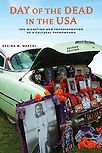
Day of the Dead in the USA: The Migration and Transformation of a Cultural Phenomenon by Regina Marchi
Before we look at your books, can you give a basic description of what the Day of the Dead is?
The “Day(s) of the Dead” or “Día(s) de los Muertos” refers to a two-day holiday observed in Latin American countries on November 1st and 2nd. It is a fusion of Roman Catholic rituals from All Saints’ Day and All Souls’ Day (when Catholics pray for the souls of the departed), and pre-Christian indigenous agrarian festivals that occurred throughout Latin America before the arrival of Spanish missionaries in the 1500s. The latter were rituals for honouring ancestors – you made altars on which you put harvest offerings to remember and thank the ancestors for their blessings. It was believed that the spirits of the dead were very active in helping the living to achieve success in things like having a good harvest or having a healthy family.
Can you take me through a typical celebration of the Day of the Dead in Mexico?
People who celebrate this holiday are Catholic, so they often go to a Catholic All Saints’ Day Mass on November 1st and then they go to the cemeteries to decorate family graves and leave offerings for deceased relatives. Those offerings will be things like flowers, candles, incense and special foods. They may leave tamales or fruits, or whatever the typical food of that region might be. It could be chicken with mole sauce.
It’s the same in other countries of Latin America. In Guatemala, for example, people prepare a dish called el fiambre – chopped and pickled meats and veggies – which is cooked exclusively for this holiday. In the Andean regions of South America, they have special breads they make only for the Days of the Dead, which they leave on tombs for the deceased. Those breads are called gua guas, which in the Quechua language means “babies.” They are shaped like babies to signify the connection between life and death. Some people are dying but new people are always being born, so there is a cycle between life and death. This is a very important philosophy among many indigenous peoples of the Americas.
The festival is celebrated in different parts of Latin America, yet most books concentrate on how it is done in Mexico – why?
Most books on the topic focus on Mexico because it has the most famous celebrations. The southern regions of Mexico, which have the country’s heaviest concentration of indigenous peoples, have extremely elaborate altar-making traditions that really grab you when you see them. Also, a lot of the researchers who have written on the topic are from the US and Mexico is our closest neighbour, so it’s easier to go there for research instead of traveling all the way down to South America. Moreover, a lot of the books have been written by Mexican Americans, who naturally are most interested in Mexico’s celebrations.
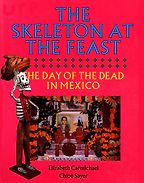
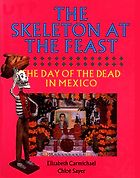
Your first choice is a good introductory book about how Mexicans celebrate this festival. Tell us about The Skeleton at the Feast by Elizabeth Carmichael and Chloë Sayer.
For people who don’t know much about the holiday, this is one of my favourite books. It is a wonderful way to get acquainted with it. The book is written in a very accessible way, which makes it good for both high-school students and adults. It tells the history of the holiday and discusses the ancient celebrations that took place in Mexico with the Aztecs, Olmecs and other indigenous groups. From there it goes on to show how the tradition has been observed historically throughout Mexico and how the celebrations vary regionally within the country.
People today make offerings that include mixtures of both Catholic and ancient pre-Christian symbols. For example, on altars you will find pictures of Jesus or Mary or other saints. You will see religious candles, crucifixes and other Catholic iconography mixed with images of skulls and marigold flowers, which in Spanish are called flor de muerto or “flower of death.” Throughout Central America and Mexico, marigolds have been used for thousands of years to honor the dead and are still found on Day of the Dead altars today. Another thing you see on altars today is an incense called copal, which is made of pine resin. This incense was also used in Mesoamerica many hundreds of years before the arrival of Christians to the Americas, as a way to communicate with the dead. The book has beautiful pictures which illustrate these ancient rituals and how they still take place today.
“It’s such an interesting, beautiful and fun way to think about the dead or death”
It also has interviews with people in Mexico, including those with indigenous ancestry, who grew up at a time where their culture was looked down upon and they were told to stop doing these rituals. This holiday wasn’t always appreciated in Mexico. In the 1930s, 40s and 50s, when the government of Mexico was trying to modernise and westernise the nation, it actually encouraged indigenous populations to stop performing what urban elites considered to be superstitious and pagan rites of altar-making for the dead. These altars were mostly made by indigenous peoples in rural areas of Mexico, so the people of Mexico City and other urban centers frowned on it, considering it to be “backwards.” Indigenous children were punished in school for speaking their native languages and their families were made fun of for upholding “superstitions.” But the book also shows how views in Mexico have changed since then. In the 1970s the Mexican government did an about-face when they realized that promoting native cultures was good for tourism and for creating a unique national identity to distinguish Mexico from its former colonizers (the Spanish and French) or the United States.
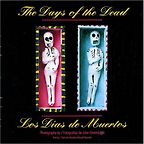
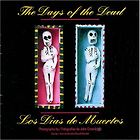
Let’s move on to your next choice, John Greenleigh and Rosalind Beimler’s book, The Days of the Dead.
This book has really beautiful photos and is less text-heavy than my first choice. It has photos of contemporary Day of the Dead altars in rural Mexican villages. It also has scenes of the marketplaces where people go to buy items for their altars, as well as photos of cemeteries and people going to church. It shows a lot more of the day-to-day activities of celebrating the holiday and is another very good background book. It also discusses pre-Columbian rituals and the differing ways that altars are done in various regions of Mexico. I like that it is written bilingually. Every page is printed in half Spanish and half English.
Since you started your research on Día de los Muertos, there’s been at least one Hollywood blockbuster about it. As a scholar of the Day of the Dead what was your take on Coco? Were you horrified?
Given Disney’s long history of offensive stereotyping of ethnic cultures, I was surprised at how well Coco turned out. There’s a backstory to that, which I discuss in my book, which is that they started out doing a very poor job. The original animatic (a clip composed of sections of the early storyboard set to music) which Disney had created to depict the initial direction of the story, illustrated a complete misunderstanding of what the celebration was. The images looked almost like Carnaval, with acrobats jumping around and a casino nightclub scene set to calypso music and Caribbean drumbeats. The imagery didn’t reflect Mexican indigenous values or aesthetics at all. Then Disney tried to trademark the term ‘El Día de los Muertos’ (which is what they wanted to name the movie) and it became a huge fight with the US Chicano community. The community won and Disney backed down. At the time, Disney had almost no Latinos involved in making the film at a senior level, which is shocking, but they did have a Mexican American animator on staff, who Disney executives then turned to for advice. He not only showed them where they were off, but also had wonderful ideas for developing realistic characters and plotlines. He was promoted to co-director and insisted on bringing in other Chicanos to consult on the film. He also made sure that Disney showed clips of the movie along the way to Chicano artists and the larger Mexican American community to get feedback. That’s how it became such a good film. In the end, it became a model for how you should do this kind of film – soliciting community input and feedback.
Get the weekly Five Books newsletter
Did they get everything right? No. One thing I’ve heard people complain about is the scene where the souls are crossing the border into the land of the dead. The film imitates the US border crossing, with Immigration and Border Patrol agents rejecting certain people who are trying to cross the border. There might have been a more sensitive way to depict that.
Another thing is the inaccurate portrayals of alebrijes in the film. Alebrijes are fantastical animal creatures created by Mexican artisan Pedro Linares in the 1930s, when he had a fever dream. He and his family and other local artisans in Oaxaca began creating colorfully painted carvings based on his fevered visions of these whimsical creatures and they became very popular. There is now a large craft industry in Oaxaca making alebrijes. They’re beautiful but they’re a modern creation. In Coco, alebrijes are said to be indigenous “spirit guides” that accompany souls to the land of the dead. This is not true. Alebrijes originally had nothing to do with Day of the Dead. The film gives the impression that they have always been part of indigenous death culture. They have no mythological meaning in relation to Day of the Dead but, thanks to the film, people will erroneously believe that they do.
However, by and large, I think Coco is a really nice way to introduce children and adults to the holiday’s meaning because it does a good job of showing that the celebration is about love for your family and the importance of remembering deceased loved ones, and that as long as you remember them, they won’t really be dead. That’s a beautiful message.
It is a beautiful holiday. Here in the UK there’s no day dedicated to my dead parents, who are so important to me. From that point of view, Día de los Muertos seems like a nice celebration, it fills a hole.
I love the celebration. It’s such an interesting, beautiful and fun way to think about the dead or death. In mainstream US culture, we don’t have a joyous way to honor the deceased, but they mean so much to us. Even when they’re physically gone, they’re still a big part of our lives. One thing that my book talks about is how Americans have taken to the celebration, making little altars in their homes, and getting into the idea of remembering deceased loved ones in a special way each year.
It’s so much fun to make a Day of the Dead altar! If you ever want to do one with your kids, you can make one displaying your parents’ photos and little mementos—like if your dad liked to play the harmonica or your mother liked to knit, you’d put those items on the altar, along with their favorite foods, flowers and other decorative items. Then you can light candles and tell stories about them. It’s a beautiful ritual to do with children, to help them learn about their family history and keep the memory of deceased loved ones alive.
It’s not only Latin America where the dead are celebrated on a particular day, right?
There are many parts of the world where similar types of ritual offerings for the dead are done, especially around harvest time. For example, in Ancient Egypt, there were offerings to Osiris, god of the dead, who was also god of the harvest. You also find similar rites in Africa and Asia. So, this is actually a common form of ritual remembrance throughout many parts of the world. But when I researched this subject, I focused on Latin American customs. My own book deals with the Day of the Dead as it is observed in the United States, where it was first initiated as the public festival we know today by Mexican Americans in 1972.
How did the festival move from Mexico to the US?
In the 1970s, in the US and many other countries, it was a time of social movements and political activism. Here in the US, there was the Black civil rights movement, the American Indian movement, the women’s rights movement and the anti-war movement, for example. A lot of social change was going on at that time. Ethnic and racial groups who had for generations lived in the United States as stigmatized minorities were sick of being made to feel that they were second-class citizens vis-à-vis the dominant Anglo-American population. They had been told for so long to assimilate in order to become “real” Americans, almost made to feel ashamed of their ethnic heritage. When immigrant families arrived in the US, many Anglicized their names and dropped their ethnic traditions or native languages.
That changed when a lot of young Americans in the 1970s travelled back to their ancestral countries – such as Mexico – to rediscover cultural rituals they may not have grown up with. The term Chicano is a self-identifying term used by Mexican Americans who are politically active in civil rights and other social justice issues. The Chicano Movement in the US had roots in the 1930s but really took off in the 1970s. It is still going on today. It emerged to fight the racism that was happening in the US Southwest and California, where people of Mexican ancestry faced segregation in schools, housing, employment, restaurants, et cetera, as well as harassment and violence from the dominant Anglo population.
The Chicano Movement was a political movement to fight for equal rights, but it was also a cultural movement that wanted to proudly reclaim Mexican identity. Celebrating the Day of the Dead in the US was very much part of that, and my book Day of the Dead in the USA discusses this process. Many Chicanos travelled to study the traditions of southern Mexico, such as ancient weaving practices, altar making, Aztec art and dance, and they brought these traditions back with them to California.
That’s a good moment to move to your next book, Día de los Muertos: A Cultural Legacy, Past, Present and Future.
This book is published by Self Help Graphics & Art, a community art center in East Los Angeles. It was one of the first two places to start celebrating Day of the Dead in the United States in 1972, when Chicanos began to hold art-oriented Day of the Dead events. Before that, even the term “Day of the Dead” was not used in the United States by most Mexican Americans; they called it All Souls’ Day and All Saints’ Day, because that’s the Catholic celebration they were raised with.
Chicano artists, most of whom had grown up in the United States, were interested in reclaiming their indigenous roots. They were tired of the whitewashing of US history and of only celebrating the Spanish part of Latino ancestry. For decades, if Latino history was commemorated in the US at all, it was Spanish flamenco dancing and paella, not indigenous aspects. So, Chicanos travelled to southern Mexico and brought indigenous Mexican traditions to the US via public altar installations, street processions, craft workshops, Aztec danza and other community events. They celebrated Day of the Dead in ways that almost nobody in the US, including most Mexican Americans, had heard of at that time. Only indigenous migrants from central and southern Mexico (who were rare in the US back then) would have practiced such elaborate altar-making traditions. In contrast, most Mexican Americans at that time had roots in northern Mexico, where there wasn’t much indigenous presence at the time. The US didn’t get larger migrations from Oaxaca and other heavily indigenous Mexican states until the late 1980s, 1990s and onwards. In the 2020s, there are now hundreds of thousands of indigenous migrants from Mexico, Central America and South America living in the United States, but that was not the case in the 1970s.
So, this wonderful book talks about how Chicano artists created the first Day of the Dead celebrations in Los Angeles. It’s got a lot of beautiful archival photos, both black-and-white and color. It also has essays by Chicano artists and scholars reflecting on the tradition and what it means for Chicanos, and how it’s evolved over time. I love that it’s a book produced by Self Help Graphics & Art, a grassroots arts organization that played such an important role in beginning to celebrate Día de los Muertos in the United States.
The other major Chicano art gallery that was doing this at the same time, in 1972, was Galería de la Raza in San Francisco. And I talk about that gallery in my book, too.
Those two galleries created celebrations that then influenced other galleries, museums and schools, eventually spreading across California, the Southwest and the entire country. And here we are, 50 years later, and all 50 states now have Día de los Muertos celebrations in one way or another, whether via art gallery exhibits, street processions, or educational curriculum in schools. Now even in England, Scotland, Ireland, Japan, Italy and elsewhere, you’re seeing Day of the Dead celebrations brought by Mexican immigrants.
“Marigolds have been used for thousands of years to honor the dead”
Chicano renditions of Day of the Dead have also recirculated back to Mexico, affecting how Día de los Muertos is celebrated there. For example, the above-mentioned book talks about how Chicano artists in the 1970s began painting their faces like skeletons during Day of the Dead processions. This was not previously done in Mexico, but by the 1980s and 90s, urban Mexicans were painting their faces like skeletons when participating in street processions. You still didn’t see this in cemeteries in rural indigenous villages, but after Coco now you’re seeing this there too. So, this is a great book if people want the history of how Day of the Dead started in the United States. It only discusses Los Angeles and not San Francisco, although Chicanos began observing Day of the Dead in both cities in 1972. The book I had recommended on this site in 2011, by Tere Romo, talked about celebrations in both cities. However, that book is out of print and hard to get hold of now (although you can find it in libraries, and it is an excellent historical resource).
The United States has a long history of racism against people of color, including blatant discrimination and police brutality. In California and the US Southwest, that was mainly directed against Mexican Americans. The Chicano Movement fought back against this, and Chicano artists adopted indigenous Mexican traditions of Day of the Dead to joyously celebrate a culture and people who, in mainstream US media at that time, were routinely portrayed as criminals, as if their culture were devoid of anything useful or meaningful. That’s what this book does a really nice job of explaining. My book also discusses this, interviewing many foundational Chicana/o artists.
When I wrote the first edition of the book, there was very little about the celebration found online. Social media was just starting to be a thing and we didn’t have virtual Day of the Dead processions and altar exhibitions back then. Now, there are thousands of social media sites (Facebook, Instagram, Twitter, TikTok and more) where people are talking about how to make altars, how to paint your face, how to make a “Catrina” costume. There are YouTube videos of Day of the Dead fashion shows and “low rider” Day of the Dead car altars. We’ve also seen the emergence of Hollywood movies like Coco (2017), and The Book of Life (2014) and the James Bond flick, Spectre (2015), which have affected how people all over the world see and interpret Day of the Dead. Coco has even affected how people in rural villages in Mexico now celebrate Día de los Muertos.
I spoke with a photographer who spent 20 years going to rural indigenous Mexican villages to take photos of Day of the Dead rituals. She said that before Coco, indigenous young people in the villages she visited would go to the cemeteries with their families and they weren’t painting their faces like skeletons. But after Coco, she said, indigenous youth now paint their faces like skeletons when they go to the cemetery to hold vigils for their departed relatives. The film is having these kinds of effects on the lived tradition.
Another example I discuss in my book is the James Bond movie, Spectre. The movie was rather a box office dud, but if you watch the first ten minutes, it’s set in Mexico City. The film opens with a spectacular Day of the Dead procession in the area of El Zócalo and the Plaza de la Constitución (a massive central plaza, considered to be the heart of Mexico City). In reality, there was never any such procession held there before the movie was made. Yet the Hollywood portrayal of this procession was so spectacular that, after watching the film, the mayor of Mexico City decided he wanted to start such a procession. The very next year, Mexico City began holding a massive Day of the Dead procession modelled closely on the one depicted in Spectre, even using props from the movie set! Now tons of Mexicans and tourists participate annually in this “tradition.”
So, my book really unpacks what we think of as “traditions” and how they are impacted by media, tourism and commercialism. This is not a new thing. Even in the 1930s and 40s, tourism in Mexico was affecting the way rural villages celebrated Day of the Dead—but it’s become much more prominent now, due to the greater reach and speed with which such information and imagery circulates today.
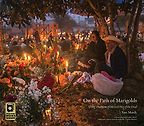
Let’s move on to your next book suggestion, On the Path of Marigolds, by photographer Ann Murdy.
On the Path of Marigolds was published in 2019. Ann Murdy has spent some 20 years traveling to villages in Oaxaca, Puebla and Michoacán, photographing Day of the Dead festivities. It’s a gorgeous photography book. I also love Mary Andrade’s book—it’s beautiful—but since her last book was published 2007, I wanted to share Murdy’s book, which has more recent photos and observations. The photos are accompanied by informative essays about what’s taking place in the photos. It’s also bilingual, which is wonderful. I really appreciate books that are written both in English and Spanish.
The book has won multiple awards: the 2021 Southwest Book Design Award for best photography/art book; the best bilingual book of the year award from the New Mexico Book Association; and the gold medal for best multicultural Book of the Year from the Indies Book Award. It also won an award from Latino Literacy Now’s International Latino Book Award.
You mentioned that in Mexico Día de los Muertos is mainly celebrated by Catholics, how did the Catholic church come to accept this pagan festival?
Before Catholic missionaries arrived, native peoples throughout Latin America had traditions of creating altars or ofrendas (“offerings”) to honor their ancestors. These rituals differed from place to place but the basic idea was the same: you must pay homage and make offerings to your ancestors if you expect to have good crops and a healthy family. These offerings took place at the end of the harvest season because if you’re going to make an altar, you need stuff to put on it. So, they’d put on all the wonderful harvest fruits and vegetables, corn, squashes, as well as flowers, candles and incense. In Mesoamerica, because of the climate, they have at least three harvest seasons per year, so pre-colonial ritual celebrations honoring the dead happened throughout the year in conjunction with various harvests.
When the missionaries arrived, they were horrified by this “pagan worship” of the dead and tried to obliterate it. They forced everyone to convert to Catholicism and tried to stop pre-Christian rituals, but they couldn’t because these were so deeply ingrained in people’s worldviews. Indigenous people were still surreptitiously making altars in their homes and going to the cemetery and leaving offerings for the dead at gravesites. So, missionaries finally decided to tolerate a syncretic mixture. They said, ‘Okay, you can continue to make these altars, but they must happen on our Roman Catholic schedule of All Saints’ Day on November 1 and All Souls’ Day on November 2.’ So that’s why these traditions, which used to happen multiple times in the year, got pushed to these specific dates.
Support Five Books
Five Books interviews are expensive to produce. If you're enjoying this interview, please support us by donating a small amount.
What’s interesting—something I note in my book, and Ann Murdy also mentions in hers—is that many Latin Americans have been converting from Catholicism to fundamentalist Christianity in recent decades. For example, Guatemala was about 98% Catholic before the 1980s, when US evangelical missionaries began heavily proselytizing there, particularly in indigenous villages. According to 2020 statistics, Guatemala is roughly 40% Catholic and 40% evangelical Christian today. Evangelical Christianity is also growing in Mexico, especially in states with large indigenous populations such as Chiapas and Tabasco, which have each recently become about 35% evangelical Christian. This is significant because evangelicals don’t create Day of the Dead altars. They reject what they consider to be the “satanic” worshipping of saints, ancestors or other kinds of “idolatry.” They forbid their church members from participating in Day of the Dead celebrations. So, in some rural Mexican villages where indigenous people used to celebrate Day of the Dead, people are doing it less because of conversions to evangelical Christianity. We’ll see what’s going to happen there. If conversions keep happening at the rate they have been, will indigenous villages still celebrate Day of the Dead in 50 years?
Or will rural villagers say, ‘This is too much of a money maker for us not to celebrate!’ Aside from the spiritual significance of the celebration, economically struggling villages in Mexico have benefitted from Day of the Dead tourism, which the Mexican government began actively promoting in the 1970s. My book notes examples of Mexican towns where Día de los Muertos wasn’t much celebrated previously, that have begun holding Day of the Dead events to increase tourism. Today, village celebrations last not just for two days, but for a week or even a month. Villages that didn’t previously observe the holiday with much fanfare have begun holding Día de los Muertos altar exhibitions, processions, theatrical shows or music and dance performances. Residents convert their homes into temporary lodging and restaurants, selling food and drinks to tourists who come to experience Day of the Dead. Some even charge for tourists to enter their homes and view their altars. Impoverished villagers, who may barely scrape by during most of the year, can make more money during Day of the Dead season than they might make in an entire year. So, tourism is also a factor in whether or not the celebrations will continue in rural indigenous villages.
My book grapples with all of this. What does all this mean for traditions? Does it mean that they’re fake? Or does it mean that they’re still meaningful for many people? These are questions we can ask ourselves about any cultural traditions. How and why do they survive and adapt (or not)? What is the role of media? Does commercialization help or harm them? Or is there a mixture of both happening at the same time?
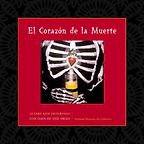
Your final choice is El Corazon de le Muerte or The Heart of the Dead, which is published by the Oakland Museum of California and looks at how the celebration has changed over time in the US.
This is an art museum catalogue that starts with a description of some of the pre-Columbian ways that Day of the Dead was observed. Then it gets into the ways it has been observed in California, when Chicanos first began to publicly celebrate the festival in the 1970s. The photos are gorgeous, and the book is written in English and Spanish, so each page allows readers to follow in the language of their choice. The book focuses on altar exhibitions at the Oakland Museum of California. These exhibitions show how the concept of remembering the dead remains strong in US Latino communities, but the ways in which they celebrate are often very different here than in Latin America.
Get the weekly Five Books newsletter
I have seen this in my own research. US altar installations are no longer simply “altars” but can be entire exhibition rooms in honor of a certain person or a political cause. Altars in Latin America are traditionally made specifically for deceased family members, but in the US, Chicanos reshaped the altar concept to also honor the “collective ancestors” of the Latino community. You see altars honoring famous people of diverse Latin American national origins, like revolutionary activist, Che Guevara, artists Frida Kahlo and Diego Rivera, or salsa singer, Celia Cruz, as a way to celebrate the contributions of Latinos to the wider world.
Chicanos also created altars with political messages in honor of people who have died from preventable socio-political causes like inner city gang violence, gendered violence, inhumane work conditions and pesticide poisoning of farm workers. Most US farm workers are Latino immigrants. Day of the Dead altars in the US often raise consciousness about social injustices. In the first edition of my book, I talked a lot about US Day of the Dead altars as a form of political communication. Since then, we’ve seen altars created in memory of George Floyd and other victims of police brutality, #MeToo victims, LGBT people gunned down in mass shootings, immigrant children put in cages and dying on the US/Mexican border, and racial disparities concerning Covid deaths, so I’ve added new developments such as these to the 2022 edition of my book.
October 16, 2022
Five Books aims to keep its book recommendations and interviews up to date. If you are the interviewee and would like to update your choice of books (or even just what you say about them) please email us at [email protected]
Regina Marchi is a professor in the Department of Journalism and Media Studies at Rutgers, the State University of New Jersey, and is also an affiliated professor with the Rutgers Department of Latino Studies and the Center for Latin American Studies. She holds a PhD in Communication from the University of California, San Diego. She is the author of Day of the Dead in the USA: The Migration and Transformation of a Cultural Phenomenon (Rutgers University Press: 2009 and 2022), which examines Latinx Day of the Dead celebrations as a form of alternative media that communicates about cultural identity and politics. The book received the 2010 national James W. Carey Award for Media Research from the Carl Couch Center for Media and Internet Research, and a 2010 International Latino Book Award in the category of Best Political/Historical Book. The revised second edition of this book was published in 2022 and incorporates new information about the internet and social media, new forms of commercialization, and updated examples of Day of the Dead events as forms of political expression.
Regina Marchi is a professor in the Department of Journalism and Media Studies at Rutgers, the State University of New Jersey, and is also an affiliated professor with the Rutgers Department of Latino Studies and the Center for Latin American Studies. She holds a PhD in Communication from the University of California, San Diego. She is the author of Day of the Dead in the USA: The Migration and Transformation of a Cultural Phenomenon (Rutgers University Press: 2009 and 2022), which examines Latinx Day of the Dead celebrations as a form of alternative media that communicates about cultural identity and politics. The book received the 2010 national James W. Carey Award for Media Research from the Carl Couch Center for Media and Internet Research, and a 2010 International Latino Book Award in the category of Best Political/Historical Book. The revised second edition of this book was published in 2022 and incorporates new information about the internet and social media, new forms of commercialization, and updated examples of Day of the Dead events as forms of political expression.