You wrote (with James Medoff) what remains the most-cited book on U.S. unions, What Do Unions Do? Please tell us about your seminal work.
Prior to our work, there was a shortage of evidence available on union effects. Newly available computerised data changed that. In conjunction with other social scientists, we were able to provide a more complete picture of how unions impact society.
The book looked at unions from two perspectives: first, what we called the monopoly face of union – unions acting as raisers of benefits for their members – and second, the voice face of unions, or how unions represented labour in the workplace and in the body politic, giving voice to people who otherwise wouldn’t have had much say. I think, in the long run, this is the stronger and more important face of unions.
So what do unions do?
The first thing unions do is to raise wages for working people, and that obviously benefits the working people. They also increase the kind of benefits that workers want. So, if workers want pensions, the unions negotiate for that. If workers want maternity leave, that’s what they bargain for. If workers want to have better insurance and are willing to give up some wages to get it, unions help them. Unions change the pattern of compensation towards greater benefits.
Because unions make working life better for workers, they lower turnover in unionised workplaces. Employers with unions traditionally have workers who stay longer and contribute to raising the productivity of the enterprise. Employers also get more credible information about what workers really want in the workplace, because the union representatives are democratically elected and they really speak for the workers. So a good, functioning union is a real positive. Of course, not all unions function well. But our evidence, and the evidence people generated twenty years later, demonstrated that, on net, unions are a positive force in the economy.
How are public sector unions different?
Public sector unions are different in an interesting way. Private sector unions can do very little to raise the demand for their services. But public sector unions can try to convince voters that we need more police and better education. By politicking, they can help public sector employers raise the funds to provide more and better public services. They have that unique attribute.
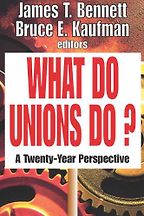
You’ve chosen What Do Unions Do?: A Twenty-Year Perspective as one of your five books. This volume is composed of eighteen papers about your own work. Please explain how this book bolstered and challenged what you first published in 1984.
When the papers were given at a set of symposia, and published in economics journals, I was very nervous – the most nervous I’ve ever been in my academic life. A fair number of the authors were conservative economists who looked at unions through an unfavorable lens, and I thought, if I had made a mistake, they were sure going to find it.
So here were a bunch of people who looked at unions quite sceptically – and they actually found that almost everything we had uncovered was correct. In the end, I felt very happy that all economists could come to agreement about what unions do – at least all economists who actually looked at the evidence.
Your work seems greatly influenced by that of economist Albert O Hirschman. Can you please expound on the theory put forth in Hirschman’s treatise, Exit, Voice, and Loyalty, and explain how you applied it to unions?
Albert Hirschman is one of the most creative thinkers we have in economics. Exit, Voice, and Loyalty was picked by the Times Literary Supplement as one of the most influential books of the last century.
They key idea is that when things are going wrong in democratic societies and market economies, people have two options: exit and voice. Now, what did Hirschman mean by exit and voice? Say you are in a restaurant and your soup is too salty. One option is too storm out. That’s exit. The other option is to call the waiter over and say, ‘Please bring the soup back and ask the chef to make it less salty.’ That’s voice.
His book inspired me to look at unions through somewhat different eyes than most economists. People too often think that workers have only one choice in the competitive market: if you don’t like your job, get another. But there is another choice – you can go to the employer, individually or as a group, and say, ‘let’s change what’s not working’. That’s what unions do.
Get the weekly Five Books newsletter
This simple notion of voice runs through Hirschman’s work. Voice is what democracy is all about. When we don’t like how things are going in America, we don’t exit or expatriate. We vote – we voice our concerns to our elected representatives; we try to effect change to make our country better.
I took the key insight of Hirschman’s analysis and applied it to unions, pointing out that unions give workers a mechanism for voice as a group. They help resolve workplace grievances; bring helpful suggestions to the attention of management; and lower turnover, which benefits firms. These hypotheses were strongly backed up by the all the data we and other people have looked at. Giving voice to workers is one of the key benefits that unions bring, to society, to the economy and to the individual firms where they are organised. There is one other element. Organised labour represents workers’ voices in our broader democracy. Of course, when they support one party, the other party doesn’t like them too much. I think that’s what we are seeing now.
Your next recommendation is Industrial Relations Systems, by John T. Dunlop.
Dunlop was one of the pioneers who created the labour relations field. He taught at Harvard, but he wasn’t just an academician; he had a long history of advising US presidents, dating back to Roosevelt. He was Secretary of Labor under Gerald Ford, during a time when Republicans didn’t reflexively view unions as villains, but instead recognised them as a legitimate part of our economic and political system. Dunlop was an arbitrator and mediator. He was always trying to solve problems – help management solve problems, help unions solve problems, help workers solve problems.
The book builds a theory from his dealings with unions and management over many years. His view was that there was almost always some right on the labour side and some right on the management side. He taught us that the best way for a firm to operate is for rational representatives of management and labour to sit down, look at the evidence and resolve real problems. The book also makes the point that labour decisions involve not only workers and the management of the firm, but also the government. He recognised that workplaces would always be fraught with human problems, and that workers would always form groups to defend their interests. Workplaces are social institutions, so workers and management do not operate as if it was a bourse or market where people buy or sell inanimate goods.
If they read Dunlop, those who want to restrict collective bargaining and who think that unions shouldn’t be a part of this country will realise that, no matter what they do, there are always going to be worker organisations.
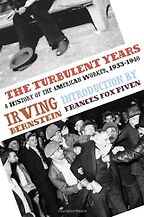
Let’s go back in time for a minute. What can we learn by reading Irving Bernstein’s The Turbulent Years?
The Turbulent Years covers the years of the Great Depression. What historians do, but economists do not do, is tell interesting stories about the labour events of that period. Bernstein had a talent for linking the stories of ordinary people to the historical phenomena of their times.
He writes about how workers fought to organise before the Wagner Act. The Wagner Act, otherwise known as the National Labor Relations Act of 1935, prohibited large firms from interfering with the right to organise and discriminating against employees who did. The Wagner Act represented an effort to give us an electoral way for workers to choose whether they wanted to be represented by a union or not.
The Depression experience in Bernstein’s book shows that you can only push people so far before they snap back. These were years when people had lost faith in how the business community was running the country. They had lost faith in how President Hoover had been running the country. Even though there was 20-25 percent unemployment, people were willing to risk their jobs to fight – not just for better wages and labour conditions, but for a better American labour system.
Are there any lessons that today’s labour leaders can draw from the difficulties labour had in organising and maintaining unions throughout the Great Depression?
I think one of the problems in the United States right now is that our labour leaders have not shown the same fight and creativity that the people did in those days. U.S. unions and labour leaders have been hunkered down and on the defence for twenty years. The guys in the Great Depression did not hunker down. They took chances, they tried new institutional forms and strategies, and they helped workers create a new labour movement.
Finally, Rebuilding Labor, edited by Ruth Milkman and Kim Voss, focuses on how unions can overcome the formidable challenges facing labour in the 21st century. What does this collection teach its readers?
What I like about this collection is that it includes the story of people who didn’t really want to be in a union. It’s rare that sociology or history books about unions treat workers who opposed unions with the respect that they deserve. Rebuilding Labor takes the point of view of all workers. It’s packed with ways that unions can change their traditional strategies for the better.
Of course, we always hope that employers in the United States will change some of their strategies. We have the most strongly anti-union employers in the advanced world. You go to any advanced country and you say, ‘Take me to your anti-union employers!’ – maybe they’ll take you to some American multinationals.
Support Five Books
Five Books interviews are expensive to produce. If you're enjoying this interview, please support us by donating a small amount.
When Russian communists were threatening the free world, Americans had a greater appreciation for unions. We have unions that are pro-business and pro-capitalist. Our unions helped us defeat the threat of communism. After the fall of communism, I think people on the right lost sight of how useful unions can be, and perhaps forgot that the communists believed the employer, in the form of state enterprises, was always right, and outlawed true collective bargaining.
Does Rebuilding Labor shed light on how labour can survive the tidal wave of anti-union sentiment sweeping across American statehouses?
The authors couldn’t foresee the current wave of anti-union feeling. I don’t think anyone saw this coming, because the unions didn’t cause this recession, and they didn’t cause the budget crisis that the states are dealing with.
Collective bargaining by state and city employees is regulated by state law. Each state chooses its own laws for collective bargaining. Because some states have laws that make state and local employee bargaining difficult or even illegal, while others have laws that make collective bargaining the norm for state and local employees, we can see what unions do in the public sector by comparing states. If you look at states that don’t have much collective bargaining and ask whether or not they have lower deficits than other states, the answer is no.
The state fiscal problem – much less the country’s anemic jobless recovery – is not a problem associated with collective bargaining. The unions haven’t had big strikes in recent years, nor have they negotiated for big wage gains. The public sector unions have been offering big concessions to state and city governments. What is going on right now is not a response to an economic problem. It’s politics.
If you had the ear of Wisconsin Governor Scott Walker, who is pushing a bill to strip public sector unions of their bargaining power through the state legislature, what would you say?
I would say: consider what happened to John Howard, former Prime Minister of Australia. When he gained control of both houses of parliament, he did what the governor of Wisconsin seems to want to do: he forced through the legislature (in which his party had a small majority) a policy to radically restrict union activity, with the goal of basically de-legitimising that institution in society. John Howard was thrown out of office in the next election; he even lost his own seat. If you push to undo an institution that is part of the fabric of society, one that many people believe should be available to workers who want it (whether or not they themselves want to be part of it), you might find yourself pushed aside.
Removing collective bargaining from the public sector and lodging all power with employers will not solve the economic problems of U.S. states and cities. It will just remove one mechanism for bringing workers and management in the public sector together to deal with the fiscal problem that neither of them caused.
Five Books aims to keep its book recommendations and interviews up to date. If you are the interviewee and would like to update your choice of books (or even just what you say about them) please email us at editor@fivebooks.com
Leading labour economist Richard B Freeman is a professor at Harvard, where he received his Ph.D., and also a Senior Research Fellow at the LSE’s Centre for Economic Performance. He has published over 400 articles, edited 20 volumes, and authored 14 books on labour topics. In 2006, he was honoured with a Lifetime Achievement Prize from the Society of Labor Economics.
Leading labour economist Richard B Freeman is a professor at Harvard, where he received his Ph.D., and also a Senior Research Fellow at the LSE’s Centre for Economic Performance. He has published over 400 articles, edited 20 volumes, and authored 14 books on labour topics. In 2006, he was honoured with a Lifetime Achievement Prize from the Society of Labor Economics.