What’s behind your interest in magic?
Magic is obscure. Most of the books I’ve read on it are written in the most impenetrable jargon. I’m a businessman and management consultant by training, and my own work, The Book of English Magic, tries to get at the truth behind the subject. The writers invariably lay claim to some incredible secret that no one else understands – and which they’ll reveal for the right price. I hate all that. I wanted a book that asks in a scientific way if magic works and what the rules of engaging with it are.
And did you find one?
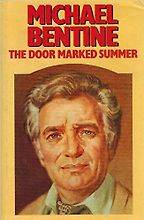
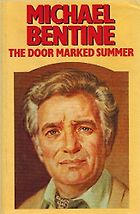
Yes – Michael Bentine’s The Door Marked Summer. Bentine was a famous English comedian and a Goon Show founder member. With Harry Secombe, Peter Sellers and Spike Milligan, he got England laughing after the war. He wasn’t known in the magic world but, like his father, he had a powerful clairvoyant ability. There’s a very poignant moment in the book when he foretells his son’s death in a plane crash. It’s an absolutely wonderful read. Bentine’s overriding question is: does magic really work? He and his father interviewed hundreds of different people from all branches of the magic world, trying to work out who was bluffing and who was not. They considered about 90 per cent of the interviewees to be frauds. But the remaining ten per cent did things that were totally inexplicable by any known means.
What kind of things?
They could predict the future or point out things that had happened to you with perfect accuracy. And some explored the spookier stuff: the nasty spirits that came to call. You can laugh at it, but some of the events in the book are horrifying. Bentine says that when you get into real magic, you’re playing with fire. You’re like a scientist with explosives and no training in what they can do. Things can go badly wrong. His conclusion is that a small minority are doing extraordinary things. He suggests simple rules of self-preservation, with common sense at the top of the list.
The Door Marked Summer is the first truly scientific overview of magic. And it’s written by someone who doesn’t need to convince you how wonderful he is. He was a well-known and intelligent individual and he gives us an unbiased view. That makes the book unique.
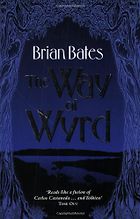
Tell me about Brian Bates’s The Way of Wyrd.
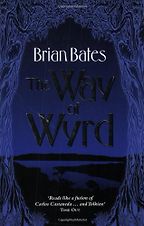
This addresses the relationship between magic and Christianity. Bates is a Professor of Sociology at Sussex University. Middle-Earth, and the world of Tolkien, fascinates him. The church wiped it out in the sixth and seventh centuries, but Bates wanted to understand what paganism was really like. He didn’t find any direct descriptions. But he came across some wonderful books, written by monks around the tenth century, telling of cures for the effects of Anglo-Saxon magic. By coming at it from the position of the victim, so to speak, Bates works out what magicians at that time could actually do.
This extraordinary book is an encounter between a young Christian priest and a shaman. The priest has just finished his education and is travelling by boat around the English coast. He’s part of a group of Christians converting others. They arrive at a Saxon kingdom, whose king tells the priest: ‘You can convert me if you can convert my shaman.’ Of course, the opposite happens. It’s a fictional book with a factual basis beneath it. The way he interprets exactly how magic might have worked is incredible. It brings you close to the world of shamanism.
What kind of magic do shamans practise?
Shamans relate with things and spirits from other worlds, which can help and cure people in our world. They exist on the boundaries. You need to understand various things to transfer across these two worlds – the spirits of plants, trances and dreams. Shamanism is all over the world but the book is about a particular kind of belief that existed in England until that time.
Shamanism puts you into this strange half-mind: is this real or not real? You stand with one foot in this world and one in the magical world. The book shows you how it feels.
The question I have about magic is largely the same as the one I have for Christianity. If people can perform miracles, why don’t they perform more of them and provide food for starving people, for example? Why are they always bending spoons? Can’t they do something useful?
That was the role of the Shaman. He was the miracle-maker for the tribe. You don’t get too many people in the modern world doing it because it can be very dangerous. You can buy books about shamanism, do the chanting with a pair of headphones on and get into a trance. I know people who have been quite badly harmed by doing this. The shaman is trained to do this but he’s not a social scientist. He does the daily miracles and cures people of diseases.
Yes. But people die of terrible diseases all the time.
Shamans die of terrible diseases too. What happened in England in the sixth century was that the Church rebranded all the sources that gave rise to miracles. The places where shamans could connect to the spirits had churches built on them. The holy well got a Christian name. The priest would go and talk to God at the altar in a similar way. But he wouldn’t turn round and do a miracle for the people in the church.
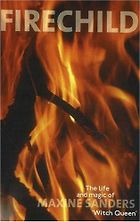
Let’s move on to Maxine Sanders’s Fire Child.
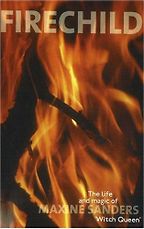
Magic came back to England in the 1950s. Various magical traditions, including Wicca, Druidry and practices from the Far East, exerted a strong influence. Alex Sanders, a very powerful magician known as ‘King of the Witches’, had a priestess girlfriend called Maxine. He eventually married her. He represented the dawning of the age of modern magic. He would encourage photographers from the News of the World, our most scandal-driven newspaper, to turn up in the middle of his act. They took pictures of Maxine, a high priestess, in the nude.
People wanted to try something similar: Wicca was the result, the fastest-growing religion in America. Maxine was right there at the start of modern magic in the 1960s. Fire Child explores her childhood, her relationship with her partner and life in England at this time of magical resurgence.
What kind of magic does she perform?
All sorts, including some pretty hairy Egyptian stuff. She practised ritual magic, which uses various techniques to raise power. That power can be both good and bad. It can help people with diseases, personal problems and financial issues. You can use it in many different ways if you recognise magic as power.
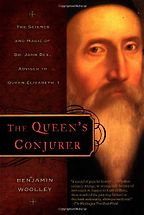
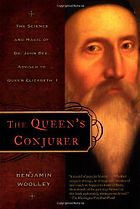
You’ve chosen a royal magician in Benjamin Woolley’s The Queen’s Conjurer.
The greatest English magician was undoubtedly John Dee. He was a clergyman, he brought geometry to England, and he became the astrologer and adviser to Elizabeth I. Dee assembled the world’s first great library of magical books. He wanted to experiment with magic, so he hired a rather villainous Irishman called Kelly to work as his ‘psychic link’. Working with him, Dee claimed to interact with angels, producing a language for communicating with the other side.
What kind of magic did Dr Dee perform?
He mainly assimilated knowledge in a scientific way. His crystal ball and all his ‘angel’ diaries have survived; they are in the British Museum. You can see the workings of the mind of this 16th-century scientist and mathematician, who was trying to understand how magic worked and how to make it work better.
Five Books interviews are expensive to produce. If you're enjoying this interview, please support us by donating a small amount.
Did he actually do any conjuring for the Queen?
He worked with her astrologer and selected the day for the Coronation. He also tried to predict the way the British Empire would work. I constantly try to find people who are credible in the world of magic. Those people tend to be scientists, writers and people who try to understand it. Dr Dee stands between the past – wiped out by the Church – and the present.
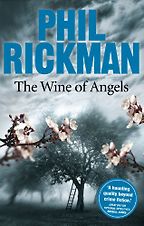
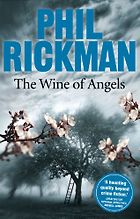
Tell me about The Wine of Angels.
This novel is by a great friend, Phil Rickman, who’s had some experience of magic himself. He writes about the way the Church deals with magic. There are several books in his Merrily Watkins series; this is the first. Watkins, a new woman priest, is the exorcist of the diocese. The Church doesn’t really believe in her methods. She’s a sort of embarrassment from the past, someone who actually believes in exorcism and sprinkling holy water. On the one hand, she deals with a Church that doesn’t believe in her. On the other, she confronts a side of magic that will scare you witless.
Get the weekly Five Books newsletter
What’s so frightening about it?
Demons, spirits and entities play their part. People are scared of the impact of these things on them.
And people go mad?
Some do. There’s a wonderful story in the Bentine book, my first choice, about a pub owner in Sussex who discovers he can predict the winners at the races. He starts to question why this is happening and goes through the usual drama with planchets and glasses. A message appears: ‘I am an old friend.’ Events start to take him over, an exorcism is performed and things reach a terrible denouement. It’s an extraordinary encounter with the other world. After that, he can no longer predict the winners. He ends up in a padded cell. I’ve been in situations where I got scared too.
I think the padded cell is a good place to end.
Five Books aims to keep its book recommendations and interviews up to date. If you are the interviewee and would like to update your choice of books (or even just what you say about them) please email us at [email protected]