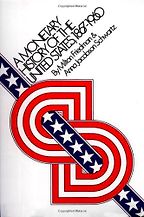
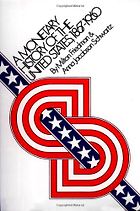
You’re better off reading Milton Friedman and Anna Jacobson Schwartz’s A Monetary History of the United States, which I think is a better account. Keynes was more contemporary, so maybe had not as much perspective.
This is the argument that the Federal Reserve caused the Great Depression, prompting Ben Bernanke’s famous apology to the authors. So why does this book need to be read, in your view?
I think it appropriately looks at the monetary financial situation that is at the core of the Great Depression crisis and also the current situation. So they focus on the role of the monetary authority and the banking panics, and you can fit into that the legislative changes – particularly under Franklin Roosevelt – some of which helped the situation. I think the most important of those was the introduction of deposit insurance in 1934, with the Federal Deposit Insurance Corporation. The FDIC has really worked in preventing https://fivebooks.com/book/bank-runs-deposit-insurance-and-liquidity-by-douglas-diamond-and-philip-dybvig/ since that time in the US. I think a lot of the solutions these days involve extending that concept beyond the commercial banks that were at the heart of the financial system in the 1930s, but of course the system has been much broadened since then.
So we shouldn’t take books with titles like FDR’s Folly, claiming Roosevelt prolonged rather than alleviated the Great Depression, too seriously?
It’s clear that a lot of the policies that were put into place were negative, but as to sorting out how important they were, that’s a much more challenging question. And I think Roosevelt at the time recognized ex-post that some of the things he tried were failures and then his attitude was, “OK, it’s a failure. I’ll stop doing it.” Which is actually pretty positive.
For example, some of the things he did was try to organize labour unions and also businesses essentially promoting monopoly – I don’t think that was a plus. He was trying really hard to keep wages and prices from falling with direct influence and that was a negative. The effect of the expenditure programs is less clear. In the mid-1930s with the New Deal there was an unusual amount of infrastructure-type of expenditures. But it’s not actually big enough to sort out in a statistical sense – to figure out how much it mattered in terms of the recovery after the trough in 1932-33. I don’t think we know that that was a mistake, but it’s not clear that it was all that important.
So you’re not saying the New Deal was a mistake, you’re saying basically we don’t know.
One of the things I’ve been trying to do in my research is to calculate the effect, particularly on Gross Domestic Product, of government expenditure programs. And I’ve been focusing on the US experience, because that’s where I have the information, although it would be good to go beyond that. But the thing you can clearly isolate is the effect of wartime expenditure – particularly World War Two – it is so big that in a statistical sense it gives you a lot of power to figure out what is going on.
There’s both the build-up, starting in 1941, and then there’s expenditures coming down after the war, in 1945-6. There’s a lot of evidence there. Sometimes the spending in a year is 20 per cent of GDP, which is absolutely astounding. In comparison, the New Deal programs, particularly in 1934 and 1936, are only two to three per cent of GDP of extra spending.
In terms of the stuff that’s not wartime spending – which we’re probably most interested in in the current climate – it’s just hard to know from the history of the data and the time series. The New Deal is part of my research, and it’s bigger than the other non-defence expenditure in terms of stimulus, but it’s not enough to really sort it out.
So I don’t think you can reliably say what the effect is. But conceptually you’d expect the wartime spending to have a bigger effect for various reasons on the GDP than the equivalent amount of expenditure in a non-war situation. And the wartime effect you can estimate pretty precisely, and the multiplier is clearly less than one, even in World War Two – it’s in the order of 0.6, 0.7, something like that.
So your point is that even in the context of massive expenditures in a wartime situation, the multiplier effect of government spending on the economy is less than one – ie, it is not a multiplier at all. In other words, fiscal stimulus does not work. I read your WSJ editorial on this. Is that a good way for the layman to understand your arguments? Also this, on the “Voodoo Multipliers” and your September 2009 NBER working paper?
Yes, those articles refer to this kind of evidence, and I’ve been working more on it, trying to make it more precise. Some economists have argued that in a time of slack the multiple should be bigger, because there’s more capacity to respond to the extra demand. There’s a little bit of evidence that that’s right. A lot of that comes from the build-up in World War Two, because in 1941 the unemployment rate is still around nine per cent, so you can see what is the effect in that environment, in a high unemployment situation, of having a big expenditure increase. (Later in the war, the unemployment rate is close to nothing, so you don’t have that setting.) There’s a little bit of evidence from that that the multiplier is bigger when there’s more slack. But it doesn’t look like the multiplier gets up to one, even when the unemployment rate is nine per cent. It’s getting closer to that, but even then it is not one.
And yet neo-Keynesians – which include White House economics adviser Christina Romer – often cite the number as being 1.5, and you say in your article that the Obama administration is using 1.5 as a basis for its fiscal stimulus policies. How do they come up with that then?
Oh they pulled that out of the air. I have the advantage of having at least a little bit of empirical evidence: as I said, it’s based particularly on military purchases. So even though that evidence is not that great, it’s infinitely better than the alternatives, which are no evidence.
I think Valerie Ramey’s work is the best in terms of empirically trying to figure what the effect is of expenditure on the macro-variables. She has focused mostly on the post-World War Two period, but she’s looked somewhat at the earlier part.
So you would put her work among your must-reads?
Since part of the remedy for the current crisis is this fiscal stimulus package –which particularly revolves around this Keynesian multiplier – then Valerie’s work is especially relevant there and is probably the best recent work on that topic that I know of.
So what else should I be reading on the Great Depression?
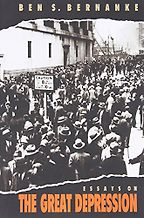
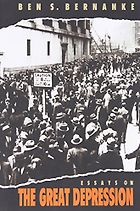
There’s Ben Bernanke’s research in the 1980s – that’s probably his most important contribution in terms of macroeconomics and financial economics.
Yes, I saw the Dow Jones Newswires quote on Bernanke’s book, Essays on the Great Depression, which made me laugh: “With some observers saying that the ongoing financial crisis could be the worst since the Great Depression, the greatest living expert on that period is getting the chance to apply its economic lessons.”
Well, Bernanke was thinking that way in April 2008. I remember talking to him at the time, just after the Bear Stearns initial intervention. I got a chance to ask him a question about why they were so aggressive at that time when things didn’t look so bad. And his response was that basically he was worrying about a Depression-type scenario – and trying to act early to nip that in the bud.
So what is the thrust of his book and why is it important?
It’s focusing on the Great Depression as a credit implosion, not so much the money supply, which Friedman and Schwartz had emphasized, but a somewhat related phenomenon, which is credit availability. That had been imploding from 1929 through to the trough, early in 1933. So it’s really focusing on the credit aspects and trying to measure that, particularly by looking at patterns in interest rates.
Today, for example, if you look at the spread between lower quality bonds – like B-rated corporate bonds, say – and compare those to treasury yields, that’s a good indicator of the extent of stress in the credit markets. And actually the recent period is going back to the kinds of spreads that you saw in the early 1930s. Well, perhaps not quite as much, but certainly reminiscent of that. So he’s focused on that as a measure of the extent of the credit stress, and on the other side he focused on how what turned things around was when the credit problems were being eased.
People often think that the US economy stagnated in the Depression all the way through the 1930s, and didn’t at all get out of that until World War Two – and that really is not accurate, it’s not what the data look like. In fact the growth rate of the US economy from 1933 until 1937 is extremely rapid. It’s actually the fastest growth period of any peacetime period of that length in the whole history. Maybe it’s not as fast as you would have hoped for or wanted, given how big the contraction was, but it’s very rapid – and then it’s unfortunately interrupted by a pretty big recession, 1937-8, which was probably caused by the Federal Reserve doubling the reserve requirement in 1937. It’s pretty unbelievable that they did that actually.
The Fed was probably the reason, though people have advanced other possibilities. But then it starts again, from 1938-41, there’s also very rapid growth, before the US is into the war and has a lot of expenditures. 1941 is the first year where there is a lot of big federal US expenditure related to the war, there’s not really much of a build-up in 1939-40, which is also kind of surprising.
They focused more on some of these anti-market FDR policies. I think they’re right that these are mistakes, as are some of the tax increases. There was a tax increase under Hoover and then some under Roosevelt, trying to balance the budget, which was clearly a mistake in the context of the very high unemployment rate and the poor economy. But as to how much that mattered is much less clear. Similarly the Smoot-Hawley Tariff in 1930, which every economist agrees is ridiculous – it’s not clear how much that actually mattered in terms of the macro results.
I thought that the Great Depression was the ultimate cautionary tale on the dangers of protectionism. That’s not the case?
No. I think what is much clearer is the role of the financial system and the credit implosion, both in the 1930s and today. The rest of the stuff may just be a sideshow, it may not be that important. There’s a strong tendency for the economy to recover on its own, as long as it’s not subject to further new shocks, so a likely scenario is that that is what will happen today as well. And then the Obama administration will say that it’s because of our policy that things recovered, and there won’t be any way to prove whether that’s right or wrong.
So are you not a fan of what Obama is doing?
I think the stimulus package was very stupid; it was awful. It’s just a tremendous waste of money and it’s going to cause some trouble in terms of a bigger public debt; it’s just wasting resources. But the more important thing is the financial system, and the housing related aspects. So on that, despite a lot of floundering around, mostly I think what they were doing is in the right direction. I think they made a big mistake by not bailing out Lehman Brothers – I think they recognized that two days later. That was Paulson’s individual fault and responsibility from what I can gather.
But I noticed you did not sign that full page advertisement in The New York Times opposing Obama’s stimulus package. A lot of other economists did, including Edward Prescott, who won the Nobel Prize for economics, so presumably should be taken seriously. Has he done any work on this?
I don’t know what he’s contributed that is particularly relevant on this issue. He has done some brilliant work and deserved the Nobel Prize, but his empirical stuff is not that good frankly. I didn’t sign that advertisement because I don’t really like to sign things in general – I prefer to write my individual thing.
But you’re broadly sympathetic to that viewpoint?
For a while there was this ridiculous view that there was this massive consensus in favour of Keynesian stimulus. And Biden even said at some point that, “Every economist agrees that we need this stimulus.” Of course that was always nonsense. So in that sense I agreed with the sentiment of what was in that signed advertisement.
Five Books aims to keep its book recommendations and interviews up to date. If you are the interviewee and would like to update your choice of books (or even just what you say about them) please email us at editor@fivebooks.com