Could you tell me a bit about why you chose to write about polar exploration?
It’s always very difficult to probe one’s motives, but it’s because of my background as a Nordic skier. I was once a foreign correspondent, The Observer’s man in the Nordic area for 15 years. In my off moments I did a certain amount of Nordic skiing. There were good winters in Stockholm in the sixties and early seventies, and I did a certain amount of ski touring in the north of Scandinavia. By sheer accident I found that the last surviving member of Scott’s expedition [to the South Pole in 1911-12], Tryggve Gran, was in Norway. So I did an interview with him for The Observer magazine.
This prompted my interest, and then something happened which is absolutely true but you won’t believe it. It’s what happens when one talks to the office – you’ll know what I mean. The editor of the magazine was an awfully nice man called John Silverlight, and just before that issue was going to come out he said to me, “You ought to write a book about the race for the South Pole.” I said, “It’s not a bad idea. Give me time to think about it.” When the piece appeared, it said, in black and white, “The author is working on a book about the race for the South Pole”. That having appeared, I was morally obliged to do the book. This was about the time I began to realise that I had to move on. There is a time when, as a journalist, you realise something’s happening and you don’t quite fit in any more.
So either you move into management, or you get out and do something else, or you end up as an old Fleet Street soak. As I can’t drink for physiological reasons, that one was out. So I left The Observer and I came to Cambridge to work on the book. To answer your question, when I first looked into [polar explorer Roald] Amundsen I immediately connected. If you’re a Nordic skier, you understand what he’s all about.
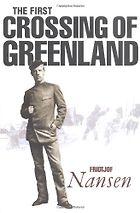
Your first book is The First Crossing of Greenland, by Nobel Peace Prize winner Fridtjof Nansen.
The reason I chose this book is that it was the beginning of modern polar exploration. Nansen devised a technique using skis, and – by devising specialised equipment – particularly the broad-runnered sledge. The main point was that by the application of technology, and by abandoning any kind of emotion, he demythologised polar exploration. The other side of that coin is that he came from a society which has an affinity with nature. Paradoxically, because of living so close to nature he demythologised the whole polar environment by accepting her dictates. That was the start of modern polar exploration. The first crossing of Greenland was one of the factitious goals that marked the end of terrestrial exploration before the leap into space.
Presumably he did cross Greenland?
Yes he did, in 1888. It was the first of the great polar goals ever to be achieved. People had been trying to do this since the Middle Ages. And this is that story.
Who did he go with?
He went with a man called Otto Sverdrup, who was a seaman and a skier. And he had two Laplanders with him because it was felt that the Laps, apart from being great skiers, had an ancient tradition there too and knew how to find their way in the snow. He also had a military officer, Oluf Christian Dietrichson, and finally a peasant from central Norway called Kristian Kristiansen. They were six all together. They were all skiers first and explorers second.
Did they all survive?
Oh yes. They not only survived, they got across with the minimum of trouble. They all came from a tradition where it wasn’t clever to suffer. Suffering was a sign of incompetence. There was no point in punishing yourself – you had to do it in such a way that you have some fun. And there is nothing that is worth the sacrifice of the tip of a little finger. They got across with very little physical or mental harm.
Farthest North is a very different story, I think.
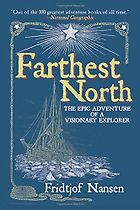
Yes. Nansen wanted to reach the North Pole but there had been many attempts ending in disaster, so instead of fighting nature he figured he’d work with her. Because of some driftwood and relics found in Greenland, he worked out that there must be a current running from Siberia to Greenland. It looked as if that current passed over, or close to, the North Pole. So he had a special ship built called Fram – which means “forward” – which was specially designed to be frozen into ice without being nicked, and he was going to exploit this current.
He sailed along the coast of Siberia, deliberately froze her into the ice and let the drift carry her along. He was right – there was a current – but it soon became clear that she was not going to reach the Pole. So taking one companion, dogs and sledges, he tried to reach the North Pole over the ice. He didn’t get very far, only within about 250 miles of the Pole before he turned back and made his way across the drift ice. He landed on Franz Josef Land and spent the whole winter in a hut like a northern Robinson Crusoe. His life was saved because an English explorer called Frederick George Jackson just happened to be there at the same time, and Nansen returned home in Jackson’s expedition ship.
“When I first looked into Amundsen I immediately connected. If you’re a Nordic skier, you understand what he’s all about.”
Fram left in 1893 and returned in 1896 when Nansen also returned. By making that attempt on the Pole he hardly got any further than he would have had he remained on the ship. His record was 86 degrees and 14 minutes [latitude]. The reason I chose this book is because Nansen was an intellectual explorer, and he brought all his men home safe and sound. This is a bit of a record given the history of disaster in polar exploration. It’s also interesting how people from a certain background were able to survive the isolation of three years in the ice, seeing the same faces day after day.
What background?
They were all Norwegians. Scandinavians have an ability to live in their thoughts. If they don’t like their surroundings they retreat into themselves and live in a make-believe world. In this expedition there was a doctor, a couple of naval officers, sealers, sailors and drifters.
English explorers tend to be aristocrats, but these are the opposite aren’t they? They’re already tough?
They come from a society that is meritocratic – where you don’t have class in our sense – and they would all approximate to our middle classes, but their roots are in the soil or on the seas. Most of the people on Fram were seamen from the age of sail, and there they had to learn to survive in cramped and difficult conditions. It’s the art of surviving in a small group. Unlike our [British] explorers nobody there was looking for adventure, they were looking for accomplishment. It’s part of the Norwegian character going back to the sagas – great admiration for conspicuous achievement. Nansen took skis and dogs with him, and he made a momentous discovery on the Fram expedition. He discovered that the natural speed of a team of dogs in front of a loaded sledge is the same as that of Nordic or cross-country idling, not racing. This was momentous because it was the origination of the Norwegian – ie the modern – form of polar travel, before the advent of motorised transport.
Now we’re going South, with Roald Amundsen.
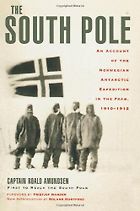
The problem here is one of language. I’ve only read this in the original, and when it is translated you lose 95% of what was really said. This happens in any language but it’s particularly pronounced with Scandinavian languages. The thing about The South Pole is that it’s the opposite of the heroic delusion – it’s the search for achievement. It’s full of a very subdued, ironic humour, and Amundsen wanted to remove any form of drama from it – he saw it as perfectly natural.
The way it turned out, it wasn’t an expedition in our sense of the word. Rather, it was the longest ski race in the world. Among his men he’d chosen a ski champion, Olaf Bjorland, who was totally unimpressed by the prospect of going to the Pole. It was just a ski race to him. He was runner up in the 50km cross-country in Oslo in 1908, and when you look at it that way getting to the Pole was no big deal. That was the attitude of all the men there. They were doing something that came naturally.
Which was very different from the British attitude.
Yes, but they were at home in the environment, they felt part of the nature. It’s an interesting difference. In [Britain] man is outside of nature looking in, but their view is that you are part of nature, and in the grand scheme of things man is a tiny little insect – you forget that at your peril. Because of that, they avoided the psychological pressure of the people who didn’t have that attitude. Here we regard nature as the stage manager for the Chelsea Flower Show, but they knew nature was the founding member of the dirty tricks brigade. If there’s a storm she’s in a bad mood, so let’s hunker down and wait for her to get into a good mood again.
What would the British have done?
You only have to look at Scott. When nature was less than desirable, there was a lot of complaint and moaning and beefing on about bad luck. They didn’t take things in their stride because they expected nature to be on their side.
Another Amundsen book now, but a different exploration.
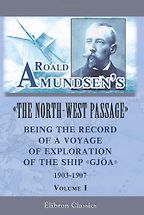
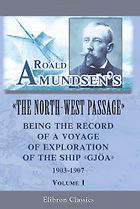
Amundsen was a pioneer in the selection of his companions. He carried out what we would call psychological screening of a simple kind. If somebody was married he would ask if they had asked their wife, and if the answer was “no” they couldn’t come. He didn’t want any drifters, failures or people at odds with society. The other reason I chose this book was because Amundsen says something very interesting in it, when he describes his principles of command. He writes:
“We have established a little republic on board. After my own experience I decided to use a system of freedom on board, let everybody feel independent in his own sphere. There arises in that way among sensible people a kind of voluntary discipline which is worth far more than compulsion. Every man thereby has the consciousness of being a human being and is treated as a rational being and not as a machine.”
Get the weekly Five Books newsletter
This is a quite astonishing declaration of the principles of command. The accomplishment of the northwest passage on one and the same keel – that is, sailing from the Atlantic to the Pacific across the north American Arctic – was the third of the classic polar goals.
Amundsen spent a lot of time with the Eskimos and showed himself to be a born anthropologist. He could put himself in the Eskimos’ position, and he used the expedition to learn their lore of survival in a cold climate. He learnt how to cut an anorak so it keeps you warm without making you sweat, and how to use furs. How you must never hurry, because if you hurry you use energy faster than you can renew it and if you sweat you lose the insulation of the furs. He learnt how to build igloos, and he applied that knowledge to his South Pole expedition. The interest in the northwest passage was that of a civilised person learning the skills of a highly adaptive tribe who had learnt how to survive in a very hostile environment.
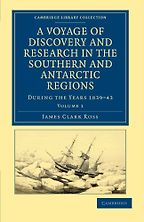
James Clark Ross is one of the lesser-known great British Polar explorers.
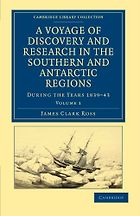
He is hardly known in Britain, but he was one of Amundsen’s heroes. He made this expedition to the Antarctic regions between 1839 and 1843, so he was an early Victorian. He was a watershed figure, born in 1800 and almost an 18th century figure who saw exploration as a rational occupation. He was definitely against self-sacrifice and becoming a martyr. After him came [John] Franklin, who tried to navigate the northwest passage but never came back, and became the model of the martyred hero. After Ross, British polar exploration became a search for adventure and took place in a public ambience of waiting for disaster. If you could have a dead hero with a service in St Paul’s, that was all to the good. But Ross was almost a Johnsonian figure – no sentiment, just very rational.
All of your authors have been like that.
Absolutely.
But I would have thought you’d be bound to get sentimental about these incredibly bleak landscapes. How could they not affect you existentially?
Obviously they were impressed and you’re right it affects you, but in a rational and cool way. I’m not saying these people were without emotion, but it was a different kind of emotion – the kick you get from what mathematicians call the elegant solution. I suppose you could say it’s emotional but intellectual. I admire Ross because of what he did. Remembering that his ships were purely sail driven, he plunged into the pack ice around 170 degrees east longitude. Nobody had ever been that way before. He found his way through to what is now called the Ross sea, and then explored the coast for hundreds of miles. Then he sailed along the Ross ice layer – which he said looked for all the world like the cliffs of Dover.
Get the weekly Five Books newsletter
He writes in a simple and compelling way. He has this description of how, using a studding sail, he discovered the bay that Amundsen later used for his base, and explored it for 500 miles. He got out again safely, and for sheer shiphandling he has my abject admiration. It’s not much fun on a sailing ship going along a high cliff.
This was his accomplishment, and again it is a strange phenomenon that Ross is hardly known in Britain but he is a household name in Norway. This is a hangover from the whaling days. The last factory ship ever built was called the James Clark Ross. They hunted out one of his descendants and got him over to baptise the ship. Clark Ross’s was the last major discovery of Antarctic coastline for about 70 years. When Amundsen came along, he said it was incredible that this man accomplished what he did with nothing but sail. He was the best kind of naval officer.
Five Books aims to keep its book recommendations and interviews up to date. If you are the interviewee and would like to update your choice of books (or even just what you say about them) please email us at [email protected]
Five Books interviews are expensive to produce. If you've enjoyed this interview, please support us by donating a small amount.