Over the New Year, people will be looking at themselves, making resolutions, starting afresh. Do you think that this introspection is a good thing, or are we too full of anxiety when we re-evaluate our lives?
It’s important to keep asking yourself the question, what am I doing with my life? Shall I go in new directions? Throughout history there have always been people who have been interested in this question. Tolstoy, for example, was always asking himself whether he was doing the right thing with his life.
Of course, the New Year is a great peg to hang these questions. The real issue, though, is how we go about making changes in our lives. I like to make a distinction between introspection and outrospection. In the 20th century we were obsessed with introspection – the idea that the way to find meaning in our lives is to look inside us, at our drives, motivations and priorities. That introspective approach really comes out of psychoanalysis and the self-help industry.
I think that’s an old-fashioned idea. In the 21st century we need to balance introspection with outrospection – the idea that the way to discover how to live is to discover how other people see the world, to put yourself in their shoes and see how they have pursued the art of living. When it comes to New Year, I think we need a healthy dose of outrospection to explore how others have gone about dealing with the dilemmas of everyday life, whether it’s how to find love or how to deal with family tensions or career change.
What is the ultimate goal here? You say “pursue the art of living”, but what does that really mean?
It’s partly about confronting what people find difficult in their lives, and reducing human suffering on some level. To find ways to nurture our relationships, and give our lives deeper meaning. To try to deal with the practicalities of making a living, dealing with money and work and time. To think about what it means to be a creative person and to nurture the many sides of yourself. These are all different aspects of the art of living.
“Treat life as an experiment. Take chances. Say things you’ve never said before, and do things you’ve never done before.”
And of course we also need to think about the art of dying, about growing old and facing our mortality – which I think of as “deathstyle”. We need to think of deathstyle as much as lifestyle. Often people say what this is really about is happiness – how should I be happy? But I prefer to think about concrete areas of life, like love, family, time, travel and death – this whole array of areas in which we’re confronted by questions about what to do with our lives.
Is it especially difficult to confront such questions in our modern times? You write in your book, The Wonderbox, that “how to pursue the art of living has become the great quandary of our age”. What is it about the day and age we live in that makes it a quandary?
I think we’re in a state of flux. Many of these areas of life are undergoing change, and often rapid change because of technology. For example, the way we fall in love and make friends has been transformed by online networks and internet dating. There are new questions about how we spend the extra years that have been granted us, through medical technologies and public health. And there are questions about the nature of materialism and consumption.
The 20th century is an age of the idea that wellbeing can be discovered through a high-consumption, luxury lifestyle. But research on life satisfaction in the last 10 or 15 years has shown that above a certain income level, your life satisfaction doesn’t go up as you consume more goods. So that raises questions such as: How do we pursue the good life? Is there an alternative to consumer culture and materialism? There are more and more questions like this. Which is partly why if you walk into a bookshop, the self-help and personal development sections are much bigger than they have ever been.
Wherever we want to get to in our lives, how do we get there? This isn’t a self-help question – I’m not after a panacea – but where should we be looking to learn this art of living?
Traditionally, there have been three major sources for wisdom on the art of living. One has been religious and spiritual thought. A second has been philosophy. And a third has been psychology, particularly in the last 100 years. So when you do walk into your local bookshop and go to the self-help section, those are the kinds of book you’ll find. Increasingly there’s a fourth category, which is books on neuroscience – the idea that if we understand better how our brains work, we can understand better about falling in love or dealing with stress and so on.
I think the gap in all of this is looking at history. I think there are inspiring answers in past civilisations and the lives of past individuals, and that is my influence in writing my book The Wonderbox. In the 17th century the philosopher and historian Thomas Hobbes said: “The principal and proper work of history is to instruct, and to enable men by knowledge of actions past to bear themselves prudently in the present, and providently in the future.”
Historians have always thought that their work is relevant to the present, but normally in terms of political institutions or economic systems. They haven’t so much tried to think about history as being relevant for individual life and the decisions that we make every day – for the art of living. That’s something I’ve been very keen to draw on, and the books I’ve chosen reflect that desire.
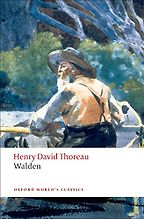
Well, let’s draw on it now, beginning with Thoreau’s Walden. Will you briefly introduce the book to our readers?
Well, in 1845 the American naturalist Henry David Thoreau went out to live in the woods of western Massachusetts. He lived two years there, and a few years later he wrote a book about his experiences called Walden; or, Life in the Woods. It’s an account of how he went about the practicalities of simple living. It’s about how he built his house – a log cabin – with his own hands, grew his own food and lived a subsistence lifestyle. And it’s about what he did when he was there, like observing nature and swimming in Walden Pond.
I think Thoreau was one of the great masters of the art of simple living. Of course, he didn’t live in complete isolation. Every few days he walked into the town of Concord, to read the papers and have a chat with his mum. He was very open about that. But he wrote extremely eloquently about the advantages of paring down life to its essentials – of doing more than getting caught up in the commercialisation and industrialisation that was going on around him.
Which is a lesson as relevant to our lives today as it was in the 19th century.
Even more relevant now, I think. In the era of climate change, there’s increasingly a move to cut back on our carbon emissions. Thoreau would have totally fitted into that. He would have looked around today and said: If you want to live carbon-lite, a less high-consumption lifestyle, you’ll see plenty of ideas in my book for turning away from material culture – not depriving yourself, but embracing the beauties of nature and of free time, the ultimate luxury.
Thoreau’s experience in Walden taught him that he could live extremely cheaply and he didn’t have to work very much. In fact, he said that he could work as a part-time surveyor for about six or seven weeks and have enough to live on at Walden Pond for a year.
He also talks about not striving purely for ambition’s sake. What does that say about our modern obsession with bettering our material situation?
Thoreau was always sceptical of what people called “civilisation” – accumulating material goods, moving into a bigger house. He viewed those things as burdens. He saw that having a massive mortgage was just going to tie you down and limit your freedom. Somewhat romantically, he thought you’d be much better off living in a wigwam, like the indigenous native Americans.
Thoreau famously said: “A man is rich in proportion to the number of things he can afford to let alone.” That was a message that he very much wanted to spread, at least through his own example. He saw the stress faced by farmers around him, who were trying to pay off their mortgages and improve the material quality of their lives. And he thought that it was much more luxurious and enjoyable to sit in the doorway of his cabin and listen to the birds sing, than to try to earn enough money to buy a new sofa.
Yet surely he doesn’t mean we should all follow his example, and give it all up to build ourselves cabins in the woods alongside his?
Thoreau was an extraordinarily realistic person. I don’t think he actually thought that everyone should live in the woods. What he was really saying was that wherever we live – even in urban society – we can simplify our lives. And that way, in purely practical terms, we probably don’t have to work as hard to support our lifestyle. And if you don’t have to work as much, you have more free time. Free time, for him, was the ultimate freedom.
I think he would say to us now: Even if you are living in a high-rise flat in Paris or Berlin or New York, if you simplify your life then you can learn that it may be more enjoyable to take a walk in the park than to drive an expensive car around. That’s something that everyone can do without having to go and live in the woods. So Thoreau has a very realistic message for us, especially now that a third of people feel time-stressed or time-poor. What they really want is the freedom to not be tied down to jobs they don’t want to do or debts they wish they didn’t have.
My favourite quote is near the end, when he writes: “If a man does not keep pace with his companion, perhaps it is because he hears a different drummer.”
That’s right, and I think that idea of walking to the beat of your own drummer is a vital lesson for the art of living. What he’s saying there is that we don’t need to conform; in a way we need to break the rules. There have always been inspiring figures in history who have done that, and Thoreau is one of them. Mary Wollstonecraft is another – she became an author in an age [the 18th century] when no women did so, went to revolutionary France, had a child out of wedlock and so on. She was walking to the beat of her own drummer, and I find that personally inspiring.
From everyday things like rejecting the culture of watching TV for three hours a day and locking your TV in the cupboard, to maybe leaving your well-paid job to do something which embodies your values more, we need to walk to the beat of our own drummer if we want to live a more experimental and adventurous life.
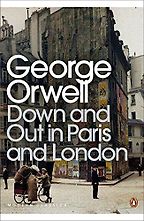
Another man who walked to the beat of his own drummer was George Orwell. Down and Out in Paris and London is your second choice. What does it teach us?
I think that Orwell was one of the great travel adventurers of the 20th century. The reason I think that is because in Down and Out in Paris and London he showed that empathy could become an extreme sport and the guideline for the art of living. It’s the second half of the book that I particularly like, in which he describes how he went tramping in east London. He would dress up as a tramp and go into the streets of London, fraternising with beggars and people living on the streets. He was trying to empathise with people who lived on the social margins.
One has to remember that Orwell had an incredibly privileged background. He went to Eton, he was an officer in the colonial police in Burma for five years. He realised that he didn’t know how everyday people lived, so his experiments in the late 1920s and 30s of tramping in London were a form of travel really, or experiential adventuring. He was trying to experience how other people lived, to get a taste of their lives. By doing so, he discovered that empathy isn’t something that makes you good but something that is good for you. So for me, Orwell is one of my great empathic heroes.
Tell us more about the crucial role of empathy, which I know is a great interest of yours. What should we all keep in mind about empathy?
I think we’ve been too obsessed with self-interest over the last century, and that’s limited the way that we pursue the good life. I think that empathy – the ability to try to imagine yourself into someone else’s life, to look through their eyes – can expand our lives enormously. Of course, if you see somebody begging under a bridge you might feel sorry for them or toss them a coin, but that’s not empathy, it’s sympathy or pity. Empathy is when you have a conversation with them, try to understand how they feel about life, what it’s like sleeping outside on a cold winter’s night – try to make a real human connection and see their individuality.
The benefit of this is not only that it widens your own moral universe, but that it engages you with other people and other ways of living. It expands your curiosity to new ideas of how to live. That’s what happened to Orwell. He expanded his moral universe by talking to beggars and people sleeping on the streets, but also he met incredible characters. He was energised for his literary work by everything that he saw. It was the great travel adventure of his life, and that’s ultimately what I think empathy can do for us.
The lessons which Orwell says he learned from this experience of poverty seem almost mundane – simply that he shall “never again think that all tramps are drunken scoundrels, nor expect a beggar to be grateful when I give him a penny”.
I think it’s anything but mundane. The traditional way to think about social change is about changing political institutions – new laws, new policies, overthrowing governments and so on. I think social change is actually about creating a revolution of human relationships. About changing the way people treat each other on an everyday basis. That’s what Orwell was learning about. He was talking to individuals – understanding the minutiae of their lives – and after his time living in the streets of London he went on to do journalistic work which was really about trying to connect with human lives.
For example, in his book The Road to Wigan Pier there’s a famous essay called “Down the Mine”, when he goes down a coal mine and tries to understand what it’s like to be a coal miner. These coal miners were powering British society at the time – coal created everything. Orwell said if you don’t understand their lives, you understand nothing.
Let’s move on to Albert Schweitzer’s autobiography Out of My Life and Thought. Will you introduce this book for us?
Schweitzer is an almost forgotten figure today, yet for much of the 20th century he was one of the most famous people in the Western world. He was born in 1875 in Alsace-Lorraine, and in his twenties he was a literary and intellectual superstar. He had PhDs in three subjects: in music, philosophy and theology. By his twenties he had written a two-volume biography of the life of Johann Sebastian Bach; a book on the quest for the historical Jesus; he was a professor of theology at the University of Strasbourg, and he was one of the world’s greatest organists to boot.
Then at the age of 30 – and this is extraordinary in my view – Schweitzer decided to give all of that up, trained as a doctor and went to work in a leper hospital in the West African jungle. He later won the Nobel Peace Prize for his medical work there. His autobiography traces his transformation from his literary and intellectual work to the way he gave himself to human service.
So what lessons do we learn by reading about this man’s life?
I think we learn two things from Schweitzer. The first is that it’s never too late to change your job, which is one of our great dilemmas. At The School of Life in London I teach a class called “How to find a job you love”. People are always saying, it’s too late to change my job as a banker or doctor or in PR. Schweitzer shows that you can change. When he was 30, he was revered, respected, he had status, yet he gave it all up and went into obscurity by retraining as a doctor. We live in an age where 60% of people want to change their job, but 25% of people are too afraid to make that change – many of them because they think it’s too late, that they can’t re-establish themselves. Schweitzer is telling us that we can.
The second thing he’s telling us is that he put his political and ethical values into practice in his work. During his era it was actually quite difficult to find a job where you could express your beliefs. You may have believed in the trade union movement, but there weren’t that many jobs in it. Today, half a million jobs exist in the charity sector in Britain alone. So it’s even more realistic now to think, what are my core values and how can I express them in the work that I do? Because that’s one of the keys to finding fulfilling work.
Schweitzer writes: “The values that are turned into will and action constitute a richness that must not be undervalued.”
Absolutely. And he kept working as a doctor until the age of 90. He never really stopped. In fact, there’s a lot of contemporary research which shows that if you do a job that engages your ethics, it will give you more satisfaction than prioritising money or status.
He also puts forward the philosophy of Reverence for Life. Will you briefly describe for our readers what he meant by that?
The way he described it, it sounds like a rather simplistic philosophy – to revere and protect every living thing. But where that really came from – in a way it links back to empathy – is he thought that if we experience suffering ourselves, we can understand the suffering of others, whether of humans rich or poor and animal life as well. He thought that out of that suffering which we experience ourselves, we can connect with others and create human bonds. That is what can empower a more ethical world. Reverence for Life is really an empathic concept in my view.
Let’s move on to Man’s Search for Meaning by Victor Frankl, his depiction of surviving several Nazi concentration camps and the insights he gained there. What did he discover in terms of finding meaning in life?
Frankl’s time in concentration camps in occupied Europe was enlightening for him, in the sense that he came to understand something very important about human motivation and what gives life meaning. One of the things he noticed amongst his fellow camp inmates was that those who were most likely to survive were not the biggest and strongest or those who could best scramble for bread, but those who had what he called a “will to meaning”. In other words, they had a project in their lives, a future goal which kept them going.
He quotes Nietzsche, who said that “he who has a why to live for can bear with almost any how”. That was really the core of what Frankl discovered. For instance, he met a man who, before he was captured, was in the middle of writing a scientific textbook. What kept this man alive all those years in the camp was the fact that he hadn’t yet finished. Because he was the only person who could write this textbook, he wanted to stay alive to complete it. So Frankl is telling us that if you’ve got a great project in life, it can drive you and keep you going through all the pains and sorrows and joys of everyday living.
Which applies as much to everyday life as it does to extremes of suffering such as in the Holocaust.
Frankl in fact founded a school of therapy called logotherapy, which he felt could be applied to everybody in their lives. I’ve noticed while teaching in The School of Life that there’s a great hunger among people for finding a vocation or project that can drive their lives. People understand that having some greater goal can give life meaning. You also find this in the work of the Hungarian psychologist Mihaly Csikszentmihalyi on the psychology of “flow”. And of course you find it in Aristotle, who said that to live without a goal in life is a mark of much folly.
What are the other types of meaning that can sustain us? One, presumably, is relationships.
That’s right. I think there are two great lessons here for the art of living. One is that meaning comes from nurturing relationships, whether it’s with lovers, family or strangers. You can cook yourself the most wonderful gourmet meal night after night, but unless you’re sharing it with someone it’s not going to give you much enjoyment after a while.
A second lesson is to practice the art of giving. Pursuing self-interest is a natural part of us, but it isn’t enough. To step outside the boundaries of your own ego by giving to others is incredibly fulfilling. Certainly when I’ve interviewed people about their lives, particularly elderly people, it’s those who have given a lot to others – whether to local communities or by dedicating themselves to some great cause like women’s rights or climate change – who have felt the most satisfied in life.
In logotherapy – which Frankl gives a brief summary of at the end of the book – a principal tenet seems to be changing one’s attitude to a perceived obstacle.
The art of living is as much about changing how we think of life as about changing what we do. Let’s take a very simple example, like being stressed out about time. This is a very common malady in everyday life. But just changing the way that we think about time can liberate ourselves from our high stress, high velocity lifestyle. To think ourselves more into the present. To change our metaphors, for example, talking about our leisure time as “time on” instead of “time off”, to give it more value. It’s about changing the way we think at quite a deep level.
Equally, one of the reasons why I emphasise the importance of empathy is because stepping into someone’s shoes and seeing life through their eyes can change our world view, change what we think is important in life, what we think are our priorities and what we think about our options.
Another of Frankl’s insights from the concentration camp is this: “Love is the ultimate and highest goal to which man can aspire… The salvation of man is through love and in love.” Is man defined by his search for love?
Much as I like Frankl, I think that conception of love is simplistic. I am an adherent of the Ancient Greek way of thinking about love – that we need to become more sophisticated by thinking about and nurturing the many different varieties of love.
Today we have one word for love. We use that same word to sign an email – “lots of love” – yet we whisper “I love you” over a romantic meal. The Ancient Greeks were much more complex in the art of loving. They had one word, eros, for sexual love and sexual passion. They had another word, philia, for deep comradely friendship. Another word, pragma, was about the mature love between long-married couples – about giving love as well as receiving it, and compromise. There was agape, their concept of selfless love, which is where we got our word “charity”, from caritas which was the Latin translation of agape. And there was philautia, which is self-love – the idea that we need to nurture a healthy self-love. And the sixth kind is ludos, playful love.
I think that nurturing these varieties of love is the way to lead a much more complex and deep emotional life. The idea of “all we need is love” – whether it’s Frankl or the Beatles or [psychiatrist] M Scott Peck – it’s not enough, it’s too simplistic an analysis. We need to be much more sophisticated in the art of loving, and that’s why we need to look to the past. I love this quote from Goethe: “He who cannot draw on 3,000 years is living from hand to mouth.” So we need to go right back to Ancient Greece to find the wisdom for how to live today.
Let’s finish the books with Theodore Zeldin’s An Intimate History of Humanity.
I think this book is a watershed in the writing of human history. It is an exploration of the history of emotions, and the way that they relate to everyday life today. Zeldin helps us to understand the big picture that who we are – the way we think about love, fear, death and so on – is partly inherited from the past. The way we think about love is inherited from medieval ideas of courtly love, for instance. We’re products of the past. This was a revolutionary idea, to personalise history and make it relevant – and it inspired my own book The Wonderbox. So Zeldin connects the past with the present, for me like no other historical writer.
What is the structure of the book, with those short, distinct chapters?
He’s chosen what he thinks are the 24 most important aspects of emotional life – like love, fear, hate or curiosity – and has dedicated a chapter to each one. He starts each chapter by interviewing someone (in the case of this book a French woman) and then traces how that person’s quandaries in life are reflected in the past. What he leads up to is a core conclusion that conversation, and nurturing the art of conversation, is one of the ways to transform our lives in a mental way.
By conversation, you mean seeking empathy through talking with people?
Not only. One of the ways that we nurture empathy is through conversation, yes. Of course you can nurture empathy through experience as well, like George Orwell did. But conversation is important for other areas of life too, for example the way in which we think about death. We live in a culture that barely talks about death, compared to a few hundred years ago. It’s as taboo a subject today as talking about sex was in the Victorian era. Yet we need to nurture the way in which we talk about death if we’re going to have serious conversations in society about issues like euthanasia or Alzheimer’s, or deal with our dilemmas of nursing home culture. We need to learn to talk about death as much as we need to talk about life.
And how should we be thinking about death and our mortality?
One of the discoveries I made in writing The Wonderbox is that in the past people in Western culture were so much closer to death than we are today. That’s partly because mortality rates were much higher – people were dying in their thirties on average until the early Victorian period. So in public culture death was much more around, particularly in the Middle Ages. Children played in cemeteries. People wore death’s head brooches and skull necklaces – memento mori. There were frescos on the walls of the dance of death, with skeletons leading people away to their graves. And many historians stress how when death culture was much more around us, that’s when we lived life with the greatest passion.
I think what we need to do today, by developing a more healthy way to talk about death, is to bring death closer to our lives without it making us more fearful of it, so we realise that life is short, that it’s fragile, that it’s precious. I would like every Sunday newspaper to have not just a lifestyle section but a deathstyle section.
The famous quote from Thoreau is: “I went to the woods because I wished to live deliberately, to front only the essential facts of life, and see if I could not learn what I had to teach, and not, when I came to die, discover that I had not lived.”
That is one of my favourite quotes, and is highlighted in my copy of Walden which sits beside my desk. Thoreau understood that we don’t need to waste our time by turning shopping into our favourite leisure activity, or spending three hours a day watching television. By staring the essentials of life in the face, by trying to understand who we are, by engaging with nature, by expanding our creativity and our minds, by using our hands – these are ways in which we can live deeply and, as he said, suck all the marrow out of life.
To end our own conversation, what in essence are we saying to our readers, as 2012 dawns, as to how to learn to live wisely?
Well, one could sit down and read these five books to begin with. That may give one a certain kind of inspiration. But what really comes out of these books, I think, is to treat life as an experiment. To take chances. To say things you’ve never said before, and to do things you’ve never done before. On some level every culture has come up with the idea that we need to seize the day – carpe diem. As the idea in Judaic thought goes: If not now, when?
We need to recognise that life is preciously short and now is the moment to make that change – whether it is talking to your sister whom you haven’t spoken to in a decade, or handing in your resignation letter, or starting a community puppet theatre whether it works or not. Ultimately, if we don’t take those chances, and if we don’t sometimes fall down as well as stand up and thrive, we’re never going to live a life which is both deep and adventurous.
Five Books aims to keep its book recommendations and interviews up to date. If you are the interviewee and would like to update your choice of books (or even just what you say about them) please email us at editor@fivebooks.com
Five Books interviews are expensive to produce. If you've enjoyed this interview, please support us by donating a small amount.