Rory McTurk, Emeritus Professor of Icelandic Studies at the University of Leeds, introduces us to the landscape of old Icelandic culture, addressing the Icelandic sagas, medieval Nordic history, and links to Anglo-Saxon England.
The Blackwell Companion to Old Norse-Icelandic Literature and Culture by Rory McTurk
What insight can get into Old Icelandic culture from The Culture of the Teutons?
This is a book I first came across as an undergraduate. It was published in Danish, but, of course, I read it in the translation which appeared in 1931. It’s a kind of introduction, on a massive scale, to early Germanic and old Norse culture – not specifically Icelandic culture, though many of its examples are taken from the Icelandic sagas. It’s an immensely stimulating book, even though quite a few of its ideas need to be revised in the light of more recent research.
The author outlines three concepts that he says characterise ancient Germanic culture. These are frith, honour and luck. The word ‘frith’ is a reflection of Old Norse and Old English words meaning ‘peace’. He keeps the word ‘frith’ because peace is not exactly what is meant. What he means is a sense of co-consciousness, a strong feeling of identity with your family, your kin and the group to which you belong.
I was wondering why those concepts might apply more to ancient Germanic culture than they would to other ancient cultures. It’s quite a fundamental little troika.
I think what is characteristically Germanic is the tremendous sense of family feeling, of belonging to a group. You can hardly become an individual in this kind of society – or the only way you can become anything like an individual is by being very much part of the larger group. I suppose there is a potential paradox and irony in that. One thing about Grønbech is that he mixes an awful lot of things together, like poems recited by characters in the Icelandic sagas, most of which were written in the 13th century, though the characters to whom the poems are attributed may have lived considerably earlier than that, in the 9th or 10th centuries. Grønbech would treat these characters almost as real people, and wouldn’t take account of whether or not they might have been fictionally created by the writers of the later sagas.
Are they fictional?
It’s debatable. Not in all cases, certainly, but recent scholarship has shown that these 13th century Icelandic sagas are by no means as historical as they purport to be.
Could you give me some saga background?
The sagas are prose narratives written in Iceland, mainly in the 13th century, and there are different theories about what sort of literature they are. Some people have emphasised that they were originally oral literature; some have stressed that they are predominantly written literature; but, in fact, they are a combination of both. The general view now is that they are works that obey their own laws rather than adhere strictly to historical tradition.
Are they adventures?
There are many different kinds of sagas, but the ones best known outside Iceland are the so-called ‘Family Sagas’, which essentially deal with family feuds in Iceland during the Saga Age. That would be the century or so after Iceland was settled, the decades before and after 1000 AD. The 13th century sagas relate events from this period.
The versions that are preserved in manuscripts in Iceland – are these 13th century texts, or are they copies of things we assume to have been written in the 13th century?
Well, they are for the most part preserved in manuscripts rather later than the 13th century, but from studying different versions from different dates it’s usually possible to get an idea of what the original form was like. You can see some of the manuscripts in Copenhagen, but since Iceland became independent in 1944 a large number of the manuscripts have been returned to Iceland, so you should really go to the Árni Magnússon Institute in Reykjavík to see them there.
Let’s move on to Sigurður Nordal’s Icelandic Culture.
Again, this is someone whose work needs to be revised in the light of recent scholarship. He treats the characters in the sagas as historical; he would maintain that much of the poetry attributed to the characters in these narratives was actually composed by those characters. That is not necessarily always the case. His point of view is very specifically Icelandic, and the book was published in 1942, shortly before Iceland gained its independence from Denmark. It is a strongly patriotic book, though the patriotism is kept for the most part under control. It’s a history of Iceland up to the time of Iceland’s submission to Norway in 1262-1264. The Icelanders were made to pay taxes to the crown of Norway at that time, and later became subject to Denmark in around 1380.
Is ‘Icelandic culture’ mainly the sagas?
In this book, yes. Nordal is giving an historical account and using the sagas to illustrate that account – sometimes in rather questionable ways.
What do you mean?
Well, one can’t always be sure that things people said in the sagas were historically accurate. He’s particularly interesting on the period of the Icelandic Commonwealth before Iceland became subject to Norway, when the Commonwealth depended for its survival on the co-existence of the chieftains, the independent farmers. This broke down as a result of some families becoming more powerful than others.
There are the Family Sagas and then there are the Contemporary Sagas, which deal with feuds in the 13th century itself. Because there was no single head of state in Iceland, once some of the chieftains became more powerful than others, the question of how they were to hold on to their power arose. Many of them appealed to the king of Norway to help them in their struggles. In a way, that was just what the king of Norway wanted: they were playing into his hands.
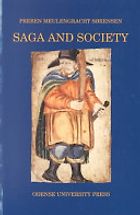
Your next choice is Saga and Society, by Preben Meulengracht Sørensen.
This is a much more balanced book. It was first published in 1977, and most of the ideas in the book are still pretty reliable and fairly generally accepted by scholars of the subject. It summarises the history of Iceland in the medieval period, not least the history of the church. Initially the church was quite congenial to the chieftains in sharing the balance of power, but its attitude changed towards the end of the 12th century, in that it wanted an independence of its own, and this contributed to the internal strife that led to the submission of Iceland to the Norwegian crown.
The second part of the book is about early Icelandic literature, and gives a very balanced and sensible account of it, drawing attention first of all to the two main theories about the origins of the sagas: oral as against written. He says one shouldn’t think in terms of too rigid a distinction here, that the two theories inter-relate.
But the sagas are pre-Christian, aren’t they?
No. Iceland was converted to Christianity in the year 1000, when the Althingi, the ancestor of the Icelandic parliament, adopted Christianity by decree, and the sagas were written much later than that. On the other hand, there is a considerable residue of the pre-Christian religion in the sagas, and also in the poetry, much of which dates from relatively early, and on which the sagas rely to some extent.
I’d like to know a bit about the pre-Christian religion.
It was a polytheistic religion, of course. We know about it partly from a collection of poems put together in the 13th century, the Poetic Edda, although many of these poems – eddic poems, as they are called – date from earlier than that, some from the pre-Christian period. We also know about it from the Prose Edda, an account of pre-Christian mythology written around 1220 by Snorri Sturluson.
“Iceland was converted to Christianity in the year 1000, when the Althingi adopted Christianity by decree.”
The Poetic Edda is an anonymous collection, and, since much of the poetry contained in it must originally have been transmitted orally, it’s doubtful how far we can speak of authors of individual poems. Snorri Sturluson was writing partly on the basis of the kind of poetry that is preserved in the Poetic Edda. The major gods were Odin, the god of poetry, Thor, the warrior protector of farmers and peasants, and Freyr, who was a fertility god.
She’s female, is she?
Well, Freyr in the form in which I gave the name is a god, and male, but his sister and consort is the goddess Freyja, so these two deities are very closely bound up with one another.
Does Old Norse have links to Anglo-Saxon?
Yes, indeed. Old Norse is essentially the language of medieval Scandinavia, and it’s divided into West Norse, represented today by Icelandic, Faroese, and Norwegian, and East Norse, represented by Swedish and Danish. We’re talking mainly about West Norse here. Anglo-Saxon belongs to the West Germanic group of languages, and shares a common ancestry with Old Norse, because both are Germanic languages.
On to your penultimate author, Terry Gunnell.
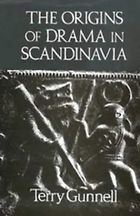
He was a pupil of mine, and I’m very proud of him, although I wouldn’t presume to take any credit for his work. His book, The Origins of Drama in Scandinavia (an ambiguous title that might give the impression that all drama originated in Scandinavia!) is based on his PhD thesis. He’s now a Professor in Folkloristics at the University of Iceland.
He’s mainly discussing the poems of the Poetic Edda, and what he’s arguing in the book is that it’s almost impossible to recite some of these poems, which consist largely of dialogue, without drama, without acting, without needing more than one person to play the parts of the characters. He also shows – and this is the most original feature of his book – that the way in which speeches are indicated and attributed to characters in the manuscripts is comparable to the way in which speech directions are given in other medieval drama traditions – in French drama in particular.
He’s suggesting they acted them out?
He is indeed. It’s an approach that makes the poems that much more attractive and interesting to present-day students. In teaching them, one can make the students read the parts, and so on.
Tell me about one of the poems.
The best-known one is the one in which the god Thor has his hammer stolen by one of the giants, and is told that he won’t get it back unless the goddess Freyja comes to Giantland and marries the giant in question, whose name is Thrym.
The climax of the poem is that Thor himself dresses up as a bride (a comic situation, as Thor is one of the most masculine of the gods) and goes to Giantland, where fortunately the giants don’t see through the disguise. Thor seizes his hammer and kills Thrym. This poem is composed in the metre known as epic metre (or ‘old story’ metre), but the metrical form that Terry Gunnell makes most of for the purposes of his theory is the one known as chant metre.
Your final book is J R R Tolkien’s Legend of Sigurd and Gudrún.
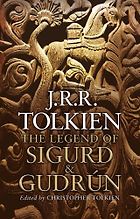
Tolkien is mainly known for The Hobbit, The Lord of the Rings, and so on, but he was a Professor of Anglo-Saxon at Oxford and wrote a fair number of scholarly works and articles. The Legend of Sigurd and Gudrún is a creative work, consisting of two long poems written in Modern English but mainly in epic metre. Now, the main manuscript in which the eddic poems are preserved is called the Codex Regius, and the unfortunate thing is that some eight leaves of this manuscript are missing, and they come in the middle of the story of Sigurd and Brynhild. This book of Tolkien’s was edited by his son, Christopher, who has edited the poems together with his father’s lecture notes, and there is an interesting difference between the lecture notes and one of the poems.
“The main manuscript in which the eddic poems are preserved is called the Codex Regius, and the unfortunate thing is that some eight leaves of this manuscript are missing.”
In the lecture notes, Tolkien says that there would originally have been 200 to 300 stanzas in the missing part of the manuscript – but in his own poem, where his creative imagination is at work, he fills the gap with only 125 stanzas. You get an opportunity here to see the tension in Tolkien between the scholarly impulse and the creative impulse.
Get the weekly Five Books newsletter
With what does he fill the gap?
Well, one would need to go into quite a bit of detail, but it’s essentially the story of how Sigurd and Brynhild get together and are betrothed, but are tricked in various ways so that Sigurd marries Gudrún instead of Brynhild. In revenge, Brynhild arranges for Sigurd to be killed; she then commits suicide, aghast at what she has done. We know the details of the story from sources other than the Codex Regius, but the sources conflict with each other, so Tolkien does his best to give them coherent form.
March 29, 2011
Five Books aims to keep its book recommendations and interviews up to date. If you are the interviewee and would like to update your choice of books (or even just what you say about them) please email us at [email protected]