The author and Senior Conservator of the University of London's Senate House Library discusses books on Indian Journeys. Interesting selections that offer good insights into the authors themselves
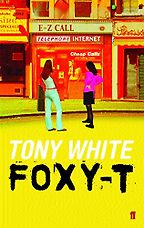
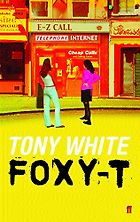
Your first book doesn’t actually get as far as India. Foxy-T, by Tony White.
This is, in fact, the best book that has ever been written about Brick Lane. No doubt it would have won lots of prizes if the author had had a slightly different name. Anyway, it is about a community really, but it is based around two girls who work in a telephone and computer place off Cannon Street Road, the E-Z Call phone shop. There are all these dubious characters coming in who are out of young offenders institutes or whatever, people from the Bangladeshi community, and it’s really about the progress of these two girls, and the whole book is written in Bangladeshi idiom. It takes a while to get into, but then you do get into it and it’s an amazing tour de force.
But he’s not Bangladeshi?
As you can imagine, no. Tony White! It was very well reviewed when it came out. I don’t know how he knows so much about the community and I’m not an expert on the dialect, but to the extent to which I do know about these things, I’d say it was pretty authentic. I think you can often learn more from a novel than you can from a factual book.
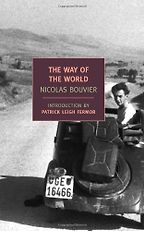
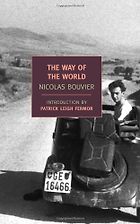
The Way of the World by Nicolas Bouvier.
It’s translated from the French because I think he was Swiss, and it’s about a journey in the 1950s from Belgrade to India. They try to go to India in a tiny battered Fiat and it takes them several years, these friends, and it probably describes the attraction of travel better than any book I’ve ever read. They spend quite a lot of time in Turkey and Iran and Afghanistan. He is going to India and the book ends as he goes into Pakistan. A lot of it is set in cafés and one thing and another – it’s a diary. I remember a little bit in there when they’re setting out one morning into a semi-desert landscape and the rising sun catches the plumage of the quails and partridges, and it’s a magical moment when he just sees that this is what travel is all about.
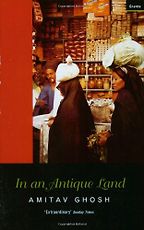
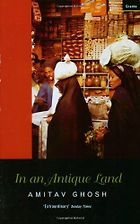
He’s a much better writer of factual books than fiction. It’s about him researching these documents that originally came to Cambridge University out of Egypt, and they are documents pertaining to Jews who were based in Egypt but were travelling to do business in Southern India in medieval times. He writes extremely beautifully about life in an Egyptian village where he stays and the people he meets, and the stress when their young men are caught up in the war between Iraq and Iran. It’s an amazing story really and it’s amazing how these documents were preserved. Apparently, for Jews it’s considered wrong to throw away documents that have God’s name written on them, so they had these huge boxes the size of houses in Cairo and if you wanted to get rid of anything you just threw it into these and they accumulated over centuries and centuries. It’s extraordinary that they survived in this way. So it’s a personal piece of historical research. He eventually goes to India as well and tries to find connections with people who had gone over there.
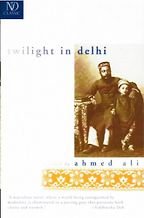
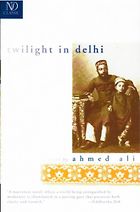
Twilight in Delhi by Ahmed Ali.
This is a book about Delhi, which was a mainly Muslim city before partition and it’s about old life in Delhi. It’s a very interesting book and it has a very interesting publishing history actually. It was published by Hogarth Press at the beginning of the war, then the printers refused to print it because they thought it was subversive – it was quite critical of the British in India. E M Forster had initially found him a publisher and then Virginia Woolf got involved, and had a friend who was the chief censor and it was passed, and it came out to some acclaim, but then the warehouse was bombed in the Blitz and it was out of print for many years. But it is a fascinating story of what life was like in a kind of prosperous, middle-class family in the crowded lanes of Old Delhi in the early 20th century. There’s a lot about standing on the roofs – everyone’s got their own flock of pigeons, which you still see sometimes in Delhi – and people are calling to them and the whole idea is to try to capture some other person’s pigeons with your own.
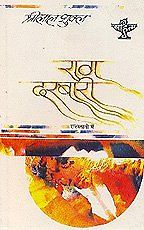
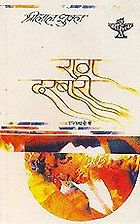
Raag Darbari, Sri Lal Sukla.
This is a book about a village in India in the 1960s and it’s about how everybody in that village is involved in the politics of that village, and it’s all to do with striving to become the dominant force, either in the agricultural co-operative or in the local college, and there are endless conflicts about who’s going to be elected and what’s going to happen. It’s all to do with influence in the village. When there is an impasse they all go and get stoned. They drink the cannabis actually, mixing it with yoghurt, which they call bhang lassi, and that seems to solve the problem. It would probably solve a lot of problems in politics in England too! It’s written as a satire but actually a lot of the things in this book, the violence and the criminals getting involved in politics have now overtaken these areas, particularly in Uttar Pradesh where this novel is set. So Sukla, who is still alive and was a government official himself, is now amazed by how real events have overtaken what he wrote as a satire.
Tell me about your latest book. You’ve written a lot about India.
Well, not a lot. But I wrote The Great Hedge of India which was about a hedge that the British grew across India to stop salt being moved across the country. Then I wrote a book on tea, A Brief History of Tea. I used to be a tea planter in Africa and this is about the British and tea and how they introduced it to India, Sri Lanka and Africa. Originally it was pioneered by the Chinese to keep awake during meditation. The British became very addicted to tea and ended up going to war against China to secure their supply.
My latest book, Outlaw: India’s Bandit Queen and Me, is about a woman called Phoolan Devi. I read a small thing about her in the newspaper in 1992. She had surrendered under a deal with the government where she would be released after eight years, and they hadn’t released her, so she was running for parliament from jail to draw attention to her plight and the condition in general of women and the poor in India. I wrote her a note to cheer her up and surprisingly I’d got a reply. She had never learnt to read or write but she’d got it translated and sent a reply. We had a long correspondence while she was in prison and I gave her advice and a bit of help, and then in 1994 she was released, and I happened to be in India so I went to visit. I thought I might not even like this woman but we got on very well and next day I moved into the house where she was staying, which was completely surrounded by armed police because her life was in danger.
What kind of bandit had she been?
She was a bandit by accident. She was married off at 11 to a much older man, who was supposed to wait for her puberty but didn’t and he raped her a lot of times, and she ran away. But when she ran back to her own village she was a fallen woman. Men propositioned her and she refused, so a group of them arranged for her to be kidnapped by bandits. So there she was with these bandits, ultimately led by a bit of a Robin Hood character. They would get a message from a village that the upper caste wasn’t allowing the villagers to get water, so they would descend on the village and shoot a few people and that kind of thing. They took money from the rich to give to the poor, though no doubt they kept some. She was captured and taken to an upper-caste village, her man was killed, and she was held there and raped by many men in the village. At some later stage her gang went back to the village and shot 22 of the men. So the government went mad and she went on the run and they couldn’t catch her. She realised she’d get caught in the end and so surrendered. After she came out of prison she became a member of parliament. She was assassinated in 2001. It’s an extraordinary story.
A terrible story.
August 18, 2010
Five Books aims to keep its book recommendations and interviews up to date. If you are the interviewee and would like to update your choice of books (or even just what you say about them) please email us at editor@fivebooks.com
Five Books interviews are expensive to produce. If you've enjoyed this interview, please support us by donating a small amount.
Roy Moxham
Roy Moxham is the author of Outlaw: India’s Bandit Queen and Me, A Brief History of Tea, an updated edition of Tea: Addiction, Exploitation and Empire, The Great Hedge of India, and The Freelander. A former tea planter in Nyasaland and later Malawi, he spent 13 years in Eastern Africa before becoming Senior Conservator of the Senate House Library, University of London.
Roy Moxham is the author of Outlaw: India’s Bandit Queen and Me, A Brief History of Tea, an updated edition of Tea: Addiction, Exploitation and Empire, The Great Hedge of India, and The Freelander. A former tea planter in Nyasaland and later Malawi, he spent 13 years in Eastern Africa before becoming Senior Conservator of the Senate House Library, University of London.