The Best Fiction Books » Thrillers (Books)
The Best Legal Novels
recommended by Scott Turow
The bestselling author of legal thriller Presumed Innocent tells us about his own favourite legal novels.
Interview by Christine Thomas


The bestselling author of legal thriller Presumed Innocent tells us about his own favourite legal novels.
Interview by Christine Thomas
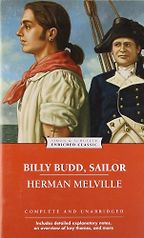
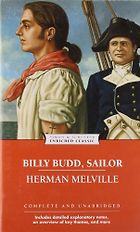
Why does the 1924 book Billy Budd top your list?
It’s Herman Melville and it’s kind of great. It’s a clear classic. It’s a pretty simple tale except for its gay subtext, which I think would be pretty obvious to contemporary readers but probably was not to Herman Melville. And it’s about the extraordinary divide that sometimes arises between law and justice.
How does it explore that?
Well, there’s Captain Vere, and vere, of course, translates from the Latin as truth, and I think it’s his last journey. Billy Budd, who’s basically being, in today’s view, homosexually harassed by Claggart, the master-at-arms, strikes Claggart, and of course a seaman cannot strike an officer. And even though the provocation is clear to Vere, Billy is executed. But it absolutely breaks Vere’s spirit, and if I’m recalling – it’s been a while since I’ve read it – he dies with Billy Budd’s name on his lips.
So from an attorney’s perspective, it’s a great reminder that law and justice don’t always meet?
I read Billy Budd long before I went to law school; it stands on its own as simply a classic piece of literature about the war between duty and morality. It was the last thing Herman Melville wrote and he hadn’t written any fiction for quite some time. And the other thing that’s always interesting about Melville is he’s always had a noticeable fascination with the law. His father-in-law was Lemuel Shaw who was the Chief Justice of the Supreme Judicial Court in Massachusetts. Melville wrote about the law throughout his career but most famously in Billy Budd.
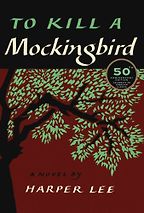
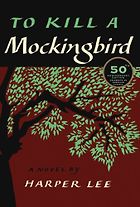
I was surprised and not surprised to see To Kill A Mockingbird next on your list. Why does it earn that place?
It’s still a wonderful read. It’s dated in many ways; it’s extremely sentimental. But it’s beautifully done – you can’t take a thing away from it.
It was published around 1960 – is its vision of the law much changed from Melville’s time?
We hope that the law is less crassly unfair to African-Americans. I would love to believe that there’s less injustice to racial minorities – that our consciousness has grown, a consciousness spread in part by books like To Kill A Mockingbird. It’s an interesting segue between literature and the law that a book like that, which was so overwhelmingly popular, also went on to demonstrate why something like the Civil Rights Act needed to be passed.
Why does the book stick with you and with the country generally?
It’s kind of a combination of the fact that it’s beautifully done and also incredibly politically correct. It’s the oppressed and innocent African-American, the noble poor person, and the virtuous white guy who’s willing to stand up to the town.
It’s a story we like to believe.
It’s a story we like to hear right now, yes.
Do you see the novel any differently from an attorney’s perspective, perhaps in a way another reader wouldn’t?
I think Atticus Finch is probably more admirable to lawyers than to other readers, so being a lawyer adds something to that. I often talk about Atticus Finch because people wouldn’t believe any more in a lawyer that good. Lawyers were supposed to be paragons and the reality that they weren’t always that way came with Watergate in the seventies.
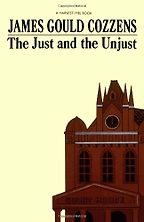
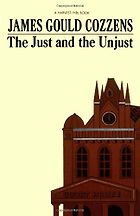
The Just and the Unjust was the only book ever reviewed in the Harvard Law Review – is it standard reading for attorneys?
No, I don’t think it’s standard reading for anybody any more, which is why I put it on the list. Cozzens was regarded as a major American novelist in the middle of the 20th century, and he has fallen by the wayside in terms of public esteem. But this is just a very, very good book about a small-town lawyer. It’s ultra-realistic, which means that it is from that time when realist novelists believed that their job was to portray only the so-called middle range of experience, which other people might call boring. But it’s a really beautiful book. It’s a beautiful portrait of a time and a place. If anybody really ever wants to know what it was like to be a small-town lawyer in the United States in the 1930s, people whose grandfathers or great-grandfathers were lawyers in a small town and want to know what their life was like, I would say read this book.
People also say this isn’t a crime book but about the lawyer and the lessons he learns. Is this what books about the law do well – at least the books you like?
I would agree with that. The books I like tend to be more about character than plot. This is a book that’s steeped in the details of a lawyer’s life, and I read it while I was in law school. But it’s a wonderful book. It is, again, not full of excitement. If you want to read about car chases this is not the right book for you.
Cozzens was a contemporary of Faulkner and Hemingway. Why do you think, as you mentioned, he’s fallen by the wayside?
I think he’s a very fine writer; I don’t think he’s either Faulkner or Hemingway. Hemingway basically changed the nature of the American story; although his macho side has caused him to fall out of vogue, I think his novels will actually prove to last a long, long time – even though he may have created stereotypes that people treat with some scorn. Faulkner, I think, is regarded by many, with great justification, as the greatest American novelist. His manner is unique, and the profundity of Faulkner at his best is pretty much unrivalled. He’s an amazing, amazing writer and he goes on that short list, you know; he can get in the ring and battle Tolstoy. Cozzens was not as path-breaking a novelist.
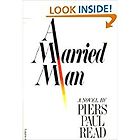
Tell me about A Married Man.
I keep talking about this book, hoping that someone will reissue it; it is out of print, and I mention it because of that. First of all, it’s a wonderful novel. It is elegantly plotted and it’s about serious stuff – about a lawyer in London who’s turning 40 and about the approach of middle age. Obviously, some of the themes resemble those in my own books, which is probably what enhances my appreciation for it. He’s drawn into an affair and… I don’t want to say too much about it and ruin it.
And oddly they made a British movie about it, I think it was made for television, and the movie was also quite good. But you know the whole thing has dropped from the scene, and so, all things being equal, I choose to mention it to remind people that this is a really good novel.
The crisis in the book is tied to perceptions about the country’s moral state. Melville deals with similar issues, doesn’t he?
Melville of course did that much more overtly and much more symbolically. Melville was kind of a Marxist before Marx, and he saw the world in terms of this great clash of ideas and values. And he saw the American dilemma of trying to deal with commercialism, which he saw consistently as soul destroying. Piers Paul Reid is not writing on as large a canvas; he’s just trying to compare the moral crisis in one man’s life with the decline in the country.
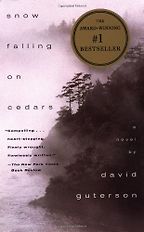
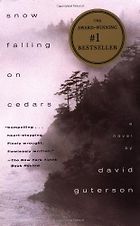
One reviewer said your fifth book, Snow Falling on Cedars, does what the best books about law do – takes readers to the heart of living in a political community.
Yes. I think it’s a terrific novel. It’s about a trial, and about prejudice about Asian-Americans in a small town in Washington State – again, a particular time and place. Again, there’s a surprise at the end. Odd things happen to books when they become movies, and a great movie was not made from this great novel, and it clearly diminished the reputation of the book. But it’s just a superb novel, full of really beautiful characterizations – the reporter who’s covering this trial, and his elderly lawyer who’s defending the case is quite a remarkable character. He’s old, he’s impotent and thinks of sex wistfully, yet his wisdom captures the courtroom.
“ Lawyers were supposed to be paragons and the reality that they weren’t always that way came with Watergate in the seventies.”
Guterson grew up in that milieu – his father was a lawyer so he knows whereof he speaks. The sense of what goes on in the courtroom is extremely realistic – it’s very good on the law, but it’s very good at recognising the larger political and emotional context in which any important trial necessarily sets itself.
Does it have contemporary reverberations? Read together, what do these books offer?
I think they’re a pretty round portrait of the problems of the law, the kind of human mess that it tries unsuccessfully to make sense of.
Is that your aim when writing your novels?
Yes, indeed. Yes, indeed.
Interview by Christine Thomas
December 18, 2012
Five Books aims to keep its book recommendations and interviews up to date. If you are the interviewee and would like to update your choice of books (or even just what you say about them) please email us at [email protected]
Support Five Books
Five Books interviews are expensive to produce. If you've enjoyed this interview, please support us by donating a small amount.

Scott Turow
Scott Turow is the author of legal thriller Presumed Innocent and nine other bestselling works of fiction including, most recently, Testimony. His non-fiction writing includes Ultimate Punishment, a reflection on the death penalty. He continues to work as an attorney and is a partner in the Chicago office of international law firm SNR Denton. His books have been translated into more than 25 languages and sold more than 25 million copies worldwide.
Scott Turow
Scott Turow is the author of legal thriller Presumed Innocent and nine other bestselling works of fiction including, most recently, Testimony. His non-fiction writing includes Ultimate Punishment, a reflection on the death penalty. He continues to work as an attorney and is a partner in the Chicago office of international law firm SNR Denton. His books have been translated into more than 25 languages and sold more than 25 million copies worldwide.
© Five Books 2024