Politics & Society » Human Rights
The best books on Human Rights
recommended by Shami Chakrabarti
Director of Liberty Shami Chakrabarti says Harry Potter and the Order of the Phoenix is a thinly veiled metaphor for the War on Terror


Director of Liberty Shami Chakrabarti says Harry Potter and the Order of the Phoenix is a thinly veiled metaphor for the War on Terror
Your first book?
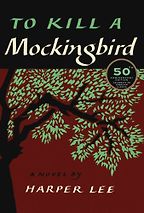
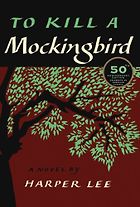
To Kill A Mockingbird by Harper Lee, which I have no doubt has launched hundreds of thousands of lawyers and human rights campaigners on their path. I read it as a child and it just had an incredible effect on me. What’s wonderful about it is that it’s such a big book but such a small one – it’s very human and very touching, as well as dealing with very big issues to do with fair trials and race discrimination in America’s Deep South.
It’s the story of a child’s summer in the Deep South, and the protagonist is a little girl called Scout and her father is Atticus Finch, who’s a single parent – she’s lost her mother. Atticus Finch is a lawyer and during this summer he defends a black man who’s wrongly accused of raping a white woman: with all that that entails. I’ve really picked this book because it just shows you that in the end great fiction can probably move more people than legislation or political speeches. A great novel can inspire people to do all sorts of great work, and I am sure that amongst my friends, and lawyers in particular, if they were asked to pick a book that’s had a profound influence on them it would be this. The genius of it is the fact that you can read it when you’re relatively young and that it can still convey some very difficult and complex messages.
Support Five Books
Five Books interviews are expensive to produce. If you're enjoying this interview, please support us by donating a small amount.
I named it as a favourite book in another interview and I got this wonderful letter from a complete stranger who said I’d like to share a story with you. Years ago this person was on a teaching exchange in the South of America, working with some children who were putting on a dramatic version of the story in a church hall. There was an elderly woman who came in at one point and was skulking around the back of the hall, and when they asked, ‘Can we help, Ma’am?’, she said, ‘Whose idea was this to put it on?’ And the teacher said, ‘Can we ask why you’re interested?’ And she said, ‘Because my name is Harper Lee and that’s my book.’ And they said: ‘What an honour to meet you and can we ask why did you never write another book?’ And the answer came: ‘Because I said everything I had to say in that book and I stand by it forever.’
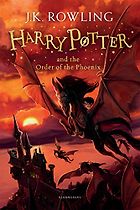
Your next book is Harry Potter and the Order of the Phoenix. Is that the one with a terrorist theme?
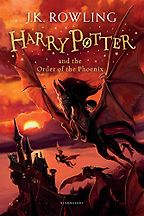
It’s all about the War on Terror as far as I’m concerned. I read this book shortly before I became director of Liberty and you might say I’m someone who’s a little unwell and thinks the TV is talking to me, but to me it’s a thinly veiled metaphor for the War on Terror. The Ministry of Magic is raining down in various draconian ways in response to a very serious threat from the dark Lord Voldemort. Early on in the book we see that the owls – who are a means of communication – are being intercepted to and from Hogwarts School – so that’s your increased surveillance. Poor old Harry is wrongfully accused of something and is up before a kangaroo commission where every trick in the book is used against him: they change the time of the hearing, and there’s no proper due process, and that’s very reminiscent of some of the secret commissions that sprang up in Britain during the War on Terror, this attempt to bypass traditional British justice as we understand it.
“There’s an attempt in the European Convention on Human Rights to encapsulate the non-negotiables of any democracy: no torture, free speech, fair trials, personal privacy, equal treatment under the law, freedom of thought, conscience, and religion, and peaceful enjoyment of property.”
In the book what it might feel like to be in front of something that purports to be a court but clearly isn’t comes across incredibly well. There are human rights issues all the way through it, and there’s even a scene where Harry is tortured. It’s great fiction, and what with the massive readership and the movies and everything you can reach so many more people than with polemical writing or political activism or whatever. It will reach – and has done already – so many more children and young people than I, or anybody who campaigns for rights and freedoms, ever could. What’s wonderful is that she’s got people reading this – about intrusive surveillance and torture, but also about solidarity and resistance and great human virtues.
Your next book?
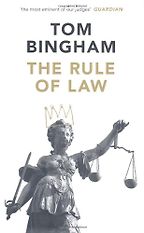
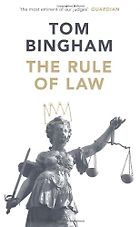
Tom Bingham’s The Rule of Law. A new book from probably the greatest jurist of our times, probably anywhere in the world. Recently retired, he was the senior law lord for the War on Terror and therefore heavily responsible for some very important decisions from the House of Lords Judicial Committee: against torture, against detention without trial, and so on. What’s wonderful about this book is that it’s not a law book; it’s for everybody. He’s attempting to explain, clearly, simply, powerfully, to a lay audience what the rule of law means and how important it is to everybody in modern society. Everyone should read this book, because it’s about our society. It’s about democracy, and how democracy isn’t just about having elections every few years, and it’s about our fundamental rights and freedoms that keep democracy alive, and how you do need firm independent judges to police the rules of the game. He’s not polemical, and he’s not preachy: he just reminds us of what we have and why we have it, and why it’s important. You do have to have rights and freedoms, you do have to have independent judges, and the law does have to have some moral content to it. It’s not long, it’s not complicated: it’s a really useful reminder of things that were taken for granted.
Next book?
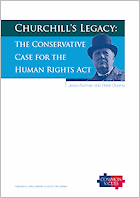
I’m picking something with the new coalition government in mind. It’s called Churchill’s Legacy: the Conservative Case for the Human Rights Act, written by Peter Oborne and Jesse Norman, and it’s downloadable for free. They do something really important, which is to write – from a conservative point of view – about the Human Rights Act, which of course has been so denigrated and attacked from the centre right and the right of politics in Britain, who saw it as this horrible New Labour political correctness kind of thing. As two very proud conservative thinkers, they explain some of the history and philosophy of the Act. It was actually the post-war Labour government which had far more doubts about enshrining rights and freedoms in law. But it was Winston Churchill who said: we must have these rights and freedoms enshrined in post-war Europe, and there’s an obvious reason for that: we’ve seen the Holocaust and the Blitz, and what totalitarianism can do. So there’s an attempt in the European Convention on Human Rights to encapsulate the non-negotiables of any democracy: no torture, free speech, fair trials, personal privacy, equal treatment under the law, freedom of thought, conscience, and religion, peaceful enjoyment of property, and so on, and all that is now enshrined in the Human Rights Act. So this book is particularly important now, when you’ve got a government of two coalition partners, one partner of which – the Lib Dems – has been very solid in supporting the Act to date, with the other party, the Conservatives, being much more ambivalent and mixed. There are hawks and doves everywhere, and we can dispute particular policies and the application of rights and principles, but no one wants to scrap human rights culture altogether, so I think at this moment this is an important little book.
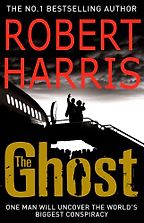
The Ghost by Robert Harris?
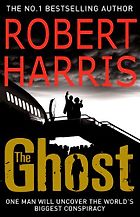
This is great fun, a ripping yarn, lovely suspense, great story, but still touching on some pretty serious, pretty contemporary issues: notably what happens to a government when the values that we’ve been talking about begin to evaporate, in particular in the context of that great euphemism, the War on Terrror, which I think was all about euphemisms. Perhaps the euphemism to end all euphemisms was ‘extraordinary rendition’, which means kidnap and torture in freedom’s name, it seems, and that and its consequences are dealt with in the book, which obviously doesn’t end happily for the fictional prime minister in it.
Who we are encouraged to believe is based on Tony Blair?
It’s hard not to make that assumption. This is a book about what happens when the rules of the game no longer apply, and it’s about picking up the pieces and dealing with the consequences of that and trying to understand how people can be mesmerised and drunk on their own confidence. But, most of all, it’s a lovely classic thriller. I think it’s a nice conceit that you’ve got this protagonist, the Prime Minister’s ghostwriter, who has just drifted into this and is fairly morally neutral about everything; it’s a nice way to bring the reader in, and then he obviously discovers various things. The book might perhaps remind us of some of the things that have happened in our name during this misguided, misnamed, misjudged War on Terror, which will rob us of our values. Because we’re supposed to feel that we’re in a permanent state of war, so the rules of the game no longer apply.
I’m always incredibly admiring of people who can convey the sort of things that I would want to convey, although I don’t have those talents – whether it’s J K Rowling or Robert Harris or even Harper Lee. It’s the power of fiction – that ability to move people with suspense, character, emotion.
December 17, 2010
Five Books aims to keep its book recommendations and interviews up to date. If you are the interviewee and would like to update your choice of books (or even just what you say about them) please email us at [email protected]

Shami Chakrabarti
Shami Chakrabarti is the director of Liberty, the National Council for Civil Liberties, and is heavily involved in attempting to resist some of the more draconian laws brought in during the War on Terror. She is the Chancellor of Oxford Brookes University, as well as being a governor of the London School of Economics and the British Film Institute, a Visiting Fellow of Nuffield College, Oxford and a Master of the Bench of Middle Temple.
Shami Chakrabarti
Shami Chakrabarti is the director of Liberty, the National Council for Civil Liberties, and is heavily involved in attempting to resist some of the more draconian laws brought in during the War on Terror. She is the Chancellor of Oxford Brookes University, as well as being a governor of the London School of Economics and the British Film Institute, a Visiting Fellow of Nuffield College, Oxford and a Master of the Bench of Middle Temple.
© Five Books 2024