When William of Orange came from Holland to take the English throne in 1688, was it a foreign invasion, or a revolution from within? Yale historian, Steven Pincus, talks us through the conflicting views on the Glorious Revolution and argues for a new perspective.
The Glorious Revolution is an event that – like so many of these classic historical events – has undergone substantial reinterpretation in recent years. For example, in the UK, where I studied history, it was long the conventional wisdom that the last time England was invaded was in 1066. But in 1688, William of Orange came from Holland to take the English throne with more than 21,000 men, and a fleet twice the size of the Spanish Armada. Is it right to now view 1688 as a foreign invasion?
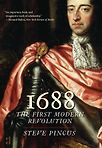
A major contribution of one of the books on the list, Jonathan Israel’s The Anglo-Dutch Moment, is to document just how big the invasion force was, both in terms of the size of the fleet and the number of men and how sophisticated it was. His claim was that, yes, this should be considered an invasion. The point I tried to make in my own book, 1688: The First Modern Revolution, is that yes, it was a huge invasion force, but it involved a large number of people who were, in fact, English, Scottish, Welsh and Irish exiles. There was also a huge amount of financial support from Britain. Something larger than the annual revenue of the Crown was given to William from inside Britain to support his invasion. Also, William himself had both an English wife and an English mother, so deep connections to England. So rather than seeing it as an invasion, it makes more sense to see it as part of a revolutionary movement from below, from within Britain. What we need to do is jettison our conventional notions of what the boundaries of a nation state were, and accept that social and political movements in the 17th and 18th as much as in the 20th century were internationalised. There was critical support from outside Britain, but that support was part of a negotiated process with people in Britain who wanted to overthrow the regime.
In the literature on the Glorious Revolution, and some of the books you’ve recommended, the events of 1688 are presented as non-revolutionary. It’s all about the preservation of ancient liberties – it’s even called the Bloodless Revolution, because very few people were killed. There’s almost a denial that it was a revolution, and certainly nothing like the bloody French or Russian revolutions. But I believe the main thrust of your own book is that it was in fact deeply revolutionary?
That’s right. Starting with Thomas Babington Macaulay’s seminal work in 1849, the thrust of the scholarship in British historiography has been that Britain is unlike the Continent in not having had either a violent or radical revolution at any point in its history. The standard line was that British political and social development was always evolutionary rather than revolutionary, and 1688-9 was a restorative event. Then the revisionists came along. They said, “Look, this standard Whig interpretation sees the victors of 1688-9 as being the progressives, that it’s about defending liberty. But James II was, in fact, quite committed to religious toleration. The revolution was actually reactionary against someone who was innovative.”
The point that I try to make in my book is that the revolutionaries were innovative. There was revolutionary change and there was quite a lot of violence and social disruption. It would be a mistake to see James II as a proto-liberal and the revolutionaries as reactionary. Both of them were trying to modernise the British state and British society. So the Revolution of 1688-9 – like the French Revolution, and the Mexican Revolution, and the Russian Revolution – was a competition between two groups who thought that the polity had to be radically transformed. They just had radically different visions of how that transformation should take place.
Let’s start with the Macaulay, then, The History of England from the Accession of James II. He’s writing at the time of the 1848 revolutions in continental Europe, and he writes that “it’s almost an abuse” to give 1688 “the terrible name of revolution” – because it was so different from what he was seeing going on in Europe. Tell me about the significance of this book.
Macaulay’s work was extremely important in a number of ways. It was incredibly well researched: He had an army of research assistants and used archival material that had hitherto been unutilised. The case that he made – writing very much in the shadow of the revolutionary events of the 1840s in Europe – was that what happened in England in 1688-9 was completely the opposite of what had happened in France in the 1790s, and was going on on the Continent in the 1840s. That is to say, it was a peaceful, consensual event, in which everybody agreed to get rid of an abusive monarch. Also, one of the central points he makes, in the third chapter of the book, is to dissociate the relationship between social and economic change and political change. He argues that before 1688 England was, by any measure, a backward place. It was the political change [of 1688-9] and the protection of liberty, which paved the way for British industrial development in the later 18th century. He was reversing the line of mid-19th century European radicals who argued that socio-economic change demanded political change, and arguing that it was in fact political change in Britain that gave rise to social and economic modernisation.
In terms of the way the book is written, he’s not trying to be an objective historian is he? It’s full of stirring passages, with goodies and baddies and a tyrant being overthrown by parliament. It’s quite novelistic isn’t it?
Without question. Historical writing in the mid-19th century was much more narrative driven. It was expected that people would take a side. The discipline of history hadn’t been consolidated yet, so the tone of objectivity that we’re all supposed to have now was not the standard. That’s something that happens after the writings of Leopold von Ranke in the late 19th century. It does make it quite easy to dismiss Macaulay, simply because of the rhetorical flourishes. Nevertheless, it’s a book that needs to be taken very seriously. Macaulay did an amazing amount of research, and while he’s taking a side and while he’s quite passionate, his arguments are well considered, sophisticated and well thought out. I was always amazed, doing research for my own book on 1688 – I’d think I’d found a manuscript nobody had seen before, and frequently Macaulay had seen it.I did, I hope, find some things that he hadn’t seen, but it was remarkable how thorough his research was.
I know Karl Marx called Macaulay a “systematic falsifier of history.” Even Lord Acton, while a great admirer, was very rude about his work. Was he quite controversial?
He was and remains controversial. Now scholars criticise him for not discussing the Empire at all in his history, when this was so manifestly important in the 18th century. There’s no question he was a controversial figure. He was simultaneously a publishing historian and quite an active politician. He took positions and he defended them. The book does, as you say, have novelistic tendencies, but it also reads a bit like a lawyer’s brief for a particular point of view. There’s no attempt to be impartial. I think Marx’s quibble with Macaulay was that he got the social and economic history of Britain completely wrong. Marx saw the Revolution of 1688-9 as a bourgeois revolution, a transformative event, so he disagreed interpretively with Macaulay. A lot of what Macaulay said, especially about the socio-economic history, hasn’t stood the test of time. Also, the overall interpretation of some of the things that he described I disagree with, and others disagree with too. That said, it’s a remarkable testament to a historian that we’re talking about his book in a serious way almost two full centuries after it was written. One can only aspire to such longevity!
So was he trying to make a point about politics in his own time?
Without question. He’s not only writing in the context of the revolutions on the Continent, he’s also writing in critical dialogue with the Chartists in Britain. He would say that the Chartists had it all wrong, and that their attempts to promote radical changes in the British constitution were wrong-headed. There’s no question he was trying to make a point. That said, as with many other historians, there’s a sense in which the way Macaulay understood the past tended to inform his contemporary political commitments, as much as his contemporary political commitments informed the way he understood the past. I don’t think he’s just trying to impose a particular vision on the past. It’s a dialectical relationship.
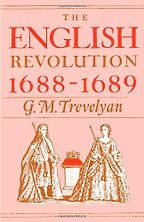
Let’s go on to GM Trevelyan’s The English Revolution. He is Macaulay’s great-nephew, but also one of the most distinguished English historians of the 20th century.
Yes. Trevelyan made his name writing about Continental history. He was a distinguished historian of Italy as well as having written a history of Anne’s reign. Like Macaulay, he was deeply immersed in the politics of his age, in his case the 1930s. His account of The English Revolution – the foregrounding of the word English in the title is important – was to distinguish the changes that had gone on in Britain in the 17th century from the rise of fascism on the Continent which he very much despised. He was a critic of Hitler, Mussolini and Franco. Again, it was a dialogue between past and present. However, in terms of length and depth, Macaulay’s study and Trevelyan’s stand in complete contrast. Trevelyan did no new archival research. He was basically interpreting facts that were relatively well known. It doesn’t read like a book where he’s telling the reader things they should be surprised about. He was making the story understandable and pointed, for his own time. He’s pointing out the significance of things the reader already knows. He did this remarkably successfully. It’s a short book, immensely readable, something someone could easily consume in an evening.
So what is his main argument? What does make England different?
His view is that the English were sensible. There were all sorts of political issues, and reasons to be unhappy with the regime, but unlike what was going on in Germany and Italy, and in Spain, the English ruling classes saw that they needed to get rid of a bad ruler, but not go to extremes. His point was that England was different precisely because the ruling classes acted sensibly: Rather than pursuing an extreme right-wing version [ie fascism] or an extreme left-wing version [ie the Russian Revolution] of political change, they sought moderate and gradual change. The significance for him of England’s Revolution was its moderation. The political classes knew that political change was called for, but they also knew that they could do so in a moderate as opposed to an extreme fashion. The lesson of England’s Revolution was that moderate change had extremely beneficial long-term outcomes.
In one of your articles you mention two quotes of Trevelyan’s about 1688, that “the spirit of this strange revolution was the opposite of revolutionary” and that there were “no new ideas”.
Exactly. For Trevelyan, the point was that what one needed to do to fix a polity was to rely on established ideas, not to try to innovate for the sake of innovating. One could draw on one’s tradition, on ideas that had developed over a long period of time – like the common law, for example – to get rid of a bad ruler and a bad polity.
I noticed one review of the Trevelyan book, commenting that this was “Whiggish history at its best.” What does that mean? Is it easy to summarise?
No, it’s not. But it is easy to summarise what Macaulay and Trevelyan both believed in, which was a commitment to slow and progressive change as opposed to revolutionary change. There’s also a notion of Protestant triumphalism, that Protestant polities are superior to Catholic polities. It’s no accident, in the case of Trevelyan, that he’s contrasting England with Catholic polities: Spain, Italy and Nazi Germany (where a lot of the intellectual firepower came from the Catholic south). These are contrasts that for Macaulay are absolutely central. There’s also the notion that social and economic change does not cause political change, but that what matters is top-down changes from the political elite. In some sense, it’s an elitist form of history.
My memory of learning about the fall of James II in school was that it was very much about the bad Catholic being chased out by the good Protestants. Is that not what actually happened?
It’s partly true. Part of what I say in my book is that one needs to take Catholicism much more seriously than people have done in the past. Catholic Europe was no more consensual than Protestant Europe. Just as there were divisions between Lutheran and Calvinist states, so there were deep divisions in Catholic Europe. On one side was Louis XIV’s France, which insisted on the absolute sovereignty of the prince with respect to both religious and political affairs, and the need, therefore, of the state to forcibly convert its Protestant dissenters, by the sword if necessary. On the other side you have the view of the pope and his political allies that sovereigns were not, in fact, absolutely sovereign. The pope should have more authority with respect to religious affairs than any secular king and therefore there were necessarily limits on royal power. Pope Innocent XI was extremely sceptical of the forcible conversions that were happening in France and he thought seriously about excommunicating Louis XIV. Why this is important is that James II was reconciled to the Catholic Church by French Jesuits. As a result, he took the point of view about Catholicism that was associated with Louis XIV’s court. That earned him the enmity of Pope Innocent XI and a lot of Catholics in Europe, as well as a lot of Catholics within Britain. The British Catholic community was divided as much as the European Catholic community was. There was an ambivalence among a lot of Catholics about James. There were also divisions within the Protestant community. Some Protestants believed that the king did have absolute authority. This was the position of a number of Anglican bishops, for example. They were willing to support James in whatever he was doing. There were many Protestants who supported James and many Protestant Jacobites throughout the 18th century. There were also a number of Catholics who supported the revolution. It wasn’t straightforwardly a Protestant-Catholic struggle in Britain itself.
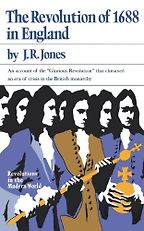
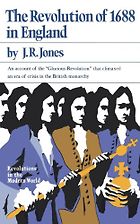
What does the next book, JR Jones’s The Revolution of 1688 in England, bring to the table? This was published in 1972, you mentioned.
Jones made two really significant contributions. The first was to point out that a number of former Whigs, people who had been active in trying to remove James II from the throne, were willing to work with James once he promoted his Declaration of Indulgence. So there are Whig collaborators with James’s regime, which, again, puts pressure on seeing it straightforwardly as a Protestant-Catholic struggle. The second contribution Jones made was to go back to something which Macaulay had done, which had fallen out in Trevelyan’s work, which was the international context of diplomatic struggles and how those made it important, from William’s perspective, to get involved in the British situation. I learned a great deal from both of these contributions.
One point I would make about the foreign policy issue is that Jones’s assumption was that these diplomatic issues motivated European actors. They explain why William wanted to get involved in Britain, but weren’t an issue for Britons, because Britons didn’t care about what was going on on the Continent. In my view, Britons cared deeply about what was going on on the Continent. The transformation of foreign policy – that turned England from an anti-Dutch alignment to an anti-French alignment – was something that a lot of people in Britain actually wanted and was on their agenda long before William came on the scene. In fact, part of the reason they wanted William was because they supported William’s foreign policy. It wasn’t William who imposed it on them.
The Dutch historian Pieter Geyl called Macaulay’s essays “exclusively and intolerantly English”. Is that also a move in the historiography of 1688, from a very English event towards a more international understanding of what happened?
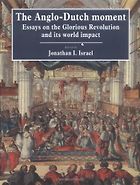
That’s the direction in which some people have been pushing, that one really needs to place Britain in a much broader international context. The next book on the list, Jonathan Israel’s The Anglo-Dutch Moment was the crowning achievement of that. Israel’s collection of essays, and most importantly his own contributions to the volume, were extremely innovative and extremely important. But they seem to have had little effect. What was really exciting about Israel was his pushing for placing things in a European context, and indeed an extra-European context, though Israel doesn’t go quite that far in the book. But most British historians and people working in this field have in fact turned much more inward, and talked about the relations between England, Scotland and Ireland. That had the effect of moving the discussion away from Europe and the broader European issues that Pieter Geyl had asked for and Jonathan Israel demanded. I felt, in a sense, that it was a lost opportunity. It was that tradition, which had become a dead end, that I tried to follow up and develop more in my book.
Can you tell me a bit more about the Israel book? I’ve always been a huge fan of his, I have to confess.
He’s a wonderfully innovative scholar. There’s another really, really important contribution that Jonathan Israel made in The Anglo-Dutch Moment, and, again, something that has largely gone unnoticed. His argument was that there was a Dutch invasion and the Dutch transformed the English polity and then the British polity. It was a real revolution. There was revolutionary change, and it came from outside. Israel was the first person to break the consensus about the un-revolutionary nature of the English Revolution of 1688-9. Where I differ from Israel is that I draw on everything he says and say he’s absolutely right, but he’s underestimated the extent to which there was a radical tradition developing within England itself. The reason why the radical Whigs in England turned to William was precisely because they thought he was sympathetic with their ideas.
So you’re recommending the book largely for the contributions by Israel himself? Because there is also an essay in there saying the revolution was conservative.
Yes, there’s John Morrill’s essay on Trevelyan which says exactly that. But the Israel essays are a book almost in and of itself. They’re really incredibly innovative and well researched.
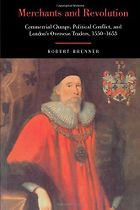
Lastly you’ve chosen a book by Robert Brenner, Merchants and Revolution. This actually covers the 1550 to 1653 period, so it’s not going all the way up to 1688, is that right?
Narrowly, the empirical stuff is on the early 17th century, but there is a very long postscript at the end of the book where he takes the story up until 1688-9. The central argument of Brenner’s book is that the real revolutionary change happened in the mid-17th century, and what happened in 1688-9 was a bit of a mopping-up operation. The really important contribution that Brenner made was to reintegrate social and economic history into the political history. For me, that was an incredibly important move. The second contribution that Brenner made was to show how important extra-European affairs were in the politics of the 17th century. The protagonists of his story are a group of people whom he calls “the colonial interlopers”. These are people who make it by getting involved in long-distance trade to North America and the West Indies and to some degree to India, and the role that they play in transforming the English polity. That got me thinking about how important things like the East India Company, extra-European trade and extra-European politics were in creating the dynamics that made the revolution.
Tell me more about the socio-economic changes. This was an incredibly important period for Britain: In the 17th century the Dutch were the leaders in world trade, but by the 18th century Britain had taken over.
The argument that Brenner tries to make is that in the late 16th and early 17th centuries, England transforms from being a relatively backward European state into a commercially dynamic society, and that needs to be taken into account in any story about English politics in the 17th century. This prior agrarian transformation had very complicated origins, but the dynamic area of English economic growth in the 17th century was very much long-distance trade.
What I try to do in my book is to follow up on these themes, but to think especially about the comparative context that you suggest. Why did England – which was a relatively backward state in the 16th century – become the first industrial nation? Why did it overtake the Netherlands? One of the things that I point out is that between 1640 and 1700 all of Europe was in recession except for the Netherlands and England, and that creates a remarkable dynamic. It’s precisely the fact that England was growing economically when the rest of Europe wasn’t that informed a lot of the politics of the later 17th century. But it was also the case that while both England and the Netherlands were growing, England, in the later 17th century, was beginning to catch up with the Netherlands. This was partly because the Dutch had to deal with a number of Continental rivals. Also, one of the things that I try to suggest in my book is that the Revolution of 1688-9 actually created economic institutions in Britain that surpassed those of the Netherlands.
One good example is the creation of the Bank of England in 1694. The difference between that and the Bank of Amsterdam was that the Bank of England gave interest on deposits, whereas the Bank of Amsterdam didn’t. The other huge difference is that the Bank of England gave low-interest loans to manufacturers, so they could borrow money to get start-up capital to develop manufacturing. The Bank of Amsterdam didn’t do that. Part of what I’m arguing is that the Revolution of 1688-9 was absolutely vital in England and then Britain ultimately surpassing the Netherlands as an economic power.
So some of these ideas came from the Netherlands with William of Orange, but then the British improved on them?
There was a pan-European discussion of these things. They’d been better institutionalised in the Netherlands, but after the revolution there was a climate of institutionalisation of a lot of these economic “projects” as Daniel Defoe called them. The revolution was absolutely important for them, but I wouldn’t say they were brought over with William. For example, there was a lot of discussion about creating a bank in England from the 1650s onwards. It only gets implemented in the 1690s, but given how innovative the Bank of England was as an institutional design, I wouldn’t want to say the ideas came from the Netherlands.
England had this real problem. They got involved in a huge continental war with extremely antiquated financial institutions. They had to develop new ones, and William was willing to turn to people who were willing to innovate. These tended to be Whig political and economic leaders. These people developed their own economic ideas, but they were deeply influenced by the Dutch. Charles Montagu, for example, who becomes Earl of Halifax and the great financial genius of the 1690s, is somebody who spent quite a lot of time in the Netherlands and understood Dutch economic institutions from the inside. But he didn’t merely mimic them – he adapted them to an English situation.
Five Books aims to keep its book recommendations and interviews up to date. If you are the interviewee and would like to update your choice of books (or even just what you say about them) please email us at editor@fivebooks.com
Five Books interviews are expensive to produce. If you've enjoyed this interview, please support us by donating a small amount.
Steven Pincus
Steven Pincus is professor of history at Yale University, as well as director of undergraduate studies in history. His most recent book 1688: The First Modern Revolution won a number of prizes, including the 2010 Morris D Forkosch Prize given by the American Historical Association
Steven Pincus is professor of history at Yale University, as well as director of undergraduate studies in history. His most recent book 1688: The First Modern Revolution won a number of prizes, including the 2010 Morris D Forkosch Prize given by the American Historical Association