Do you want to start by explaining what essentialism is?
People have all kinds of cognitive biases, ways that we look at the world that are not quite in tune with reality, shortcuts that we use to make sense of the world. Essentialism is one of those and seems to be really pervasive. It’s how we think about everyday categories around us, like women or dogs or gold, or social categories, like different races or ethnicities. We tend to think that if we have a word for these categories, that it’s real and based in nature, that it’s not constructed by humans, but is really out there. We think that it has some deep, underlying basis and that if we look hard enough, we’ll be able to learn something about that deep underlying something that all members of the category have in common. That’s why it’s called essentialism, because that underlying something, that makes a Jew a member of that category, for example, is the essence.
People have looked at this in different cultures. In modern educated American culture people often think, “Oh, genes or DNA, that’s the essence that all members of a category share.” But if you go to cultures where they don’t have that scientific understanding, they still think there is something there that all members of the category share.
Are you saying that there isn’t anything there? That it’s just a cognitive bias?
If you ask biologists, they would say, “No, there is not any one thing that’s inherent in each individual member of a category.” Let’s jump right into race, which is one of the most contested areas. An essentialist would say that there is a sharp divide between white and black. That all members of the category of white people have something in common in their DNA, where you could identify absolutely – yes or no – if they’re a member of that category, what’s different from people who are black, and that that has all kinds of deep consequences for behaviour, personality, et cetera.
A biologist would say, no. For one thing, it’s all about variation. There is no one thing that all white people have in common. There’s all this variability in DNA at the individual level, and the differences between people of so-called different races are predictive of appearance, of skin colour, and whatever other superficial differences we use to distinguish races. They actually are not predictive of anything else. You get nearly as much variability in genetic material in one community in Africa, as you get across the world. There is no evidence that genes that predict outward physical differences are deeply determining of any other traits. So that is one thing. Another thing is that even if you actually take a species, like different kinds of birds, for example – from a biologist’s perspective they are actually defined in terms of inter-breeding populations. There’s nothing at the level of the individual organism that can tell you absolutely that all and only members of this category have precisely the same genetic material. We want to place individuals in categories and say, at some level they’re all the same, in this deep way. But just the way you get variability on the surface, you get variability all the way through.
But surely we need some measure of essentialism to cope with the world?
Essentialism has a lot of positive implications. You could say it’s one of the motivators for science. One of the reasons why we keep looking and digging for non-obvious similarities within a category is that we have this optimistic belief that the world has a lot of structure to it. That seems to be true. As far as we can tell, there is an awful lot of deep structure to the world, which goes beyond superficial appearances. That’s a very productive and positive feature of essentialism. What’s not so productive and positive is when we turn this lens on to thinking about social categories. A great example of that is when Larry Summers made those off-the-cuff comments about women at a conference a few years ago. If you read the transcript, which I did, he really made essentialist claims. He said that there are inherent differences between men and women that are responsible for women not reaching as high levels in academia and that he didn’t think factors like environment, or outward causes that aren’t located in the individual, had much weight. Interestingly, he also linked these [differences] to childhood. If something is really essential, it should be there from the beginning, it should be innate. It unfolds with development – it doesn’t come to be with development. It’s there all along, within the individual, just waiting for its expression. So he gave anecdotes from small children, where girls wanted to play with dolls, as evidence, as if these were relevant to his claims about the economic situation of women in academia.
Is the reason girls play with dolls just about environment then?
We over-essentialise, and I can point to places where people think there are absolute boundaries when there aren’t. Another great example is evolution. One reason people deny evolution is because they think it makes no sense for one category to shift into another category, because these are supposed to be absolutely bounded categories. Nonetheless, I do think that there are strong influences of genes as well as environment. It’s somewhat of an open issue as to why we get such strong gender-typed toy playing in children. There are definitely theories out there that would explain it in terms of innate propensities and there are other theories out there that would explain it in terms of identification with one gender category or another. So there’s a cognitive basis to it that’s then environmentally set.
Obviously there are differences between men and women, but in Larry Summers’s case you felt he was going too far?
Personally, I do. Obviously this is a matter of great debate. Steven Pinker and Liz Spelke, who were both at Harvard at the same time Summers was there, did these big public debates, with Pinker on the pro-Summers side, and Spelke on the anti-Summers side. I certainly wouldn’t say, “Oh, he’s the only person who holds that view.” A great book on this, by the way, which is not one of my five, is Why So Slow? by Virginia Valian. It’s wonderful. She takes as a phenomenon that women are underrepresented in the highest reaches of business and academia and so on. Based on very well-established [psychology] literature, she argues that small effects can accumulate to lead to large differences in outcome. Some are at the level of being discouraged, that sort of thing, some are at the level of unconscious bias. Small little effects, where you think this is just a little tweak, a little push here or there, cumulatively can lead to very different trajectories and outcomes. But yes, I think Summers was way too willing to adopt an essentialist view of gender differences and just dismiss alternative accounts.
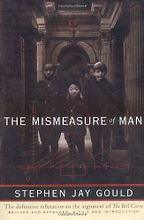
Let’s talk about your books and how they relate to essentialism. Your first pick is Stephen Jay Gould’s The Mismeasure of Man.
This is a classic book. It was published in 1981 and got a lot of attention when it came out. Gould just does this beautiful job of laying out the “biology as destiny” idea – and then ripping it to shreds. It’s a historical view, he’s talking about the foundations – he wasn’t trying to capture current day psychology. You can think about it as how intelligence is viewed as this single thing that has an underlying essence. Many argued that it’s innate, it’s fixed. Gould also talks about IQ tests, and the problems in thinking that they provide a window into this fixed intelligence. If you’re eight years old, and you take an IQ test, that’s it, that’s your destiny, it tells you how far you’re going to get in life. That’s a very widespread belief. It’s wrong, but it’s widespread.
The other thing he talks about is how scientists studied this and linked up intelligence to social categories, like social class and race and gender. He says – over and over again – that this is not a story about people who are overtly racist and are trying to put forth an evil view of the universe or anything like that. These are scientists who prided themselves on being objective, on relying on the data, on doing everything right. So it’s also a story about how science can be infected by ideological beliefs and how that can lead to bias. One of the people Gould critiqued was [Samuel] Morton, who did all these measurements of brain size [and concluded that whites had bigger brains than any other race]. You’d think, OK, if you want to measure brain size that would be pretty objective. You just get your sample, measure it, you get the numbers, there’s no room for ideology. Gould went through all the ways that bias can creep in – everything from how hard you shake the skulls when the little pellets that you’re using to measure the insides are in there so that they shift down, more or less, to what you choose as your sample, to which skulls you throw out because they’re outliers, to whether or not to take into account the gender of the people in your sample (it’s well known that generally men’s skulls are bigger than women’s). He just did a lovely job going through all of this and arguing that all Morton’s measurements were tainted. Then, recently, researchers re-measured Morton’s skulls and found that his original measurements were basically correct, and that Gould himself was subject to these biases. I don’t think that undermines the messages of the book, though it certainly is an irony. One could say it’s even more evidence for Gould’s point…
So Gould has an anti-essentialist view of intelligence as well as race?
Yes, it’s a critique of essentialism all the way up and down.
And it’s a critique of IQ?
Yes, it’s a critique of IQ, because IQ is supposed to measure this one underlying factor, that holds through all these different things we do as humans. There is a statistical analysis that underlies the claim that there is “g” – which is supposed to be the general intelligence factor that IQ is measuring. He has a big critique of that. He critiques how brain size was then linked to intelligence. The brain size studies and the IQ studies assume that there is one underlying thing that’s intelligence, and that different groups of people can be ranked according to their IQ, and that it’s innate and it’s unchanging and not open to environmental influence.
Let’s go on to The Bad Seed, a 1954 thriller about a little girl who turns out to be a serial killer.
I love this book. I have to confess that in high school I had the lead in a play that we put on of The Bad Seed. I was the evil girl. So I’ve been thinking about this one for a long time. It’s really essentialism personified. What makes it essentialism is that this girl, who outwardly seems very sweet and innocent, in actuality is bad to the core. So there’s this appearance/reality distinction that is a big piece of essentialism. Also, the reason that she’s evil is that she was born that way – it was passed down from her grandmother. Her grandmother was a serial killer who got executed. The serial killer’s daughter was a very young child at the time. She was adopted and didn’t even remember any of this in more than the vaguest way. She was a perfectly fine person: The evil skipped a generation, and it was her own daughter who turned out to be this bad seed. The idea is that your moral character can be in-born. This little girl was raised in a wonderful environment, but that had no effect. That the evil is passed down from generation to generation is a very essentialist idea. It was actually controversial. If you read some reviews when the book came out, some of the reviewers really objected to that aspect.
What’s your view?
As far as I understand it, there is no evidence that criminality is passed down through the genes. It’s a fiction, but it’s one that resonates with people. This is not supposed to be a work of science fiction. It works well for the plot of the book: The mother feels guilty for passing this along to her daughter. In some ways she feels her daughter is not at fault, because she doesn’t know any better. This is just the way she was born. What’s interesting to me is that that’s considered a plausible underlying theme that a reader can perfectly well accept. It’s a nice illustration of the common-sense aspect of essentialism.
Your next book is by Paul Bloom – How Pleasure Works: The New Science of Why We Like What We Like.
Paul is also an academic psychologist and we’ve co-authored a couple of papers together. He’s a world-class scientist, and he’s also very good at taking sophisticated scientific ideas and portraying them to a broad audience. This book is a wonderful example of that. He’s really interested in how pleasure works, and he says, upfront, that his view is rooted in essentialism. So he says that we like what we like, not, as you might think, because of what it presents to our senses. It’s not just how something tastes or how it looks. Instead, it’s all filtered through our beliefs about what the item is, and that that has to do with essentialism. For example, two cups of water might look identical, but if I’m told that one of them came from a cold, pure mountain spring, and the other came out of a tap in New York City, I’m going to like the one that I think came out of the mountain spring more. That’s because of my beliefs about purity and where things come from, and that appearance is different from reality. These kinds of factors are much more powerful than you might think. Then he uses this to talk about appreciation of artwork, where authenticity is so critical to how we evaluate it. What matters is not just how it looks to you, but whether it’s authentic.
Yes, because you could put an exact replica of Van Gogh’s “Sunflowers” on your wall, but it wouldn’t be the same.
It wouldn’t give you that pleasure, and it wouldn’t have the value. He has an example of a painting that was originally thought to be authentic and then turned out to be a reproduction. The value then plunged. But it applies to everyday objects as well. People pay a lot of money for John F Kennedy’s rocking chair because it was his, because it has that particular history. The idea is that maybe a little JFK essence rubbed off on it because he sat in it and touched it. We have these almost magical beliefs that affect our evaluation and our pleasure.
But is that necessarily essentialism? Isn’t it more that we can imagine JFK sitting in it?
It’s possible there might be alternative accounts. In that particular case, people not only give it more value, but they actually want to touch it more. If it’s just that they think, “Oh, it reminds me of him,” why would they want to make contact? There are some funny things about people’s preferences and attitudes to these things. For example, he reports this really clever study that he did with Bruce Hood. They convinced kids that they had a duplicating machine. They had kids bring into a lab either just a regular toy or their special security blanket, their attachment object. They put the toys in the duplicating machine and then asked the kids which they would prefer to have if it were duplicated – the original or the duplicate? When it was just an ordinary object, kids tended to want the duplicate, because they thought it was really cool that they could copy things. But when it was their own special object, they did not want the duplicate. A lot of the kids wouldn’t even let them put it in the machine. It’s as if there is something about the history of an object that gives it some special qualities over and above any material properties of the thing.
Why is this interesting to you as a psychologist?
It goes in two different directions for me. One of them is the developmental side. The developmental piece of it is that essentialism is really all about expecting that there is something that’s not obvious, that’s kind of invisible, that’s underneath. It’s subtle and hard to detect – but you think it’s there anyway. The fascinating thing for me is that we have all this evidence that young kids are essentialist. That is so counter to the usual view of children – as clueless, that you have to hit them over the head with the most salient thing before they pay attention to it. No, they seem to really expect that there’s this hidden structure to the world. That’s a very different view of what’s basic in cognition than you would get from a lot of studies looking at kids. The other thing is that I’ve always been really fascinated by human biases, whether they’re perceptual illusions or reasoning biases or Kahneman and Tversky judgement errors. And essentialism, even though there’s a piece of it that’s quite useful and a piece of it that seems true, also has this component that’s just flat-out wrong.
So we have to be on the lookout for it?
Yes. The way we see the world – we think we’re viewing it in an unbiased way, but that’s not true. There are ways that we see things where we have certain distortions, and essentialism is one of those that’s really interesting.
At Dan Ariely’s recommendation I read a book by Robert Cialdini called Influence: The Psychology of Persuasion. I got the impression from his book that whenever psychologists start documenting a cognitive bias, marketers and second-hand car salesmen have already been there, exploiting it. Is that true of essentialism too?
Absolutely. The whole concept of purity, for example, is very essentialist: The idea that the pure version of water is the best.
Your next choice is The Edge of Islam by Janet McIntosh.
This is definitely the most challenging book on my list. It’s not an easy read. Janet McIntosh is a cultural-linguistic anthropologist and she did her fieldwork in a little town in Kenya where there are two ethnic groups that she looked at, the Swahili and the Giriama. What’s really cool about it is that she shows how essentialism works in a culture that’s really different from a middle-class, developed world context. She also shows how colonial practices had effects on how people think about ethnicity. On the one hand, if you look at how people explicitly talk about these two ethnic groups, people say that it’s easy to convert to the religion of the Swahili – Islam – if you want to. All you have to do is affiliate with that group. People can do it and they’ve been doing it since the 19th century. It’s very permeable – it’s like moving from Ohio to Michigan, no big deal. But when you look, on the ground, at how people actually talk about it, most people say it just isn’t possible for a member of the Giriama group to convert to Islam. They’ll say that while they may try, they can’t really become Swahili. They’re incapable of doing that – they’re intrinsically two different groups and you can’t switch from one to the other. It has all sorts of implications for these people’s lives. So it’s an example of how essentialism actually has on-the-ground consequences in this culture. I really liked the book for that reason.
You said it was easy to convert from one to the other in principle. Why?
Because Islam is supposed to be a universal religion that anyone can claim for themselves. You’re supposed to be able to convert – there are no actual barriers. But if you ask either the Swahili or the Giriama, a lot of them say, no, it can’t be done. It’s interesting when you think about it in terms of Stephen Jay Gould, because they talk about these almost biological differences. They talk about blood, or how you’re born – that your ethnic identity is fixed at birth and it’s in your blood and you just can’t change that.
Certainly, in hearing about the genocide in Rwanda in 1994, I always understood the Tutsi were taller and lighter skinned and the Hutus short and darker skinned, so that it was easy to tell who was who. But later I read Philip Gourevitch’s book and found out that in many cases, Hutu and Tutsi are indistinguishable.
Yes, it’s a way that they explain it after the fact. It’s not really the basis for distinguishing people. McIntosh talks about a similar thing. One person said, “It’s black versus Arab.” The blacks are the Giriama and the Arabs are the Swahili. But actually if you look at the people who are there, a lot of the Swahili are just as black as the so-called black Giriama. It’s not really the basis, it’s just how people talk about it.
Tell me about your last book, Mindset by Carol Dweck.
This is great. It’s a self-help book, but it’s written by one of the most well-respected social psychologists. Carol Dweck has done really groundbreaking work over several decades, and found that there are differences in how people think about success and achievement. As she puts it in the book, people have either a “fixed” mindset or a “growth” mindset. The fixed mindset is that you have these fixed, permanent traits. They can’t be changed, and you should be judged on the basis of them. With the growth mindset, you grow and change with experience, and that’s an important part of life – changing and learning and becoming better. In her work, she’s found that not only are there these stable differences in how people think, but that they have stunning consequences for how people do when they’re faced with a challenge. If you have a fixed mindset and then you don’t do so well on a task, it can be really devastating. You take that as evidence that you’re no good at whatever it is. But if you’ve got a growth mindset and you’re faced with a challenge, then your response to that is, “OK, what can I learn from this and how can I get better?”
There are some really counter-intuitive results she has too. Praise, for example, turns out to be a really bad thing, because it fosters a fixed mindset. If you praise someone for how they do, then they lose interest in that activity. This is based on experiments with kids. They’re less likely to continue with the activity that they’re praised for, because they’re vulnerable then. They don’t want to try it again and maybe they won’t be as good. Then they’ll have a negative self-view. Then there is a whole thing about effort. If you have a fixed mindset, you think, “Well I’d better not put in a lot of effort, because if I put in a lot of effort and I still don’t do well, it really means I’m no good.” But if you have a growth mindset, you think, “Well, I’d better put in more effort and I’ll do better and I’ll learn and I’ll grow.” The last piece of the whole thing is that she’s found that if you make people aware of these differences and you give them enough input about it, you can move people from a fixed mindset to a growth mindset. That’s really what the whole book is about, trying to get people to think critically about their mindset and come to one that actually has better consequences for them.
So we shouldn’t praise our children?
You shouldn’t say, “You’re such a good artist.” You can praise their efforts – you can say, “I really like how hard you worked on this picture,” or, “This picture really has a lot of ideas in it.” Or something concrete about the picture. But when you attach it to the child, it’s not good.
In my family, there was definitely never much given by way of praise.
Withholding of positive response, that’s not good either. It’s also not good when parents say, “I knew you could do it all along,” because that undercuts the whole achievement. It’s a minefield out there for parents…
How does the Mindset book fit into essentialism?
I see the fixed mindset as an essentialist view of intelligence. I don’t know if Dweck ever says that, but that’s what I think about it. She gives lot of examples. You can actually go to her website, and you can take the test and find out what your mindset is. There are about a dozen questions like: “Imagine a student who receives an excellent grade on a maths test. How much of the grade is due to hard work and how much is due to maths ability?” If you’re someone who thinks it’s 90% maths ability, you probably have a fixed mindset.
Take learning languages, though. There are some people who pick them up very quickly. They just seem to have an ear for them. Then there are other people who really don’t have an ear for languages at all. When they tell me they’re planning to learn a language, I sigh inwardly at the thought of all those wasted hours, because I know that they’re never going to get anywhere. Does that reveal me as the worst fixed-mindset person imaginable?
It’s interesting, because Dweck talks about how she used to be of a fixed mindset, and about her own evolution. I certainly was. I have very clear memories of being essentialist about gender and about intelligence as a young child. When I reflect back on the messages that I got from my parents, it was very much fixed mindset – you’re either good at it or you’re not. The fixed mindset does feel very right to me, but when you read the book, she just has example after example of how flawed it is…
Five Books aims to keep its book recommendations and interviews up to date. If you are the interviewee and would like to update your choice of books (or even just what you say about them) please email us at editor@fivebooks.com
Five Books interviews are expensive to produce. If you've enjoyed this interview, please support us by donating a small amount.