There’s so much sex in the media, on TV, in films, but when I read some of the books you’re recommending, I get a slightly different perspective on it, which is fascinating. What is sex really about, do you think?
It’s about three things: connection, connection and connection. Really good sex is about a deep, not just physical, but emotional, connection. I’m not trying to mystify it, but I think good sex is one of the peak experiences of life—and I’m not necessarily talking about having an orgasm. I’m talking about the connection. It might be a connection with yourself, or it might be a connection with another person. Theoretically, it might be a connection with many other people, but that’s probably a different conversation.
Bad sex is about a toxic connection, or a lack of connection. Today, we have much more potential for a good connection but we still also have the potential for a bad, toxic or misguided connection. As an optimist, I believe in the good connection, but there’s no denying that in the decade since you and I first started talking about sex books, things have potentially become much more toxic.
Why do you say that?
I say that because every week people with sexual problems talk to me or write to me. And I realise that while sex is in some ways more simplistic nowadays, in other ways it is a lot more complicated and a lot more challenging than it ever was. In particular, clearly there’s been a rise in misogynist and misandrist sexuality and violent pornography.
The answer is not to strip everything away—because along with the complication has come information, support, insight and understanding. Nevertheless, with the good comes the bad and vice versa.
What would you say people struggle most with in terms of sex?
Lack of desire. Sometimes lack of performance, but the consistent one is, ‘We’re not having it. The desire has dropped. We love each other deeply but we don’t have sex anymore.’ Or, ‘I’m single and I don’t want sex anymore.’ So with the riches that open up, we also get a drop in desire. That’s underpinned by all sorts of emotions—not believing we’re worth it or not believing we can do it or being over-awed by everything that’s in the media. Of course, there’s also erectile dysfunction and anorgasmia and vaginal or penile pain, but the one that comes back again and again is, ‘We want it less, we’re having it less, and therefore there’s something wrong with us, or something wrong with me.’
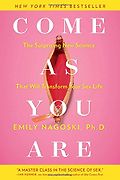
Some of the books you’ve recommended provide some help with that, so let’s start looking at them now. You’ve already referred to Come as You Are (2015) by Emily Nagoski, subtitled: ‘the surprising new science that will transform your sex life.’ It’s highly readable and you’re a big fan of the book, aren’t you?
It’s one of the best books ever written, in my view, for guiding women in particular through the minefield of their sexuality in today’s world. It’s the opposite end to The Hite Report, which goes, ‘guys, girls, clitoris! This is happening!’ and simply shouts that out. Emily shows you how to do it.
“Good sex is one of the peak experiences of life”
The book is written hugely accessibly and it brings in almost everything: emotions, social context. It does bring in the science, but I don’t think that’s the main selling point of the book. Its main contribution is that she gives women (and men: she doesn’t shut men out, that’s another strength of the book) an idea of sex as something hugely complicated, but at the same time enjoyable. She puts you back to, ‘Forget what everybody says—even what I, Emily, say—and trust your own instincts. Work with your own body, your own emotions and your own life.’ I would almost take the word science off the front of her book, not because it’s not there, but because it’s not the most important thing that she’s saying.
But she’s done a PhD. The knowledge is there, underlying what she writes.
Yes, the knowledge and the professional experience. She describes herself as a sex educator, which I think is a wonderful way of presenting herself. She’s here to help you reach your potential, because 1. She’s been there, 2. She’s read the books, 3. She’s done the research, 4. She’s a working therapist, and 5. She’s incredibly tuned into all the other stuff: the humanistic psychology as well as the sexual science. She’s bringing everything together for our decade. There may be better books out there, but so far I haven’t found them.
A big theme of hers is she wants people to feel ‘normal,’ because as you’ve already hinted, when it comes to sex, everybody feels inadequate in some way.
Yes. You could say that sex has become ‘aspirational.’ Sex is now the norm, unlike in our grandparents’ time. But now it’s no longer just ‘Let’s have sex,’ it’s ‘Let’s have the best sex we can and let’s give ourselves a hard time if we don’t.’ What Emily is saying is,‘Sex is normal. What you’re feeling is normal. You are normal for wanting it and you’re normal for not wanting it. You’re normal for having off days and you’re normal for getting nervous. Let’s just push back against this constant desire to say, ‘If you’re not doing this, you’re wrong. If you are doing this, you’re wrong. Whatever you’re doing, it’s not right because we’re going to give you a better way.’’
Going back to the issue of lack of desire, what solutions does she suggest? She talks a lot about removing the “brakes.”
In the book there are whole chapters dealing with different issues. She says that the secret to reclaiming desire is ‘coming back to yourself’. She uses this wonderful phrase, in a non-judgmental way. I use this concept in my coaching work as well. It’s getting you to come back to what they feel, what you think, what you sense is correct for you. In terms of brakes, what she’s saying is that if you come back to listening, looking, being who you are, accepting that you’re normal, and not judging, a lot of the desire will come back. The main block is telling yourself that what you’re doing here and now is wrong. If you take that away, then the desire will likely be the default option.
An interesting question she raises in the book: “Given all the talk of sex out there, how can it be we still have so many questions?” Sex is so central, but many of us still feel quite ignorant about it.
Bringing in my own experience as well as hers, I think the thing that many writers, advisers, and organizations miss—and she really majors in—is that factual ignorance about sex is not the main block. Of course you need the facts, but once you’ve got the facts that doesn’t actually help with sexual blocks or sexual presuppositions. This isn’t a new idea, but she explains it well: that we all come with our own maps, and we need to be aware of those maps and where they come from.
Get the weekly Five Books newsletter
When I was growing up, I probably got a better sex education than a lot of people nowadays because my mother was happy to talk about sex and emotions. Most sex education—in Britain today, at any rate—is still very, very limited. Where it is given, it is all about the facts. There’s not enough information about the emotional side of sex, the connecting side of sex, the power plays in sex or needs in sex.
So there’s lots of information out there, but are there the emotional models? Is there the emotional permission? Is there the encouragement to look on sex as something that you experience rather than something you need to be aspirational about? No, I don’t think there is. It’s better than it was, but it’s offset by all sorts of negative messages about achievement and power and resentment of the opposite gender (or the gender you fancy). There is still an imbalance between the useful messages we’re getting and the non-useful messages. All the information in the world is not going to solve that.
Before we move on to the next book, let’s quickly draw attention to a modern sex guide written from a male perspective, that you also recommend.
I love Paul Joannides’s Guide to Getting it On. It’s written for younger people and goes all the way back to the basics, although I often recommend it to people who aren’t necessarily young. In the same way as Emily’s book, it takes into account emotions and social context. It’s the book I would recommend as a complete ‘how to’ for a guy in the same way as I would recommend Emily’s as the complete ‘how to’ for a woman. But then I’d ask them to read each other’s.
I don’t have the figures in front of me but men are still suffering from premature ejaculation, erectile dysfunction and loss of desire. They may also be feeling harangued at the moment, which is going to drop self-esteem levels and lead to a loss of desire.
It’s quite funny the way he writes it. “Aside from landing an astronaut on the moon during the 1960s, science also introduced men and women to the word clitoris.” Or elsewhere, “if you don’t know a clitoris from a bunion”. . .
I love his writing style. The book is funny, it’s completely accurate, it’s not trite or cute, it’s just really upfront in what it says. It has no hang-ups, no biases, no prejudices, no phobias of any sort. There is also a joyfulness to it. Paul says, ‘Look guys (and women if you’re reading this) let’s not take sex too seriously, because it can be wonderful. Let’s not get hung up about it.’ I would challenge anybody to read this book and not learn something.
Let’s talk about the classic sex guide, The Joy of Sex next, which first came out in 1972, but you updated in 2008. The author, Alex Comfort, writes in the introduction that “for 200 years the description and especially the depiction of this most familiar and domestic group of activities and almost everything associated with them had been classified.” In fact, even in 1972, he was worried The Joy of Sex might be banned. Tell me about the book.
The Joy of Sex was a seminal book. It not only reflected but created the sexual revolution. Even now, people who haven’t read it know what it’s about. When you mention it, they’ll go, ‘Oh yes, that was that book with the bearded man, wasn’t it?’
The Joy of Sex was born out of Alex Comfort’s experiences with couples who came to him when he was working as a GP. He’d have people turning up to his surgery saying, ‘We can’t have a baby. Why not?’ Or ‘We’re not enjoying sex. Why not?’ They didn’t seem to know very much about sex—even in 1972 when they were getting messages that they all ought to be having sex all the time. I’d just come out of university and my experience there was guys saying, ‘You’re on the Pill, so why not?’ We learned how to do it, but there was no actual help there apart from what we got through discovery, which was great. I love sexual discovery.
Alex was so nervous about the book that he wondered whether it would be banned. Indeed, in Australia, The Joy of Sex was sold in plastic covers. You had to buy the book before you could take the plastic cover off and read it. In Britain it was more laissez-faire, but there was a lot of wariness about it.
And then, just a few years after the book took off, we had the AIDS epidemic. Just as we were getting a good sense of what Alex was talking about, we were no longer able to talk about sex in the same way. If there was any joy being discovered in sex as a result of his book and other projects, it ended and sex was wrong again.
It’s written as a recipe book, isn’t it? He says we have recipe books for cooking so here is a cordon bleu guide to sex. It’s very practical, isn’t it?
Yes, the model was a book called The Joy of Cooking. Alex brought in all his knowledge to write it. He had medical knowledge, clearly, but he also used to have a folder where he kept interesting newspaper articles and he would look through them to get ideas.
The book was hugely successful and a tour de force. Nobody had done anything like it before. We’d had Mary Stopes talking about marital commitment, but nobody had said, ‘Look, sex can be joyful.’ Alex’s view was, ‘I love sex. I know my patients want to love sex; let’s just tell people everything.’ And then he and the publisher got together and worked out it would be a recipe book: you could enjoy sex as much as you enjoyed eating and cooking.
You were then commissioned to update it, a book which became The New Joy of Sex (2008). I was looking at it yesterday; as one of the ‘ingredients’, there’s a section on tenderness. Was that in the original, or did you add sections on things he didn’t emphasize as much back then but which you think are important?
Absolutely. This was not only a re-edit job—it badly needed updating. It wasn’t just that some of the science was inaccurate: Comfort mentions the world clitoris only five or six times in the entire book! He’s very pro-women and very liberated as far as sex is concerned, but it needed updating in terms of values as well.
In what way?
It reflected 1970s values. There’s a lot of emphasis on the man as the active person. It was written by a man, for men. And it’s quite chauvinistic. There’s one quote: “Impotence in old men (may be) due to . . . lack of . . . an attractive partner.”
And it’s very liberal. Nowadays we’re more aware of the dangers of sex. So we had to take some stuff out—like his suggestion of having sex on a moving motorbike and the fairly regular references to group sex. He says things like ‘If you have close friends over, you’re going to make love to them.’ Nowadays, that’s not what you do. And I’m not entirely sure it was happening in 1972! It may have been what people wanted to happen, rather than what was actually happening. So we had to take out a lot of that.
We did put in tenderness. We did put in a lot more about the clitoris. We (when I say ‘we’, I had two research assistants working with me) did insert a lot about sexual health and sexual therapy. Much of it was woven in; I’d take a piece of 500 words and would add in a sentence or a paragraph. There were over 40 additional sections. It was certainly longer than the original, although only marginally, because we cut out about 10 or 12 sections—including the motorbike one.
Shall we talk about The Hite Report on Female Sexuality (1976) by Shere Hite next? This marks another key moment in our sexual liberation.
The crucial thing The Hite Report does—and it’s a message that still hasn’t filtered through—is that it makes a very, very strong statement about the clitoris being vital to female sexuality. Up to that point, the word ‘sex’ meant intercourse—as it still often does, even in sex books written by informed people. When people say ‘we had sex’, they mean ‘We had intercourse.’
One of the main arguments of the book—the groundbreaking part that got Shere Hite so much attention—is that most women do not orgasm through intercourse alone. We need clitoral stimulation. And that’s the basis on which almost all sex books for women have been written since. It’s also a big part of accepted sex therapy. Sadly, it’s a piece of information that many women still don’t have and many men still don’t have.
But before The Hite Report, everybody thought a woman should climax through intercourse. It was a core belief that went unchallenged. Freud wrote that a woman who has an orgasm by stimulation of the clitoris is infantile and is having an infantile orgasm.
He’s the culprit is he?
He’s one of the culprits. As were all the other male sex therapists who followed, saying, ‘If we climax through penetration, that’s obviously the way it has to be done.’ It’s a myth that still lingers: to this day I get people writing to me in my role as an advice columnist saying, ‘I can’t climax easily through intercourse, what’s wrong with me?’ Shere Hite was the first to challenge that view and back it up with research.
Last time we spoke you mentioned the methodology was a bit suspect.
Yes, questions were raised: Did she get paid for it? Did she actually do all of the research? We’re still suspicious, but The Hite Report was a turning point. It’s not really important whether its methodology was squeaky clean, because all the subsequent research has shown that the clitoris is important. So whereas when The Hite Report came out (and in the years following), people were going, ‘Her work is suspect so it probably isn’t true’, now we have the bigger picture.
“Most women do not orgasm through intercourse alone. We need clitoral stimulation”
She radically changed the way we view sex. The next time we got as important a message about the clitoris was in 1998 when an Australian neurologist pointed out that clitoral tissue—including the clitoral tissue inside the woman’s pelvis—has as many nerve endings as penile tissue. That piece of research again changed everything. But no one would have thought of doing it, if it hadn’t been for The Hite Report.
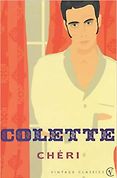
Let’s turn to one of the novels you’ve picked next. Tell me about Chéri (1920) by Colette, which is about the relationship between a young man, Chéri, and an older courtesan. Why is it on your list?
I chose Chéri because this is the book that gave me, as a young girl, an idea of an older woman’s sexuality. I read it when I was in my teens, and it was one of the first erotic books I read. Although it has a very, very sad ending—I literally cried when I read it—interestingly, the message that I took away from it was not that at 49 you are too old to have a lover, but that you are absolutely not too old.
Even though he leaves her and goes back to his young and stupid wife, and she is desperate, the message I took away from it is that actually, it doesn’t have to be like that. At the age of 49, you can be extremely sexual and extremely desirous and you can be desired. Chéri is one of the books that—obviously personally but also professionally—gave me quite early on the idea that sex is for life.
And that’s an important point.
It’s a really important point. There was some very nice research from Sweden in 2008 suggesting that many couples in their 60s, 70s and 80s are still having extremely active sex lives. And that it’s really only the cultural taboos and the link between sexuality with fertility that had suggested we can’t do that.
I also chose Chéri because whenever somebody is interviewed for Desert Island Discs they always include one thing that isn’t serious. It’s not significant, but they like it. I like Chéri. It’s beautifully written and has lovely memories for me. I’m now approaching 70 and it’s still relevant. Given the science and the medical advances it is more acceptable now, even for a woman ‘as old as me,’ to have a partner and enjoy sex and to be enthusiastic about it. We’re no longer saying, ‘Well, actually, once you hit menopause it’s over.’ It’s not only youth who are sexual. My generation was the first Pill generation, and it really freed us from the link between fertility and sex. That’s a message that everyone—and especially sexual health professionals like me—has really taken on board now.
Now, 49 seems incredibly young to me, looking back. It’s like, ’Oh she’s only 49!’ 20 years on from that, sex is still good. So, that’s my self-indulgence book on this list.
Also, as you discuss in The New Joy of Sex, isn’t it possible that after menopause, women can enjoy sex more?
There are a number of physical and social reasons why post-menopausal sex can be better. The obvious one is no fear of pregnancy. The other one is that there is a hormonal shift, when oestrogen drops away and testosterone levels are left high, and there can be this period after menopause where you’re feeling more desirous and more aroused.
The drop in oestrogen also makes women more ‘self-referenced’; that is, more able to choose what we want. It’s not about selfishness, it’s about considering yourself more than you consider others. A lot of women spend the middle part of their life thinking about partnership, commitment, kids and responsibilities, working as a team leader. Then you come to menopause and there is research suggesting that as oestrogen drops, you enter a period of ‘What about me?’ Your life will reflect that because the kids will normally be grown and flown and you’re back with your partner. Or you’re divorced and taking a new partner.
There’s a very healthy ‘What about me?’ mindset going on which can allow you to enjoy sex more. You’re more in touch with your own body, and crucially, you can be more convinced that what you’re feeling is important. That leads back to Emily’s book, although she doesn’t focus on the menopause. But there is just as much capacity post-menopause, should you choose sexuality. One caveat: many women don’t. Many women say, ‘No, that’s over for me.’ Good on them, they’ve made a choice. But for those who do want sexuality, there can be a different picture.
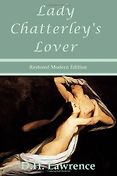
Before we get to your last book I just wanted to take a quick detour to D H Lawrence’s last book, Lady Chatterley’s Lover, which you’ve mentioned to me in the past as important. This was first published overseas in 1928, but didn’t appear in the UK until 1960. When Penguin tried to publish it, they were taken to court under the ‘Obscene Publications Act’, though the jury found in their favour.
Yes, the Lady Chatterley trial was a turning point for freedom of expression around sexuality. There’s the famous line by Philip Larkin: “Sexual intercourse began in 1963, between the end of the Chatterley ban and the Beatles’ first LP.” So I like Lady Chatterley’s Lover for symbolic reasons. It was a reflection of the sexual revolution in which I grew up.
But it’s also a very, very passionate book. It was one of the first big works of literature to describe sexuality fully, very arousingly, and also to celebrate sexuality between classes. Because there was a whole lot of other social change at that time, particularly in Europe. We were moving from a very structured, hierarchical society to a much more equal society. Having sex up and down the classes was very new and very revolutionary. So it’s a beautiful book to read—the love between them is brilliant—but it’s also legally and sociologically a very important book.
Psychologically, I think the most important thing in the book is that, for the first time perhaps, we’re seeing people being encouraged to be more whole and more sane and more healthy by acknowledging their sexual side, not just their mind. The whole theme of the book is that you don’t just live through the mind, you live through the body, and the whole person. It’s a holistic sex book, if you like.
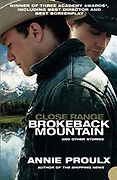
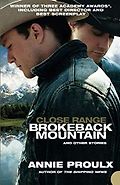
Let’s talk about your last choice which is a short story by Annie Proulx, Brokeback Mountain (1997). You can read it in an hour or so, and it’s well worth the effort.
It’s a beautiful, beautiful book, and it was also turned into an Oscar-winning film. Brokeback Mountain is important to me because it’s the first time I’ve heard ordinary people in the street comment on a story focused on homosexual love—without distinguishing between it and heterosexual love. The film helped bring gay sex into the mainstream.
The way the sex is described is not feminine sex. Annie Proulx is excellent at not saying: ‘Well, it’s gay sex, but it’s acceptable because it’s gentle and sensitive and soft focus and pink.’ No. In the book there is blood. They hit each other. There is loving force and strong passion. She’s saying that passion can be aggressive and it can be very masculine.
The other thing that is important about the book is that it makes a very strong statement about the way some sorts of sexuality are still not accepted in our world, and people can get killed for it.
Or even if they don’t get killed, they can be made very unhappy for feeling the way they do when society doesn’t allow it. Though we’re hopefully getting better at overcoming taboos.
Taboos are being handled openly now and we are protesting them, rather than just accepting them. Today, even just ten years on, it’s inconceivable that Brokeback Mountain should have caused such a furore. It’s even more inconceivable that Lady Chatterley’s Lover—even though it has some really dirty bits in it—should have caused such a furore. In the same way it is inconceivable that we would ostracize somebody for fantasizing, which is the subject of another book we’ve talked about in the past, Nancy Friday’s My Secret Garden. So I think they’re all signs of progress.
Do you think there are any taboos still remaining that we need to deal with?
I think we’ve broken the S&M taboo with Fifty Shades of Grey. So we’re getting through that. We’re certainly getting through gender reassignment. There’s still something around ageism—in particular, that it’s fine for a man to go with a younger woman, but not for an older woman to go with a younger man. It’s a lot better than it used to be, but there’s still something there.
Five Books interviews are expensive to produce. If you're enjoying this interview, please support us by donating a small amount.
When we launched The New Joy of Sex, I talked about the new hedonism and the new Puritanism. In some ways, because sex is so open, we tend to be more wary of it, more boundaried. I’m not saying we should take this taboo away, but I think there is still a lot of wariness about the freedom that sexuality gives us to have lots and lots and lots of different relationships. So, if you asked somebody, ‘Is it OK to fantasize?’ The answer is yes. ‘Is it okay to be gay?’ Yes. But if you ask ‘Is it okay to be polyamorous?’ the answer is ‘no.’ I’m not saying that polyamory is either a good or a bad idea. That’s a personal choice. I don’t think it’s for society to judge, but I think that’s still one that might make people flinch a little.
So there is still a taboo around polyamory?
Yes. It’s interesting that if you’d had this conversation with Alex Comfort in 1972, he would have said that within ten years polyamory would be par for the course. I remember in 1972 us all saying to each other, ‘We’re not in sexual communes, but we know this is coming. We’re not actually doing it, but that’s because we’re behind the times.’ No, it hasn’t. The sexual communes have largely died and people are a lot more defended simply because it is possible to have more than one partner. It’s not that it’s a hanging offense, but I think it’s something that would make people flinch a lot more than masturbation, anal sex, or fantasy.
It’s the whole question of whether humans are naturally monogamous. We still have this idea that we should be.
The aspiration is ‘till death do us part’ with one partner, because psychologically that gives us what I call ‘womb love.’ What we’re looking for in a love relationship—and therefore in a sexual relationship—is to get back to the total safety, the total validity, the total connection that we had in the womb. Monogamy offers that. This is sacrosanct, nobody is going to break this and therefore we are safe for the rest of our lives. Actually, we’re not. Now that we have divorce, now that we have more sexual freedom, that essential safety in a relationship has gone. Some people are taking that forward by being polyamorous, but because that’s now possible, it’s almost more threatening to society than it was in the past.
But let’s not end this interview on a negative. Ten years on from when we first spoke, I still believe that sex is wonderful, powerful, and a hugely important part of life for anyone, if they want it to be. We are so privileged to live in an age where—despite the continuing risks and dangers—sexuality—in most societies is not only permitted but also appreciated, valued, and supported. We are very fortunate indeed.
Five Books aims to keep its book recommendations and interviews up to date. If you are the interviewee and would like to update your choice of books (or even just what you say about them) please email us at [email protected]