World » Asia » Middle East
The best books on The Arab World
recommended by Tarek Osman
The Egyptian author and journalist discusses Egypt’s past and present and the main issues facing the post-revolutionary Arab world


The Egyptian author and journalist discusses Egypt’s past and present and the main issues facing the post-revolutionary Arab world
As an Egyptian, how do you feel about what is going on in your country at the moment?
I try to look at what’s happening now from a long-term perspective. From one angle you can take what is happening in Egypt and other parts of the Arab world as revolts or revolutions against oppressive regimes. That is one correct reading. But I think the bigger story is that you are seeing a generation of Arabs, who are very young, who feel they have inherited a succession of failures that they have not contributed to and yet are living their consequences. This generation now effectively reject these failures and is revolting against them.
Demographics are crucial here. In Egypt, for example, you have roughly 45 million people who are under 35 years old, which is about 60 per cent of the population. That demographic segment includes the youngest ever group of adolescents in Egypt’s history.
This generation is not working in isolation. They are supported by a very wide middle class. That is why I think what we are seeing now in the Arab world is a wonderful change: it’s not simply a matter of changing faces or presidents but it is effectively a revolution on the failures of the past 60 years. This theme will come out in some of my book choices.
Were you surprised when events start unfolding so fast in Egypt?
I was not surprised that the revolt happened. I actually expected it. I thought it would come from within the country’s major middle classes and would be led by young Egyptians. But what did surprise me was that it happened while President Mubarak was still in power. I think many people including myself thought a major change would happen when he was dead. He is nearly 83 years old. That it has happened while he is still alive and only months after we were talking about its likelihood, that was a surprise.
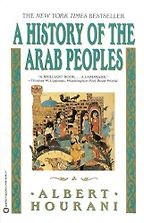
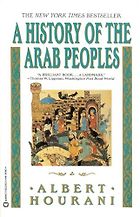
Let’s hear about your first choice, Albert Hourani’s A History of the Arab Peoples, which you see as a real contribution to the history of the people in the Middle East and North Africa – why?
One of the key reasons is in the title. It is called the peoples not people, which I thought was very interesting. Hourani redefined how people look at the history of that part of the world. Typically, throughout the late 19th and early 20th century the history of the Arab peoples was told either in terms of religion, mainly by recounting the story of Islam since the time of the Prophet Mohammed and until the fall of the Ottomans, or from the perspective of state development. For example, how the Egyptian state emerged.
What Hourani did was something very different. He emphasised that all these points are secondary to the most important one, which is the culture that unites the different people who live in this large piece of land. And he paid specific attention to the language: he saw it as a key denominator between the people who live in the space from Morocco to Bahrain. He focused on the development of the language and the culture as a whole. He traced the history of those people through their contributions to the culture that came to emerge over the past 14 centuries. There is lots of Islamic history and politics in Hourani’s book. But the key illuminating point is on how the culture that has emerged has gathered those people and really united them by a common thread.
The second point, which I thought was very interesting, was how he focused on Arabism as an identity, rather than on the flow of the different Islamic empires. We sometimes forget that the Christian Arabs constituted at one point more than 20 per cent of the people in that part of the world. And their contribution was immense. It’s also crucial to remember that the idea of Arabism pre-dates Islam. And what Hourani has done is to take the idea of Arabism and to link it with his focus on culture and basically put that mix as the framework through which you can understand the history of the people who live there. The book covers more than 1,300 years of history, so to do that without losing the focus on your thesis I thought was a great contribution.
And what kind of role do you think the Christians have in that part of the world today?
This is a very interesting point because if you look at the last 200 years, especially in places such as Egypt, Lebanon and Iraq, Arab Christians were at the forefront of social development in these countries. Arab Christians were key participants in the development of Arab liberalism at the end of the 19th and early 20th century. They played a big part in the development of education, journalism, and art, (whether cinema, theatre, literature, etc). But then the Arab liberal experiment was abruptly ended by the emergence of Arab nationalism. Gradually, the liberal values faded and were replaced by an antagonistic and sometimes pugnacious form of nationalism. And in the few decades that followed, political Islam started to gain significant ground across the Arab world. I discuss in my book in detail why these developments subtly but steadily eroded Christians’ involvement in their society.
Was there eventually less room for Christians in that new identity?
The interesting thing is that Arab nationalists, mainly Nasser, were very sensitive to the concerns of Egyptian and Levantine Christians but there was no escaping the fact that by promoting Arab nationalism you are throwing Egypt, for example, into the core of the Arabian hinterland, which for the past 14 centuries was ruled by Islam. And with the rise of Islamism throughout the 1970s and 1980s across the whole of the Arab world, Islam as an identity started to gain ground. And that is why in the last 30 or 35 years we have seen the steady dilution of the role of Christians in Egyptian society. We have seen seclusion and massive Christian emigration out of Egypt (and also out of Lebanon and recently out of Iraq). But I am optimistic because the 2011 revolution that we have seen was secular in nature and national in rhetoric – at least in the initial stage. This secularism and focus on nationalism, rather than sectarianism and any religious discourse, have created momentum for the liberal movement in Egypt. And that hopefully will revitalise the Christian role in the country.
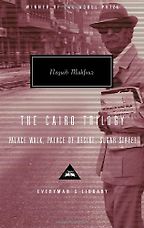
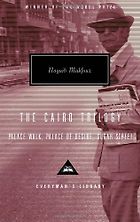
Let’s see if your predictions are correct! I really enjoyed reading your next choice, The Cairo Trilogy by Naguib Mahfouz, and think it gives you a real flavour of what it was like to live in Cairo during the 20th century.
I think first of all that it is a great literary treat. I believe it is a really captivating novel. But I think the real importance of The Cairo Trilogy is that arguably if you want to choose one city within the whole of the Arab world that is representative of the history of the Arab world in the past few hundred years I would say that it is Cairo. Damascus might be a contender but I think Cairo would be my choice.
Why?
Because it has been at the centre of almost every single political, religious, and social movement that has shaped the Arab world for the past 1,300 years. Egypt – and Cairo at its centre – emerged as the most important province in every single Islamic empire, from the one that has emerged out of the Arabian Peninsula after the death of the Prophet Mohammed, to the Umayyads and Abbasids in the few centuries that followed. It was the capital of three key Islamic empires. It was the centre of defending the Islamic world against the Crusaders and the Mongols. It was the capital of the Mamelukes. It was by far the most important Arab province in the Ottoman Empire. And throughout that illustrious history, its heritage became the cultural reservoir of the region.
We also need to take into account that the existence of the 1,000-year-old Al-Azhar University, Sunni Islam’s pre-eminent seat of learning, in Cairo meant that the city became associated with creativity, scholarship and learning. Tens of thousands of scholars from all over the Arab world (and actually the entire Islamic world) would come to Cairo over the centuries to study for few years before returning to their countries as religious – or potentially political – leaders. That widened the impact of Egypt’s influence.
And very recently, Arab liberalism and the notion of a modern Arab state came out of Egypt – in the early 19th century. The Arabs’ first real encounter with modern Europe was in Egypt’s experience with Napoleon’s invasion of the country, and later its attempt at building a modern state in the mid-19th century. And the fact that Nasserite Arab nationalism emerged out of Cairo had also cemented that positioning.
So arguably this city has been the centre of almost every single social and political trend that dominated the Arab world throughout the past 1,000 years.
In my view, what Mahfouz has done brilliantly is to dissect the rich life of the middle class of that multifaceted city and presented it to his readers; he made the readers experience what it feels like to be a middle-class family in the first half of the 20th century in Cairo. This was a very interesting time because Cairo was slowly shedding its conservative Islamic heritage and more or less embracing Westernism. Through tracing the three generations of the family at the centre of the novel you see the change.
And you see the different faces of Cairo that the generations are presented with.
Absolutely, and you not only see the moment that they are living in but also the heritage that they carry. For example, without going into too many details, in the first part of the novel you see how the father, who is a very solid patriarch, represents to a large extent Cairo’s Islamic heritage from the era of the Mamelukes and the Ottomans in the way he behaves. His image is contrasted by the characters of his different sons, who are shaped by the interaction with modernity. We not only see different characters but also different Cairos throughout the development of the novel.
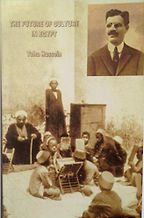
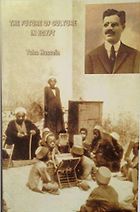
You refer to your next book, Taha Hussein’s The Future of Culture in Egypt, as a sombre book, but do you think it is one that is still worth reading?
Yes, that book was published in 1936, and to a large extent the same question that Hussein faced then actually faces Egypt and many other parts of the Arab world today. At that time the Arab world, especially Egypt and the Levant and even parts of North Africa, was really in a dilemma. Sixty or 70 years had passed since the Europeans had arrived in the Middle East in the mid-19th century. And some of the brilliant minds of the Arab world had gone to Europe, mainly to Vienna, Paris, London and Rome, to try to learn from the West. By that time Egypt had already had its first modern constitution in 1923, in which the parliament rather than the monarch was the most important player in internal politics – which was a major development in the ruling framework in an Arab country. The society as a whole was opening up. Girls were getting educated; it was the time of the first wave of Egyptian girls to go to university. The Islamic headscarf was on the retreat. The society as a whole was gradually embracing new experiences and to some extent new identity. This was not Kamal Ataturk’s Turkey, where a ruling elite has decided to jettison its heritage and adopt a different identity. It was a gradual development taking over the entire society, across all social classes.
What Taha Hussein was trying to work out was how Egypt, like many other parts of the Arab world, should develop its own frame of reference in that period. On the one side you had very conservative movements within the religious establishment trying to close down all of these moves towards modernity. On the other side you had some players, especially within certain political parties, who were very open to a blind imitation of the West.
So this was very much a pivotal moment in Egypt’s history?
Yes. Hussein provided a very interesting narrative in which he challenged the foundations upon which the religious establishment was opposing taking anything from the West. He said, look at the Islamic culture and theology and recognise that they were influenced by Hellenic ideas, by Ancient Egyptian ideas, by Persian ideas. He didn’t advocate trying to create ‘a Paris on the Nile’ as some politicians dreamt. He was realistic in trying to see how a society such as Egypt’s (and by extension others in the Arab world) can marry its heritage with modernity: what to retain, what to discard, what to adopt. Remember, he has discussed these themes in the 1930s, but this is all relevant today, because the new generation which is taking over the region’s political scene at the moment and which is leading the revolts across the Arab world and certainly in Egypt, face a similar situation to what Taha Hussein’s generation faced decades ago. Because they have inherited different experiences that proved severely lacking, this new generation will confront the same choices that Hussein’s generation faced, and will need to take decisions about how they want the future of their countries to be.
One of the most important choices that this generation faces is how to reconcile their heritage with the lives of this generation now. Again, there are many similarities with the situation in the 1930s when Egypt – and other parts of the Arab world – tried to forge a new social framework. That is why I think that Hussein is still so relevant today.
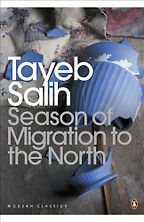
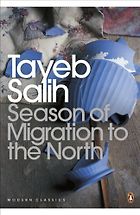
It sounds very fresh still. Next up is Season of Migration to the North by Tayeb Salih, which looks at similar sorts of issues but through a novel.
I intentionally chose to put this book after Hussein’s because it is very similar in its idea but very different in its approach. Taha Hussein was very analytical. He had done two PhDs and was a very sharp academic. He tackled his subject using a highly analytical approach.
Tayeb Salih has done the exact opposite. He tackled similar problems to those that Hussein had put forward, but he focused on the soft aspects. He looked at a middle-class family in an Arab society and how it embodied inherited traditions and values that have been passed from one generation to another, and how these have become part of the family’s psyche. In this case he took a family in Sudan and he explored how one person from that milieu was thrown into the heart of a Western society and then he came back to Sudan only to face an identity crisis. Salih approached this problem in a soft, delicate way. He focused on the feelings and emotions of that person; his approach was very different to Hussein’s.
What are some of the issues that come up, which you may well have experienced?
Family structures, value systems, how a person’s sense of belonging changes, all of these are themes that Salih touched on and that many Arabs who have had rich experiences with the West can relate to. There are many aspects in most Islamic societies that would fly against some of the values that any liberal would probably advocate. How do Arab liberals then face such situations? Do they face an identity crisis? Do they try to evade facing such dilemmas through escapism or perhaps avoiding the correct scoping of a question? What kind of decision-making process do Arab liberals adhere to?
The value system of Arab liberalism is very interesting. Some might vote for a liberal party in a political election but then baulk at any notion of liberalism with it comes to family dynamics. Arab liberals’ attitudes towards religion, or at least how it was interpreted over the past few centuries, is also another very interesting area, because here we find extreme caution in addressing any controversial topic.
Tayeb Salih in this particular novel goes into these kinds of questions, especially in his presentation of the main character, the novel’s protagonist. He is in a dilemma between his true love, what he wants to belong to, and his internal need to adhere to his inherited value system. Salih’s focus on the emotions and feelings is very revealing: it takes us into the depths of the dilemma that many Arab liberals experience.
These days such focus is very relevant because there is a line of thinking in the West that believes that the wave of revolutions that have occurred in the Arab world could propel a new phase of liberalism in the region, and that the West should support the potential emergence of such Arab liberalism. I agree with that line of thinking, but I really think that many people in the West don’t fully understand what it means to be an Arab liberal. If you dissect it, you will probably find that its characteristics are very different from what you would inherently assume to be liberal values in the West. One way to understand these differences is to look at the hard-nosed assessment that Hussein put in his book; another way is read Tayeb Salih and delve into the fluid soft emotions of his novel.
So these two books are essential reading for how we engage with the Arab world in the future?
They would be very helpful.
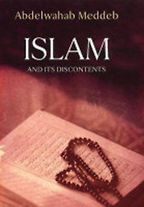
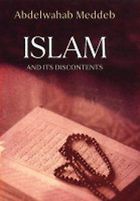
Let’s have a look at your final choice, Abdelwahab Meddeb’s Islam and Its Discontents, which looks at what went wrong in the Islamic world.
I would really recommend this book. If you are going to try to understand the Arab world, you certainly need some sort of understanding of Islam. And Islam is obviously a topic that has been discussed hundreds of time and there are excellent scholars who tried to put forward narratives of what went wrong. For example, you have Bernard Lewis with a book called, Islam: What Went Wrong; Olivier Roy has a number of interesting ideas in different books, and there are many others.
But for me the interesting thing about Abdelwahab Meddeb is that he redefined the question. He did not really focus on the flow of politics in the history of Islam as Bernard Lewis did. Nor did he focus on the psychology of the masses, ie how the strong Muslim became a weak Muslim. He basically followed the different philosophies that had come to dominate Islamic discourse over the centuries.
Of course there have been many divisions within Islam, many schools of thoughts, and some – though highly important – got marginalised, but he was looking at the main ideas that had governed general Islamic thinking throughout the ages. He didn’t do that objectively and that is important to know. He didn’t just tell the reader what that main dominant idea was at every single stage and then how it developed to the next stage. He actually took sides. He believed some were excellent and some were terrible. A key message in his book was that at one point in time Islam had a very positive governing idea, main flow of thinking, and that this line of thinking was very inclusive and was I think relatively tolerant; and then that idea and line of thinking was more or less sabotaged. He believed it happened roughly at the time when Islam was forced to defend its lands against the crusaders coming from the West and the Mongols coming from the East, and the key cannons of its schools of thinking became less courageous or perhaps more cautious. His thesis was that from that moment onwards Islam started to become less tolerant and the main philosophical ideas governing the Islamic discourse became intolerant and rigid.
Whether you agree with him or not is not the most important point. What is interesting is that he traced that dominant philosophical thinking throughout the ages and presented it to you in a very succinct way. I think following his flow is very interesting for a Western reader who may not know much about Islam and probably has no time to really study it in detail. This simple short book gives you a succinct narrative.
April 25, 2011
Five Books aims to keep its book recommendations and interviews up to date. If you are the interviewee and would like to update your choice of books (or even just what you say about them) please email us at [email protected]
Support Five Books
Five Books interviews are expensive to produce. If you've enjoyed this interview, please support us by donating a small amount.

Tarek Osman
Tarek Osman is the author of Egypt on the Brink: From Nasser to Mubarak. He has published extensively on Egypt and the Middle East in leading UK, US and Continental European publications. His work has been cited widely, including in The Sunday Times, The Financial Times, The Guardian, Foreign Policy, Jerusalem Post, The Economist, and Singapore Straits. For the past 13 years, Tarek has covered and reported on Egypt for a UK publication, an international strategy consulting firm, and a number of institutional investment houses. He was educated at the American University in Cairo and Bocconi University in Milan. He lives in Cairo and London.
Tarek Osman’s writing on openDemocracy
Interview with Tarek Osman on CNN
Tarek Osman
Tarek Osman is the author of Egypt on the Brink: From Nasser to Mubarak. He has published extensively on Egypt and the Middle East in leading UK, US and Continental European publications. His work has been cited widely, including in The Sunday Times, The Financial Times, The Guardian, Foreign Policy, Jerusalem Post, The Economist, and Singapore Straits. For the past 13 years, Tarek has covered and reported on Egypt for a UK publication, an international strategy consulting firm, and a number of institutional investment houses. He was educated at the American University in Cairo and Bocconi University in Milan. He lives in Cairo and London.
Tarek Osman’s writing on openDemocracy
Interview with Tarek Osman on CNN
© Five Books 2024