You are best known for your medical thrillers, but you started off writing romantic suspense fiction. How did you get from romance to thrillers?
I started writing romance novels because I was reading the genre while I was in medical training. I found, at the end of a day dealing with death and sickness, that I wanted something uplifting. What I loved in particular, both as a reader and a writer, was romantic suspense – which could be defined as half romance, half thriller. From the start, there has always been a thriller element in my books, but those early ones had more emphasis on a love story. Eventually I wanted to dig deeper and write bigger books, and romance publishers can be very limiting. They have limits on length, topics and language. I didn’t want to have those limits any more.
Why do they have rules like that?
Romance series publishers have uniform standards for length and page count. And they have restrictions on language as well, because they feel their audience might be upset by certain words or by profanity.
Whereas you wanted to be let loose a bit more.
Exactly. I wanted to explore crime fiction, and in more disturbing ways.
Do you think that is because you had stopped being a doctor – you were missing the grime?
Maybe that is it. I didn’t really start doing thrillers until I left medicine. Then I could branch out, and get as down and dirty as I wanted to.
What do you think makes a good medical thriller?
It is not just about medical science. Ethical questions also come up in medical thrillers. How far do you go to preserve life? How do you choose who lives and who dies? These are questions that doctors deal with in real life. I think what really makes a good medical thriller is that your hero or heroine is forced to make a moral choice. You can see him being pulled either way. What he chooses to do helps define whether he is, or is not, a hero.
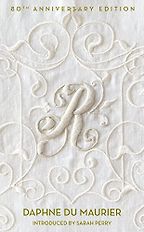
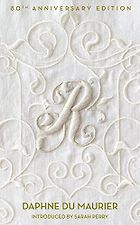
The first thriller you have chosen is Rebecca by Daphne Du Maurier, which has one of the most evocative opening lines of any novel: “Last night I dreamt I went to Manderley again.”
This a modern – well, 1930s – version of Jane Eyre. In the grand tradition of Gothic novels, it features an innocent young woman and a scary house with secrets. The heroine marries a widowed Englishman and moves into his mansion, where the servants are still mourning his stunning first wife, Rebecca. Throughout the story, she feels the first wife haunt the house, and she can never quite measure up to her. And then the heroine begins to wonder: What if Rebecca was murdered? What if my husband did it?
Rebecca has many different sides to her as a character, depending on who is describing her.
Yes, it is a little bit like [Akira Kurosawa’s film] Rashomon in that you look at this dead woman from different points of view. The housekeeper Mrs Danvers sees the late Rebecca as a queen, an object of total worship. The heroine sees her as a flawless and beautiful ideal that she can never match up to. Then you find out that, from the husband’s point of view, Rebecca was in fact a monster.
What makes it such a good thriller?
The exploration of who this dead woman really was, and whether her husband might have killed her. That’s the underlying theme for a lot of good crime novels – the unknowable person. We all walk around with a public face, but we don’t really know what is underneath that mask. Crime fiction is about finding out who the real person is.
And what they are capable of!
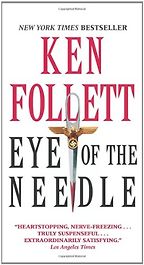
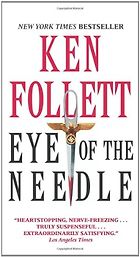
Next up is the Second World War thriller Eye of the Needle by Ken Follett, about a German spy on the run code-named “the Needle”.
This book was my introduction to the spy thriller. I had read Tinker, Tailor, Soldier, Spy before that. But Eye of the Needle was a thriller as opposed to a spy novel.
What do you think is the difference?
John le Carré is very cerebral. There is an intellectual puzzle of trying to figure out who the characters are. Eye of the Needle was an out-and-out chase thriller. The plot is about whether the English intelligence officer will catch “the Needle” before he completely changes the course of the Second World War. And even though you know how the war ends, Follett manages to keep up this incredible adrenaline all the way through the story because the villain is so brilliant and tenacious.
What makes him such a mesmerising character?
First, he is ruthless. He can get out of almost any scrape. He is like the dark side of James Bond. Another thing Follett does which I found really effective is introduce a heroine who is a completely ordinary housewife with nothing going for her. She is very unhappy, yet she ends up being the one who brings down “the Needle”. That is what I love – a downtrodden character who is not a classic heroine ends up becoming the heroine after all. It’s a wonderful example of an ordinary person doing something extraordinary.
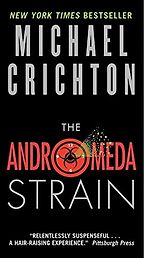
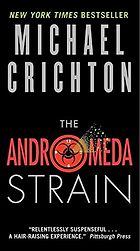
Michael Crichton was a bestselling author, often dubbed the master of suspense. Of all his books what made you choose The Andromeda Strain?
This was the first science thriller I ever read. I remember thinking it was the first book to make real science so exciting. The plot is a little village that has been wiped out by a strange illness. Nobody knows what the disease is, and the book examines how scientists solve this puzzle. People die horribly, no one understands the organism responsible and there is a strange creepy factor that it comes from outer space.
As well as a medical thriller it has also been described as a techno-thriller – what does that mean?
Simply that he puts more attention on the technology than on the investigation. The illness is medical, but he takes a closer look at how scientists would go about doing the research. There is a behind-the-scenes look at medicine and science that I don’t remember ever seeing before that novel.
Five Books interviews are expensive to produce. If you're enjoying this interview, please support us by donating a small amount.
How did he go about getting that detail?
He was a tireless researcher when writing. He would spend a couple of years just doing the research before he started to write. I think that’s what gives his books such a sense of authenticity.
Having been a doctor yourself must help, but do you still do additional research for your books?
I do. I try to be as accurate as possible, although everyone makes mistakes. The funny thing about mistakes is that you don’t know what you don’t know. So you put the error down and you don’t stop to look it up, because you assume you know it. That is when you make mistakes.
Do people get in touch with you?
Oh yes! There are some things I am not comfortable with. One of them is details about automobiles. Whenever there is an error in my books, it usually has to do with cars. I have learned to shy away from errors about guns. Now I am very non-specific when I talk about them. When you become too specific, that is when you trip up.
But you still spend time in hospitals as part of your research?
I have gone back into the autopsy room to make sure I remember what I learnt in medical school. When I wrote a space thriller called Gravity I spent two weeks with NASA. When a book is highly technical it requires a lot of extra digging. I approached my time with NASA as an anthropologist. When you walk onto a campus like the Johnson Space Center you are entering a different culture, and a large part of translating that into good fiction is getting the culture right. How do these people think? What is their attitude towards science? How do they talk? They have a different language, and nailing that is really important.
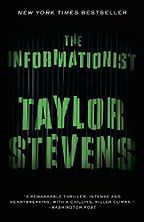
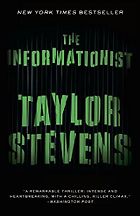
Vanessa Michael Munroe is the heroine of your next choice, Taylor Stevens’s novel The Informationist.
When I was choosing my five books, I wanted to go for a mixture of different thrillers that have inspired me. My first three choices inspired me earlier on in my career, whereas the next two are stories that impressed me more recently. They are also both illustrative of certain trends that I see coming through in thrillers.
The Informationist is a great example of turning a character on its head. We always think of the heroine as being somebody who needs to be rescued, and often female characters aren’t the heroes of the book. But in this book it is completely different. It is really a book about a female James Bond.
So she can really take care of herself.
Absolutely. She is one of the most interesting female characters I have read in a long time. What also made this book interesting is that it is set in Africa, and the author grew up in Africa. I got the sense that everything she was writing about – from the African landscape to the various dangers there – had a ring of authenticity. You don’t generally come across thrillers set in Africa unless you are talking about South African authors.
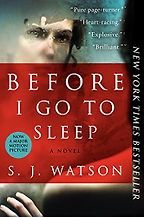
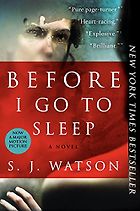
Your final novel explores the terrifying consequences of daily memory loss. In Before I Go To Sleep by SJ Watson, the protagonist Christine’s memories disappear every time she falls asleep.
This is a domestic thriller, by a man writing from a female point of view. I read it when it was still in manuscript form, after an editor asked me if I wanted to do a blurb for it. I get these requests all the time. I thought, “Ah, that sounds like just a clever trick.” But he had me convinced from the first paragraph.
How does he manage it?
It just feels so much like a woman’s voice. It opens quietly, with a woman waking up in bed. She sees a strange man lying beside her and thinks: “Oh my God, what have I done now?” She walks into the bathroom, looks at herself in the mirror and is shocked when she sees herself 20 years older than she thinks she is. Immediately all these questions are popping up. Then she finds a note she’s written to herself. It says: “Don’t trust your husband.”
That is so chilling.
It’s a great example of how you don’t need violence to have incredible suspense. The only real violence in the book is at the end. Everything else is a slow unveiling of what really happened. The woman has a form of amnesia in which her memory is erased every night. So every morning she must piece the puzzle together all over again. A lot of it is repetitive – waking up every day, experiencing the same dilemmas – so the writer risks being boring. Yet somehow he manages to make every day just as exciting. That is why I had to include it. It’s a domestic thriller with no violence – how often do you see that?
I am interested in the different types of thrillers you talk about. What for you are the key thriller sub-genres?
I tried to choose five types here. We started with the Gothic thriller. Then there was the spy thriller, the science thriller and the domestic thriller. The Informationist is the female-driven thriller. I am sure there are others. I didn’t look at legal thrillers and military thrillers, which are also sub-genres. Now there are even supernatural thrillers. The variety of thriller stories that you can come up with is endless, and I am sure there will be some new blending ones coming out.
You mentioned that Before I Go To Sleep was one manuscript among many. What makes a thriller really stand out for you?
What is really important to me is that there is a unique voice. For example, in Before I Go To Sleep that female voice was so compelling that I wanted to listen to her. I will follow a book for a character, so if the character has no spark I don’t really care what the plot is. For me, it is about the voice and the characters.
How do you manage to get a fast pace with just as strong a voice and characters. I thought thrillers were meant to be all about pace?
That is true, but pace doesn’t have anything to do with violence or bloodshed. It has to do with a sense of something not being right. I like the feeling of being off-balance, and that is what Before I Go To Sleep has. There is a sense that something isn’t right. So you want to get to the bottom of why everything feels out of kilter.
Five Books aims to keep its book recommendations and interviews up to date. If you are the interviewee and would like to update your choice of books (or even just what you say about them) please email us at editor@fivebooks.com