He was the Machiavelli of English kings – a chancer and usurper with a highly dubious claim to the throne. But Henry VII ruled for 25 years and founded a dynasty. His biographer tells us how he did it
So many people have written books about Henry VIII and studied that period – what makes you so interested in the lesser-known early Tudor period?
Henry VII ruled from 1485-1509. He was, of course, the founder of the dynasty – and father to Henry VIII – but he was also one of the most unlikely kings England has had. He was a usurper and a chancer with a highly dubious claim to the throne. He also knew very little at first-hand about the country he ended up ruling, as he had spent much of his early life as a refugee in Brittany and France. He was very charming but inscrutable, controlling and ruthless – the Machiavelli of English kings.
One of the interesting things for me about this period is that it links two epochs. The Middle Ages is generally seen as ending in 1485 – and Henry’s accession is also popularly seen as the endpoint of the Wars of the Roses, the destructive civil wars that flare intermittently in the three decades before that. The early modern period in England, on the other hand, is seen as starting in 1509 when Henry VIII came to the throne as a 17 year old. That quarter-century in between is Henry VII’s reign.
The late 15th and early 16th centuries is a distinctive age in its own right. It’s a world in which England is still part of Christendom, owing allegiance to the Pope. England is still a feudal kingdom, one that’s recognisably medieval – but at the same time you have the emergence of what we think of as the early modern world – the discovery of America, new Renaissance ideas about politics and government, and the widespread appearance of print culture which in terms of communicating these ideas is absolutely crucial.
So this is a volatile world, a world in flux. In a sense Henry VII is typical of this age. He’s somebody who seems to come out of nowhere, seizes power and makes the throne his own.
And hangs on to it for dear life.
Yes, and this is a crucial thing about his reign. One of the things my book does is to show Henry’s reign as a 25-year-long state of emergency. He’s never able to shake off the spectre of civil war.
Your first book is Michael Jones and Malcolm Underwood’s The King’s Mother, which shows what a crucial figure Margaret Beaufort was in helping Henry VII achieve his goals.
Lady Margaret Beaufort was Henry VII’s mother. She gave birth to him in January 1457 when she was just 14 years old – pretty early even by the standards of the time. The Beauforts are descended from the House of Lancaster, one of the sides contesting the Wars of the Roses – the other, of course, being the House of York.
Lady Margaret Beaufort has a claim to the throne but the Beauforts, although descended from Edward III’s son, John of Gaunt, were his illegitimate offspring, so they were banned by an Act of Parliament from ever laying claim to the throne. Lady Margaret is a great political operator, and has a huge influence on events which lead her son to the throne, and subsequently throughout his reign.
The book is a fantastic piece of scholarship, based on meticulous archival work, and paints a wonderfully rich picture of Lady Margaret’s world, from the day-to-day running of her huge household to how she negotiates and at times dominates the politics of the age.
How did she manage to get Henry VII into power and keep him there?
In April 1483 the Yorkist King Edward IV dies and leaves two young sons – Edward V, the heir to the throne, and Richard, Duke of York – by his wife Elizabeth Woodville. The boys’ uncle, Richard of Gloucester, puts the boys in the Tower of London – they are, of course, the Princes in the Tower – and they’re never seen again. Richard then claims the crown for himself and becomes Richard III. It’s at this point, with resistance to Richard III looking for a figurehead, that people start to think of Henry, Earl of Richmond, the man who will become Henry VII. And what prompts his emergence is, to a great extent, secret and ongoing negotiation between Elizabeth Woodville and Lady Margaret Beaufort.
Get the weekly Five Books newsletter
Between them, these two powerful women decide that Lady Margaret’s son – who will become Henry VII and who, of course, has Lancastrian blood – will marry Elizabeth Woodville’s eldest daughter, Elizabeth of York, the older sister of the Princes in the Tower. This marriage will create a new dynasty, uniting the houses of Lancaster and York, and carry England into a glorious new future. The interesting thing is that this pact is as much a stitch-up between the houses of Beaufort and Woodville as it is about any genuine union between the houses of Lancaster and York.
How was it that women managed to have so much power in those days?
Well, of course, most of the time they didn’t. Kingship was seen as a male preserve, and the crown is passed on down a male line of inheritance. But much of the time the male heir is either too young to govern or – most notoriously, in the case of the later Tudors – dies. In this situation, royal women end up effectively wielding sovereign power, even though in theory they’re not meant to. Incidentally, this is something that Helen Castor’s book She–Wolves explores quite brilliantly. But Lady Margaret’s case is especially interesting, because she’s one of Henry VII’s very few surviving close blood relatives – he’s an only child and his father’s dead – so she ends up having a massive and very influential power base.
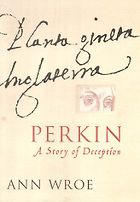
Next up we continue with the idea of the various usurpers around at the time. Perkin: A Story of Deception by Ann Wroe is all about Perkin Warbeck who tried to pass himself off as Richard, Duke of York in order to steal Henry VII’s throne.
Perkin Warbeck claims to be Richard, Duke of York, the younger of the Princes in the Tower who went missing in 1483. The two princes, of course, were the Yorkist heirs to the throne. The fact that they disappear – and are presumed to be dead – is crucial to Henry VII being able to claim the throne. But the great problem for Henry is that he can’t prove that the princes ever died. Just the possibility, then, of Richard, Duke of York’s existence serves to cast fundamental doubt on Henry’s right to the throne.
Perkin Warbeck appears in the early 1490s. His performance as Richard, Duke of York is so convincing – and so many people want to believe that he is who he says he is – that he manages to destabilise, and at one point almost bring down, Henry VII’s reign for a decade.
Which just shows how unstable Henry’s reign really was.
Yes, it does. And Ann Wroe’s book is a wonderful evocation of the uncertainty of the age, as encapsulated in the shadowy figure of Perkin Warbeck.
Isn’t there this suggestion that Perkin Warbeck actually began to believe that he was in fact Richard of York, which seems rather far-fetched?
The point is that we – like Perkin’s contemporaries – never quite know whether Perkin is who he says he is. History tends to be written by the winners. Inevitably the picture we have is the Tudor one – that Perkin was an impostor, pure and simple. On the balance of probabilities, you’d have to say that he was. But one of the terrific things about Ann Wroe’s book is its exploration of how someone can assume a role and play it so convincingly that they come to believe that they are who they act. It’s a beautifully textured book.
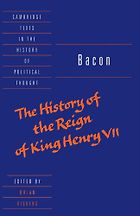
I am interested to hear what you learnt from your next choice, Francis Bacon’s book on Henry VII, when you were writing Winter King?
Bacon’s book is a terrific psychological portrait of Henry VII. As well as a philosopher and pioneering scientist, Bacon was an influential politician: Lord Chancellor during the reign of James I, who came to the throne in 1603 after the death of Elizabeth I. In 1621, Bacon’s career ended in disgrace – he was convicted of corruption and sacked. He went away to his large house in the country and wrote the history of Henry VII, who was James I’s great-great-grandfather.
What is interesting about this book for me is that it’s a book written by someone who was himself a practising politician. Bacon is the first writer to get into Henry VII’s mind and under his skin. What I love about what Bacon does is that he intends the book to be true to life – it’s not a hagiography. Bacon said that if Henry were alive again, he hoped that the king would not be angry with the portrait that Bacon had painted but would rather be pleased, “in seeing himself so truly in colours that will last and be believed”.
Support Five Books
Five Books interviews are expensive to produce. If you're enjoying this interview, please support us by donating a small amount.
Although I think he is wrong in some of his interpretations – for example, I argue in my book that Henry and his wife were close, rather than distant, as Bacon says, and I also think that Bacon to an extent misunderstands Henry’s avarice and the way it functions – it remains an exceptional study of power.
Why do you think that Henry VII has been so differently interpreted by other historians as this rather grey figure?
I think partly it is because Henry doesn’t lend himself to caricatures in the way that Henry VIII – the fat monarch with lots of wives – does. What is intriguing about Henry VII is his ability, despite having no claim to the throne, to gain power and hold on to it. And the oppressive control that he exercises over government, particularly in the last years of the reign, which are years of secrecy, intrigue and terror. Henry VII is unable to make his subjects love him – so he makes them fear him instead.
Because he is so paranoid about losing his throne.
Exactly so, and when the 17-year-old Henry VIII ascends the throne in 1509 he has to go through this extraordinary contortion of presenting himself both as heir to his father, and – because his father’s reign became so oppressive – as something fundamentally different from him at the same time. Henry VIII had to portray himself as the antithesis of his wintry, avaricious father – as this young prince who would usher England into a glorious new age.
Which at the beginning of his reign he did embody. He was very much the poster boy king.
He was indeed, and this is accentuated in the way he defined himself against his father. In fact, the reaction to Henry VII’s reign in 1509 sets the tone for how we continue to see the first Tudor king today.
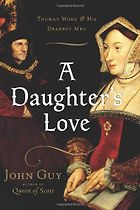
Your next choice moves us firmly into the reign of Henry VIII with an interesting father-daughter portrait written by John Guy about Sir Thomas More and his daughter Margaret.
This is an exceptional double biography, written by one of the foremost experts on Tudor England. Thomas More, of course, was executed in 1535 for refusing to acknowledge the validity of Henry VIII’s break from Rome and his supremacy over the Church. Guy combines brilliant interpretation of primary sources with absorbing narrative to paint More’s relationship with Margaret and in so doing places Margaret right at the centre of More’s life. As More wrestled with his spiritual doubts in the 1530s he was deserted by most of his relatives. But Margaret stays faithful to him. The book also shows Thomas More’s encouragement of his daughter’s considerable intellect.
He tutored her.
He did teach her – and she was in many respects his best student. This is a terrific portrait of a woman growing up in a man’s world, carving out her own identity within it. In a very radical move, she publishes her own book – a translation of Erasmus’s meditations on the Lord’s Prayer. Guy makes the point that very few women had dared to go into print in this way before.
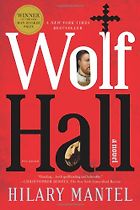
Your final choice is a novel and the winner of the Booker Prize, Wolf Hall by Hilary Mantel.
Yes. It may seem curious to choose a work of fiction, but Hilary Mantel possesses an extraordinary historical imagination and her recreation of the world of the 1530s through the eyes of Thomas Cromwell is, I think, utterly convincing. Cromwell, of course, is More’s contemporary and his nemesis.
One of the fascinating things for me about this book is that in exploring Cromwell’s world, Mantel is also looking at the mentality of the new men – the lawyers, financiers and administrators – who helped to forge Tudor England.
Cromwell was an exceptional man, but he also exemplified a type of royal servant who was able to multitask, to turn their hands to anything from finance to espionage to government. These were the kings of men, in fact, with whom Henry VII surrounded himself. Chief among the new men of Henry VII’s reign are the likes of Richard Fox and Thomas Lovell who are Thomas Wolsey’s mentors – Wolsey then, of course, becomes Cromwell’s mentor.
Although Mantel’s portrait of Cromwell is fictional it has, I think, a real truth about it. It has this wonderful quality of bringing to us in a very immediate way a world that is very strange, very distant from our own.
November 7, 2011
Five Books aims to keep its book recommendations and interviews up to date. If you are the interviewee and would like to update your choice of books (or even just what you say about them) please email us at [email protected]
Thomas Penn is the author of the critically acclaimed Winter King, which redefines the reign of Henry VII. Penn received his PhD in early Tudor history from Cambridge University. He lives in London, where he works in publishing
Thomas Penn is the author of the critically acclaimed Winter King, which redefines the reign of Henry VII. Penn received his PhD in early Tudor history from Cambridge University. He lives in London, where he works in publishing