You can find economics lessons in the most unlikely places, including the virtual world of computer games, says Tim Harford, author of a number of economics books aimed at the general public. He recommends five books that you wouldn't necessarily expect on a list of popular economics books, but nonetheless contain important lessons.
You’ve chosen books that contain economic lessons, but are outside the mainstream of pop-economics literature. Tell me why? Do you feel it’s important that people are better informed about economics?
I do think it’s important that people are better informed about economics. I could easily have named five really great mainstream popularisations of economics – such as The Armchair Economist or Naked Economics or Freakonomics or The Accidental Theorist by Paul Krugman. But then everybody would have heard of them. I wanted to choose books that were a bit different.
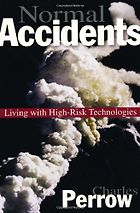
Yes, and your first choice is seemingly not about economics at all. It’s called Normal Accidents and is by Charles Perrow. He is, I believe, an expert on the safety of systems and, in this book, argues that as technology gets more complex, the odds of tragic accidents occurring are increasing.
Yes. Charles Perrow is still going strong: I think he is now in his eighties. He is a sociologist, but got very interested in unintended consequences, and from looking at those, got very interested in technological disasters. For him, at the time he published the first edition of this book, Three Mile Island [the nuclear core meltdown in Pennsylvania in 1979] was the definitive one. It prefigured Chernobyl. And then he revisits the subject at the end of the 1990s. The book goes through awful accidents in complex systems and explores why they happened – the human failings that go into them, the systemic consequences, the fact you could have a very small error that propagates and propagates. It’s quite a technical book, but it’s wonderful and completely compelling.
I originally read the book because I wanted to write about a particular accident. My sister is a qualified safety engineer, and she gave me a bunch of safety engineering books. But as I read Perrow’s book, I realised that it could have been written about the financial crisis. That was really shocking to me – this realisation that these banks and their interconnections were, in many ways, the same kind of system as a nuclear reactor, or at least had very important similarities.
And is there any way of avoiding this kind of disaster in future? Does the book shed any light on that?
Perrow is, in many ways, a pessimist. He says that if the system is too complicated, you will have accidents. There’s nothing you can do about it. Looking back at the history of financial crises, that’s probably appropriate. But one thing that comes out of the book is the idea that we tend to make systems more complex by adding safety systems on top of them, and that the safety systems themselves create new ways for things to go wrong. That was a key problem in the financial crisis. A lot of banks were taking bets and then insuring themselves with credit default swaps (CDS). Credit default swaps were, basically, insurance contracts that banks wrote, often with [the big insurance company] AIG. Or banks were repackaging sub-prime mortgages into vehicles that were supposed to make risky loans safe. These two innovations – the packages of sub-prime loans and the credit default swaps – were both safety systems. But they were both absolutely crucial in explaining why the system blew up. I think that’s a central and really useful idea, that these safety systems are probably not helpful – and even when they are helpful, they will have unintended consequences.
Is that because they lull us into a false sense of security?
That is one of the things they do. In the case of credit default swaps, they were specifically designed to allow banks to take more risks, with the approval of regulators. The entire point was to allow more risks to be taken. So yes, absolutely, that is part of the problem. But also, just by virtue of making the system more complex, they introduce new ways for things to go wrong. That was very much the case with Three Mile Island. Three Mile Island was a nuclear accident triggered by a safety system. In the case of the financial crisis, credit default swaps introduced unexpected links in the financial system. You have small banks with what appear to be perfectly safe packages of loans, insured with credit default swaps. But those insurance contracts turned out to be links to risks elsewhere in the system.
It’s a bit like climbing a mountain. You’re roped together, and you think the rope is making you all safer. Then, suddenly, a couple of people fall off. You realise that it’s the rope that’s dragging you all off the cliff – even people who were never in trouble themselves.
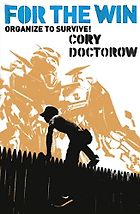
Let’s move onto For The Win. I was intrigued to see this was classified as young adult fiction, and the assurance that it would “appeal to any enthusiastic player of MMO [Massively Multiplayer Online] games.”
Yes. The author, Cory Doctorow, is a really interesting guy. He is one of the founders of the blog and former magazine Boing Boing. He’s a campaigner for internet freedom and fair dealing in intellectual property rights. And he’s also an author – writing these young adult novels. I read this book because I was writing a column about the economies inside computer games – because these games are now so complex they do have their own economies. I read the novel for background, but I really grew to admire it. It is for young adults – it’s an adventure-action story, it’s not that complicated. But it’s very well done and conveys a lot of really interesting economic ideas very well. For instance there’s the impact of globalisation, the possibility of bubbles occurring in economic systems, the idea of the race to the bottom, of sweatshops and the role of unionisation. Really key economic ideas.
Of course there are a lot of economic ideas that are not in the book. I would also say that Cory is well to the left of where I am. He thinks trade unions are incredibly important – I’m not so sure. But I was very impressed by the way he could take this novel and convey all these economic ideas without slowing the action down. There have been people who have tried to create works of fiction with an economic message – notably Ayn Rand, who has just had a film made about her work – but Cory has really done it very well. It’s a tremendous and very admirable achievement.
The story is very empowering isn’t it? The protagonists take things into their own hands?
Like all good young adult fiction it’s about protagonists of about the same age as the reader getting things done and taking control. These are 16-to-18-year-old kids across the world who are expert computer game players and able to make money playing computer games. They have to deal with thugs and crimelords and the Chinese state trying to shut them down in various ways. In the end, it becomes something bigger than just trying to make money by playing games. It’s about rights for the workers who are playing these games and are being exploited. But it’s not an economics lesson, it’s an adventure story.
Next on your list is a book that certainly is an economics lesson, but takes the form of a cartoon.
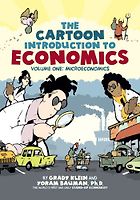
This is by Yoram Bauman, who is perhaps better known as the stand-up economist. He sprang to fame because of this lecture – you can see it on YouTube – which was a stand-up comedy routine, based on a parody of one of the most famous economics textbooks, Greg Mankiw’s Principles of Economics. Bauman has a PhD in economics, so he knows a lot of economics, and there’s actually quite a lot of wisdom woven into the comedy routine, but he just lays into economics.
Then he decided that the next thing he wanted to do was write this cartoon introduction to economics. And, just to be clear, this is a textbook. It’s not a comic book with some economic messages, it’s a textbook in the form of a cartoon. But it’s quite sophisticated and it’s very nicely done. So far the only edition to be out is the microeconomics version, but the macroeconomics is coming soon. For anybody who is genuinely interested in economics, who really wants to learn the jargon, or anyone who is starting out studying an economics course, this is just a brilliant source. It really is rigorous, but it’s also a lot of fun to read.
Is he laying into economics again or is he playing it straight?
He basically plays it straight, but he’s not averse to poking a little fun when it’s deserved, so there’s this subversive undercurrent. One of my favourite running jokes is every time an economist wins a Nobel Prize, the King of Sweden pops up and says, “Congratulations! You’ve won the Nobel Prize!” Of course, every time it seems to be for an incredibly banal insight, so it’s quite a nice running gag – these people making really obvious points and then suddenly the King of Sweden pops up.
Can’t the Nobel Prize for economics almost always be summed up with a banal catchphrase, like “you shouldn’t put all your eggs in one basket”?
It’s true. But I suppose you could say the same thing for the winners of the Nobel Prize for literature.
I think this textbook might be useful to a lot of people. You read so much about economics in the media these days – how it needs to change in the wake of the financial crisis, that it should take on board the insights of behavioural economics et cetera. But when you say the word economics, people start talking about completely different things – to some it means dealing with inequality, others equate it with lack of regulation on Wall Street. I’ve got to the stage where I don’t even know what economics is any more, it seems to mean completely different things to different people.
Economics studies the human economic system, which is a tremendously broad and deep field of study. In any modern economy, like London or New York, there are probably about 10 billion different types of products in service – not numbers of products, but separate types of thing that a stock-keeping system would give a different code number to. These products are often incredibly complicated, like the telephone I am talking to you on. It’s an incredibly sophisticated piece of kit. But even the notebook I’ve got in front of me, I couldn’t make that. I couldn’t twist the wire and produce the paper. These are terribly, terribly complex systems and they can be understood at the really macro level – booms and busts – and they can be understood in terms of human behaviour inside these systems, how we respond to prices, and the decisions that we make. It’s a fascinating, rich subject, so it’s not surprising it means different things to different people.
In terms of how economics needs to change in light of the crisis, where I would put my emphasis is not so much in behavioural economics, though I have no problem with it – it’s a very interesting area and it’s producing really important insights – but I think it’s more about engaging with the world, and the institutions of the world as it is. Economists got too used to reasoning in fairly abstract ways, without looking at the details of what was actually going on.If, as an economist, you’d looked at the way sub-prime loans were being sold, and the kinds of contracts that were being written and the financial instruments that were being created, you don’t need any mysterious appeal to psychology to explain the disaster. You just need to have been paying attention. That’s not to write off behavioural economics – but it’s just not true that behavioural economics was the single thing that was missing, that if only we’d had it, there would have been no crisis.
If you look at some of the behavioural economics books that were published before the crisis, they’re very good, but there’s nothing in them that successfully warns of the crisis to come. They’re focused on things like consumer protection and writing better credit card contracts. They’re not saying, “Look, there’s this huge systemic problem that’s about to blow up in our faces…”
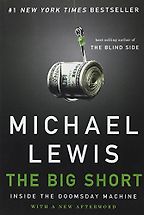
Which takes us onto your next book, The Big Short by Michael Lewis.
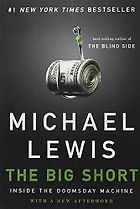
This is probably the most popular book on my list, and many people will already have read it. It really is a masterful book. Lewis is an amazing storyteller, but what I loved about this book is that he really tries hard to understand how this system went wrong. Then he explains it, all the complexities, and he just makes it look so effortless. You feel really smart when you’re reading this book. It all becomes obvious. Of course it wasn’t obvious at the time, and it isn’t obvious until a master storyteller like Lewis gets his hands on it. This book should be required reading, and, because it’s a pleasure to read, that’s not a very onerous requirement.
So on the crisis, if you had to recommend just one book, it would be this one?
Yes. There are some other very good books on the crisis, but this would probably be the one. If I had any criticism of the book, it’s that he makes it seem too obvious. It becomes mysterious how anyone could have been confused.
On this issue of the interaction between economic theory and the world as it is. Aren’t academic economists, almost by definition, always going to be removed from the wheelings and dealings on Wall Street to a large degree? Do you get any sense that there is a fundamental change afoot, that they’re going to be more plugged into the reality that Michael Lewis is describing in the future?
I think they probably are, for a couple of reasons. One is that reality is starting to produce really good data. Previously, data was something that would be collected by a government statistical department. You’d have data on unemployment, inflation, GDP growth and not much else. Now data is just thrown off in huge quantities by the likes of Google and all these computerised business processes. That means that if you want to do good empirical work, you need to start engaging with businesses. That is one thing that is changing.
Another thing that is changing is if you look at the awards that are now being given to economists. A few weeks ago, Jonathan Levin was given the John Bates Clark medal, which is awarded to an American economist under the age of 40. It’s basically a forerunner for the Nobel: most Bates Clark medallists who stay in the profession have gone on to win the Nobel Prize – people like Paul Krugman, Gary Becker, Joe Stiglitz and much earlier, Paul Samuelson. Larry Summers probably isn’t going to win the Nobel Prize, but he was a Bates Clark medallist as well. So it’s a really serious award. Jonathan Levin is one of a new breed of economists who mixes very sophisticated economic theory with quite detailed empirical study. It used to be that economics was entirely theory driven.
And empirical work was even looked down on, I get the sense?
Yes, and then Steve Levitt came along. He won the Bates Clark medal in 2003. He’s the author of Freakonomics, he is a brilliant empiricist, a data guy, but not really much in the way of theory. He would say that himself – he’s just looking for patterns in the numbers. What’s happened more recently is there’s been this marriage of classical economic theory and careful empirical data collection. Levin won this year, last year it was Esther Duflo, who is also a brilliant empiricist. The year before it was Emmanuel Saez, who is famous for his very careful studies of inequality. The year before that it was Susan Athey, who is a co-author with Jonathan Levin. These are people who are really getting their hands dirty with the data. I think that is a change in economics. You can’t just produce theoretical models. There’s so much good data now that you can’t get away without doing some of it.
What happened with The Big Short? Has there been some reassessment of the story he tells, a goodie turned out to be a baddie or vice versa?
It’s a book that’s made and broken reputations, so there is still some jockeying for position. I believe that somebody is suing Michael Lewis. He emphasised certain characters, and he could have looked at other stories. But I’m not aware of any consensus that Lewis made some awful, terrible mistakes in the book.
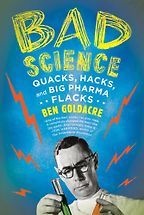
Lastly, you’ve chosen the Bad Science book by Ben Goldacre. Again, not obviously to do with economics. He’s a medical doctor who also writes a column for the UK newspaper The Guardian.
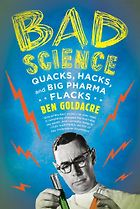
This is really one of the best books I have ever read. It’s been hugely successful in the UK, and has now been published in the US as well. I thought it was just going to be Ben laying into silly tabloid newspaper stories about how everything in the world either cures cancer or causes it. And he does do that. But if you go through the book as a science writer, which I am (I’m writing about the science of economics, and what economists do) I started becoming increasingly ashamed of myself, at the standards that Ben holds up for writing about what’s going on in academia, versus the standards that I was holding myself up to. You read a paper, you understand a paper, you write a paper up. Ben is saying, “What about the contrary papers? What about the research that contradicts it? How is it that you found this particular piece of research? Have you looked widely enough? Have you thought about publication bias?” He is really thinking about all the different ways we can deceive ourselves that something is true when it really isn’t. Ben is just a master of that. It changed the way I thought about my own writing and it changed the way I thought about the world.
It’s also become particularly relevant because economists have got much more interested in using the methodology of clinical trials. I mentioned Esther Duflo earlier, who is the author of a new book called Poor Economics. She won the Bates Clark medal for her use of randomised controlled trials in economics – the kind of trials doctors use to test new drugs. Economists are now using it to test different sorts of social policy. They’re tremendously inventive and I write about some of them in my new book, Adapt. For example, there is one trial currently going on to test the effectiveness of post-conflict reconstruction projects. There are two million people in the control group and two million in the treatment group. This project is being conducted in the Democratic Republic of Congo, in places that don’t exist on any map, that you have to wade up to your chest in swampy water for hours to reach. The ambition of some of these experiments is just incredible. It’s a really important change in the social sciences and reading Ben’s book is a real complement to it. It’s not enough just to run a randomised trial, you have to understand all the other stuff that is going on as well. That’s what makes medicine such an effective academic discipline.
But he’s criticising medical research as well, isn’t he? Doesn’t he show exactly how a pharmaceutical researcher can bring a mediocre new drug to the market, by skewing the data to show a positive result?
Ben is not defending the medical establishment against all comers. He’s explaining the scientific method and how it is used and where it falls short. When I talk to Ben about it, he says: “Whenever I look at how it works in other fields, I conclude that it’s bad in medicine, but it’s worse everywhere else.” Whether we’re talking about conflicts of interest policy, or trial registries, which make sure that trials with inconvenient results don’t just disappear, whatever we’re talking about, the doctors are ahead of the rest of us. But they haven’t got it entirely right.
Is that really the way things are going in economics?
That’s one very important direction for economics. Also, reading Ben’s work made me think more deeply about a lot of the very cool results that are coming out of behavioural economics. You’ve got a good researcher who runs an experiment and produces a result and it’s published in a peer-reviewed paper. Previously I would have said, “OK, fine, that’s good enough for me.’’ But now I think, “Well, hang on, how many experiments have been done that didn’t get published? What’s the publication bias? What are the systems we have in place? What’s the bias in the media towards reporting the interesting results versus the boring results?” You do find the same few studies reported again and again in the media. They become iconic, when in fact they’re not really representative of what’s going on. Ben really got me to think hard about that process.
In economics, just now, during the financial crisis, we had a very sick patient. Some economists prescribed fiscal stimulus. But there was another group who said fiscal stimulus doesn’t work and is a waste of money. How could academic economists, who study this for a living, not be able to agree on such a simple question – does fiscal stimulus work or doesn’t it?
I’m much more of a microeconomist, and all the books I’ve recommended are in some way related to microeconomic issues because I do feel microeconomics has made more progress in what is a very difficult field of study. But to defend the macroeconomists: you’re right they haven’t been able to give us a simple answer to the question, “Does fiscal stimulus work?” But the whole idea behind fiscal stimulus is to use the power of government to force unused resources into action. You simply cannot, in an abstract way, say whether it works or it doesn’t because so much depends on questions like, “What are the unused resources in the economy? What kind of sectors are they in? How open is the economy? Is it connected to other economies? Does it trade a lot? Does it not trade a lot? How deep is the recession? What kind of stimulus are we talking about? Is this writing cheques to people? Is it cutting taxes? Or launching spending programmes? What kind of spending programmes? Are we building roads or are we doing something else?”
There are so many different ways it could be done. There will never be a single answer, because it will always depend on context. Also, whenever it’s been tried in the past, it’s been in a chaotic environment where lots and lots of other things are going on. You can’t create those experiments in a macro environment. I think they have made progress. You would have hoped they had made more, but you have to respect the difficulty of the question that is being asked. You said it’s a simple question. Sure it’s simple, in that it doesn’t involve that many words. But that doesn’t mean it’s easy to answer.
I still think with all these people studying economics, it’s something they could have figured out by now.
Maybe you should just create a few economies, run some treatments and run some controls. Going back to Cory Doctorow’s book – and this is going to sound really, really weird and far out, but I believe it’s true – these online computer games are getting sophisticated enough now, and complex enough, with lots and lots of players, and real economies inside them, that you can start running experiments in these virtual economies to see how they work. That is something some economists are interested in doing. Maybe World of Warcraft will one day give us the answer to some of these questions you want answers to.
Five Books aims to keep its book recommendations and interviews up to date. If you are the interviewee and would like to update your choice of books (or even just what you say about them) please email us at editor@fivebooks.com
Five Books interviews are expensive to produce. If you've enjoyed this interview, please support us by donating a small amount.
Tim Harford
Tim Harford is a British economist. He is a columnist for the Financial Times, a presenter of the BBC radio series More or Less, an occasional TV presenter and prolific author. He was made an Officer of the Order of the British Empire (OBE) in the 2018 New Year Honours for services to improving economic understanding.
Tim Harford is a British economist. He is a columnist for the Financial Times, a presenter of the BBC radio series More or Less, an occasional TV presenter and prolific author. He was made an Officer of the Order of the British Empire (OBE) in the 2018 New Year Honours for services to improving economic understanding.