Author and Arabist Tim Mackintosh-Smith tells us about the rich tradition in Islam of travelling to gain knowledge, and directs us towards some of those, both Western and Arab, who’ve inspired with their tales of life on the road.
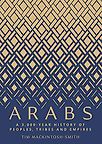
Arabs: A 3,000 Year History of Peoples, Tribes and Empires by Tim Mackintosh-Smith
I think you’ve got to look. You’ve got to use your eyes above all, but use all your senses. Keep your senses open. Never close anything down. Always be open. I’m writing about China at the moment. I went there first with a TV crew and, as you’re there to make a programme, you’re always looking at a place with tunnel vision. Afterwards, I got back and had a think about what I had missed, and it was smells and sounds in particular. So I went back to China and concentrated on smells and sounds. So keep your eyes open as well as all your other senses. I think it was Dr Johnson who said – although I believe he was quoting someone else – “If you wish to bring back the treasures of the Indies, then you must carry the treasures of the Indies with you”, or something to that effect. In other words, I think the kind of the travel writing that I do, I have to do quite a bit of mugging up first. Then you have to forget it all, rely on your senses, and then come back to your research.
Should travel writing – excluding travel guides – be taken literally, or should readers accept a degree of exaggeration and embellishment in order for a good story to be told? I’m thinking in particular of Bruce Chatwin, who made up significant bits of The Songlines to make the story “real”. Is that acceptable?
I definitely don’t think you should tell fibs and make stuff up. But readers almost expect that you will tell lies. I can give you an example. In my Yemen book, I write about meeting this little boy in the street who’s kicking a football and he’s wearing my prep school blazer. People would say: “Was that really true or did you make it up?” It was absolutely true. In fact, I wrote about it quite carefully so that I didn’t actually say it was my very own prep school blazer. But people automatically read it as saying that it was my very own blazer, which couldn’t possibly be true. That’s the kind of expectation people have of travel writing.
Probably the best simile for what you have to do is like when you make a TV programme – you play around with the colours afterwards, you heighten some and dull others down to make it look better. You don’t end up telling fibs or anything, but you do heighten the colours. Another example, which I owned up to, is in my India book [TheHallofaThousandColumns] where there’s a chapter on [the town of] Aligarh. It comes across as if I made a single, discrete visit, when in fact I went there five or six times over two years, but I connected them together. If you say everything that happens to you and in exactly the order it happened, nobody would want to read you. You do have to edit, to cut and splice, to do the montage. It’s a bit like film editing.
Travel for Muslims is a religious duty, as believers are expected to go to Mecca for the hajj at least once in their lifetime. Do you think there is a richer tradition of travel writing amongst Muslims?
Absolutely. Very much so among Arabs in particular. There is a word in Arabic “rihlah” – it’s both a journey and also a book about a journey. You can go back a long way, to the time of the Abbasid caliphs around the ninth century, and you get people writing accounts of their journeys. A bit later you had people like Ibn Jubayr, who was 12th century. He was the paragon of Arabic travel writing. The Quran encourages people to travel and gain knowledge. Travel for knowledge is a very big thing in Islam. There’s a famous saying of the prophet Mohammed: “Seek knowledge even if you have to go to China.”
Today, we live in a world of instant and easy communication. Has it become harder for travel writers to capture the attention and the imagination of their audience?
I talked a bit about this in my last book apropos [Moroccan 14th century traveller] Ibn Battutah going to China and getting stuff completely wrong. For example, he said that the emperor had been killed and there was a funeral. That was nonsense as he lived for another 25 years. Then I thought, he didn’t have Google to check things on; he didn’t have guidebooks – he would have been in China in a complete blizzard of not knowing anything. But his main job was to impart information. Now we can get our information from so many different sources and so easily that that side of travel writing isn’t there so much. I try to differentiate information and knowledge. I think what you can impart as a travel writer is knowledge. You can impart insights and a narrative which you can’t get on the Internet or in a guidebook.
Just before we move on to your books, I would like to touch on the fact that you live in Yemen, a country which the British Foreign Office recommends all its nationals leave immediately. I trust you won’t be coming home soon, but I wonder if you would tell us about why you live there and whether the current wave of instability in the country can be given a broader historical context?
I live in Yemen because I love it. I really do love it. I have lots of good friends here – some very special friends who are like family. In fact, I have just done an interview on [local] TV in which I was effectively saying that despite all the crises and all the problems, I still do love the place and I always will. The country is not just the leader who happens to be in power at the time, messing things up as like as not. It’s the whole cultural past and the future as well. This is what I like. You must look before and in front of the moment that you are in. Inshallah [God willing], it has a great future somewhere along the line.
In terms of what is happening now, it is a bit of a departure. I really do genuinely think it is something absolutely new. For the first time, people are questioning leaders who are effectively ruling in the same way that people ruled a thousand years ago – my word is law, all my brothers and cousins are going to occupy the top positions and we run the place and you shut up. Talk of democracy has been much in the air over the last couple of decades here, but it hasn’t really been understood what it means until now. People are beginning to realise that the country is more than the guy who occupies the post of leader.
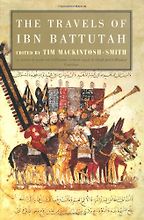
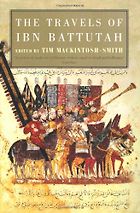
We’ve broken all our rules by allowing you to include in your list a book that you have contributed to, but it is the most readily available edition. Can you tell us more about Ibn Battutah and his extraordinary travels?
I couldn’t not include him. His editor Ibn Juzayy says towards the end of the book that Ibn Battutah is “the traveller of the Arabs and if anyone says he is a traveller of this ummah [Islamic community], he would not be wrong”. That actually stands today. In a sense he hasn’t been bettered since that time [the 14th century]. The complete diversity of the Muslim world was put on the axis of a book by Ibn Battutah. Nobody afterwards could really do better. He is the traveller of the Islamic world.
He was born in 1304. In 1325, when he was 21, he sets out on a pilgrimage to Mecca. He starts from Tangiers in Morocco, so it’s a long way from there to Mecca. It’s almost as far as you can go in the Arab world. Like other people doing that pilgrimage from his background, which was an educated background of judges and scholars, he would have hoped to do some studies along the way, probably in Cairo or Damascus, which is indeed what he did. But unlike most of these other people, he really got the travel bug. I think there are a number of reasons for this. One is that he realised that he could make money and get jobs in the Islamic world, especially in areas that were newly Islamised or its leaders were newly Islamised, like the ruler of India. Ibn Battutah thought, “I can get a job there,” being a card-carrying Arab Muslim scholar. So he went further than the pilgrimage, partly to get jobs to make money and to hobnob with sultans, and partly because he had this total fascination with the world of Islamic mysticism – Sufis, and particularly Sufi holy men. So he was really trying to collect sultans to make money from them, and he was trying to collect Sufi holy men, both dead and alive, as you could visit a tomb and be deemed to have visited that person, and collect their barakah [blessing]. So, he travelled for these different reasons and he kind of went on and on and on.
If you read this book, it seems quite chaotic, but there is an underlying structure to it. I think there are two elements to this structure. When he is in Egypt he has this dream, which is interpreted by a holy man who says: “You will go to these different countries.” Another holy man he meets predicts he will meet his spiritual brothers in India and China. So part of the structure is fulfilling his fate, which has already been predicted. Another part of the structure is he talks quite early on about the seven great kings of the known world and they are obviously his ruler in Morocco, because he’s got to say nice things about him, and the Mamluk Sultan of Egypt and Syria, the Sultan of Delhi and then the four Mongol cousins – the Khan of the Golden Horde, the ruler of Iran and Iraq, the ruler of central Asia and the Chinese Emperor. All of those were Muslims, except for the Emperor of China. I think possibly what happened, and this is speculation, is that he sort of realised he didn’t actually get to see the Emperor of China so he added on a seventh great king who was a Muslim, and he was the Emperor of Mali, which was this great West African empire. And so he collected these seven great kings and uses them as a hook and that I think is the deep structure of his book.
At some point he realised he was surfing this huge wave of Islam and that he could actually be the one who wrote about the Islamic world – his rihlah could be the rihlah to end all rihlahs. I think he probably realised that consciously at some point.
Could you tell us where he got to and how long his journey lasted?
He spent 29 years travelling overall. I’ll tell you the outer limits of his journey. He started in Morocco and he covered most of the known world between the middle of the River Volga to the north, down to almost what is now the border of Mozambique in the south; east as far as Guangzhou in China, and west, we don’t know quite how far, but probably not quite as far as Senegal but getting that way. If you think of the known world of his day, it almost sits within those outer limits. It is extraordinary.
His account of his journey was never that popular in the 14th century, compared with, say, the writing of Ibn Jubayr. Why was that?
He wasn’t popular partly because of his style. He wasn’t a great stylist. His style could get a bit rough and these snotty-nosed literary sorts at the time didn’t like that. Also, it sort of went too far beyond their purview. He talks about the Sultan of Delhi catapulting bags of money from the backs of elephants. People actually said: “This is a lie.” What I have been trying to do with my books on him is trying to prove that he, in general, wasn’t a liar. He might have massaged things and heightened the colours, which we all do, but in general he wasn’t a fibber. So, because of style and literal outlandishness, people didn’t really take to it.
. So it really is all over the place. “]
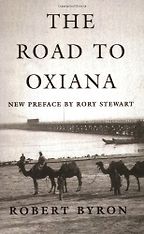
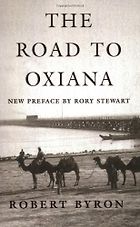
In his introduction to your next book, Road to Oxiana, Bruce Chatwin describes it as a “sacred text, beyond criticism”. Would you agree?
I recently wrote about this book and hooked what I wrote on what Chatwin said about it – that it was a sacred text – and what Wilfred Thesiger said, which was that it was a lot of nonsense. I think you can reconcile these views. It’s actually why I like the book. It’s sacred nonsense, or Robert Byron is a holy fool, if that makes sense. It’s nonsense because he sort of explodes the usual narrative of the travel book – the narrative itinerary where you go from A to B, B to C and so on. Byron is all over the shop. I think if you read his contents page, it tells you he goes to Tehran seven times and he goes to Persia and then Afghanistan and then back to Persia and then Afghanistan and Persia again and he ends up in India and then he’s back in Wiltshire [in the UK]. So it really is all over the place. So it is nonsensical in that way. But the reason that somebody like Chatwin thought it was sacred was above all because of his looking. This is what Byron does and he’s absolutely brilliant at it.
He’s looking at buildings isn’t he, searching for the roots of Islamic architecture?
Yes, he’s looking at Islamic architecture. The reason I chose it as one of my five Muslim world travel books, even though he isn’t an Islamicist or Arabist or anything, is because he once said that to travel in the Islamic world is to look at a close cousin. Travelling to India and Tibet he said was to discover a new and wholly unconnected world. So, it’s really the way that he’s looking at Islamic architecture and Islamic rationalism. He is drawing subtle parallels between the place he starts with, which is Venice – he goes to the Veneto and looks at Palladio’s Villa “La Malcontenta”, the masterpiece of Palladian rationalism – and places like Isfahan and the great tomb tower in Iran, and he is covertly making his point that Islam and the West are sharers in this rationalism. And that’s really why I am so inspired by him as someone who travels in the Islamic world and looks at Islamic buildings. It’s why Chatwin called him sacred, I think. He’s sacred, not in a secular sense, but a humanist sense. He’s trying to tease out what makes humans reasonable, rational and capable of producing great works of art. He teases this out beautifully and he draws the parallel that what we have in Europe and what we care about and love so much you can find in the Islamic world also. It’s a tremendously important point.
In Britain, Byron was very much a “Brideshead” character – a camp aesthete, gossipy and belligerent. He becomes almost a better person when he travelled.
I think it transforms all of us. To a lot of my friends here I’m a horrible old curmudgeon when I’m at home. It blows the cobwebs away when you go travelling. That’s a very important point to make. But something does come across of his outrageous character in his books. If you read his outrageous pronouncements, he is being a bright young thing out to shock. When he’s talking about the Buddhas of Bamiyan he says something like “the massive flaccid bulk that sickens, they are not art and do not even have the dignity of labour”. Rereading this quite recently, I thought maybe the Taliban were secret fans of Robert Byron and they went and blew up the Buddhas of Bamiyan. He would have loved that. He was a stirrer. Someone once asked him what he would most like to be and he said “a very beautiful male prostitute with a sting in my bottom”. And it’s the sting in the bottom which I love about the book. At the beginning he says he travels to Persia to get the taste of the Alhambra and the Taj Mahal out of his mouth. There he is demolishing two of the most important buildings in art history. You’ve got to love him because of that. Even though he’s outrageous, his arrows are almost always hitting the mark.
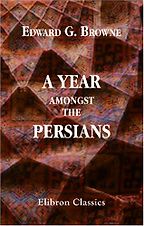
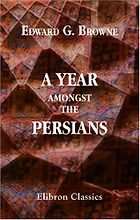
Your third book,A Year Amongst the Persians, was written at the end of the 19th century by Edward Granville Browne, a British Arabic professor at Cambridge. Why did you choose it?
It’s a good book to segue on to after Byron as they both visit Persia. But Byron is most of all into looking and Browne is most of all into ideas. He considers ideas in a huge way. It’s a book that’s very much an anthology of ideas.
Browne studies Persian at Cambridge and goes off to Persia for a year and flits around from place to place and observes the ruling Qajar dynasty of the time. He talks interestingly about the tensions between the Qajars – who were Turkic – and the Aryans, in Persian history. The bit that I love the most is when he is in Kerman where he gets into this world of ideas. He gets in with these dervishes, who are these quite extreme Sufis. He talks about being intoxicated by opium smoke and mysticism. He has this weird experience. He gets ophthalmia when he’s in Kerman and somebody says the best way to counteract the pain is by smoking opium. So he gets into this complete reliance on opium – he calls it the “poppy wizard”. It turns into this trippy, hippy experience. Remember we’re back in the 1880s, not in the 1960s, when it’s all about mysticism and opium smoke.
He was very sympathetic towards Persia and its people. It could be said to be a bit of a departure from much of the Orientalist literature being written at the time.
He, like Byron, was a supremely civilised man. I think, if I remember right, somebody advised him that if he had private means, the best way you can indulge a penchant for civilisation is by going off and indulging in Oriental studies. He was one of these supremely civilised Orientalists, quite a rare breed. There is a sheer intoxication not just with mysticism, opium smoke and metaphysics but also with words. In a sense his book doubles as an anthology of Persian poetry. This is what he went on to be most famous for, the literary history of Persia. He was a professor of Arabic at Cambridge but I think only because there wasn’t a professorship of Persian at the time. He really was a Persianist before he was an Arabist.
I wouldn’t want to put readers off who are not into the mysticism, metaphysics, opium and Persian poetry because it’s also in places, like Byron’s, a deeply funny book. He says one thing about the Persians is that they share with us a sense of the ludicrous. A lovely example of this, which chimes so much with my sense of humour, is where he recalls a joke which is told about Isfahanis, who are supposed to be very miserly. He says they say the Isfahanis are so miserly they put their cheese in a glass bottle and rub their bread on the outside of the bottle. He goes on and says one day a merchant in Isfahan caught his apprentice looking hungrily at the cheese in the glass bottle and said “Isn’t dried bread good enough for you?” Something like that rings a humorous bell with us and that’s part of what makes his book so lovely.
Both Byron and Browne, in different ways, are giving us this Iran or this Persia which is so utterly different to the one today. And both their Persias are so different and in different ways. In a sense I chose two books about Persia because I myself am an Arabist and they open up to me part of the Islamic world which is far away and weird and wonderful again. I like to be taken away from the Arab world and this is one reason why I chose these two.
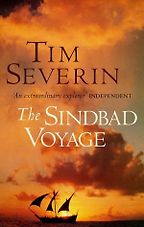
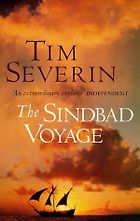
Tim Severin is famous for retracing legendary journeys of historical characters. What can you tell us about his book The Sindbad Voyage?
I chose it because it’s got boys’ stuff in it and I’m quite into boys’ stuff. It’s about how you put things together, how you build things. It’s about this journey from Muscat [in Oman] to Guangzhou or Canton in China. A substantial part of the book is about his research of how you make a sewn boat or ship, which is what his boat was. Not that the boat was made of cloth, but the planks, rather than being nailed together, have holes put in them and big cross stitches are used to pull them together. There are various reasons why people say these sewn boats were used in the Indian Ocean for thousands of years. Perhaps they withstand collisions against reefs better or perhaps people didn’t have access to nails. But whatever the reason, people used this technique of sewing boats which had been completely forgotten in Oman, but is still used in Kerala in southwest India. And so Severin goes off to India and researches how you actually make these boats, picks up a load of guys and brings them back to Muscat to make this boat using methods from a thousand years ago.
I’m into how to make things and how to restore things and I found the story of how they researched and made the boat absolutely fascinating. On top of that you have the voyage and all the adventures and derring-do – the mast breaks, they sail through storms and so on. It’s really like reading the stories of Sinbad or the stories of Al-Ramhurmuzi, an Arabian sea captain from the 10th century. It’s fascinating from the point of view of the building and the journey and it’s like travelling back in time and that’s why I love it.
The Sohar, the name of Severin’s boat, had ended up on a roundabout in Muscat. The thing is, it’s so tiny. It’s absolutely miniscule and gives you this enormous regard for the Arabs, the Persians and the Muslims of a thousand years ago who did these amazing voyages.
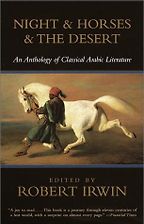
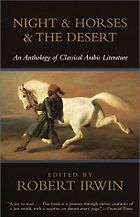
Night and Horses and the Desert by Robert Irwin – what does this anthology of Arabic literature tell us about travel?
It’s been said before by others, but I think reading is travel and travel is reading. As a travel writer I’m very conscious that they are twins or different sides of the same coin. In Arabic, the word for travelling is safar and from the same Arabic root you get the word sifr, meaning an old-fashioned volume of a book or a scroll. The reason they come from the same root is because when you travel, you are unrolling the world beneath your feet. And when you are unrolling a scroll you are unrolling a scroll beneath your gaze. So there is a very close relationship between reading and travelling.
Irwin does have quite a lot of travelling in the book. His title itself comes from one of the great lines of Arabic poetry by the great poet Al-Mutanabbi. I am very into Arabic verse and the meters of Arabic verse are supposed by some to have come from the different paces of camels.
It’s loosely based on a journey through the desert, isn’t it?
The classical Arabic ode really describes a journey. The meters themselves in Arabic poetry are supposed by some to have come from the trotting, galloping, walking and ambling of camels and horses. Arabic literature and particularly poetry are absolutely suffused with motion and travel. You could say that if a piece of literature moves you in a metaphorical sense it can move you almost physically. It can move you to different places and move you to different times. I talked before about time travel, but I think reading a book like this is the closest you can get to time travel. I think you can learn a lot more about the Arab and Islamic world from a book like this than you can from reading political narrative history.
Can you give us a little more on the contents of the book?
It’s classical Arabic literature and he takes us from pre-Islamic poetry in the sixth century to the 16th century. He doesn’t encroach on later times. He’s really looking at the great period of classical Arabic. He divides his book into the pre-Islamic period, then the courtly times of the Abbasid caliphs, and then there is a long chapter on the wandering scholars, which shows the connection between travel and literature. The last chapter is about the Mamluk period and the Turkic people taking over, and the Arabic literature this period generated. I think he says in the book that, “You may think I have got a lot of poetry, but I haven’t got enough.” Poetry is the life and soul of Arabic literature. But he’s got a good mix of poetry and prose. His commentary that joins it together is superbly balanced. There is no better anthology of Arabic literature. It’s a book that I wish I had compiled myself.
February 13, 2012
Five Books aims to keep its book recommendations and interviews up to date. If you are the interviewee and would like to update your choice of books (or even just what you say about them) please email us at editor@fivebooks.com
Five Books interviews are expensive to produce. If you've enjoyed this interview, please support us by donating a small amount.
Tim Mackintosh-Smith
Tim Mackintosh-Smith is an Arabist, traveller, writer and lecturer. He studied at Oxford University and lives in San'a, the Yemeni capital. He is one of the foremost scholars of 14th-century Moroccan traveller, Ibn Battutah, and in 2011 was named by Newsweek as one of the finest twelve travel writers of the last hundred years.
Tim Mackintosh-Smith is an Arabist, traveller, writer and lecturer. He studied at Oxford University and lives in San'a, the Yemeni capital. He is one of the foremost scholars of 14th-century Moroccan traveller, Ibn Battutah, and in 2011 was named by Newsweek as one of the finest twelve travel writers of the last hundred years.