Dissent is not just about anger, but about having a rival articulation of the world, argues American historian Timothy Snyder. He recommends five books by European writers of the 20th century who lived in regimes that "not only monopolised violence but threatened it in an everyday sense" and tells us what today’s dissidents can learn from their experience.
How do you define dissent? What sets it apart from simple anger?
It’s a good question. I think the difference is that dissent accepts that there are rival articulations of the world. To be a dissenter you have to understand the articulation of your enemy, of society around you, of the regime. You have to accept its reality and have your own articulate defence of something else, whatever that might be – of an alternative society, an alternative future, or yourself as you would like to be. It depends on recognising an intellectually crystalised reality outside you, and having an intellectually crystalised counter-reality inside you.
So it has to offer both a precise target and a precise alternative. And what of more vague dissent against circumstances that aren’t politically well defined, for instance the Occupy Movement.
I’m forced here to make a distinction between dissent and dissidence. Of course, dissent can simply be an object noun. Clearly the Occupiers are dissenting, although it’s not entirely clear either what they’re dissenting from or what their alternative is. And I think those two go together – you can’t have an alternative unless you know precisely what you’re dissenting from. Whereas the Eastern European dissidents who I’m talking about here did, in general, stand for precise alternatives. It was insufficient for them just to say, “I’m standing apart”.
Although in the case of Václav Havel all he was really doing was to say, “We have the right to stand apart”. That was required in an awful lot of argumentation given the communist society that was around him. Dissidents recognise that you’re all on the same school bench but you have to sit somewhere else on that school bench, saying something different.
What else ties together the writers you have chosen to discuss?
The people whose books I’ve chosen lived in regimes which not only monopolised violence but threatened it in an everyday sense. And some of them suffered as a direct result of what they wrote. They were combating a Soviet regime which had killed literally millions of people, as they were aware of or sometimes had experience of. So as far as one can generalise the experience of Eastern European dissidents, they have had to use non-violent ways to deal with violent regimes. That non-violence was taken for granted, and in the end was successful.
Do you agree with the thesis that non-violent civil resistance is not only morally superior but simply the most effective method for regime change?
The statistics do suggest that non-violence is five times more likely to succeed within a political regime than armed resistance or terrorism. The aim is to establish within a society – indirectly of course – a standard of behaviour which would make it difficult for the regime to function. Whereas when you act violently, that’s also a kind of propaganda and a communication. Knocking down the World Trade Center was a horrible tragedy for thousands and frightened many millions of Americans. But it’s not sure exactly to whom it was addressed, and it was certainly seen by many millions of people to whom it was not addressed. One of the advantages of non-violent resistance is that you can be much more precise about what you’re trying to say.
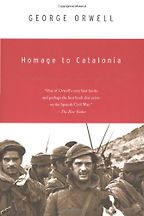
Your first book is Homage to Catalonia by George Orwell, which you describe as a prehistory of dissent.
Generally when people talk about Orwell in this context, they start with Animal Farm because it’s a retelling of Soviet history, or with 1984 because it’s an account of what a totalitarian society would look like, at a time when communism was spreading to Eastern Europe. The reason why I am so fond of Homage to Catalonia, and see it as an even more relevant precursor to dissent, is that in it you can see a man of the Left learning to make the distinction that breaks down the Left with a big L into lots of little lefts. He comes to understand what Soviet power actually is, and that it is qualitatively different to the other sorts of Spanish left, or to European left-wing intellectuals or Labour in England.
The difference is not just a matter of being on a different point of the spectrum. It is to do with the immediate violence of Soviet means which were visible to Orwell at that time and place. That’s the second thing which I find important about the book as a precursor to dissident literature. To the end of dissident literature, in the seventies and eighties, people defended themselves by making observations and elementary distinctions, preserving certain concepts, not allowing things to be vague. They defined themselves as individuals by their capacity to be specific about what was going on around them. And Orwell is wonderful at that. It is his creative gift.
He describes what is happening in Catalonia during the Spanish Civil War in such a way that we are able to see why he’s so upset about Soviet power. His argument is not one of category and concept but of irresistible observation, that builds itself up into facticity with a literary quality that is strong enough to contend with, if not defeat, ideological certainty. The dilemma that the dissidents had to face later on was that they had to build up a view of the world which was non-ideological, yet could somehow contend with and subvert ideological views of the world. Orwell did that on the basis of good observation and good prose.
Was it that fixed ideological dogma that repelled Orwell’s moral compass most?
My sense was that the ruthlessness of Soviet communist actions in Spain led him to an intuition about the wrongness of the total certainty of a worldview that could justify any action at any place and any time in service of the larger story. I think Orwell grasped that there was an almost arrogant coherence to Soviet activity when he saw the ruthlessness of Soviet behaviour, against a background where other people on the left were much less sure and confident, and were fighting for things that were much more immediate and palpable.
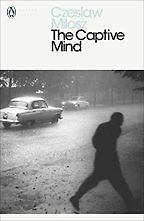
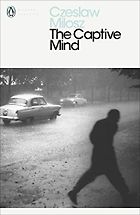
Your next book, The Captive Mind by the celebrated Polish poet Czeslaw Milosz, seems to have some overtones of 1984 itself.
Yes. Milosz tried to explain – as the title suggests – how thinking people could accept communism from inside the communist system. How does one not resist or just endure, but actually place one’s mind in the system? He points to a number of ways in which the mind can adapt. You can accept one larger truth that guides your interpretation of all of the smaller untruths, accept a vision of the future that is so bright that it drives away the shadows of the various dark acts of your own time and place. Or you can collaborate on the outside but preserve an inner core of yourself that does not collaborate on the inside.
Milosz’s point was that all of these things are possible as human adaptations to a situation, but impossible as ways of preserving humanity. In fact they’re nothing more than stories people tell about themselves, as they give in to a system which is actually inferior and repressive.
It’s an interesting argument because it gives people an alibi, which is what Milosz’s publisher in Paris – Jerzy Giedroyc, also a very important Polish intellectual – recognised. He felt that this was all bunk – that people collaborated because they were scared and needed money, and that what Milosz was arguing was just superstructural nonsense. But he published it anyway, because he wanted people who did collaborate and made their way out of communism to have a story to tell about themselves.
That debate, about whether these mechanisms were authentically felt or not, continues to this day. I find it interesting that people in Poland and undergraduates around the world stake out the positions both that there was something authentic about the internalisation of collaboration, and that it really was just a straightforward calculation of one’s best interests.
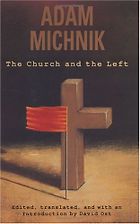
Continuing with Poland, tell us about Adam Michnik and his book.
Michnik is of a much younger generation than Milosz. Milosz was informed by the interwar years, and then defected to the West in 1951. Michnik was of the golden youth of communist Poland. He grew up in Soviet Poland, and even as a teenager was regarded as the brightest person of his generation. Along with people like [political scientist] Aleksander Smolar and [philosopher] Leszek Kolakowski, professor of the revolting students, his formative experience was the student revolt in Warsaw in the spring of 1968, which led to his imprisonment.
The question he posed after that was: How could we have a polar society which was integrated and opposed to the communist regime? Because his experience as a left-leaning student was very different to the experience of most of society. His first major shock was going to prison after resisting the system. The regime worked very hard to tell the working class of Poland that the resisters were all Jews, paid agents of the CIA or outsiders in some way. So the question in the seventies was how might there be a Poland that isn’t just intellectuals or workers.
In The Church and the Left Michnik argues for an untraditional alliance. He says that the left has to talk to the Polish Catholic Church, especially after the Vatican’s internal reform [in 1965]. What I find interesting here is the recognition of unpredictability. On the left you tend to think your allies will be the world left, the working class or the welfare state. But Michnik says you have to be observant about what history offers up for you, such as a Church which is reforming itself, which is sympathetic to many of their goals, and might be a bastion of human rights.
The main thing that I find attractive in the book is its acceptance of pluralism. If there’s going to be an alternative Poland, it’s not going to be built because a lot of intelligent people have smart ideas about it. It’s going to be built because of these odd coalitions, for example a secular and to some extent Jewish left coming to terms with collaboration with the traditional Polish Catholic Church. That is plurality: Rather than encountering one totality with another totality, accepting that resistance is going to be hodge-podge and we should take advantage of every possibility.
What are the lessons that modern-day dissidents learnt from the Polish Solidarity movement?
I think the two things that came out of 1989, which are so fundamental that they’ve almost become the default option in much of the world, are: Be non-violent if you can, and counter dictatorship through democracy. Movements today are not generally about overturning one system with another highly defined system, while political movements in the 1950s and 60s were about overthrowing dictatorships in the name of the organised chaos of civil society.
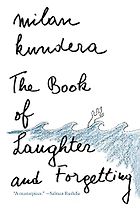
Why did you choose Milan Kundera’s The Book of Laughter and Forgetting?
Milan Kundera was of course not really a dissident, but this book gets across the heartfelt reality of Stalinist faith. Kundera was a young Stalinist, as were his friends. So he knows what it was like to be on the inside, to have certainty about the rest of the world and to believe that everyone who didn’t share that certainty was a fool. To know where things were going and what you wanted from society – that glowing, overwhelming sense that one is young and the world belongs to you. Kundera really gets that sense across, and I think that’s incredibly important.
When one thinks about the reality of dissidence, we in the West tend to look back and think there was bad communism and a bunch of nice liberals. But in fact most dissidents went through a pretty intense intellectual revolution themselves to get to where they were. The most important dissidents in Czechoslovakia were themselves Stalinists at one point. The point is not just that we all have original sin, but that if we don’t grasp the positive forces that attracted other people at one point then we grasp neither the human evolution of dissidence nor what they were really up against, which was a quite powerful ideology.
So was the history of Soviet dissidence written by the victors?
I think the history of dissidence has been written not so much by the victors as by observers of the victors. They played a supporting role in a larger drama about the neoliberal triumph. It’s only part of a larger story, whereas there’s a much more interesting smaller story about people’s capacity to change themselves.
Interestingly, in 2008, documents were found that seemed to suggest that Kundera had turned in a spy to the communist authorities. Everyone was shocked. The Americans, the Czechs, everyone – including Kundera himself, who denies it. But we shouldn’t have been shocked. We have this delusion that everyone who we think of as resisting communism must have been a nice liberal their whole life. But of course when this allegedly happened, in 1952, Kundera was a Stalinist. So behaving irregularly was completely consistent with his worldview at the time. Everyone has together been wishfully dismissing that from history.
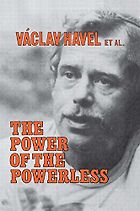
Also apropos of Czechoslovakia and very topical, your final selection is Václav Havel’s essay The Power of the Powerless.
In the end I think Havel will be remembered as the outstanding East European dissident writer, and he will be remembered as such above all for this essay. Its central point is that even a communist regime that controls the media and exercises a great deal of power depends ultimately on an almost visible collaboration with society – society meaning individual decisions taken by individuals, which accumulate to have a universal appearance.
The famous example which Havel uses is of a greengrocer, who puts a sign up in his window saying “Workers of the World Unite”. The essay is a kind of semiotic analysis of this sign. What does it mean? It’s not that the greengrocer wants the workers of the world to unite – he probably doesn’t have views about that one way or the other. What the sign allows him to do is express his support of the regime in a way which is not directly humiliating to himself. It doesn’t say “I Support the Regime”, simply “Workers of the World Unite”. He’s able to display it without feeling embarrassed or degraded. But everyone who passes his window takes the message in, and this collectively creates the impression that we’re all in it together and there’s nothing we can really do about it.
Havel then asks, what happens if the greengrocer takes the sign down? The answer is that for an individual there would be very nasty consequences. But the open question of the essay is, what if everyone took all of the signs down? Havel is suggesting that if possible one ought to try to live authentically. That authenticity – not lying to oneself, even little lies such as the sign on the window – is the first step towards individual freedom.
He said that this might have good political consequences in the future, but in the meantime we ought simply to be concerned with living authentically ourselves, and so freeing ourselves. This notion has been described as anti-politics. Havel says that one has to almost ignore the political reality around oneself and build oneself up as an individual. But in fact, of course, it is quite evidently a kind of politics, and a manifesto for individualistic politics.
It also echoes Orwell’s thoughts on the English language in Politics and the English Language where he says that meaning should choose the word and not the other way around.
Thank you for making that connection, it’s one I wanted to make myself. Havel, like Orwell, says that words are never innocent and never wasted. Every word expresses a purpose and you want to make sure that the purpose is yours and not someone else’s.
And what does Havel say to that inner voice that you shouldn’t risk personal suffering and put your head above the parapet?
He understands it. There is this Christ-like patience, and he’s not programmatic. Havel doesn’t call for everyone to do what’s beyond them. He asks them to do what they can, and then – like Michnik – he leads by example, does things his own way and pays the price for it. Michnik and Havel are among the dissidents who have spent the longest time in prison.
I don’t think Havel believed that everybody in society was going to follow his example. The point was whether, in the time being, he could set the kind of example that he wanted to set. That has a self-sufficient moral power, because you can’t say that Havel was making a calculation or bet. At the end of the day you have to accept that trying to behave well in a situation is a goal in and of itself, regardless of the consequences.
One of the reasons why we keep reading The Power of the Powerless and find it powerful is that even for those of us living in societies where the cost of setting yourself apart is much smaller, we’re also powerless. We also do what everyone else is doing. In America, for example, newscasters and politicians are literally unable to take the ridiculous American flag lapels off their suit jackets, more than a decade after 9/11.
That’s a greengrocer’s sign in itself.
Yes it is. And it’s amazing that 10 years on it’s still the case. It is unfortunate that people persist in being so boring and risk-averse in societies like the United States, where the cost of being just a tiny bit reasonable and individualistic is so small. We are the greengrocer no matter what, whether the system is good or bad. The question is whether we want to keep putting signs up in the window or not.
Where is the next Václav Havel most needed today?
The particular value of Havel is that he was in a situation which seemed like it was durable, yet he was articulating an opinion that would protect individual integrity and allow for the expression of an authentic humanity over time. Although he was propelled to power, he wasn’t really a revolutionary and he wasn’t really a politician. And when he was thrown into the wider world of politics, he had real limitations.
Support Five Books
Five Books interviews are expensive to produce. If you're enjoying this interview, please support us by donating a small amount.
So rather than pointing to one of our current revolutionary situations, I would rather say two things. One, that where Havels are needed now are places a little like Czechoslovakia in the seventies. Places like Ukraine, Russia and Belarus, which have the appearance of durability but in fact are I think internally quite fragile.
Then more broadly – without it sounding too superficial or pious – that Havel’s argument for individualism is strong enough to speak to us however good our situation might be. It has the capacity to reach into worlds which are completely free, but which nevertheless might be a bit better if people did not side with the powerful every time. Havel’s legacy is permanent in that way.
Five Books aims to keep its book recommendations and interviews up to date. If you are the interviewee and would like to update your choice of books (or even just what you say about them) please email us at editor@fivebooks.com
Timothy Synder is the Richard C. Levin Professor of History at Yale University. He specialises in the history of Central and Eastern Europe, the Soviet Union, and the Holocaust.
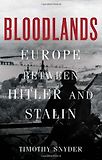
His most recommended book is Bloodlands. "This book is about not just World War II but it is also about the Stalinist repression of the areas known as the borderlands, which Snyder has termed the ‘bloodlands.’ Snyder is looking at the deliberate mass murder of civilians in a particular zone of Europe between about 1930, at the start of the second Ukraine famine, and 1945. The zone is the territory that lies between central Poland and, roughly, the Russian border, covering eastern Poland, Ukraine, Belarus and the Baltic republics." Antony Beevor included Bloodlands in his best books on World War II.
Timothy Synder is the Richard C. Levin Professor of History at Yale University. He specialises in the history of Central and Eastern Europe, the Soviet Union, and the Holocaust.
His most recommended book is Bloodlands. "This book is about not just World War II but it is also about the Stalinist repression of the areas known as the borderlands, which Snyder has termed the ‘bloodlands.’ Snyder is looking at the deliberate mass murder of civilians in a particular zone of Europe between about 1930, at the start of the second Ukraine famine, and 1945. The zone is the territory that lies between central Poland and, roughly, the Russian border, covering eastern Poland, Ukraine, Belarus and the Baltic republics." Antony Beevor included Bloodlands in his best books on World War II.