The anthropologist explains how infants are socially aware and why behaviour thought inevitable in some cultures, such as tantrums, can be uncommon elsewhere
The field of childhood studies mostly concerns older children. There is a fixation with agency, with showing that children are competent social actors, not merely passive beings or victims. If older children are increasingly ascribed traits once deemed the province of adults, what is the social, economic and political relevance of infants? Are those with very limited agency worthy of attention? On what grounds are children to be understood as social beings?
“Chekhov said that if many remedies are proposed then it means the disease has no cure. It is probably true with parenting too.”
I became interested in infants in part because childhood studies, as I saw it, had sort of stalled after arriving at the once-surprising conclusion that children have agency. I don’t consider that a great intellectual achievement. The question of babies and agency is more complicated. Can we discern autonomy in babies? Do they have culture? You’re forced to think much more deeply about what culture is, what personal autonomy is, how nature and nurture coincide at this time of life. And I think it is important to wrest infants from the developmental psychologists, who almost always conduct their studies under controlled conditions.
What do you think is the best way to study infants?
There are instances when it is best to study them in the laboratory, but surprisingly little research has been conducted on infants where they actually live and spend their time – at home, in crèches, with those who mind them during the day. This is an enormous gap in our understanding of them. Imagine if one wanted to study village life in a certain part of Afghanistan and did so by inviting the people on a field trip to New York to see how they react there. What people do is affected by where they are. So while there may not be a single approach that tells us the most about infants, I think studying them under naturalistic circumstances will make the biggest contribution to our understanding of them.
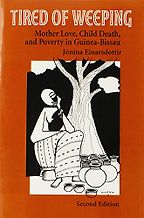
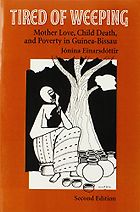
Your first book is Jónína Einarsdóttir’s Tired of Weeping: Mother Love, Child Death, and Poverty in Guinea-Bissau.
In a context where a full third of children die before their fifth birthday, most of those in infancy, what do mothers feel when they lose a baby? This is the key question animating this ethnography. Einarsdóttir asks, when the calamity looms so large, when the likelihood of loss is so great, is there a numbing effect on the emotions? Do the mothers try less hard to save their babies when they know that so many die in infancy? The thesis had been argued over for decades in the field of history, but in anthropology the question is more recent and probably more fraught.
How does Einarsdóttir reflect that in this book?
She discusses the thesis of Nancy Scheper-Hughes, who argued that in northeast Brazil, where infants frequently die from the consequences of malnutrition and disease, their deaths are felt in a muted sort of way, tempered by the idea that many of them were not fully human at birth, that many lacked the knack to live and that they will become little angels in any case, which wasn’t a bad thing for them or their families. Einarsdóttir slowly builds her case that mothers in the Biombo region of Guinea-Bissau, the West African country, feel the loss of an infant intensely and do everything they can to prevent it.
The transatlantic dialogue raises many unsettling questions about our understanding of infant death. Einarsdóttir leaves us with the sense that having lived one tragedy does not prepare us for its reiteration. In the end it is hard to know what is worse, to become habituated to child death or to feel the same excruciating loss each time.
Very true. Much of your research has been carried out in Brazil. Did mothers have similar attitudes there?
What I encountered more frequently in northeast Brazil, since I was working with street children there and not with infants, was parents who had older children or adolescents. I met a mother who had lost each of her nine children, most of them to violence. There was nothing in the pain of those mothers that suggested to me that their loss was less acute by virtue of repetition.
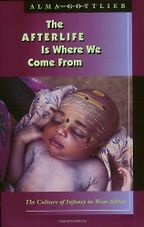
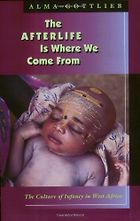
How sad. Tell me about The Afterlife is Where We Come From: The Culture of Infancy in West Africa by Alma Gottlieb.
This is perhaps the most ambitious ethnography of infants to date. The babies here, seen by adults as reincarnations of the dead, are players in their own right, endowed even with powers that adults lack, such as the ability to understand all languages. Meanwhile, religious beliefs condition the way babies are taught to crawl and walk, socialise and more. She studied the Beng of Côte d’Ivoire.
Though this is what you could call an infant-centred ethnography, even Gottlieb approaches babies largely through what adults and older children say about them and do with them. But “largely” is not exclusively and in this case the distinction is vital. Gottlieb’s ethnography would have been a book about adult beliefs and practices in relation to infants had the work not also been built around careful observation of babies.
What did she do?
She identified numerous instances in which the infants began to reveal how they act in culturally inflected ways, even well before they can speak. For instance, she writes, “I [once] left both a book and a video camera within reach of the babies… Both were unfamiliar objects that I expected to elicit much curiosity and exploration… But the babies saved their excitement for the older children and women who had gathered.” As this scene suggests, Beng babies seem to rate their relations with both older children and adults quite highly. This is perhaps the best place to start to appreciate where the anthropology of infants has come from.
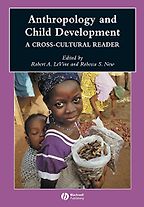
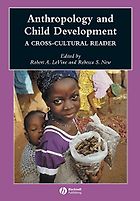
Robert A LeVine and Rebecca S New’s book, Anthropology and Child Development, gives a sense of the development of an anthropology of infants.
The editors offer a refreshing historical perspective. It is easy to have the sense that the anthropology of childhood was invented yesterday. In fact it has a long if uneven history and was probably more integrated into mainstream anthropology in the first half of the 20th century than it is today. The book includes excerpts from Margaret Mead, Bronislaw Malinowski, Meyer Fortes and beyond. One also gets a sense of the comparative perspective, with a glimpse of infants from many societies, from hunting and gathering bands to denizens of contemporary Japan. The book touches on play, discipline, communication, attachment, fathering and more.
What ideas do they give about parenting strategies?
You know what Chekhov said, that if a great many remedies are proposed, then it means the disease has no cure. It is probably true with parenting too. There are so many solutions for crying in infants that we can assume the problem will always be with us. But what is interesting to observe is that some behaviour that we consider inevitable in the United States, such as tantrums, are not common at all in many societies. To an extent, the lack of a consensus over parenting strategies reflects the fact that there are different ways of organising human society. At the same time, we are not limited to one way of parenting even within the same type of society. One thing that is clear in the United States and other wealthy countries is that what is orthodoxy today almost certainly will not be orthodoxy in the near future. Now we’re told to place infants face-up for sleeping. It wasn’t long ago that the advice was the opposite. Parents risked being accused of endangering the lives of their children – based on medical advice that was not only unsound but that put the infant’s life in jeopardy. There is a lot we don’t understand about babies. I think humility and an open mind will be useful.
Can you give another example of changing orthodoxies?
Both anthropology and developmental psychology have long been fascinated by the concept of attachment. A lot has changed since the 1950s when John Bowlby, the British psychoanalyst and psychiatrist, proposed that to have a healthy life infants needed a close, steady and warm attachment to their mothers, or a substitute. I don’t think that anthropologists would say that having that is a bad thing, but having a sense of the vastness of cultural possibilities suggests that babies can also grow up to be healthy under many different sorts of circumstances. Children who grow up with multiple caretakers and spend part of their childhood away from their mothers do not necessarily turn out to be disturbed.
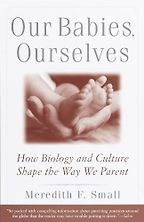
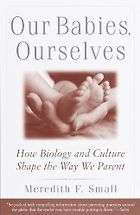
Your next book is Our Babies, Ourselves: How Biology and Culture Shape the Way We Parent by Meredith F Small.
Small looks at the interface of biology and culture in relation to infanthood. This book explores some of the questions that loom largest to parents, such as sleeping, crying, nursing and walking. The research of biological anthropologists, cultural anthropologists, paediatricians and psychologists are discussed. What I mean by the interface of biology and culture is that biology tells us, for instance, that infants cannot crawl before a certain age. It is true they can’t, but if we accept this assessment narrowly on what is observed in the United States we can believe that the precise age when babies start walking in the United States is biologically determined. Then we might be very surprised to see that this varies somewhat from one culture to another. That is where culture becomes relevant and we see that infants are not merely biological beings. They exist in a social world.
This is a readable book, in any case. Nothing is conclusive but good questions are raised. One of the merits is precisely that biology and culture are visited on the same page. Because the study of children has been so compartmentalised with paediatrics, psychology, education and the like, there is limited communication between the fields.
Why do you think that is?
To an extent, this is probably the nature of academic study; that for all the talk of interdisciplinary approaches, knowledge is compartmentalised, bureaucratised. But I think it is especially so with infants because there is a hesitation over whether they should be approached as purely scientific subjects or whether there isn’t a glimmer of culture in them.
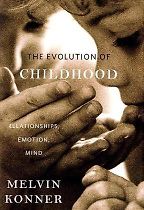
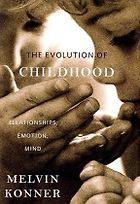
Your final choice is The Evolution of Childhood: Relationships, Emotion, Mind by Melvin Konner.
A number of reviewers call this book accessible. I suppose it depends what you mean by that but it isn’t popular science. It isn’t meant to bring in the ones who know nothing about the subject and make them feel comfortable. The book requires a certain patience, even with the sometimes mysterious jumps in the author’s train of thought. But it is rewarding.
The Evolution of Childhood brings together elements as diverse as those in the author’s background – biological anthropology, medicine, neuroscience and behavioural biology, to start with. In its progression the book is at the uneasy meeting of genetics and culture, uneasy because it is often hard to discern where one ends and the other begins. The approach here isn’t the familiar “we are part nature and part nurture” but rather that these parts are not always easy to reconcile, though they do come together. Though not a book dedicated solely to infants, it covers them extensively since it is with them that childhood begins and it is they who first begin to show signs of having or being amenable to culture. Konner writes of the transmission of culture, which is sure to make cultural anthropologists uneasy. The simple socialisation model where culture is seen to be passed along virtually unchanged from one generation to another is no longer entertained, but that is not what Konner is talking about. He is after something far more subtle.
Get the weekly Five Books newsletter
As part of a long-range Harvard study of the !Kung San [tribe] of northwestern Botswana, Konner carried out a study of infancy. He found that infants were fed on demand and given considerable freedom, within their possibilities. The mother and child were in constant contact with others, in contrast to the isolation of many mothers and children in the West. As the infant grows so too does his attachment to children of different ages.
From all your studies what are the most important things you have learnt about the anthropology of infancy?
The research I am doing at present concerns how social and economic inequality affects infants. We know that a large divide between rich and poor offends our sense of justice, but we rarely stop to consider how that divide affects infants. Yet for infants, inequality has especially damaging implications. Babies are far more likely to die from poverty and social injustice than are adults, for instance, but they are probably the ones least taken into account. What I have learned from this, or been reminded of, is that infants are actually part of history and politics and social life – often, it is true, as victims. Anthropologists of childhood often try to turn things around, speaking not only of children as victims of war, for instance, but also as combatants in war. With infants we have to throw familiar notions of agency out the window. So I have learned that when it comes to an anthropological understanding of infants, we are also on all fours. This field is wide open.
What do you think is the best way to bring up your child?
I wish I knew. I don’t think in any case that it will be found in books or on websites. Bringing children up is a broad matter of moral and cultural beliefs, the environment we can offer children, biology, our own experimentation and common sense, and the mind and inclinations of the child.
May 26, 2011
Five Books aims to keep its book recommendations and interviews up to date. If you are the interviewee and would like to update your choice of books (or even just what you say about them) please email us at [email protected]
Five Books interviews are expensive to produce. If you've enjoyed this interview, please support us by donating a small amount.
Tobias Hecht
Tobias Hecht is an anthropologist and writer. He was the winner of the 2002 Margaret Mead Award for his book, At Home in the Street: Street Children of Northeast Brazil. He has carried out research in Brazil, South Africa and the United States
Tobias Hecht is an anthropologist and writer. He was the winner of the 2002 Margaret Mead Award for his book, At Home in the Street: Street Children of Northeast Brazil. He has carried out research in Brazil, South Africa and the United States