Tell us about your first choice.
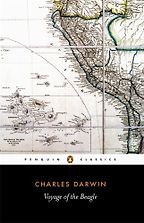
This isn’t Charles Darwin’s great work. The Origin of Species is the one we’re all taught so I hadn’t read this one until recently. It’s a fun read about a young man on an expedition finding things out. It’s as much about the journey as it is about evolution, but you can hear the idea gestating, the beginnings of the most amazing idea ever. The Origin of Species is a bit heavy going, but this is about the process of science, about him using his brain, the creative imaginative bit of science where he’s wondering why these fossils are here on top of the Andes. He sees Valparaiso destroyed by an earthquake erupting and is horrified by the brutality of nature – it’s as much a travelogue as anything else, but you can see how his mind is beginning to work. I wish I’d read it when I was younger – I’d have gone off a similar journey if I had.
Can he write?
Yes. It’s full of anecdotes and humour. I mean, he’s aware that he is an academic, and there are long passages about shale beds and geological formations that a travel writer might have left out, but he describes the meals he ate and the people he meets. You really get a feeling of his enthusiasm. It rips along.
And the Richard Dawkins?
Well, this is a man who has become known for banging on about God, who has turned into a stuffy old academic agitator, a bit of a gob, and a vicar without the dog collar. So I wanted to remind everyone that in the 70s, when he wrote The Selfish Gene, he really did something amazing. The Blind Watchmaker refutes some of the criticisms of that first important book and I think it’s also much more accessible and well articulated. It radicalised me. I’d done evolution for biology A-level and I knew it led to life on Earth as we know it, but somehow he, and perhaps he alone, had really understood what Darwin said, and he explains it in a way that is so elegantly powerful that I was an instant convert. He brought Darwin up to date, explaining evolution in a way that incorporates our understanding of genetics and heredity.
You say you were a convert, but aren’t we all already converted to evolutionary theory? What did Dawkins add?
Essentially, he argues that Darwin was looking at the organism, at the animal or plant and how it responded to the influence of nature, but that we now need to think about the gene. The gene is chemistry – it’s programmed to ensure its own survival. It doesn’t care about you – it’s the selfish gene. He takes evolution one step deeper. It is totally fundamental and shows how the world got there along the way. The power of Richard Dawkins is similar to that of a popularizer of science like Stephen Hawking. Hawking started people thinking about Einstein – it took a century for some people to really understand the enormity of the Einstein’s ideas that completely rule our lives. And most of us, myself included, are still getting to grips with them. I think Dawkins was the first person to really help the rest of us understand evolution. Natural selection, he explains, is at the genetic level. The gene is the unit of natural selection, not the organism.
This is a book that I think even some evolutionary biologists read and say; “What I studied was much more interesting than I thought!”
What about The Making of the Atomic Bomb?
This is journalism about science. It’s a history of the Manhattan Project, the US effort to build an atomic bomb to defeat Nazi Germany. This is the best history of the greatest minds in science alive at the time, or maybe ever, and how they were brought together to build this bomb. I hope humanity can come together again in the same way but with a more positive goal. It’s incredible how little they knew in 1929 and what they then did in 1945. The book takes us through the earliest theories in atomic physics, from Ernest Rutherford and Einstein, to actually detonating the device that harnessed the power of the atom – it was an astonishing rate of progress. It shows the power and the weakness of science.
Rhodes reminds us of this guy, Leo Szilard, a Hungarian physicist, a good but not the greatest atomic physicist, who had an epiphany crossing the road through London traffic in 1933, and realized you could split the atom, that you could tear it apart and release all the energy at once in a huge chain reaction. He realized you could make a bomb. The thought that this was already going through people’s minds in such a crucial time as 1933 makes the reality of nuclear war seem almost like an inevitability.
Then you’ve got Niels Bohr, a Dane and one of the greatest theoretical physicists, who was a pacifist helping Jews escape the Nazis through Denmark, who wanted to make nuclear reactors not bombs. But, in the end, his knowledge was harnessed too. These were theorists – the geekiest, nerdiest mathematicians you can imagine – but some of them had political motivations, some had philosophical motivations, some wanted to punish the Nazis. In a weird way this explains the modern day fear of science, of madmen in white coats. That fear was born of these men and some of them really were crazy scientists. This books describes the drama played out between them and then, once the military machine got involved, the story of the militarization of science.
The book has espionage too – the story of Klaus Fuchs, a brilliant British physicist who, after the Manhattan Project was concluded, leaked a lot of what he’d learned to the Soviets. Finally tracked down by the FBI and British intelligence, he spent 14 years in Wormwood Scrubs before fleeing to East Germany.
This, in a way, was the crowning achievement of America’s political understanding of the power of science. In films from then on there were always these scientists saving the day when there was an alien invasion or whatever, and they did. They won the war.
Yes, but…
I know. Look at the incredible amount of money and the destruction that went into achieving that. There is a lengthy chapter that moved me to tears about the impact of the bombs on Hiroshima and Nagasaki. Somehow, when you have been on this journey through the minds of the scientists and of Oppenheimer, the scientist-bureaucrat who ran the project with this blank cheque from the government, it makes it even more tragic.
It was a mammoth enterprise, the greatest example ever of human cooperation and such an evil end. I often have conversations about climate change where people say we would need a Manhattan Project level of financing, enthusiasm and cooperation – a blank cheque and the best minds in the world – to make anything like an impact.
You need an enemy for that.
Yes, an identifiable common enemy. But it was also a race. The Germans were on to it; the Russians weren’t so far behind. It was a race of science. This is one of the best examples of how pure science – like atomic physics or even Darwinian evolution – becomes a functioning technology. I mean, the Americans were fiddling around with centrifuges, like the Iranians are doing now, in the 1940s. They are still clearing up some of the contaminated secret locations today. The saddest thing was the outcome.
What made you choose the Steinbeck book?
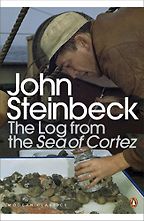
This was recommended to me by my marine conservationist brother. I had no idea Steinbeck was interested in science. I thought he was a novelist of human rights and the American working class. This book is the log of a journey he made with a scientist he befriended while he was living in Monterey in southern California. They go on this boys’ trip, hiring a retired sardine fishing boat for nine weeks and collecting invertebrates – crabs, lobsters, snails. It’s about amateur enthusiasm for the natural world and Steinbeck is a truly great science writer. He conveys a boyish enthusiasm for nature but some truly grown-up observations about man’s place in it – a real prescience for an environmental movement that hadn’t arrived when this book was written in 1941. It’s part Three Men in a Boat and part serious natural philosophy. It made me think about my relationship with nature and that you don’t need to be a scientist to be interested in the natural world.
He describes a memorable study he’d heard about where someone sits in the boat department of Sears and Roebuck and watches men walk by a fishing boat. The vast majority of men that pass the boat tap on its hull – quite involuntarily – and he wonders if it’s some innate memory in man of the ability to survive on water, a primal understanding of the healthy hollow ring a carved canoe has to have in order to float. He talks about the evolutionary connection between man and water, stuff that Dawkins would probably hate. A scientist couldn’t do this because there is no mechanistic explanation, no direct evidence and yet we know it’s there. So he speculates. It’s a great bit of science writing and people who aren’t scientists should read it. It’s open to everyone!
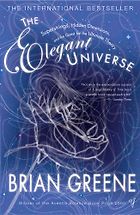
Tell us about The Elegant Universe.
I’m a biologist, not a physicist or an astronomer, but these are both fundamentally important parts of science. Why the universe is here and what it’s made of, why light behaves as it does and why time travels: they are all fundamental questions. Most physicists can’t actually explain the theories of Einstein if you ask them. His theories of relativity are an attempt to explain the very big things in the universe. Is it expanding? How many galaxies are there? If there was a Big Bang are we sitting around now waiting for the Big Crunch? Then, at the other end of the spectrum, people are trying to understand the very small things in the universe – this is quantum theory. How energy and matter interact on a very small scale.
Get the weekly Five Books newsletter
However, in the late part of the last century people started trying to put the two together but they wouldn’t go. This book is perhaps the public debut of string theory – an attempt to explain how the best of the big and the small theories might be linked to explain the entire universe. The reason I think this is such a good book is that Greene does a very good job of explaining the current understanding physicists have of the universe. In other words I wanted to include a readable book about the universe. A Brief History of Time by Stephen Hawking is a totally unreadable book so I couldn’t include it. Nobody has ever really understood it. Brian Greene’s book doesn’t suffer from this problem.
What is string theory?
String theory says, OK, the theory about the reason the universe viewed on a very small scale doesn’t line up with the universe viewed on a very large scale is because we’re looking at the small things as particles. But when you get very small, they stop behaving like particles. They do weird things like exist in two places at once. They don’t have enough dimensions for some of the other ideas in physics to work. So, to explain the whole universe you say they’re not particles at all, they’re wiggly bits of spaghetti. If you don’t see it as a particle but as a wiggly string then apparently it explains everything. Strings have 11 dimensions and the whole universe is made up of them so somehow this better allows them to obey Einstein’s explanations too. It allows for what we see out there to also fit in with the very, very small. It’s a mathematical fudge and a cop-out in some ways, but it’s the only theory we’ve got.
Five Books interviews are expensive to produce. If you're enjoying this interview, please support us by donating a small amount.
Right.
It’s I think it’s important because it’s about how science works. I’m not a mathematician – although I’m told the maths behind string theory is very elegant. However, the whole thing is a theoretical fudge and that’s what’s so exciting about it! This is how people’s brains have to work. To be a scientist you have to be creative and imaginative. Sure, science has its stamp collecting elements and attracts some quite boring types. But science doesn’t make the interesting people boring. These are really elegant, clever fudges! The main criticism of string theory is – it doesn’t deliver. Even though it comes close to explaining what might be going on in the universe it has failed to make a real prediction about how the universe behaves that can be tested by a scientific experiment. That’s about as major a problem as a scientific theory can have. One critic thought it so misguided and lacking in understanding that he borrowed an old physics put-down and described is as “not even wrong”. See Peter Woit’s Not Even Wrong, 2006. We do need a better theory but nobody’s got one.
Five Books aims to keep its book recommendations and interviews up to date. If you are the interviewee and would like to update your choice of books (or even just what you say about them) please email us at [email protected]