How accurate is what we think we know about the Romans? Tom Holland, the author of Rubicon, tells us about the exercise of power, the staging of ceremony and the influence of religion in ancient Rome.
If you've enjoyed these recommendations you might be interested in our interview on the best books on Ancient Greece.
Rubicon: The Last Years of the Roman Republic by Tom Holland
When you are adapting Latin texts for use by the BBC, how do you go about bringing them to life for today’s audience?
The thing about adapting the texts is that the framework is there for you. Essentially, all that you are doing is a glorified cutting job. But you have to cut it in such a way that preserves both the structure of the narrative and those episodes within it that will give the listener, who may not be familiar with the text, some sense of the reason why it is so powerful and the reason why it has had the impact not just over the centuries but also over the millennia. Obviously it is harder to adapt a classical text than it is, say, a 19th century novel, simply because we are further removed from the Roman world.
With all the upheavals in the world do you think there are things that we can still learn from Roman times?
I think that the quality of great literature is that it contains timeless truths. It is like a kaleidoscope – our understanding of the text will change according to the way that we ourselves change. In terms of the lessons to be drawn from Roman history, of course it will always hold a mirror up to the present, for the simple reason that what is distinctive about Western civilisation, particularly compared with the other great civilisations like China or India or even the Middle East, is that in the West we have had two cracks at it. We had the first starting in BC and lasting up until the collapse of the Roman Empire and then the second, building on the ruins left by classical civilisation, continuing into the present. And all the way through our attempts to construct civilisation we are always overshadowed by the previous attempt, so we will find in Roman history what I guess we find in science fiction – that there are points of resemblance heightened and made strange by the way that they are also completely different.
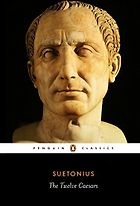
Let’s have a look at some of your choices. The Twelve Caesars by Suetonius gives the inside story on some of Rome’s greatest emperors.
I thought that if I was going to choose five books on Roman history I really had to choose a Roman historian because, for modern historians, Roman historians have always been the great model.
Why is that?
Because the classics are classics. Throughout the Middle Ages when people wanted to have a model they would look back to great Roman historians. I was thinking I should possibly have chosen the man who I think is the greatest Roman historian, Tacitus, who is a sort of pathologist of vice, particularly the vice of autocracy. I think he is one of the all-time great historians. But I decided against that because my next two choices are very infused with the spirit of Tacitus. So I thought I would go for something slightly lighter, which is to Tacitus what I guess a gossip magazine like Heat is to The Times Literary Supplement!
Suetonius’s work is a collection of biographies of the first 12 Roman rulers, from Julius Caesar through to Domitian. And it really had a crucial sense of shaping our understanding of Imperial Rome as a place of vice and savagery and sexual depravity and violent, brutal, bawdy splendour.
What particular emperors would make the headlines for one of today’s gossip magazines?
I think that what would leap out would be the shenanigans of Caligula, who indulged in incest, forced prostitution – lunacies that would put…
Any footballer to shame!
Absolutely, or Nero, who actually went one better than Caligula by having his mother killed and is said to have burnt down Rome, although he probably didn’t.
And for you, which Roman emperor do you find most intriguing?
The one that I find most intriguing wasn’t actually an emperor, but the first one listed by Suetonius – Julius Caesar. And that is simply because he has exerted such a magnetic appeal on future generations. His influence is so clearly massive and he is seen by many people as a very attractive figure. My own feeling is that he is actually much darker, verging on psychopathic, but it is that tension between the man who in his correspondence is witty and charming set against the record of someone who brought unbelievable slaughter and mayhem to Gaul and then to his own people. And it is that combination of creativity and destruction within him that I think makes him one of the all-time magnetic figures in world history.
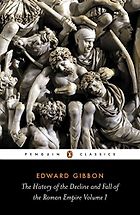
Next up is The Decline and Fall of the Roman Empire by Edward Gibbon, which is considered a classic by many, but also somewhat of a heavy read.
I think it is regarded as a heavy read simply because it is physically heavy. The most accessible version is the Penguin one which comes in three large volumes. But the truth is that it remains incredibly readable. As I said before, it takes Tacitus as its model, who was famous for his waspish style, and a careful balancing and modulating of the sentences so that irony would be generated. This is what Gibbon does as well, and it means that not only is it an incredible work of scholarship but it is also compulsively entertaining. I really think that anyone who is prepared to give it a chance will find themselves smiling at the very least throughout it.
It was written in the 18th century, but do you really think it still has an enduring appeal?
Yes, and what is interesting about Gibbon is that his work is not only a masterpiece of 18th-century prose but it shapes the terms of historical debate now. One of the ways in which he does that is because, for Gibbon, the decline and fall of the Roman Empire doesn’t end with the collapse of the empire in the West, that being the end of the Roman Empire in the fifth century. Instead it continues right the way up until the fall of Constantinople in 1453 and even beyond.
The corollary of that is that in Gibbon’s history we don’t just get a history of the decline and fall of the Roman Empire; we also get a history of the rise of the Muslim caliphate and of the Barbarian kingdoms of the West. What that does is to give us a sense of how when civilisations fall they are inevitably clearing the decks for other civilisations to rise. That is the sort of understanding that has taken historians quite a long time to catch on to and it means that Gibbon is now coming back into focus as someone who really has something to teach.
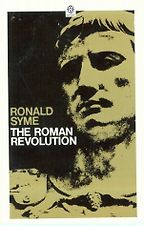
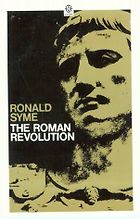
Ronald Syme’s The Roman Revolution looks at the fall of the Republic and the rise of Augustus.
This again is an absolute classic which is completely informed by Tacitus. It has that very mordant take on the way that power works and operates. One of the reasons for that is that it was written not in the heyday of the British Empire – a time when British historians were rather keen on the workings of the Roman Empire and identified themselves strongly with the Caesars and all their works – but in the 1930s, and published just as World War II was starting.
The portrait that it gives of Caesar Augustus in particular – he was the great-nephew of Julius Caesar, his adopted son and the man who ranked as first of the emperors and who established an autocracy on the ruins of the republic – is a very savage one and the reason for that is that he is writing with an awareness of what is going on in Soviet Russia, in Nazi Germany and in particular in Mussolini’s Italy, because Mussolini very closely modelled himself on Augustus.
So Syme is commenting on the perils of dictatorships.
Yes, but also the power of it is that it is a dispatch from the frontline of dictatorship. So any notion that this is just ancient history, and therefore for that reason somehow removed from how politics function and work now, is absolutely impossible to sustain when you read this and hear the details about how the Romans are coming to terms with Augustus and his regime. And the henchmen of Augustus are very recognisable figures.
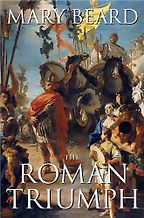
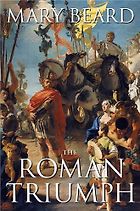
Moving away from some of the great characters in Roman history, Mary Beard’s The Roman Triumph is a radical re-examination of one of Rome’s ancient ceremonies.
I have chosen this because a lot of books on Ancient Rome, my own included, generally like to tell stories that take fragments of evidence and piece them together to make a coherent narrative. But there is also a deep pleasure in looking at some of the things that we think we know about Rome, or the myths that we know are not actually true, taking the mystery to pieces and examining the works and seeing what is there. This is what Mary Beard does in her book. She looks at a “triumph”, which is a parade through the streets of Rome by a victorious general, where he parades the loot and the captives that he has taken on his campaign and he is being cheered by the people of Rome. This is the stuff that informs virtually every sword and sandal epic which has been made, it is there in Asterix and it is there in our English word triumph, and she looks at it and says, “Are the ideas that we have of it true? Are the ideas of the Romans who wrote about it true?” It is like paint stripping – she strips layer after layer after layer away and the mystery and the excitement of the book is wondering what will be left at the end.
And what is left?
I think it would spoil the excitement because that is the point of the book!
But how does she manage to go back so far and genuinely know that what she is revealing is right rather than what there was before?
Well, you have to trust her. It is like in any detective novel you have to trust the detective. She is such a scholarly yet wittily sceptical guide that as you read it you feel that you can trust her to lead you through the labyrinth that she is exploring and point out what is true and what is not, so by the time you get to her ultimate conclusion you are perfectly content to take her word for it.
She is very good at giving a fresh view on Roman history.
Yes, she probably wouldn’t like to be described as this but she is almost the Miss Marple of Roman history because she sees to the heart of a mystery and how it works. She is a scholar and there is a feeling that scholarship is somehow intimidating or frightening or unapproachable, but it isn’t. At base it is about questioning and exploring things that anyone can be guided through. That is what she does so well. She is not dumbing down but she is making accessible what is incredibly interesting.
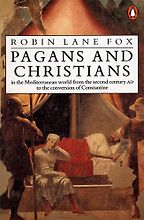
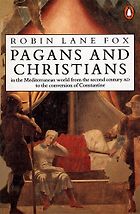
Your final choice is Pagans and Christians by Robin Lane Fox, which looks at pagans and Christians before the time of Emperor Constantine.
I chose this because the great revolution in moral and ethical affairs, which the Roman Empire witnessed and which Gibbon touches on as well, very amusingly and mordantly, is the rise of Christianity. We tend not to think of Christianity as being an expression of Roman civilisation but in so many ways it is, even though it radically transformed the empire. Robin Lane Fox’s book is the best modern account that I can think of which will give people the sense of how this remarkable revolution took place. The first half is looking at how pagans function in the years before the reign of Constantine, and you have glimpses into the practices and very deeply held beliefs of the pagans. And then in the second half you have the same treatment being given to Christians. It is an absolutely panoramic tour de raison of how people believed and thought, and the revolution and the convulsion that was underlying the religious life of the time.
This book was such an influential book on me because until I read it I hadn’t really thought of Christianity as being part of the Roman story. And ever since reading it I have become much more interested in the way in which the great religions such as Judaism and Islam emerged out of the world of the Roman Empire and antiquity generally. The book I am writing at the moment is about how Islam emerged from the context of the Roman Empire and the Persian Empire. And Mary Beard’s book also had an influence on that because I am applying the kind of treatment she gave to the “triumph” to the stories that are told about the origins of Islam.
September 13, 2011
Five Books aims to keep its book recommendations and interviews up to date. If you are the interviewee and would like to update your choice of books (or even just what you say about them) please email us at editor@fivebooks.com
Five Books interviews are expensive to produce. If you've enjoyed this interview, please support us by donating a small amount.
Tom Holland
Tom Holland is an award-winning historian, translator and novelist. In 2007, he was the winner of the Classical Association prize, awarded to ‘the individual who has done most to promote the study of the language, literature and civilisation of Ancient Greece and Rome’.
Tom Holland is an award-winning historian, translator and novelist. In 2007, he was the winner of the Classical Association prize, awarded to ‘the individual who has done most to promote the study of the language, literature and civilisation of Ancient Greece and Rome’.