The best books on Family History
recommended by Turtle Bunbury
The Irish-based writer says studying families is a fascinating way to learn about the past, and tells us about the books that have inspired his own investigations


The Irish-based writer says studying families is a fascinating way to learn about the past, and tells us about the books that have inspired his own investigations
You did your first interview when you were 13, with a 97-year-old granny who told you about her Irish childhood. Was that what got you interested in family history?
That really blew me away, because I went to talk to her about the Easter Rising in 1916 and I couldn’t get her off the subject of the Boer War, which happened nearly two decades earlier. I was amazed that there were people still alive who had lived through something which had happened so long ago.
So you were interested in the idea of living history, and learning about history from the people themselves, which is reflected in your series Vanishing Ireland where you talk to different people all over Ireland about their lives.
Yes, I love to talk to people and bring history to life that way. I also grew up in a historical house with lots of portraits, which used to follow me around and terrify me when I was a child. So part of my mission was to find about the people in the paintings, and now they don’t scare me any more.
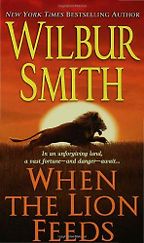
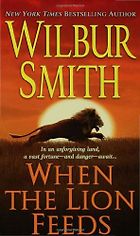
Your first choice is Wilbur Smith’s When the Lion Feeds, a book which got you hooked on family sagas.
Yes, it is the first of the Courtney sagas. Lots of school boys get hooked on Wilbur Smith, and there are of course grown men who love them too, so he seems to go across the board. I started reading him when I was about 14 or 15, and now the series runs to about 12 or 13 books. I thought it was brilliantly clever. It is like a soap opera where every book is the next chapter of the story.
“I was amazed that there were people still alive who had lived through something which had happened so long ago.”
For those who don’t know, who is Sean Courtney?
He is the hero of the first few books. He was born in the 1860s and lived in South Africa, so his life is nicely timed to coincide with the Zulu risings and diamond hunting and all that. He is quite a respectable old man by the time the Boer War comes along. And he ends up becoming a patriarch to this massive family. I love the whole family dynasty, family saga concept.
It is a good way of relating history.
I think it brings it to life. There is this idea of character traits passed down from generation to generation. When there is a union and a baby is created, and that baby grows up, if the writer is clever he can make it a creation of both its parents.
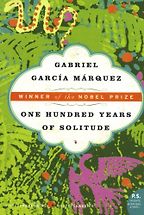
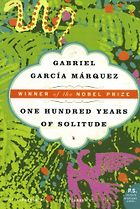
Next up is One Hundred Years of Solitude by Gabriel Garcia Marquez, which really helped you to write engagingly about family history – how?
This book put a bit of a sheen on Wilbur [Smith] because it is so beautifully written. I just loved all the different aspects of it. There is such inventive language and concepts, and the whole magical realism thing really appeals to me. There is humour as well, and you don’t get that much humour in old Wilbur to be fair! In this book there are seven generations of a family with a very definite beginning and end. It begins with José Arcadio Buendía, who founds the town of Macondo in the Latin American jungle, and the book follows his family over the next 100 years. Each member of the family has pretty obscure things happening to them right up until the extraordinary and brilliant finale.
How has it helped you with your work?
Even though it is a fictional novel, it enabled me to look at family history from a much more stimulating perspective, with family traits cascading down through the generations.
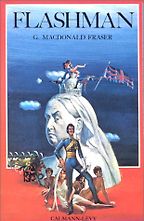
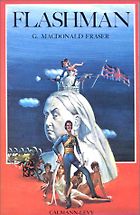
It’s a great book. George McDonald Fraser’s Flashman is yet another work of fiction.
I have always been really interested in the 19th century and these books put a lot of it in context for me. They are brilliantly written and excellently researched. Flashman is a character whom George McDonald Fraser takes on from the moment he is expelled from Tom Brown’s School, creating 12 fictional memories. For me, they really brought history to life. It introduced me to history from all over the world. Flashman was knocking around the whole of the British Empire, as well as in North America and the jungles of Madagascar. It gave me a useful insight into global history.
I know that lots of school boys use Flashman and Asterix as the basis of their revision for history exams.
Yes I am sure they do. They are both so humorous and I am quite keen to inject humour into my history writing.
You are very much part of the living history school of history. What do you see as the benefits of that?
Well I think if you interview people you get a much more intricate insight into what was going on. In Ireland I have interviewed a lot of people who remember the War of Independence here, and you get many different perspectives that you won’t get in a normal history book. You get the tiny minutiae of why things actually happened.
They also say that history books are written by the victors, and focus on big decisive events rather than the everyday life.
Exactly, so when you get to the everyday life you realise that somebody reacted this way or that. Also, the whole point is that we are all affected by what our parents and grandparents did. For example, if you had a grandparent in the war that will affect how your parents were brought up, and in turn how you are brought up.
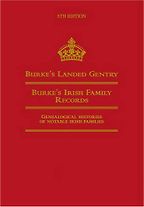
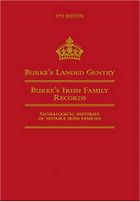
Your next choice is the Burke’s Landed Gentry of Ireland series, which gives information about hundreds of well-to-do families, mostly the Anglo-Irish.
This is vital for me as a family historian in Ireland, because quite a lot of the families that I write about are landed gentry who ran Ireland from the time of William of Orange to the War of Independence. This series chronicles all these families’ births, marriages and deaths. It has a little bit of anecdote here and there. It will say what regiment they were in and where they were at school.
So a good place to start if you are doing detective work on them?
Yes, it is very useful place to start – also if your family leased property from one of these families and you want to know more about the landlord.
Who are some of your favourite characters from that book?
I like Crosbie of Viewmont, who invented a hot air balloon. The Robertsons of Huntingdon started their own religion with the Temple of Isis.
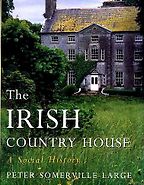
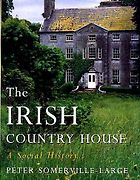
Your final book is The Irish Country House by Peter Somerville Ross.
I really like his writing. He has been a big influence on me. My mother sent me off to meet him when I was a kid, telling me, “He is a writer, you should go and talk to him.”
What was he like?
He was brilliant. He said, “You know what, writing is wonderful. You’ll never have to do a hard day’s work again in your life – you can get away with it, you know!” He has written all sorts of things about Irish eccentrics and his adventures in Afghanistan, but this one is basically a social history. It looks at a lot of the amazing houses we have here, and tries to go into a little bit more depth about the families who lived in them.
You were obviously inspired by history when you were a child, but for many people it is seen as a very boring subject at school. How would you like it to be taught?
I can safely say that if they don’t like history it is because they had a crap history teacher! I think nowadays people are making it a lot more visual. You can have a lot more fun with history. You have an enormous canvas of all these events and people and places and battles and juicy love stories. There is no way it should be boring.
August 21, 2011
Five Books aims to keep its book recommendations and interviews up to date. If you are the interviewee and would like to update your choice of books (or even just what you say about them) please email us at editor@fivebooks.com
Support Five Books
Five Books interviews are expensive to produce. If you've enjoyed this interview, please support us by donating a small amount.

Turtle Bunbury
Turtle Bunbury is a best-selling author, award-winning travel writer and historical consultant based in Ireland. His next book, Vanishing Ireland: Recollections of Our Changing Times will be launched in October 2011. The first two volumes of the Vanishing Ireland series, with photographer James Fennell, were shortlisted for the Best Irish-Published Book of the Year Awards in 2007 and 2010
Turtle Bunbury
Turtle Bunbury is a best-selling author, award-winning travel writer and historical consultant based in Ireland. His next book, Vanishing Ireland: Recollections of Our Changing Times will be launched in October 2011. The first two volumes of the Vanishing Ireland series, with photographer James Fennell, were shortlisted for the Best Irish-Published Book of the Year Awards in 2007 and 2010
© Five Books 2025