A conversation with the economist, educator, omnivore, polymath and co-founder of Marginal Revolution, highlighting books about decentralised information, mass collaboration and spontaneous order
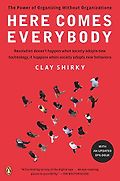
First of all, I’m choosing Shirky as a writer and thinker, rather than choosing that particular book. If you had to pick one individual who was the sharpest and most prescient commentator on the web and the internet it would be Clay. I like most of all his notion that the old mode was something like ‘filter then publish’, and the new mode of organising the production of ideas is ‘publish then filter’.
Here Comes Everybody is Clay’s very successful attempt to write a popular book for people who weren’t just tech geeks or web nerds, and it’s very clear and very to the point. It’s about spontaneous order and decentralisation, and just how powerful the web can be. I’d say first and foremost that the prize goes to the individual rather than to that book, and Clay’s new book, Cognitive Surplus, is also likely to go down as a classic.
Decentralisation. What do you mean by that? Or, rather, what does he mean by that?
Well, if you think of web production and the producers of ideas, everyone is at a separate node and there’s no central planner. A lot of ideas are put forward and most of them, almost all of them, aren’t very good, or they’re trivial or pointless or they’re terrible or they’re even destructive. But something about the web and its mechanisms of linking and commenting and information being passed along, and use of Twitter and what gets blogged, where in essence there is a process of spontaneous order that selects some of those ideas and that decentralised mechanism is extremely powerful – I think that is the key to understanding ideas on the internet.
So it’s a kind of Platonic democracy?
Well, that’s right, but unlike Plato’s Platonic democracy you don’t need philosopher kings to decide what’s best, so it’s much more competitive.
But wasn’t it all completely chaotic until Google started to give it structure and order and to be a philosopher king?
Search engines have helped a lot, but even before search engines there was an order where some things would get e-mailed around to other user groups and forums and that led more interesting items to get more play. Google, of course, was just the beginning. There’s Facebook, there’s Twitter, there are a lot of other ways to find that which is powerful and ignoring that which is trivial.
Isn’t most content on the internet pornographic?
It depends what you mean by most content. If you count the number of sites, and I don’t know what the numbers are, perhaps. But I would say the ideas on the internet that have impact are mostly not pornographic. If you just count up domain names you might get some other result. Personal journals are the most singular common item but they are not necessarily influential, just more expressive.
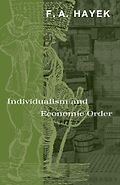
Let’s move on to the Hayek book, Individualism and Economic Order.
This is the most abstruse and obscure pick on the list. It has nothing to do with the internet per se, it’s really about decentralisation. The key essays in the book were written in the 1930s and Hayek puts forward a general theory of how decentralised processes work, why they are so powerful and can use and mobilise and distribute information so well. He focused on the price system and the market economy. A lot of these ideas are in Shirky, but if you want to go back and read the ideas in their most powerful original form there’s Hayek and there’s Adam Smith, and that’s a lot of what the web is built upon.
Nobody knows what the price for something is going to be. There will be a price in the store for bananas, for steel, for stocks and those prices reflect information, sometimes accurately, sometimes not, but they are the result of many people bidding and communicating the personal information they have and aggregating it into one tiny small number which everyone watches.
Is he a libertarian? This is basically a conservative thing, isn’t it?
He’s broadly a libertarian, but I don’t think you’d have to read the book in a political way. Most Democrats in America believe in the price system and using markets for a lot of things, and you need a way of explaining how that works and there you look to Hayek.
So you see the internet as working on an economic model?
Economic model is a loaded phrase. It means a lot of things to a lot of people. If the economic man is motivated by the desire to express himself or herself and the desire for recognition, then I would say yes.
And is it a readable book?
In many ways not, which is why I picked it. I think there is a lot to be said in any area for having at least one book which isn’t very readable. And there Hayek is my pick. But it’s brilliant, it won a Nobel Prize, and it’s one of the most important books of the century. Is it clear and fun? No.
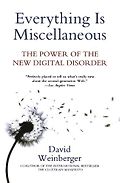
David Weinberger’s Everything is Miscellaneous.
David’s book is brilliant, but I think it raises an important question. We’re doing five books and not five blog posts or five user threads or whatever, so why is a book the most important organising medium for talking about or reading about the internet? Weinberger is a guy who gets this – that the internet is a way of ordering or not ordering reality, that you stack things in a pile, that it appears to be very chaotic, that this is a fundamental change in information processing and it’s not in every way book-like or driven by narrative. I think Weinberger is an important and underrated thinker – this is a book that is easy to comprehend and is also fun. I don’t think it’s made the big splash of Clay Shirky or Sherry Turkle or some other people, but if you want my list of five then it’s got to be on it.
Tell me something in it that’s interesting. What’s the most original point he makes?
I would say the focus on how the web works so well in spite of not having the additional message of being ordered the way, say, an encyclopaedia would or a lot of old media would be. It’s like a very messy office where we stack things in huge piles and we find new ways of making sense of it, and it looks like chaos to outsiders, but people working within the system – linking, hyperlinking, lists of favourites, bookmarks – recognise that it really does work and that it’s a revolution in how we process and order information.
Does he think it will supersede the book? Or perhaps it already has?
I don’t recall him making a prediction on that count, but I think most wise observers see the book and the web ultimately as complements. Some books will vanish, like the encyclopaedia, but the internet gets people excited about reading various books, just as your website may interest some people in reading these books.
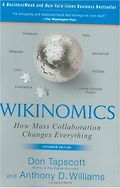
Wikinomics.
This is a very popular, very applied book. It basically says wikis work and wikis are important and wikis are the way of the future. Maybe it’s the least deep book on this list, but it makes the point and it makes it well.
What are wikis?
Take Wikipedia. It’s content generated by a large number of users and readers. There may be some amount of central planning and editing, but for the most part it’s decentralised content and everyone edits their bit. If you had asked people or economists 15 years ago, could Wikipedia ever work, where editors are not paid and with its semi-open comments, most of us would have said no and we would have been totally wrong.
What does mass collaboration really change? Have our lives really changed since the internet?
Well, it depends who the ‘our’ is. Google you can also think of as a form of mass collaboration – there is a kind of underlying wisdom of crowds that gives us all information. So, if you use Google or you use Wikipedia, which I do and I suspect you do too, then it has changed your life. If you met a spouse on match.com then that also has changed your life.
Next time, maybe.
Has it changed everyone’s life? To some extent it’s a generational thing and for the people growing up now, will it change most of their lives? Absolutely, yes.
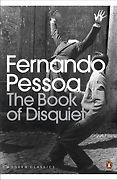
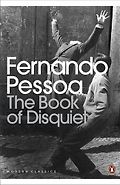
The Book of Disquiet.
This is a book of ideas. It’s not a book about the internet. It was written much earlier, in the 20th century, and written in Portuguese. It’s really a book of meditations. It’s very philosophical. It applies to the internet in that the main point is how much joy you can take in small things and small changes and the true drama of life can be extraordinarily minute in scale, and this, I think, gets at the idea that the internet and the stories we follow are, to a lot of us, extremely important and exciting and meaningful, though really they are just a few changes of characters on a little screen somewhere.
Is it a philosophical tract?
It is a philosophical tract. A collection of aphorisms, observations. It’s very rewarding to read and I’ve found that most people have not read this book, but everyone who has tried it, around 20 people that I know, have loved it.
And his point is that beauty is in small things?
Absolutely. Something that might seem a small change to a lot of observers is a big change to the person watching it and that we should think about our lives in those terms and not look for the big dramatic exciting moment, that interest and excitement can be found in other ways.
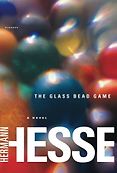
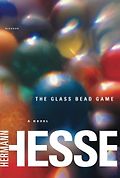
What about the Herman Hesse?
This is about the beauty of organised structures and how we play them in game-like fashion and how much they entrance us. So it’s about a kind of priestly cult that played a game called the glass bead game, which you can think of as a mix of chess and music and mathematics and much more, and he has compelling descriptions of just how spellbound and into this game people would get. And I think indirectly he was the first person to put his finger on why we so often find the web such fun. It’s like this game for us, but it’s also deeply serious and it holds our interest and can be suspenseful and, even though he’s not writing about the internet at all, this is a literary treatment of what we’re doing now and why we find it so intriguing.
What about the internet do you find so intriguing?
Every day I can learn something new.
What have you learnt today?
I have learnt quite a bit about how the German economic experiment of unification in the 1990s reflects the advantages and disadvantages of fiscal policy. I have learnt a lot on that topic.
January 2, 2013
Five Books aims to keep its book recommendations and interviews up to date. If you are the interviewee and would like to update your choice of books (or even just what you say about them) please email us at editor@fivebooks.com
Five Books interviews are expensive to produce. If you've enjoyed this interview, please support us by donating a small amount.
Tyler Cowen
Tyler Cohen is an economist, academic and writer. Cowen is the Holbert C Harris Chair of economics and Professor at George Mason University. He is co-author of the economics blog Marginal Revolution. He contributes to the New York Times, The New Republic and The Wilson Quarterly. Cowen is also general director of the Mercatus Center at George Mason University.
Tyler Cohen is an economist, academic and writer. Cowen is the Holbert C Harris Chair of economics and Professor at George Mason University. He is co-author of the economics blog Marginal Revolution. He contributes to the New York Times, The New Republic and The Wilson Quarterly. Cowen is also general director of the Mercatus Center at George Mason University.