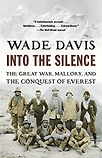
In your book, Into the Silence, you trace the connection between World War One and the attempts by British climbers to scale Mount Everest in the early 1920s. Can you tell us more about this?
The fundamental story of Mallory and Irvine is well known, especially to people in Britain. Famously, on 8 June 1924, on the third attempt on their third expedition to Everest, George Mallory, the most illustrious climber of his age, and the young undergraduate Sandy Irvine were famously seen crossing the northeast ridge of Everest going for the summit, when the mist rolled in and they dissolved into memory and myth.
The question that has always haunted mountaineers and historians of the mountain is whether Mallory got to the top or not before he met his end. From the very start I was less interested in that question than the issue of what was the spirit that carried these men on. I knew from their age, their class and their background that a big percentage of the 26 men who went to Everest on those three expeditions of 1921, 1922 and 1924 would have gone through the agony of the Western Front in the Great War. It wasn’t as if I was suggesting they were cavalier about death, or that they deliberately courted death, but they had seen so much of death it had no mystery for them. Death had nothing more to teach them, save that of their own. In a sense they were prepared to take risks on the mountain that might have been unimaginable before the war because for all of them, and indeed for all of that generation, life mattered less than the moments of being alive. And so that was the idea I had when it came to the story.
It’s fascinating how Everest evolved in the British imagination. The British had lost the race for the North and South Poles and so Everest, looming over the Raj, became known as the third pole. And in a sense the initial attempts to climb Everest were a gesture of redemption for an empire of explorers who had famously lost the races to the North and South Poles. But in the wake of the war, it became more of a mission of regeneration for a nation and a people who had been bled dry.
Can you tell us more about how living through World War One affected the climbers?
The war had affected every aspect of these men’s lives. Twenty of them saw the worst of the war. Jack Hazard, who climbed to the top of the north col in 1924, did so with bleeding wounds from the Somme soaking the tunic of his climbing gear.
One of the things that we have to remember about going to Everest at that time was that it was almost the equivalent of going to the moon today. People spoke of polar expeditions, but Everest was the equivalent of a polar expedition but one in which every step forward took you to a zone of death where oxygen deprivation obliterated consciousness. So this was an extraordinarily challenging thing and the climbers quickly came to understand that if they were to get to grips with the mountain in these conditions you have to be prepared to accept a level of risk, even at the risk of your own obliteration, as one of them put it.
So I think they came to recognise that they were playing in a different ballpark, and what I think is so fascinating is that entire generation had, in a sense, come to play in a different ballpark. One of the most powerful social realities of Britain after the war was the chasm that existed between those who had seen the front and had fought in the trenches versus those who stayed at home and continued to revel in its imagined glories, profiteering from the war in many cases.
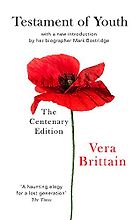
This seems a good moment to talk about your first book, Testament of Youth, as Vera Brittain recalls in her memoir about going up to Oxford after the war and the difficulty she had studying with other women who had not experienced the tragedy and suffering that she had.
To me, Testament of Youth is simply one of the finest, most heart-rending and most moving memoirs – not just of the Great War, but of any conflict. Women often spoke of the war and their losses through the metaphor of dance. Nancy Cooper famously said that “by the end of 1916 every boy that I had ever danced with was dead”. Vera Brittain simply said: “There was no one left to dance with.”
Vera Brittain really personified this extraordinary chasm that existed between those who had gone through the experience of the war and those who hadn’t. And she also personifies the agony that Britain in general went through during the war. She had one beloved brother, Edward. When her father was going to send him to university but not her, her brother said he wouldn’t go unless Vera could go too. So they were very close. Her brother had been a star athlete and he, like all of his class, who were overwhelmed by an almost mystic patriotism in 1914, marched off to war. Within months he was writing letters back to Vera outlining in incredibly graphic detail the horror of the trenches. He fought at the Battle of Loos in September 1915, which has been overshadowed by the later debacle of the Somme and the horror of Passchendaele. But the Battle of Loos was horrific.
Over the course of the war, Vera becomes a nurse and goes from being this protected middle-class Edwardian girl to dealing with the dead and the dying for months on end. She would lose, one by one, her two best friends from university, her fiancé, and finally her brother. Testament of Youth is really the most powerful account of that transformation from innocence to experience and her transformation, of course, in so many ways echoes that of Britain itself. This is why, to this day, the Great War is a fulcrum of modernity. A single bullet into the breast of a prince in Sarajevo sparked the greatest catastrophe in the history of humanity. People often focus on World War II, but as [Winston] Churchill so eloquently said the Second World War was but the continuation of the first. He called it the 30 years war and famously said that never was a war less necessary to fight than the First and more essential to win than the Second.
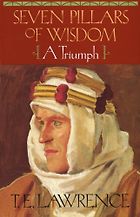
Moving away from Europe to the Near East and TE Lawrence’s account of his time with rebel forces during the Arab Revolt against the Ottoman Turks in Seven Pillars of Wisdom. Why have you chosen this book?
Someone once asked me, if a fire burnt down my house what would be the one thing I would walk out with? And it’s a first-edition, leather-bound copy of this incredible book signed by my grandfather. My grandfather was himself a surgeon at a casualty clearing station on the Western Front.
I think that the myth of Lawrence of Arabia has sort of overwhelmed the power of his prose. Famously he came back from the war and set himself the task of writing his memoir and he wrote 240,000 words and then left the manuscript on a train. He then went back and in this fever pitch rewrote the entire book from memory. Never has there been a more important and serendipitous editorial intrusion from God than at that moment, because the book he ended up writing is so intense and so powerful.
But what I find fascinating was this desperate desire to create a hero in a war that had vanquished the entire mention of heroism. So when the British locked on Lawrence, as indeed Churchill and others did, as this romantic figure, I think it really disturbed Lawrence. Seven Pillars of Wisdom has one of the best opening lines in English literature: “Some of the evil of my tale may have been inherent in our circumstances.” He then goes on in the three or four subsequent paragraphs to basically say to the British public that if you want to make me a hero you’re going to have to deal with all of my perversities, all of my obsessions, all of my complexities. Then he goes on to write this incredible account.
Can you tell us more about this?
It’s an account of the desert campaign. Originally Lawrence was a young archaeologist who travelled in the region before the war and wrote his thesis on the Crusader castles in the Middle East. Without doubt, all that time he was cooperating with the British Foreign Office. His journeys through what are now Jordan and Syria were also scouting the preparedness of the Ottoman Empire, particularly the railroad to Medina, which cut through the Middle East. He was then on the staff in Cairo, basically engaged in a clerk’s role creating maps, when the opportunity arose to actually spark the Arab Revolt which caused probably less difficulties to the Ottoman regime than the [David Lean] movie [Lawrence of Arabia] would imply, but nevertheless was a very powerful guerrilla action that led to the capture of Aqaba, and eventually the Arab armies joining, essentially as cavalry, the British as they move towards Damascus under [General] Allenby.
The book itself is a straightforward account of those engagements, but he was a beautiful writer and he was writing about a period of history in a way that today feels wildly evocative.
He also saw British promises of independence to the Arabs come to nothing as London split the former Ottoman Empire up with France.
Absolutely. We forget that every challenge we face in the Middle East today can be traced in direct lineage to the decisions made in the wake of the war to suddenly create these kingdoms and anoint these various princes and create these entities that we call countries. All of this comes out of the crucible of the war and so to read Lawrence’s account of his time in Arabia pre-modernisation, pre-oil in effect, is really to open a door on a period of history that seems impossibly distant and yet, of course, it was still there at the time of our grandfathers.
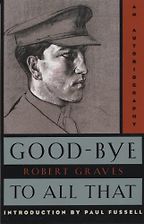
There’s a neat link to your next book, Goodbye To All That, as Lawrence was a colleague of Robert Graves at Oxford in the early 1920s.
Robert Graves and TE Lawrence famously made a pact never to speak about the war. The war was never spoken about, but never forgotten. Robert Graves was actually a student of Mallory’s at Charterhouse [school] and Mallory was best man when Robert Graves married Nancy [Nicholson] and I was able to show that by chance [the poet] Wilfred Owen also attended that wedding. As he travelled to London to attend the wedding, Owen got the news that his first poem had been accepted for publication. It’s fascinating to think that Wilfred Owen may have been there with Mallory, talking about his first publication.
Robert Graves was a fascinating figure. At the Somme he was severely wounded by artillery and left for dead. He was literally brought in and put on a pile of the dead. Only the next day, when the burial party came round and found him breathing, was he then taken by stretcher to a casualty clearing station. Such was the carnage at the front, he nevertheless ended up lying about for three or four days before he was attended to. It’s amazing that he survived. By this point his death had been reported to his mother and he appeared in the honour rolls in The Times.
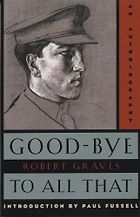
Can you tell us more about Goodbye To All That?
One of the things that was often said about World War I was that the British army lacked the clerk power to tabulate the dead at Passchendaele and the Somme. If that was true, they kept records of just about everything else. It was the most thoroughly documented war – it was amazing that men found time to fight. And so in doing my research over 12 years, I wanted to find out where each of the 20 climbers were every day of the war. I was able to do that in part because the zone of operations was so small and because 10 years after the war there was this tsunami of literature – memoirs, poetry, prose, journals, letters – published. It meant that there was no corner of that battlefield that hadn’t been documented every day of the war, and in multiple voices. The redefinition of war as we think of it today – the lost generation, the horror of the front – all came about through this outpouring of literature that occurred 10 years after the war.
Graves wrote Goodbye to All That as a war memoir, but he was also very conscious of the opportunity presented, and deliberately set out to write a bestseller about the war. He doesn’t necessarily fabricate things, but he is writing it very much with an eye to the marketplace, and it did do extremely well. But by that point it’s almost like the war is a hallucination they have all come down from. I think Graves felt a certain kind of liberty to write about the war as he wanted, as he, after all, was haunted every night by memories of it. He famously could not stand to be in the presence of cut lumber because it reminded him of the dugouts in the war.
He couldn’t touch a telephone for a decade after the war either.
Yes. And if a car backfired he would throw himself to the ground. I think of all the memoirs it is the most accessible, the best written and in many ways the most poignant of the memoirs that came from soldiers.
Robert Graves had a very close friendship with [the poet] Siegfried Sassoon, which Sassoon said had a “heavy sexual element”. Can parallels be drawn with Mallory and his relationship with Irvine?
One of the fascinating things that I found during this 12 years of research is that it was almost as difficult for me to reach across time and understand the ethos of Edwardian Britain as it was to reach across time and understand the reality of life in Tibet at that time. We tend to think of the Victorian era as being stodgy, followed by the wild chaos of the Jazz Age and the surrealistic consequences of the chaos of the war and so on. But there was a moment in time in late Edwardian England on the eve of the war where there was this remarkable ethos of freedom. There was an almost poetic sense of personal freedom, when all that counted was beauty and authenticity. It was quite a bohemian scene.
Part of that, certainly at Oxford and Cambridge, was a kind of sexual experimentation that is daunting. [The economist] John Maynard Keynes was, at Cambridge, famously called “the iron copulating machine”. Part of this was this strange British history. The old joke is that the British would keep their dogs at home and send their boys to kennels. Bosie Douglas, who was Oscar Wilde’s lover, attended Winchester College just six years before Mallory and famously recorded that 90% of the boys there had some form of sexual contact with each other and the only ones who didn’t were the 10% who were too ugly.
There was always this rumour about Mallory’s sexuality. It’s not really an issue of sexuality and words like “homosexual”, as we think of them today, have no meaning. George Mallory had a breathless love affair with James Strachey, the brother of [the writer] Lytton. They only had sex once and I was able to find out the name of the room and who lent them the room at Cambridge to have that little fling. But everybody coveted Mallory. [The painter] Duncan Grant was in love with him; Lytton Strachey was in love with him. All of these men were involved in these kind of engagements and then at a certain point in their life, they all got married and had children. There’s even been in the Everest literature the prurient suggestion that George Mallory selected Sandy Irvine for the final climb because he had designs on him. That’s a complete misreading of Mallory’s sexuality or Irvine’s libido. The truth is that by 1924 George Mallory was 37 years old, a beloved husband of a beloved wife, and had three wonderful kids. His sexual experience with James Strachey and the flirtations with Duncan Grant and others were just part of the spirit of experimentation that occurred at Cambridge before the war. As for Sandy Irvine, he was wildly and devilishly heterosexual. You always have to be careful never to judge an era by the standards of today.
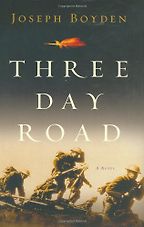
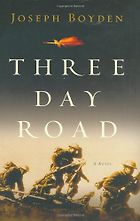
On to your fourth book now, Three Day Road. One reviewer said that Joseph Boyden’s book “illuminated a forgotten corner of the Great War”. Do you agree?
Joseph is a friend of mine and l love this book. The other novel that could have been on the list is [Sebastian Faulks’s] Birdsong, which is a beautiful book, but because Sebastian has quite properly got a lot of attention, I thought it would be nice to choose something else.
Three Day Road is a very powerful short novel. It’s almost as if the Western Front is seen through the hallucinatory vision of a shaman. It’s a story of two young Cree boys who grew up together in the wilderness of Manitoba and who go off to war in the same spirit that young men everywhere in the Empire responded to the call. They both become extremely good snipers and the book traces their descent, one into madness and the other into morphine addiction. It’s a powerful, beautiful and haunting lens upon that conflict. I don’t think there’s another book that more powerfully describes the loneliness and nightmarish qualities of being a sniper in that war – crawling into no man’s land, basically being a skilled murderer with a licence to kill – and what it does to a man’s soul. I think it’s to be highly recommended.
And ironically, when they get back to Canada they find their ability to hunt is restricted to the Indian reserves.
Yes, and one of the protagonists is haunted by the fate of the other and the revelation of that is one of the great climaxes of any novel that I have ever read. But I mustn’t give the ending away.
It’s great to have a novel from Canada on your list. I think in Britain we sometimes forget the contribution made by the Allies in the Great War
.
This war defined Canada – the Canadian victory at Vimy Ridge and the Canadian contributions to that war. It was only the suicidal defence of the Canadians in April 1915 at Ypres that kept the Germans from breaking through during the first use of poisonous gas at the Western Front.
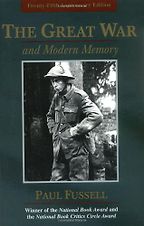
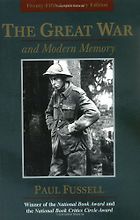
Finally, we have Paul Fussell’s The Great War and Modern Memory.
This is the perfect book to end on. Every page is a revelation. It’s for anyone who wants to understand this notion that the war was the fulcrum of modernity. It was a turning point. The entire idea of the 19th century – which was an idea of progress, optimism and the notion that you can always better yourself economically, spiritually, socially – was crushed on the fields of Flanders. And in the wake of the war we encounter the nihilism and chaos of the 20th century. That war indeed gave birth to people like Hitler, Mao and Stalin and everything else that tormented, and what Churchill called, this “blood-stained century of violence”.
What Fussell does is to reveal the impact of the war on literature, on the arts and on the rise of Surrealism. He has a wonderful phrase, “the cruel proximity of the front”. The fact that you could be in the trenches, eye-deep in hell, in the morning and be whisked away by train and be having tea at Claridges by early afternoon. The fact that 25,000 Welsh miners spent the war underground, setting charges of TNT beneath enemy lines which when blasted would send shock waves that could be felt on Hampstead Heath in London. The fact that 10,000 young subalterns were required every month, just to replace the litany of the dead and wounded. And so schools like Winchester, Uppingham, Marlborough, Eton and Harrow literally graduated their entire senior and sometimes junior classes not to Oxford, Edinburgh, Cambridge or the University of London but directly to the front. Marlborough had 733 old boys killed in the war, and that’s typical. So I think if you want to understand the sociological impact of the war, not just in arts but in politics and in terms of the entire shift of the centuries, Paul Fussell’s book is simply the greatest source.
Five Books aims to keep its book recommendations and interviews up to date. If you are the interviewee and would like to update your choice of books (or even just what you say about them) please email us at editor@fivebooks.com
Five Books interviews are expensive to produce. If you've enjoyed this interview, please support us by donating a small amount.