Could you give us a brief introduction to inkblots?
People have always been interested in seeing things – seeing things in the clouds, in tea leaves, in blots of ink. It stimulates their imagination, and in some cases they feel they’ve learned something. So when I was asked to work on the Redstone Inkblot Test [a character test based on people’s responses to inkblots of different shapes and colours – as described in an Observer feature on 26 December 2010], the obvious association was with the Rorschach Test [a psychoanatytical testing tool in which patients are asked to view and interpret ten inkblots]. But there’s a much bigger and older pedigree one could draw from.
Which takes us to your first book.
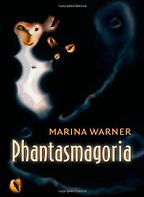
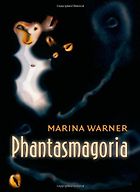
Marina Warner’s Phantasmagoria, which explores what happened in the age of science to everything that might be related to the immaterial, the numinous, the irrational. It’s in some ways a history of the unknown – which has gone through several phases, hasn’t it? The spirit world, the divine, the unconscious.
Is Warner a psychologist?
No, she’s a cultural historian. She looks at everything from table turning to Ouija boards, spirit photographs, the irrational in the modern age, ghosts, and monsters. She says wonderfully suggestive things, and she has an excellent chapter on the Rorschach Test.
What does she say?
Well, there have been inkblot tests around for ages, but in the 19th century they took over from silhouettes as the parlour game, partly due to a German doctor and poet called Justinus Koerner, who was a friend of the German Romantics and was interested in the nascent science of psychology and such things. He’d write endless letters, and he doodled in them, and started playing around with inkblots. He was the one who worked out that you could make inkblots symmetrical by folding them over.
What’s the significance of that?
Of the symmetricality? I think it just makes them more suggestive, more organic, more physical. They can look like MRI scans, or pelvises, or bugs. It makes them look more biological. Anyhow, what he’d do was make these inkblots in his letters and then embellish them – turn them into imps and monsters and devils, all sorts of little creatures. But they’re also slightly self-portrait-y. And then he’d write poems about them.
About the inkblot creatures?
Yes, he published a collection of inkblots and related poems called Klecksographien. It started a huge craze. Everybody started making their own inkblots, as aesthetic pieces, or as the basis of stories, or as a way of discovering themselves. Koerner started thinking of them in mythological terms, or about their mythologizing effect: whether there might be something hard-wired in the brain, a collective memory or thinking.
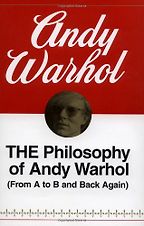
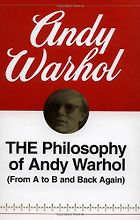
In the history of inkblots, the experiment of Hermann Rorschach [1884-1922] is the most famous moment: a controversial attempt to establish a scientific personality assessment based on ten standard Rorschach inkblots. Then comes Andy Warhol, who in the 1980s reconnects inkblots with the art that came before. He did these huge, very sexual, strange, hieratic paintings which he called ‘Rorschach Paintings’ – although they were, in fact, entirely of his own invention. At the opening a journalist asked him what they meant and Warhol – in that amazing, neutral, “I’m a mirror” way of his– said, “Oh, I made a mistake, I got that wrong. I thought the idea was that you make your own inkblots and the psychiatrist interprets them. If I’d known, I’d just have copied the originals!”
Support Five Books
Five Books interviews are expensive to produce. If you're enjoying this interview, please support us by donating a small amount.
Why do you think Warhol was so interested in them?
Partly because of his idea of an artist – in this case, an abstract artist – in an age of mass reproduction. He was a great believer in the American Dream. It didn’t matter who you were, you could still drink the same Coca-Cola or eat the same hamburger as Jackie O., say, so there was something very utopian about his images of iconic consumer objects, of which the Rorschach Test was one by then.
Consumer psychoanalysis?
Yes.
And do you think he was at all interested in applying the blots as a personality test – in anything more than the aesthetic surface?
Well, Warhol is also a very extreme example of what can happen to the self in a consumer culture. He can’t stand anything as direct, or messy, as emotional intimacy, or even sex really. Like Oscar Wilde, but even more so, he rejects nature, only accepts the artificial, worships technology, and is amazingly complexed about the body: I mean, talking about sex he makes Philip Larkin look like a love machine.
Support Five Books
Five Books interviews are expensive to produce. If you're enjoying this interview, please support us by donating a small amount.
So he’s using inkblots as a way of hiding, of keeping people at a distance?
I think so. Warhol said he didn’t know if he was capable of love, but that he stopped even thinking in terms of it when he got his first tape recorder. Instead of having relationships, he’d just go round interviewing people. When he talks about anyone, it’s always in terms of their problems; it’s the beginning of confessional as well as celebrity culture, of reality TV. It’s all in this line of his – When people are talking to me, I don’t know, and they themselves don’t know, if they’re performing or if they’re being authentic.
Your next book?
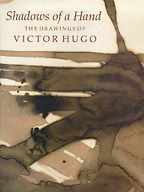
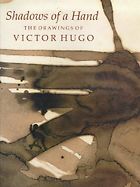
Victor Hugo – he was one of the people experimenting with inkblots, and this is the most wonderful book. During his exile, partly imposed and partly voluntary, in the Channel Isles, Hugo stopped writing for a while and went into a fury of artistic production; and he liked to use very modern techniques that exploited chance to work up his effects. He rubbed coffee into the paper, he used lace, he spattered ink and folded the paper in half, creating Gothic scenes – towers, crags, abysses. But again, they were also self-portraits, sometimes psychological, sometimes typographic. He’d draw his initials, huge glowing initials in the sky. There’s a fantastic one of an octopus, with some of its tentacles spelling VH.
And how did Hugo’s work feed into the history of inkblots?
Well, the surrealists took up a lot of his techniques, using chance as a starting point. So for example Baudelaire called him “Great, terrible, as immense as a mythic being, Cyclopean,” while Breton said, “Victor Hugo is a Surrealist when he is not stupid.”
What’s next?
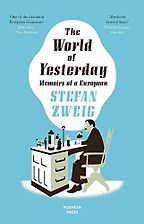
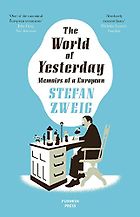
Stefan Zweig: if you see Warhol as the product of the popularisation of Freudian ideas in America after the war – partly through consumer marketing, partly through PR, as opposed to straight analysis – then Zweig is at the heroic beginnings of the whole enterprise. Rorschach studied in Switzerland at the institute where Jung taught, and part of the success of his test in America was that he combined Jungian and Freudian ideas. Zweig meanwhile grew up in the world Freud inhabited: turn-of-the-century Vienna, a totally unchanged bourgeois stronghold, apparently unshakable. Zweig calls it the age of security. Everybody grew up knowing exactly what to expect from their lives and believing in the progressive creed that everybody was getting richer, happier, that history was moving everybody forward, lifting people to the same level.
“In the 19th century inkblots took over from silhouettes as the parlour game”
So it’s about growing up as a Jewish writer in Vienna, going from this amazing generation of cultural genius through both World Wars, Nazism, every possible horror and upheaval. And it’s bookended by two meetings with Freud, the first when Zweig was a young man, and Viennese society was so repressed that women weren’t even allowed to mention trousers (they had to call them “his unmentionables”), the second when they’re both in exile in London, following the Anschluss in 1938, when Germany and Austria were united.
And what are Zweig’s conclusions?
Very sweet natured, as well as being the most fantastic celebration of high culture. He meets Rilke, he meets Rodin in his studio, and so on. He writes it in 1942 and he says – I paraphrase – “oh, people are so much more confident now”. Men and women growing up are so much freer than we were, partly of course thanks to Freud. He celebrates how much more he’s been able to learn from his own life than his parents had been able to in theirs. It’s amazingly graceful and light. And then almost immediately after finishing it he commits suicide.
Oh.
Yes, very tragic. But if you think about it, all the things that he said about the fight against repression, which was coupled in turn-of-the-century Vienna with huge industries in pornography and prostitution, resonate with Warhol and contemporary America in a way that’s very interesting and quite depressing.
Van Gogh?
There was a 19th century French statesman who said, “When we ask for advice, we’re generally looking for an accomplice.” It’s a beautiful sentiment, I think, because so often when we ask a question or say we don’t know something, our first reaction is to feel vulnerable, that we’re putting ourselves in an inferior, less confident position. It’s a fascinating thing with inkblots, for instance, that when people say what they see in them – see in these completely abstract images, waiting to have meaning projected onto them – they often say, “Is that right? Am I right?”
Get the weekly Five Books newsletter
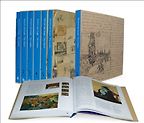
So I was thinking of great accomplices, and a classic example is Van Gogh’s brother, Theo. So this is a book of Van Gogh’s letters to Theo: Van Gogh, for example, at 19, trying to work out what to do with himself, recommending to Theo to smoke a pipe – very good to cheer yourself up if you’re in bad spirits, as Van Gogh often was. It took him a long time to work out what to do. He tried being an art dealer and a lay preacher and other things. And then Theo encouraged him to paint.
Get the weekly Five Books newsletter
Van Gogh obviously felt so comforted and loved by his brother. His letters are amazing, and he says everything that he’s trying to do in his art, and what he thought about other painters; what he thought about the technical process and the practicalities of that, and then all his feelings and hopes and loneliness and struggles. It’s just a very brilliant example of somebody having someone in their lives they can communicate with.
But a slightly different way of divining one’s feelings than projecting onto an inkblot?
Well, we only have 39 of Theo’s letters to Van Gogh, although we have hundreds of Van Gogh’s to Theo, which consequently often read as though he’s having a conversation with himself. I think of inkblots as quite a humble but nonetheless good example of a catalyst that triggers ideas and feelings. But anything can have that effect, can’t it? And then it’s interesting what sort of conversations follow, with yourself and other people. It’s a combination of the communicative imagination at work, and the act of self-portraiture – which is what we like about inkblots. We’re saying, let’s stimulate our imaginations so we create; let’s see if it brings up things about ourselves. Let’s see how we evoke ourselves.
January 31, 2011
Five Books aims to keep its book recommendations and interviews up to date. If you are the interviewee and would like to update your choice of books (or even just what you say about them) please email us at editor@fivebooks.com
Former contributing editor to Granta Magazine and Books, Will Hobson wrote The Redstone Inkblot Test, a character test based on respondents’ reactions to different inkblots. He is also a writer and translator from French and German. His translations include the Goncourt-winning The Battle by Patrick Rambaud (Picador), Sans Moi by Marie Desplechin (Granta) and Being Arab by Samir Kassir (Verso), which won the Index on Censorship Freedom of Expression Award 2007. Canongate will publish his translation of Michel Schneider’s novel about Marilyn Monroe and her last analyst, Marilyn, Dernières Séances, next year. His next project for Redstone Press, Knock, Knock! Who’s there? We Are! is about enjoying family life.
Former contributing editor to Granta Magazine and Books, Will Hobson wrote The Redstone Inkblot Test, a character test based on respondents’ reactions to different inkblots. He is also a writer and translator from French and German. His translations include the Goncourt-winning The Battle by Patrick Rambaud (Picador), Sans Moi by Marie Desplechin (Granta) and Being Arab by Samir Kassir (Verso), which won the Index on Censorship Freedom of Expression Award 2007. Canongate will publish his translation of Michel Schneider’s novel about Marilyn Monroe and her last analyst, Marilyn, Dernières Séances, next year. His next project for Redstone Press, Knock, Knock! Who’s there? We Are! is about enjoying family life.