After writing 17 novels, do you feel as inspired now as you did 20 or 30 years ago?
Yes, I do actually. Funnily enough, I feel in the last three or four years a new surge of energy. I don’t know whether it’s because I’m getting older, but I actually feel I’m working harder than I’ve ever worked before in my life. I seem to have so many things on. It’s not by any great intent, it’s just the way things have panned out. I can’t write for as long as I used to. I used to write for five hours a day and now I’m down to about three. But I do feel very creatively energised as I approach my 60th birthday, which is reassuring. It’s strange how these things happen. It’s not just new novels, I’m also writing short stories and for film and television. I feel very busy and I enjoy that. I don’t feel under any pressure, so obviously the brain is still working well.
Creatively, have your interests broadened in terms of the things you want to do?
Because I’ve done more things, I now seem to be able to initiate a TV project or a film project, whereas before I would have had to be asked. That’s the difference. Because I have already written lots of films, I am more empowered in a way, and I know a lot of directors and producers. My experience has opened more doors for me and I seem to be working more.
I’m a great believer in having as many irons in the fire as possible, particularly in the world of film and television, because it’s so fickle. With novels and short stories, I know that if I write it will be published. Whereas in the world of films, everybody can love it but nothing happens. So my modus operandi is to have seven, eight, or nine projects ticking over in the hope that one of them might heat up. Some of these projects I’ve been nurturing for ages, for years and years – decades in some cases. It’s a combination of old, much cherished projects still there, and new work that might enable them to be made. It’s strategic in a way.
Do you need to go out and search for inspiration?
I’m not an autobiographical writer in an obvious sense. I’m always inventing stories and characters and plots. Something doesn’t need to happen to me in order for me to write about it. I can sit in my study and dream up an entire plot just because my brain works that way. It’s the type of writer I am – I’m an imaginative writer rather than autobiographical. I got an idea for a novel yesterday and I just jotted it down in a notebook. I don’t know where it came from. What you recognise is that your mind is still working well. It’s seizing on things, developing them and seeing the potential in them. I write it down and store it away for a rainy day or see if it matures. There’s no sense that I’m running out of steam. If anything, it’s the opposite.
One of the characteristics of two of your chosen authors – Updike and Chekhov – was their work ethic. They were both extremely hard-working and incredibly productive. Is that a characteristic you share with them?
Nobody could probably match Updike in terms of productivity. When I was starting out as a young writer, it seemed to me that what you did was write as much as possible, whether that was a novel, short story, radio play, television play, restaurant review or book review. What you did was write. In two other literary worlds I know quite well, America and France, that doesn’t seem to be quite the case, with the exception of Updike. Somehow you can have a career as a writer lasting decades by writing five novels. Whereas the British example – which is probably Dickens, Thackeray and Trollope – is that you work hard.
So when I’m writing a novel, I write seven days a week until it’s finished. I’m currently waiting for my new novel to come out, and I’m very involved in the films we are making of Restless for the BBC. We are making two 90-minute films. That seems to me the way to be a professional writer, not just sitting around twiddling my thumbs, congratulating myself. You just keep working – Dickens being the great exemplar. I do think this is a very British phenomenon. I don’t think other writing cultures have quite the same role models as we do.
Many writers hate the idea of their books being adapted for the screen, let alone adapting them themselves.
The two art forms are completely different. Film, compared to novels, is quite a simple art form and it’s also collaborative. I don’t see the two writerly aspects of it as being that connected. It takes me three years to write a novel but I can write a screenplay in two weeks if necessary. I enjoy working in film and television precisely because it’s a collaboration. But it’s two different bits of your brain that are engaged, two different sets of gears. There’s not much overlap, to be honest. From my experience, having written novels and films and directed a film, the two forms are very distinct and all sorts of different talents and energies have to be applied. I make the shift quite happily and easily. I don’t feel I’m repeating myself.
I’ve read your novel Any Human Heart and also watched the television adaptation. Luck is a recurrent theme in the novel and it is expressed quite subtly. But in the TV adaptation, you have a character telling the viewer directly in the first episode: “It’s just luck in the end. That’s what life is.” Is film a
less subtle medium?
It is a simpler art form. Any Human Heart is a 500-page novel, and although we had more than five hours of screen time, there was a hell of a lot that was left out. Film is photography. It’s so objective. And yet Any Human Heart is probably the most subjective of novels you could write, because it’s a man’s intimate journal. Making the shift from the novel to the film version created massive difficulties of presentation. If you play to film’s strengths, you play to its simple, broad strokes. You just can’t be that subtle because you don’t have all the tools at your disposal that you have as a novelist. Again, you have a very limited time, problems with the budget, and the problems of photography on the outside looking in. All these decisions affect the way you present the material. I think that theme of luck which runs through the novel, as it does in the film, is buried in the hundreds of thousands of words of the novel. Even a long mini-series like Any Human Heart is one-tenth of the length in terms of writing as a novel. So a lot of your themes inevitably become more bluntly stated so that the point is made.
Your new novel Waiting for Sunrise
is published in the coming months. What have we got to look forward to?
It starts in Vienna in 1913, a year before the start of the First World War. The central character is a young Englishman, an actor, who has a particularly troublesome sexual dysfunction. He’s about to get married, so he decides to try out this new-fangled psychoanalysis lark to see if he can sort himself out. He goes to Vienna and spends some months there being psychoanalysed, not by Freud but by a disciple of his. Because it’s one of my novels, everything then goes wrong. The embroilments that ensue in Vienna in 1913 trammel up his life in such a way that when war begins and he travels back to London, he’s still living out the consequences of what’s happened to him in Vienna in 1913.
It’s a sort of – I say slightly facetiously – John Buchan or Somerset Maugham adventure but with sex. It’s a young man abroad who gets trapped in an affair in every sense of the word, and spends the rest of the novel trying to disentangle himself. But more seriously, it’s also about becoming modern. I think that our world – the 20th and 21st century world – began in 1914, not in 1900. The journey that my central character goes on is a journey from Victorian and Edwardian certainty to modern uncertainty, paranoia, lack of trust and lack of clear vision – the way we all function today. There was a paradigm shift from the old certitudes to the uncertainties we live with today. So there is a very serious theme under the adventure this man is on.
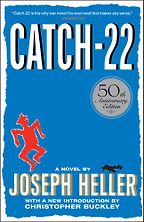
Let’s start on your book selection. Why this classic from Joseph Heller?
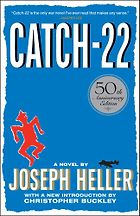
A lot of the books you read when you are young are the ones that stay with you and haunt you. I remember vividly reading this book, which is a war novel, when I was about 18 or 19. I read it on a flight from London to Lagos. I was still at school and was going out to Africa where I lived. I read it in one of those panting, rapt, engaged reads that last 12 hours. At the time, I thought it was the most wonderful novel ever written, partly because of its absurdist sense of humour and the way it looked at war and warfare. Funnily enough I was flying into a war zone then, the Nigerian civil war, and that made Joseph Heller’s war seem almost tame in comparison. It seemed to me to have complete bearing on the craziness that I was witnessing in Nigeria. It was timely, eye-opening and funny as well.
Can you tell us a little more about the book’s story?
Interestingly, I started to read it again about three years ago and I abandoned it almost immediately. I wasn’t enjoying it and I didn’t want to destroy my whole experience of it. It’s the story of a man who has been a member of an air crew, a bomber squadron, in Italy in 1944, a man called Yossarian. He and his colleagues go on bombing missions over Germany and northern Italy. The catch-22 of the title is that Yossarian thinks war is crazy and wants to get out. But that’s a very rational point of view, so nobody would take him at his word.
Anybody who thinks that war is an absurd, ghastly, farcical misadventure is in fact incredibly sane, and only the insane would be allowed out of a war zone. So Yossarian’s war is an attempt to prove that he’s insane, when in fact he’s the sanest man on the air base. It’s essentially about Yossarian’s attempt to extricate himself from this utterly ghastly black and deadly farce that he’s involved in. It is a very anti-war novel but written with tremendously skillful, tongue-in-cheek aplomb. It’s not banging an anti-war drum, it’s just showing the inherent lunacy of warfare. It is a great novel. It’s just that I read it at exactly the right time and should stick with those memories and not try to recreate them today.
The book’s publication coincided with the start of US involvement in Vietnam. Heller really caught the imagination of the growing anti-war movement, didn’t he?
It caught the mood of the 1960s counterculture even though he was talking about a war that took place 20 years earlier. Heller was in that war and I don’t think the book is an oblique look at Vietnam. I think it was an attempt to write up his experiences. Others did it too, but there was something about Heller’s tone of voice – that comic, absurdist view of the conflict – that chimed with this time particularly well.
Particularly his portrayal of the government and bureaucracy being more dangerous than the enemy.
Yes, exactly. Every time he went to the doctor saying “get me out of this”, the doctor would say he couldn’t because he was clearly not insane. This is the bind he finds himself in. It’s a very modern, almost a cool take on warfare, where an American tone of voice seems to get the business of warfare and its inherent and deadly craziness extremely well. That’s my memory of it. The reason I chose it was because it had an enormous effect on me when I was dreaming about being a writer. I did write a war novel in my twenties based on my experience in Nigeria which I’m sure was heavily inspired by Heller, but it wasn’t good enough to show to anybody.
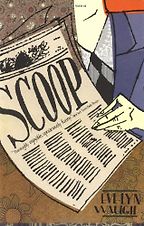
Scoop is a book you adapted for the screen, isn’t it?
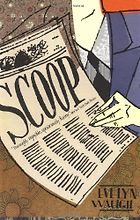
Yes, I did. I’m almost obsessively interested in Waugh as a writer and I think I’ve read everything he’s written. I think Scoop is his masterpiece. I had fallen upon it before I ever had the chance to adapt it. It’s one of the great comic novels ever written. Waugh’s brilliance was in his comedy. His later novels – Brideshead Revisited, the Sword of Honour trilogy – to me don’t match up to the unique, glittering, malevolent brilliance of the early comedies.
The interesting thing about it is that everybody remembers the first third of the book but forgets that a whole lot of it takes place in Africa. Everybody remembers Fleet Street and journalism and Lord Copper and The Daily Beast but the novel is about a classic, almost Shakespearean, case of mistaken identity. The wrong correspondent is sent to cover a war in Ishmaelia – William Boot the nature correspondent is sent, instead of William Boot the war correspondent – and mayhem occurs. In a funny way the book could also be subtitled “How William Boot Loses his Virginity” because it’s a love story as well.
When we adapted it into a film, we got quite bad reviews although I think we make a good adaptation of the novel. All the journalists who were reviewing it had only read the Fleet Street stuff and had forgotten about the African civil war in it. It’s hilariously funny, but the thing about Waugh – and this is what makes him great I think – is that his comedy is completely ruthless. He completely expunges sentimentality from it, so his comedies are dark and they chime with my own sense of humour. If Waugh interests me in any single way, it’s the unrelenting ruthlessness of his comic point of view. He will not give you any kind of a sop at all. Decline and Fall, Black Mischief and Scoop are brilliant, dark, sprightly works of a young man in full throttle. Then Waugh turns into something different and the books become, from my point of view, less interesting and more striven for. His brilliance was as a comic writer, and in Scoop you get the apotheosis.
Waugh said Scoop was “light and excellent”, but described Brideshead Revisited, which was published seven years later, as his first novel.
The thing about Waugh is that he reinvented himself. The young writer was true to his nature. The various masks that he tried on as he got older affected the way he wrote and saw the world. My theory about Waugh is that this grotesque country squire that he tried to turn himself into was a mask. But he was too intelligent not to realise that, and a kind of self-loathing began to infect him as a man. To me, the later work has brilliance in it but is not as perfectly achieved as those early comedies. Even Vile Bodies, which is a bit of a botch job, is in some ways more original than Brideshead Revisited. I have always championed the earlier novels over the later, more ponderous ones, because I think that’s where his genius lay.
The writer Ian McEwan described Updike as the greatest novelist writing in English at the time of his death in 2009. Do you agree?
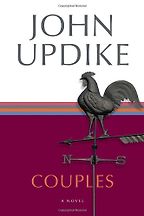
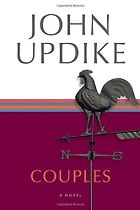
Not entirely. I think Updike was a brilliant novelist and stylist and also a brilliant critic. But I gave up. I couldn’t keep up with Updike. I think that the short stories are his great legacy. I think the novels are all rather uneven and not fully achieved, with the possible exception of Couples. But Couples is another one of those books that I read at a very young age and it blew me away. Again, I must have been 19 or so when I read it, and for me it was like a window being opened onto the adult world, a world I was about to enter. I suddenly thought that this man understands human nature and the human condition in a way that I had never encountered before.
That said, a lot of people regard Couples as his least successful novel because it seems overly preoccupied with sexual shenanigans in New England. I’ve gone back and re-read Couples and it holds up, for me, in way that Catch-22 doesn’t. It’s a brilliantly well-written and observed book. But its relevance to me – and this is why I put it on the list – is because at the time that I read it, veils were stripped from my eyes. I saw the world differently as a result of reading the book. It’s a great experience when that happens to you.
While Updike’s writing style is almost universally lauded, critics do say that his subject matter was rather shallow – Couples, the story of middle-class couples in New England, being a case in point.
You could almost say that Updike was a prolific American Jane Austen in the sense that he wrote about the same world again and again and again. Maybe because he was so prolific, the effects of reading yet another novel about middle-class adultery in New England began to pall. But he was a great prose stylist. The line-by-line pleasures are very genuine. Scott Fitzgerald said – and this very much applies to Updike – that we novelists have our two or three stories to tell, and we tell them again and again as long as someone is prepared to listen. I think this is very true about Updike. His canvas was narrow, but he painted it with incredible detail and astonishing fecundity. But I think in a way that’s going to make him seem oddly parochial.
At the centre of Couples, the relationship that he pursues between the Dutch builder and his wife and their various betrayals and adulteries is quite powerful and self-destructive. I wonder if it’s an autobiographical element in Updike’s own life that fuelled that. That’s what my subsequent re-reading of the book has brought home to me. It’s not about wife swapping or sex in the suburbs, it’s about this man’s urge to betray his lovely wife. There is more going on there, and now that Updike has left us, time will tell. I’m sure, as the biographies are written, we might find a different propulsion behind those scenes. I still think the book is a fantastically acute and brilliantly well-observed account of society, even though that society happens to be well-to-do, middle-class America. It gets the human condition really well.
His dense vocabulary and syntax can make his novels quite hard going.
In his short stories that richness doesn’t clot or cloy. The 300 or 400 pages of a novel are almost too rich a meal. His short stories somehow cohere in a way that’s more satisfying, for me anyway, than the novels. His Rabbit books are good but they are not great and enduring because they are too much, in a way. I used to teach Updike’s short stories a lot. I pulled them apart and analysed them, and they are really brilliant examples of the genre functioning at their most sophisticated and telling, but of course he wrote hundreds of them. It’s not like Chekhov where there are maybe 20 absolute masterpieces. Updike just seemed to spew out the words and of course you don’t always know where to find the good stuff. Even his four or five huge volumes of criticism – there’s nothing dull about them, they’re full of insights and you just marvel at his energy but it’s almost pathological in its logorrhea.
Much has been written – positively and negatively – about how Updike wrote about sex. Do you find sex difficult to write about?
I don’t. I think the answer is: Less is more. When sex scenes are called for in a novel, you shouldn’t shy away from writing them. But you don’t need to go the full DH Lawrence, John Updike route. It’s all about selection to create the sense of power. I think Updike was too in love with his own sumptuous prose style to hold back, so he’s very easy to parody and mock.
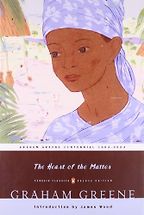
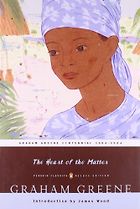
Your next choice is The Heart of the Matter. This is the story of a British colonial police officer, Henry Scobie, set in Sierra Leone. Was this an inspiration for your book A Good Man in Africa?
Yes it was. Again, I have deliberately chosen a book that I read when I was young and thinking about becoming a writer. I was born and raised in West Africa and there is very little English literature that deals with that part of the world. If I had been born in Rhodesia, South Africa or Kenya I could find masses of novels that dealt with colonial life. So The Heart of the Matter, which is set in Sierra Leone – a country I had visited several times before I read the book – was revelatory in that I saw the place where I lived in a novel. Again, it’s one of those moments as a reader and a young writer that’s quite extraordinary. I would read Greene’s descriptions of sunset in the tropics or bars in slightly shambolic African towns, and then go out and see them with my own eyes. It’s quite extraordinary to have that experience of being able to authenticate the novelist’s imagination and vision. That’s why the book had a huge impact on me.
The story itself is about this policeman Scobie. The mortal sin he commits by having an affair and not confessing seems to me to be completely absurd and bogus, but the setting of the novel and its machinations – the corrupt Syrian, the spying – are great. But what’s wrong with it is this terrible super-structure of Catholic guilt and sin that Greene hammers onto a very good novel about colonial life. Nonetheless, I think it’s a fantastically atmospheric and powerful read, and it really does hold up over the decades as one of his great novels. Greene, like Evelyn Waugh, is one of those writers whom I have become hugely intrigued by, and I have read everything written about him at great length. But it all goes back to that first reading of The Heart of the Matter when I was in my late teens or early twenties.
There is the sense in the book of Scobie’s life being out of his control, much like some characters in your own books who are buffeted by good and bad luck and managing the best they can.
I agree. I think that would be fine, except that Scobie also happens to be a devout Roman Catholic. It’s something that Greene used to make his fiction resonate in a way that, to me, as a faithless reader, seems completely and utterly bogus. It got him discussed as a Catholic novelist, whereas what he’s interested in is the seedy machinations of a policeman in a small colonial town who is broke, unhappily married and meets a young girl. All that sort of stuff was real grist to Greene’s mill. If you look at any of his novels you’ll see that this is what gets his imagination going. But then he thinks he has to make it significant in some way. At that moment, for me, the novel goes wrong and I just don’t buy it. But it doesn’t detract from the novel’s almost tactile power, a brilliantly rendered version of a life I had experienced in my own slightly tangential way.
Greene did say a few years after he wrote it that it may have been better as a comedy than a tragedy.
Everything he said or wrote you have to re-read and read between the lines. He didn’t say or do anything unknowingly. He was a highly sophisticated, manipulative person who knew exactly what he was trying to achieve with his various interviews and pronouncements. There’s no way that The Heart of the Matter could have been a comedy in the Evelyn Waugh sense. I actually don’t think Greene was a particularly good comic writer. He gets the slightly desperate seediness of life so well and I think his best novels, for me, are the ones that are to do with people trapped in situations where they can’t get out.
Let’s turn to your final choice now. You have said elsewhere that Chekhov is your favourite writer of all time.
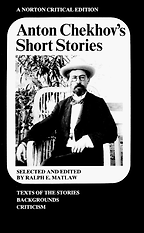
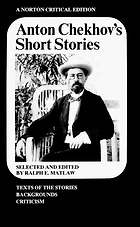
Chekhov was a later passion. I always liked the plays. I remember writing about a film version of The Cherry Orchard in the early 1980s when I was a TV critic at The New Statesman. That production really made me look at Chekhov again and re-read the short stories, which I had read but not with the attention they should have had.
I now regard the short stories as far superior to the plays. Funnily enough, that’s the same point of view that exists in Russia. They see Chekhov as a giant of the short story form who happened to write a few plays, whereas in the West, we see him as a playwright who happened to write short stories. The Russian point of view seems to me to be completely valid, and the minute you have read all the mature short stories you can see he has lifted the plays right out of them. His stories are extraordinary and mould breaking in the sense that nobody wrote short stories like Chekhov and now everybody writes short stories like Chekhov. As I have said before, we’re all Chekhovian now. He’s a very modern spirit who happened to write his great work at the end of the 19th century. But it’s completely 21st century thinking, it seems to me.
Do you have a favourite short story?
The one I really like is his longest short story, called My Life. It’s almost a novella. In it I think you’ll find every Chekhovian element. If you go to other short stories such as The House with a Mezzanine or The Steppe, you find bits of Chekhov. But in My Life, which is not remotely autobiographical, you find the whole of Chekhov. It’s a long rambling story about an idealistic young man in a provincial town. If somebody asks “What is Chekhov about?”, tell them to read My Life and they will get everything.
To what extent did Chekhov’s work as a doctor – which exposed him to all levels of Russian society – inform his writing?
Well, the other thing you have to remember is that he knew he was going to die very young. By his mid-twenties he knew he had tuberculosis. One of his brothers had died of it, and he was a doctor so he knew exactly what the course of the disease would be. He died at the age of 44. Being a doctor was a way of earning money and was something he did gladly and with zeal, but he wanted to write and his greatest ambition, he said, was to be a free artist.
His doctoring, of course, brought him into contact with every kind of individual in society, but my feeling is that it was the knowledge of his impending death that shaped his view of the world and that went into his art – which has been a massive influence on 20th century literature in the Western world. Not just in England and America but also in France, Germany, Italy and Spain. Chekhov’s world view is hugely, almost pervasively influential. So pervasive that you can hardly identify it with the original author.
Five Books aims to keep its book recommendations and interviews up to date. If you are the interviewee and would like to update your choice of books (or even just what you say about them) please email us at editor@fivebooks.com
Five Books interviews are expensive to produce. If you've enjoyed this interview, please support us by donating a small amount.