What do you like about the first person?
Well, it’s not that I’m especially interested in writers writing about themselves. The books that we’re going to talk about – even though they’re autobiographical – use the first person as a way of looking out into the world. The first person, the “I”, isn’t an introverted or a narcissistic thing. It’s more like a periscope by which the reader can see into the world. I think the voice of the first person allows a great freedom. It can touch on reportage, natural history, science, fiction, poetry, myth. It can embrace such a wide variety of strategies.
So not just straightforward memoir.
I’m a bit allergic to the word “memoir”. Obviously my own most recent book, The Music Room, could be called a memoir. And it was. But the word always gives me an inward shiver, because I feel it’s diminishing. What I love about the five books I’ve chosen is that they’re about so much more than they at first glance seem to be. There’s the concrete detail of their stories, but then there’s some idea that goes beyond that. They all touch on universal areas of human experience. That’s not something that I associate with books that are traditionally called memoirs. And I worry about the memoir being an intrinsically egotistical form. Look at the word itself. It starts with “me” and follows it up with “moi”. It’s the me me book. Whereas I think the books I’ve chosen are looking at the world outside the ego. They’re very unselfish books.
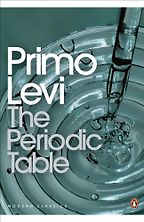
You start with Primo Levi, who is famous for his memories of Auschwitz. He worked in the labs there, as a prisoner, and that’s how he avoided the gas. But you’ve chosen another of his books, The Periodic Table, which uses the chemical elements as a framework for a series of short stories.
They’re a mixture of short stories and autobiographical essays, or essays in autobiography. Levi uses the elements from the periodic table as a way of organising memory. He uses 21 elements, each as a doorway or wormhole into a particular area of his experience, into a particular memory – but leaving out his time in Auschwitz, because he’d already written about that. You get his early interest in chemistry, his early experiments, the friends he studied with, the atmosphere of the laboratories and the characters of the professors who taught him. It’s about his interest in matter, the stuff the world is made of, as counterposed to spirit. He wrote another great book, The Wrench, which is a series of soliloquies from a mechanic called Faussone. Levi is the scribe as Faussone describes all these things he’s built – bridges, oil derricks – and the excitement of putting things together. In The Periodic Table, you also get that fascination with the stuff the world’s made of and we’re made of – the wonder of it.
I’m watching a TV series at the moment about a high-school chemistry teacher who winds up cooking crystal meth. He tells his students that chemistry is about the study of transformation.
Levi is fascinated with how elements react, with the way they become salts and oxides and so on. There are a lot of transformations happening, which I suppose strikes a chord with the personal transformations of grief, separation, longing, love, friendship. That’s most obviously brought out in the final story, titled “Carbon”, which is really the story of one carbon atom. It might start inside a human being and then go into a tree, a pencil, a glass of milk, and then re-enter the bloodstream, become a nerve cell, a neuron. There’s this extraordinary moment at the end, where he imagines the carbon atom in the part of his brain that’s deciding whether to write one word rather than another. It’s a brilliant conceptual leap, that the abstraction of what he’s writing becomes the concrete matter on the page. He’s bringing together these two worlds – the inward world of the imagination or intelligence, and the outward, concrete world of books, trees and bodies.
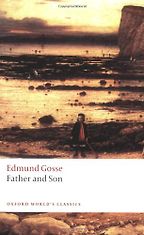
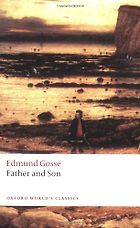
Next is Father and Son by the poet and critic Edmund Gosse.
We were talking about the ego and how autobiography can transcend it. But in this autobiography, a son – the author – explicitly throws off the influence of his brilliant father. Isn’t that close to the archetype of egotism?
There are autobiographies that are fantastically egotistical, but they tend to be not very good books. The universal is in the small. You write about your own life, but if you write about it with enough love and care then it will have the universal running through it. This book is a good illustration. It’s alive with specificity but it’s full of the universal – fathers and sons, children growing up and outstripping their parents. The book is subtitled “A Study of Two Temperaments”. Gosse’s father, Philip Henry Gosse, was an eminent zoologist in the mid-19th century. But he was also a member of a Christian sect called the Plymouth Brethren, fundamentalists who thought that the Bible was literal truth. When Darwin published On the Origin of Species in 1859, this was a huge intellectual crisis for Philip Gosse. His instinct as a scientist was to recognise the truth of what Darwin said, but his instinct as a Christian was to deny it.
Much of Edmund Gosse’s early view of the world is blinded by this oppressive faith, but he eventually steps outside his father’s authority, outside his sway. And while most of the book is written with a quiet attention to detail, with a patience and respect for concrete things, it ends with a polemical passage against religious fundamentalism that wouldn’t look out of place as a memorial to the dead at ground zero in New York. He writes:
“It divides heart from heart. It sets up a vain, chimerical ideal, in the barren pursuit of which all the tender, indulgent affections, all the genial play of life, all the exquisite pleasures and soft resignations of the body, all that enlarges and calms the soul, are exchanged for what is harsh and void and negative. It encourages a stern and ignorant spirit of condemnation; it throws altogether out of gear the healthy movement of the conscience; it invents virtues which are sterile and cruel; it invents sins which are no sins at all, but which darken the heaven of innocent joy with futile clouds of remorse. There is something horrible, if we will bring ourselves to face it, in the fanaticism that can do nothing with this pathetic and fugitive existence of ours but treat it as if it were the uncomfortable ante-chamber to a palace which no one has explored and of the plan of which we know absolutely nothing.”
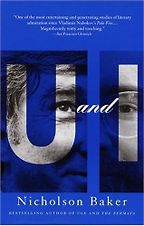
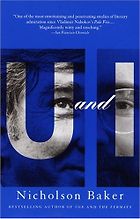
Let’s talk about U and I by Nicholson Baker.
Gosse is making a point, so he emphasises the archetypal opposition between fathers and sons. Nicholson Baker also does this in U and I, although he’s talking about authors and authors. Baker had written two novels before he wrote this. Recently he’s hit the front pages for writing about sex so much, and for referring to the male member as “the Malcolm Gladwell” [the bestselling author and journalist]. But his first two novels, The Mezzanine and Room Temperature, are interested in stuff nobody had ever imagined writing a novel about before – what characters think about while feeding their baby, what happens during their lunch hour. And then he wrote U and I, which is uncategorisable really. You could say it’s an essay, but it’s also a sort of autobiography and a piece of literary criticism. It’s a tribute to John Updike, who is the U.
An extended fan letter?
It’s about Baker’s admiration for and envy of Updike, but it’s also about literary admiration and envy in general, and about insecurity and longing in the widest sense. It’s highly discursive and incredibly funny. He fantasises about meeting John Updike at a party, or playing a round of golf with him and making a prat out of himself. The style is conversational and at the same time highly wrought, which is a pretty neat high-wire act.
How close do the fantasy meetings with John Updike come to making this a work of fiction?
No, it’s an essay. And essays allow you to digress. So if he wants to write a paragraph about Alan Hollinghurst [the novelist] then he can do that. If he wants to write a paragraph about how little one remembers even of the books one really loves, he can do that too. It lets him indulge his small, passing curiosities and still pursue this broader arc – which describes not just his feelings about John Updike, but about being a young man starting out and wanting to make something of his life. A young man looking up to an older man who’s already done that, which is inspiring but also annoying and a source of insecurity.
Is Baker also implying that if you enjoy reading this, if you admire it, then he has succeeded as an author?
Yes, there’s a sleight of hand at work that you could say is disingenuous. He spends a lot of time saying that he never gets down to doing any work or finishing anything. He keeps beginning essays and then leaving them, beginning projects and then putting them aside. But in the process of saying all that, he produces this book which is brilliant and original and will be around for a long time.
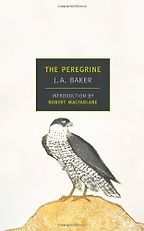
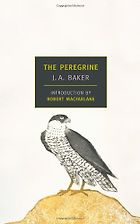
Next up is The Peregrine by J A Baker.
It’s hard to imagine a greater contrast with U and I, although it was written by another Baker. My book The Snow Geese had a lot to do with birds and the non-human world around us, but I didn’t read this book until I’d finished. I wish I’d read it earlier than I did. The way he describes the world outside him, particularly birds, is so electric. It avoids all the traps of rhapsody and the sort of nature writing that Evelyn Waugh satirises in Scoop. You remember William Boot [the protagonist of Scoop]? He writes a nature column that’s a terrible, sub-poetic kind of purple-word haze. But The Peregrine is far removed from that.
Get the weekly Five Books newsletter
There’s an introductory chapter about the peregrine falcon, but the main content of the book is a diary, between October and April, as this man goes on his own to a part of Essex in south-east England. He applies himself to watching the peregrine and to being as attentive to the world around him as it is possible to be. He doesn’t name places. The landscape is reduced to elemental, primitive quantities – field, river, estuary, sea, sky. It is inhabited by trees and by birds, and not just peregrines but lapwings, jackdaws, wood pigeons, kingfishers.
You get the sense that this man, who gives away very little about his own circumstances, goes out each morning to follow the peregrine. There are extraordinary descriptions of the peregrine hunting, of what’s known as “the stoop”, when it spots its prey – a bird or small rodent – and plunges down hundreds of feet with its hind claws extended to slash or stab. It’s incredibly dramatic, and the language at these points has a Ted Hughes-like power. Completely robust and incredibly vivid and immediate.
And then you realise there’s something bigger going on. It’s not just a record of these things. The peregrine arrives in England in October, and in April it flies north again to Scandinavia. There are timeless cycles in play, but there’s more to it than that. It’s about a man trying to have a relationship with the non-human world, about trying to efface the difference between the human and the non-human – a distance that’s been growing and growing. Increasingly he identifies with the hawk, and they get closer and closer. In April, at the end of the book, they stand close and the hawk doesn’t fly off. They’re inhabiting the same world.
And yet if one imagines a man standing close to a hawk, one can picture the man imagining what it’s like to be a hawk, but not the hawk imagining what it’s like to be a man.
I don’t think he pretends he can imagine the mind of a hawk. They’re standing close but they’re separate. In fact, the hawk is sleeping. He’s indifferent. In The Peregrine you really feel the otherness of the bird, but you also feel we’re breathing the same air. And it’s linked with other accounts of a solitary man or woman’s relationship with their immediate environment, other attempts to apply attention to the world around you: [naturalist] Gilbert White’s letters, [Henry David] Thoreau’s Walden, Annie Dillard’s Pilgrimage at Tinker Creek. But what’s unique about The Peregrine is the way it’s reduced to these mythic quantities – man, sky, bird, sea.
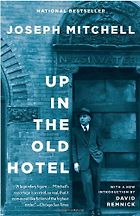
Your final book is Up in the Old Hotel.
Joseph Mitchell is one of my heroes. He was one of the writers responsible for making the reputation of The New Yorker magazine in the late 1930s and early 40s. He was a reporter who specialised in writing profiles of people in New York, often quite eccentric people – a woman with a beard, a child prodigy – such as an incredible piece called The Mohawks in High Steel about the Mohawks [a Native American people] who don’t seem to struggle with vertigo, and who work along the girders at the top of skyscrapers. He was particularly interested in the waters around New York. In a way he was their laureate. He wrote about the oystermen and the clam fishermen, the Fulton Fish Market [in the Bronx] and the trawlermen, the culture around shellfish and fin fish, the seafood coming in from the bays of Maine and Long Island and so on.
How do they read?
They’re incredibly vivid and moving stories, and often they feel closer to short stories than newspaper or magazine articles. They have an amplitude – there seems to be a hinterland or a space around them, for the imagination to fly in. Often his strategy is to build up portraits and impressions through quite short, declarative sentences, like stones in a cairn.
Five Books interviews are expensive to produce. If you're enjoying this interview, please support us by donating a small amount.
Sometimes he brings in the first person, as in the essay that gave the collection its title, “Up in the Old Hotel”. It starts in a restaurant on the harbour, Sloppy Louis’, which is at the bottom of a derelict hotel. Mitchell talks to Louis, the Italian proprietor, and initially it’s a portrait. But then Louis tells him about a lift that goes up into the upper storeys of the building, that he’s never used even though he’s owned the restaurant for years. Mitchell and Louis go up in this lift together, to the first floor and then the second, and Mitchell describes it as a coffin. There are deserted rooms in the hotel, full of dust and cobwebs and ghosts, and the story suddenly has this strangeness. It’s verging on the mythic dimension – they’re making a journey into the afterlife, they’re going into death, into otherworldly spaces.
But Mitchell is most famous for two essays that were collected in the book Joe Gould’s Secret. They are both portraits of this man Joe Gould, a hobo who tramped around Manhattan claiming he could speak different seagull languages and was working on a great work called The Oral History of Mankind. In the first essay, Gould is a loveable eccentric, full of colour, funny, a bit loopy. But in the second essay, written about 20 years later in 1965, there’s a completely different tone – darker, rather sinister and macabre, slightly frightening. Joe Gould is no longer a loveable eccentric. And it runs into the story of Mitchell’s own life. The story goes that after he wrote the second essay, Mitchell carried on going into his office for 30 years until he died, but he never published another article. As though he recognised something of himself in Joe Gould, the man who was working on this comprehensive history of mankind, a work that may not have existed at all.
Do you think that has something to say about the first person? That if you get too close to yourself, you clam up? That you should keep your back to yourself, even when you write autobiography?
There are so many ways of revealing yourself as a writer – your personality, your sensibility. You don’t just blurt it out. You don’t say: My name’s Joseph Mitchell, my name’s William Fiennes, and I’m such and such a person. You reveal yourself in your curiosity, in where it takes you, in what details you choose to foreground. As Fellini said, “All art is autobiographical. The pearl is the oyster’s autobiography.” Mitchell’s collected essays are a self-portrait, even though he hardly ever says anything about himself. Most of his pages are taken up with observations about his subjects, or just the subjects talking and talking. And yet still we have a sense of a man – like Primo Levi – in love with the world, in love with his fellow man, and passionately interested in other ways of life, in other experiences. At the same time you get a glimpse of somebody who’s susceptible to melancholy, who’s drawn to graveyards and the gloomy side of things. Those two energies co-exist – a rapture at being alive, and a recognition of how difficult it might be.
Five Books aims to keep its book recommendations and interviews up to date. If you are the interviewee and would like to update your choice of books (or even just what you say about them) please email us at editor@fivebooks.com