What got you interested in U.S. and Latin-American relations?
When I was at college, I was very interested in American foreign policy. It occurred to me that Latin America was the region with which the United States had the longest history of involvement – and the most intense relationship. That led me to study the internal politics of Latin-American countries – politics that are directly influenced by the relationship with the United States. Washington has dominated the hemisphere for the last 200 years.
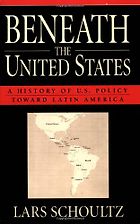
Let’s have a look at some of the different aspects of that relationship. Your first book is Lars Schoultz’s Beneath the United States.
This is a wonderful, sweeping history of U.S. relations with Latin America, from the Monroe Doctrine of 1823 to the late 20th century. Drawing on an enormous array of declassified documents from over the years, Schoultz shows that some very consistent themes ran through U.S. policy in that period. One was a presumption that the United States was, and ought to be, the dominant power in the Western Hemisphere. Other scholars have called this the ‘hegemonic presumption’ – the idea that the United States could unilaterally dictate the terms of its relationship with Latin America.
The second theme was the notion of a ‘civilising mission’. Not only was the United States entitled to be the dominant power in the hemisphere – it was a good thing, too. It was good for the United States and for Latin America, because the United States had its best interests at heart.
So a fairly patronising attitude?
Extremely. And that applies to the third theme, one of racial superiority. The reason the United States felt justified pursuing this ‘civilising mission’ was that it regarded Latin America as racially inferior. You don’t come across that approach today. But it was explicit in a lot of diplomatic correspondence before World War Two.
The book is a wonderful read because Schoultz has done a great job extracting some phenomenally revealing passages from the historical record. You really get a sense of the way U.S. diplomats and decision-makers saw the region and their mission. This was one of the first books to argue that the relationship was about more than American self-interest.
He does not deny the existence of an underlying policy of self-interest – a drive to defend the national interests of the United States. But he highlights an agenda of self-justification and self-righteousness that American policymakers also applied. They honestly thought they were ‘uplifting’ Latin America as they pursued their interests.
Your next book, Graham Greene’s Our Man in Havana, is often described as a satirical spoof.
Yes. What I like about this book is how Greene captures so beautifully the Cold-War contradictions of U.S. policy in the region. Even though the United States plays no role directly, Greene captures the way in which U.S. policy is often so blind to the realities on the ground that it produces disastrous, unintended consequences.
The story is, of course, about a British citizen living in Havana during the 1950s, recruited as a spy by the British Secret Service. He has no idea what do to – so he just pretends and makes up information, which he then sends back to London. However, his actions lead others, presumably the Russians, to think he really is a spy. They start killing people with whom he’s been in touch. Only then does he realise the mess he has got himself into.
To me, this very funny satire perfectly captures the ineptness, insensitivity and cluelessness of large powers trying to manipulate events in the Third World. In the story, as in reality, innocent people die as a result.
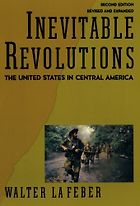
Walter LaFeber’s Inevitable Revolutions looks at the US/Latin-American relationship from a slightly different perspective
.
It complements Schoultz’s book well because it focuses, very specifically, on the countries of Central America. It covers a shorter timeframe, picking up when the United States first intervened militarily in Central America at the turn of the 20th century. This was the time when the United States was expanding its commercial interests beyond the borders of the 48 states. That expansion fed most heavily on Central America.
As the United States developed commercial interests in the region, it became involved in the internal politics. Ultimately, it intervened militarily to protect U.S. interests whenever and wherever there was instability. LaFeber traces how U.S. influence in the region in the 1920s and 1930s gradually moved from power exerted by military force to economic dominance. He shows how the region became economically, and therefore politically, subordinate to the United States.
He then describes in detail how, after World War Two, Central America’s authoritarian systems began to decay. He looks at the rise of popular opposition to these systems and how the United States reacted. Once again, it became militarily involved, propping up these brutal regimes in the face of popular challenge. During the Central-American wars of the 1980s, LaFeber’s book was widely read in the United States. It influenced many critics of U.S. foreign policy.
How would you describe the United States’ relationship with Latin America now, given that the new wave of governments, though not communist, is certainly left-wing?
Interestingly, the left-wing governments in Latin America today, with the possible exception of Hugo Chavez in Venezuela, do not really pretend to be socialist in the traditional sense. Even some of Chavez’s allies – Evo Morales in Bolivia, Rafael Correa in Ecuador and Daniel Ortega in Nicaragua – are pursuing essentially social-democratic policies. They aren’t trying to do away with capitalism, although Chavez would, I think, like to. But he hasn’t managed it.
Five Books interviews are expensive to produce. If you're enjoying this interview, please support us by donating a small amount.
A major change in the Latin-American Left since the 1960s is that no one aspires to the old socialist model of a highly centralised, state-run economy. History’s verdict is that it didn’t work very well. The other difference is, of course, that the Cold War is over. During the Cold War, the United States saw a populist left-wing government in Latin America as a potential Soviet ally, a doorway into the hemisphere through which it could project influence. Today, there is no real extra-hemispheric threat. The United States even sees problematic regimes like Venezuela as more of an annoyance than a threat to its interests.
American relations with Latin America have definitely improved recently, although the region is still not stable. In the last 20 years, transnational crime and personal insecurity have become the most pressing issues for most countries in the region – more pressing than economic inequality, poverty and social exclusion.
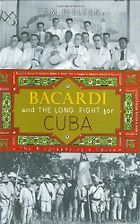
Let’s move on to Bacardi and Tom Gjelten’s Long Fight for Cuba.
This is the most recently published book in my selection. It’s a history of the Bacardi family, beginning in the middle of the 19th century when the famous rum empire was founded in Cuba. If you told me you could sum up 150 years of the island through the story of a single family, I would reply it couldn’t be done. But Gjelten has done it.
What makes this possible is that key members of the Bacardi family were at the centre of Cuban political life throughout that time. The period spans the first resistance to Spanish colonialism, the 1959 revolution and the family opposing Fidel Castro in exile. Therefore, the Bacardi family has been central to Cuba’s biography. Gjelten tells the story brilliantly: he’s a wonderful writer. One of the nice things about this book is that the Bacardi family based itself in Santiago de Cuba, not Havana; it’s a story of Cuba beyond its famous capital.
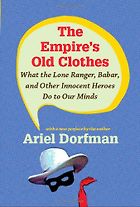
Your final book, Ariel Dorfman’s The Empire’s Old Clothes, takes a controversial look at children’s comic books. How is this relevant to the relationship between the two powers?
Of all these books, this one is probably the most fun. I chose it because a famous, earlier work by Dorfman on the same theme, How to Read Donald Duck, is no longer available. Ariel Dorfman is one of the leading literary figures in Latin America today. This book is a collection of early essays from the 1970s; this English version was published in the 1980s. It’s one of the founding works in the study of cultural imperialism and cultural hegemony.
Get the weekly Five Books newsletter
Dorfman deconstructs Donald Duck, Babar the Elephant and the Lone Ranger. He shows how the values conveyed through these stories reinforced the basic structures of the cultural, social and political status quo. Not only do they underpin the values of stability and capitalism within Latin America; they also justify and legitimatise the United State’s dominance over it. In that sense, it sits very well with Scholtz’s Beneath the United States, my first choice. Through the prism of popular children’s literature, Dorfman shows how the assumptions of American superiority, hegemony and benevolence are reproduced from one generation to the next.
Five Books aims to keep its book recommendations and interviews up to date. If you are the interviewee and would like to update your choice of books (or even just what you say about them) please email us at [email protected]