The writer, broadcaster and cultural critic says Muslim societies are not always good at looking towards the future, dwelling instead on the glories of the past and feeling fatalistic about the present
You have written extensively about the future. What does the future signify for you?
The future is the best place to find whatever you are looking for. Why? Because you can’t change the past. You can interpret it, rediscover it, draw lessons from it, but you can’t change it. Neither can you change the present. Change is not instantaneous; it takes time. So by the time the present has been changed, it is already the future.
So I see the future as the only arena where real change – positive or negative – is possible. But I look at the future not in the singular – as the future – but in the plural, as futures. Futures are an arena for numerous possibilities – where all kinds of alternatives to the present can be envisaged and developed. I am not too interested in predicting the future, although forecasts and predictions are a very significant and important part in our world. I am much more interested in shaping the future.
What about the future of Islam?
Futures of Islam, like futures of most cultures, are open to numerous pluralistic and democratic possibilities. The emphasis of my own work has been on shaping pluralistic and sustainable futures for Muslim societies. But I have to admit that Muslims, as a whole, are not very good at looking towards the future or exploring alternative futures paths. We tend to be nostalgic about the glories of our history and fatalistic about our current problems.
Tell us about your first book recommendation, The Future of Islam by Wilfrid Scawen Blunt.
It should not come as a surprise to discover that the first book on the future of Islam was written by an Englishman: Wilfrid Scawen Blunt. Blunt was an accomplished Orientalist, and wrote a numbers books on the Middle East. He was also a close friend of Jamaluddin Afghani, the famous 19th-century Muslim reformer of Egypt. The Future of Islam was written as a series of essays for the Fortnightly Review in the summer and autumn of 1881 and published as a book in the following year. As a supporter of Arabs, Blunt was aggressively anti-Ottoman: he thought the Ottoman Empire was an impediment to the emergence of ‘progressive thought in Islam’. Considering the period the essays were written, The Future of Islam is a very perceptive book, with a genuine futuristic understanding of the political and intellectual trends of the time.
Did Blunt make any predictions?
Yes, indeed, Blunt made many predictions, and quite a few turned out to be true. He predicted the fall of the Ottoman Empire, the transfer of Islam’s ‘metropolis’ from Constantinople to Mecca, the emergence of independent Muslim states, and a movement of liberal Islam in Egypt, even the arrival of a ‘Mahdi’ in the Sudan!
I think Blunt was spot on when he argued that the future survival of Islam depends on an internal reform of law and ethics. But he was sensible enough to suggest that such reforms are best undertaken by Muslims themselves. ‘I would urge,’ he wrote, ‘that it is to Mohammedans themselves that we must look to work out their ultimate regeneration according to the rules of their own law and conscience.’ The Future of Islam has its biases and prejudices, but it is worth reading, even almost 130 years after its publication, for Blunt’s perceptive insight into Muslim politics and his awareness of the general direction Islam has been moving during the past century.
How is your next recommendation, The Reconstruction of Religious Thought in Islam, connected to the future?
Most people think that The Reconstruction of Religious Thought in Islam is a religious text focused on theological issues. But in my opinion, Muhammad Iqbal, who is renowned in the Indian subcontinent as a poet and philosopher, was the first Muslim futurist. And this powerful and challenging book is packed with deep insights on the future of Islam. Like me, Iqbal is concerned with shaping rather than predicting the future. He was totally disillusioned by the religious scholars who he described as ‘ignorant’ and ‘absolutely incapable of receiving any fresh inspiration from modern thought and experience’. He wanted to develop a modern epistemology of Islam as the basis for the reconstruction of a future Muslim civilisation. He saw the future as an open possibility, not closed and predetermined, and life as an organic unity where everything was connected to everything else. He wanted to change everything, particularly the sharia, or Islamic law, which he saw as arcane and outdated. He argued that every generation has to rethink Islamic law and recast it in a futuristic framework. I think the full import of Iqbal’s futuristic thinking has yet to be appreciated by contemporary Muslims.
How has Iqbal influenced your ideas?
He was certainly one of those who inspired me to write The Future of Muslim Civilisation. I accepted his assertion that time within Islamic cosmology is largely future time: devout Muslims are always preparing for a future life, both here in this world, where as trustees of God they are responsible for maintaining the integrity of the abode of their terrestrial journey and preserving its good health for future generations, and the hereafter, where a full account of earthly activities is due. The book presents an alternative vision of a dynamic, thriving future civilisation of Islam. It starts with an observation that is also a glaring dichotomy. Given that Islam is perforce a future-orientated world view, why is the future so conspicuously absent from contemporary Muslim thought and discourses? So – single-handedly for almost a decade – I tried to shape a current discourse on Islamic futures.
How was the book received?
When The Future of Muslim Civilisation was first published, way back in 1979, most Muslim scholars found it difficult to comprehend. Part of the difficulty was due to the fact that there was no internal language for discussing the future of Islam: I had to invent my own language. But there was another problem: the inertia associated with thinking about the future. Considering the mountains of problems that the Muslim world faces today, why should we be concerned about the future? – this was the most common comment on the book. But now it is seen as a classic in the field.
And you followed that with another book.
Yes. I had to tackle the difficulty that most Muslims – indeed most people – experience with thinking about the future. Islamic Futures: The Shape of Ideas to Come, tries to overcome this resistance by showing the sheer depth of futures consciousness within Islamic concepts and ideas that most Muslims take for granted. I examined such ideas as ‘Islamic state’, ‘Islamic economics’, the sharia, fundamentalism, etc, explored the possible future problems inherent within them, and suggested various paths to viable futures. I like to think I succeeded in raising the future consciousness of a small segment of the international Muslim community.
Do you think Islamic fundamentalism has a future?
This brings me to my next book recommendation: The Future of Islam in the Middle East. Faksh looks at the future of Islamic fundamentalism in Egypt, Algeria and Saudi Arabia and concludes that it has no future. Faksh offers a refreshing and powerful analysis of the vacuous nature of Islamic fundamentalism. He is very far sighted but his book is largely neglected. I think it deserves to be read and re-read. He argues that the threat of Islamic fundamentalism is overstated, and the deep cultural and moral principles of Islam, and its overarching emphasis on diversity and pluralism, will eventually sweep it aside.
Is the future of Islam connected to the future of Judaism and Christianity?
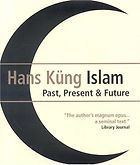
I think the future of all three monotheistic faiths is intertwined and interconnected. This point is strongly made by Hans Küng whose book is my next recommendation: Islam: Past, Present and Future. Küng is undoubtedly the most enlightened Catholic philosopher of our time. This is a monumental work: it covers the evolution and development of Islam, the present crisis of Muslim civilisation, and looks at what Küng calls ‘possibilities for the future’. Islam is the last in a trilogy which has also covered Judaism and Christianity. And Küng is simply brilliant in making connections between the three monotheistic faiths and highlighting the areas of convergence.
Küng is extremely thorough. So he looks at the future of Islamic law, the future of Muslim politics and ‘Islamic state’, the possibilities of an Islamic economic order, the future of the Islamic way of life, and even the images of hope that Muslims themselves have produced. He thinks that Islamic law should and would change in the future to meet the challenge of human rights, gender equality, and the rights of minorities, by developing a new ethical framework of rights and responsibilities. He predicts that Muslim politics will acquire ‘secularity’ without totally embracing secularism, and Islamic economics, including the banking system, will evolve further as a major system of commerce based on ethical principles.
What I really like about this book is Küng’s passionate belief that the differences between Islam and the West are more apparent than real, and that the religious divide between Islam and the other two Abrahamic faiths can be readily bridged. The deadly threats that humanity faces, he argues, require us to demolish the walls of prejudice, stone by stone. He would argue that it is a necessary requirement for our future survival.
Your last book recommendation is Islam and the Secular State: Negotiating the Future of the Sharia.
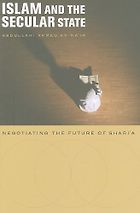
The most urgent task facing Muslim society, I think, is the reformulation of the sharia. Here, the human rights lawyer Abdullahi Ahmed An-Na’im has provided an invaluable lead. He has written extensively on Islam and human rights. In this book he argues that Islam cannot have a viable future without rethinking Islamic law and the relationship between religion and the secular state in all Muslim societies. The sharia needs to be free from state control, he suggests, just as the state should not be allowed to misuse religious authority. An-Na’im is a profound thinker with a deep knowledge of Islamic sources; and offers a penetrating analysis of Islamic law in our time, examining the role of sharia in Turkey, India and Indonesia, and its possible future development and evolution. And I couldn’t agree more with his assertion that the idea of human rights and citizenship are totally consistent with Islamic values and norms.
And finally, are you optimistic about the future?
I am always hopeful. After all, a major function of faith is to give us cautious hope. This is why Küng also concludes his book by expressing ‘unshakable hope’ about the future.
But hope is intrinsic in the very idea of future. An awareness of the future can empower people and open up possibilities where none existed before. The future is a frontier where all things are possible, including the possibility of breaking the power and the hold of the present over our future. But for that to happen we should see the future not as a commodity but as a domain of alternative potentials and promises.
June 1, 2010
Five Books aims to keep its book recommendations and interviews up to date. If you are the interviewee and would like to update your choice of books (or even just what you say about them) please email us at [email protected]
Five Books interviews are expensive to produce. If you've enjoyed this interview, please support us by donating a small amount.
Ziauddin Sardar
Ziauddin Sardar is a journalist, author, documentary maker, cultural critic, scholar and travel writer. He comments on science, politics, Islam, philosophy, travel and the arts. He is currently editor of Futures, the monthly journal of policy, planning and futures studies, a commissioner of the Equality and Human Rights Commission of Britain, and visiting Professor of Postcolonial Studies at City University, London. His explorations of the Muslim world are documented in one of his more recent books, Desperately Seeking Paradise.
Ziauddin Sardar is a journalist, author, documentary maker, cultural critic, scholar and travel writer. He comments on science, politics, Islam, philosophy, travel and the arts. He is currently editor of Futures, the monthly journal of policy, planning and futures studies, a commissioner of the Equality and Human Rights Commission of Britain, and visiting Professor of Postcolonial Studies at City University, London. His explorations of the Muslim world are documented in one of his more recent books, Desperately Seeking Paradise.