Travelling is not the same as going on holiday, says Ziauddin Sardar, the writer, broadcaster and cultural critic He recommends five books about travellers in the Muslim world—from 14th-century Morocco to 20th-century Damascus by way of Indonesia.
Travel is both a physical and a mental exercise – it is about immersing yourself in another culture. Travelling is the process of letting go of yourself and immersing yourself into different ways of knowing and seeing. If you cannot do this, you haven’t travelled. It’s certainly not a holiday – travelling is not staying in five-star hotels.
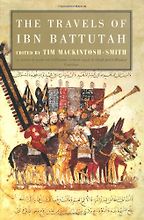
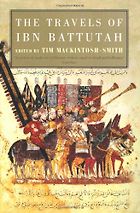
Tell us about your first book recommendation, The Travels of Ibn Battutah.
Ibn Battutah, whose name can be translated as Son of a Duck, is my hero and is regarded as ‘the traveller of Islam’. He left his native city of Tangier in 1325 at the age of 21 with the intention of performing the pilgrimage to Mecca. But he continued beyond Mecca. Travelling by horse, mule, ox wagon, junk, dhow and on foot, he covered over 75,000 miles and visited over 40 countries. Wherever he went, he found it easy to get employment as a jurist, or a courtier or an ambassador. His journeys involve swashbuckling adventures and chases with concubines in tow. He is a riveting read. The interesting thing with Ibn Battutah is that travel for him was not just going from one place to another; it was living in a place. Wherever he went, he made his home. He had a house, he married and he got a job. This allowed him to learn about the place by living as a part of it. Then he would move on. It wasn’t until he returned to Morocco in his ripe old age, that he wrote down all his adventures. It’s got a wonderful title in full, The Precious Gift for Lookers into the Marvels of Cities and Wonders of Travels.
What does he find on his travels?
You have to read Ibn Battutah to discover that. But what is important is that everywhere he went, although he could not perfectly merge with the cultures he encountered, he took a great amount of time trying to understand them. He treated each culture on its own terms, and didn’t impose his own values on them. I think that’s very important for any traveller – if you want to learn from a different culture, then you have to treat it with equality and respect. Only then will that culture become available to you. If you go there with too many of your own preconceptions, then you will limit your experience.
Is it acceptable to challenge people’s cultural beliefs when you are travelling, or should you always just respect people who behave in different ways?
Dialogue is obviously very important, but it has to be from a basis of knowledge, not from a basis of ignorance. And the only way you are going to develop knowledge about another culture is if you live in that culture for a considerable period of time. You simply can’t walk into a completely different city, with a different culture, and begin a reasonable dialogue. You can only learn so much from books; in order to really learn about a culture you have to live and see the world through its eyes. If you do this, then yes, it is acceptable to raise questions about how other people behave.
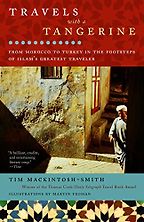
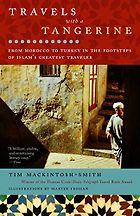
Tell us about your next book, Travels with a Tangerine.
This book, written by Tim Mackintosh-Smith, is his account of retracing Ibn Battutah’s journey. He completed the trip in parts, and describes each stage in three separate books – Travels with a Tangerine is the first (the second one is called The Hall of a Thousand Columns, and the third one is called Worlds Beyond the Wind. If you want to get a contemporary look on Ibn Battutah, then Tim Mackintosh-Smith is an excellent guide. In this first book, he follows Ibn Battutah, going from Morocco to Eygpt, Syria to Oman, and Anatolia to Constantinople. He sails in a dhow across the Arabian sea and travels to Delhi, then on to the Maldives and the fabled Adam’s Peak in Sri Lanka. He describes his own experiences beautifully but also provides us with extracts from Ibn Battutah. The result: you see India from the 14th century perspective of Ibn Battutah’s adventures overlaid with an account of an emerging 21st-century superpower. Brilliant juxtaposition. The parallels between the two ages are often quite stark.
You too wanted to do something similar?
Yes, I have to say I am very jealous – I always wanted to retrace the travels of Ibn Battutah myself. In fact, I made very elaborate plans, and even started the journey around North Africa and some of the areas in the Middle East. What I actually wanted to do was to live like Ibn Battutah. But the journey took him 29 years and I just couldn’t do the same thing.
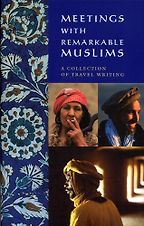
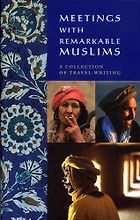
Your next book is also about travel to the Muslim world. Tell us about Meetings with Remarkable Muslims.
This book is an anthology of stories written by people who have travelled to Muslim countries and met interesting people on their way. Most of the Muslims described in the book are remarkable only in the fact that they are very ordinary. They are just farmers, taxi drivers, asylum seekers, cleaners, musicians, mothers or teachers. Yet they are living extraordinary lives. Take the story of ‘Mr F’ who survives the Taliban in Afghanistan, only to suffer unmitigated humiliation as an asylum-seeker in Britain, or Youssou N’Dour who rises above poverty in his native Senegal, to travel to France and woo people with his devotional Islamic songs.
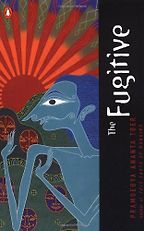
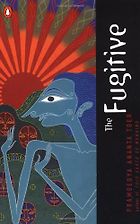
The next book, The Fugitive, is less obviously about travel. Why have you chosen it?
One of the reasons I have chosen it is that Pramoedya Ananta Toer is probably one of the most important writers of contemporary times (although we don’t recognise him as such yet) and the best way to discover his genius is to read The Fugitive. The story is about travel within one’s own homeland. The hero and protagonist Hardo is displaced despite living in his own home country, Indonesia, because of the fact that he is a colonial subject (it is written at the time of the Japanese occupation); both his physical and mental space is occupied by the coloniser. Hardo travels within his own country, in search of home. The journey is internal, but nevertheless it is a journey towards a discovery.
And what happens in the book?
Hardo is on the run from the Japanese. His revolt against their occupation ended in defeat unexpectedly, and after hiding for months in a cave, he longs to go home. He tries to travel back undetected, and the story describes the betrayal, disappointment and problems he encounters in the process. The novel is structured like a ‘wayang’ (traditional shadow play), where the first couple of acts are usually slow, but then the drama speeds up right up at the end, ending with a rather violent denouement. It is the story of the colonial experience of southeast Asia.
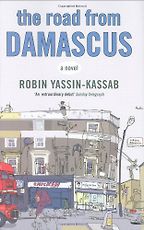
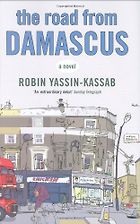
And your last book is also a fictional travel story. Tell us about The Road from Damascus.
It describes a journey which is very familiar to many Muslims. Many British Muslims travel back to what they regard as their original home – to Bangladesh, or Pakistan, or Syria, or wherever their families came from – to rediscover their roots. The protagonist Sami travels from Britain to Syria to discover what Islam and his family are all about. He doesn’t take Islam very seriously although he is a Muslim, and, whilst he and his wife are in Damascus, he is upset to find that his wife, who is very liberal, starts to wear a hijab (the headscarf). At the same time, his brother is becoming the typical, unthinking fundamentalist. The interesting thing about his wife as a character is that, although she chooses to wear the hijab, she continues also to be a very liberal-minded person. In the Koran she finds a kind of spiritual tranquillity and peace, and the hijab for her is simply an expression of that peace. Sami just can’t understand this.
Why did you choose the book?
What is so strong about the book is that it shows Muslims as a human community, struggling not just to make sense of their faith and coming to terms with Western values, but also with family problems, break-ups, unemployment and so on. The way that travel features in the book is very sophisticated; Robin Yassin-Kassab depicts the internal travel of the characters from one variety of Islam to another, the physical travel of literally going to Damascus, and also spiritual travel as certain characters find themselves spiritually enriched by their experiences.
All this talk of travel … do you have any trips of your own lined up?
Yes, I hope to go back to Mecca where I used to live for a while during the 1970s. I am going back to do some research for a book; an exercise of opening up not just the intellect, but also the spiritual side of my private life – just what real travel ought to be!
November 23, 2009
Five Books aims to keep its book recommendations and interviews up to date. If you are the interviewee and would like to update your choice of books (or even just what you say about them) please email us at editor@fivebooks.com
Five Books interviews are expensive to produce. If you've enjoyed this interview, please support us by donating a small amount.
Ziauddin Sardar
Ziauddin Sardar is a journalist, author, documentary maker, cultural critic, scholar and travel writer. He comments on science, politics, Islam, philosophy, travel and the arts. He is currently editor of Futures, the monthly journal of policy, planning and futures studies, a commissioner of the Equality and Human Rights Commission of Britain, and visiting Professor of Postcolonial Studies at City University, London. His explorations of the Muslim world are documented in one of his more recent books, Desperately Seeking Paradise.
Ziauddin Sardar is a journalist, author, documentary maker, cultural critic, scholar and travel writer. He comments on science, politics, Islam, philosophy, travel and the arts. He is currently editor of Futures, the monthly journal of policy, planning and futures studies, a commissioner of the Equality and Human Rights Commission of Britain, and visiting Professor of Postcolonial Studies at City University, London. His explorations of the Muslim world are documented in one of his more recent books, Desperately Seeking Paradise.