Free 1 min read

On Sundays, Browser readers receive a special edition with puzzles, poems, books, charts, music and more - plus selections from our decade-plus archive of the finest writing on the internet. Here's a taste of this week's edition.

Book Of The Week

An Immense World
Ed Yong | Random House | June 2022
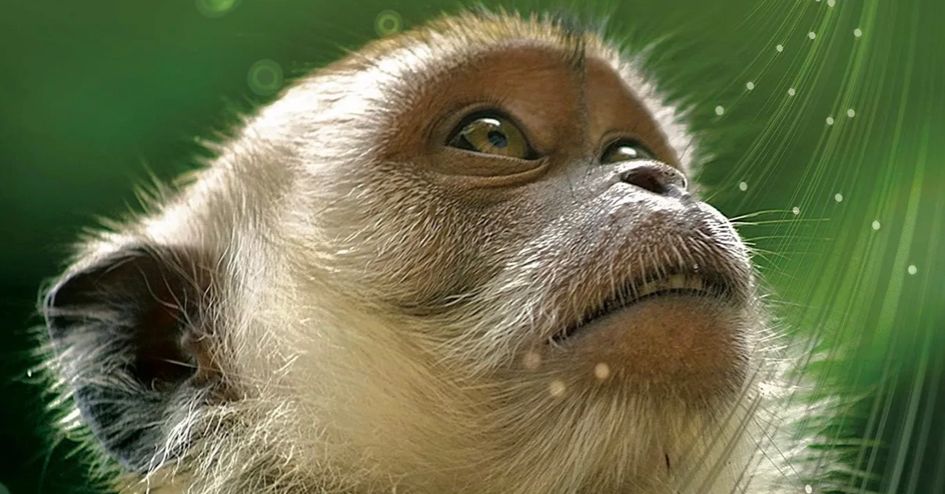
Recommended by Barbara King at NPR:
"Yong invites readers to grasp something of how other animals experience the world, bringing into beautiful focus a host of sensory worlds that co-exist with ours, and how we may protect them. He has synthesized and compellingly presented a spectacular amount of scientific information to do this, making it look easy along the way. But isn't easy at all. It's a magnificent achievement"


Chart Of The Week

The Temple Of Time, by Emma Willard
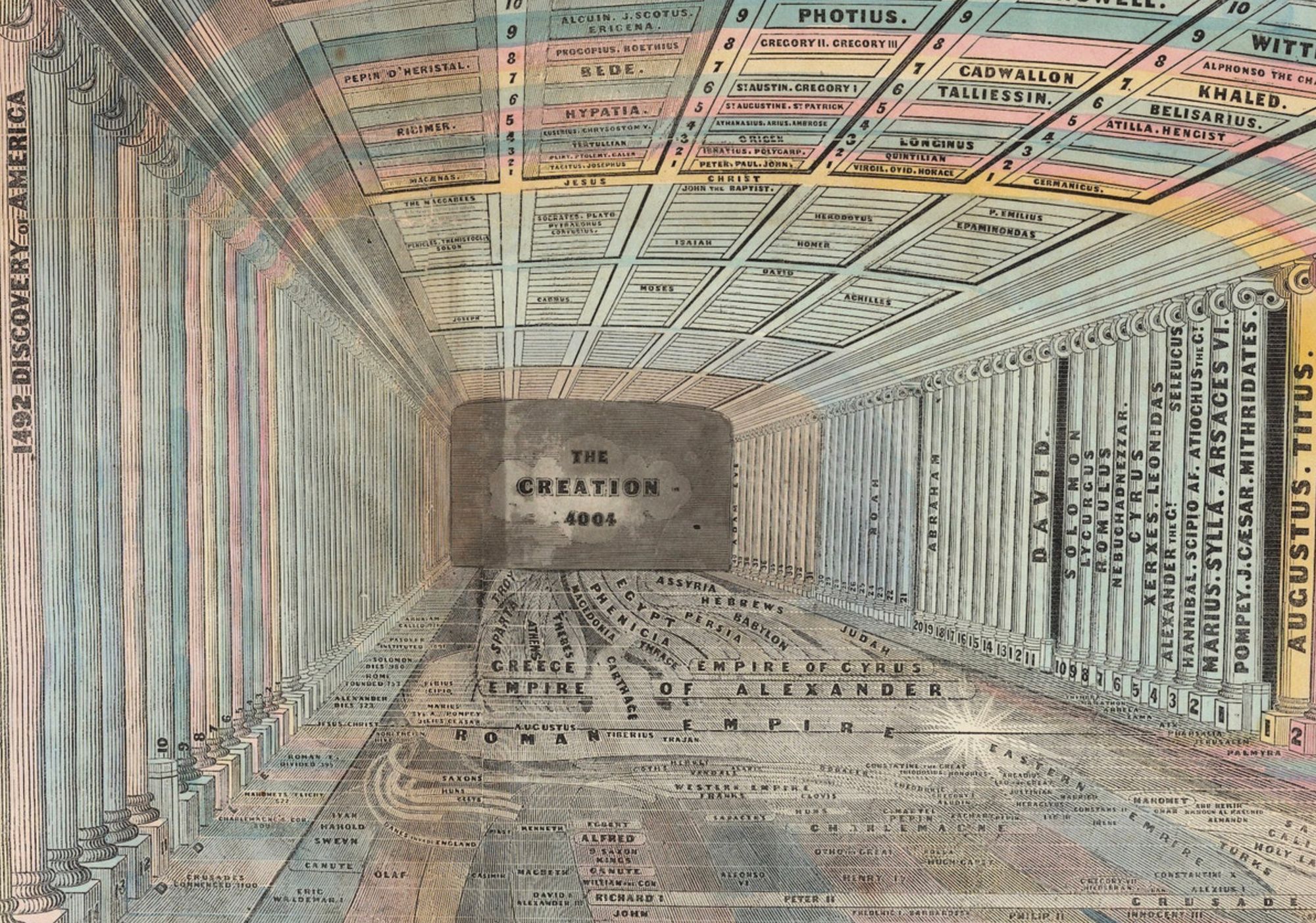
"From the 1820s through the Civil War, Emma Willard’s history and geography textbooks exposed an entire generation of students to her deeply patriotic narratives. She sought to invest chronology with a sense of perspective, presenting the biblical Creation as the apex of a triangle that then flowed forward in time and space toward the viewer" — Public Domain Review


The Browser Sunday edition is a smorgasbord of delights. If you enjoyed this taster, subscribe for puzzles, crosswords, art, charts, articles and more each Sunday - plus five articles daily, in your inbox:
Free 1 min read

What To Expect From Your Craniotomy

Mary South | White Review | 1st January 2020

A craniotomy "can be a relaxing experience, rather than one of abject terror". You will be conscious for at least part of the operation, but feeling no pain because there are no pain receptors in the brain. Hallucinatations, synaesthesia and out-of-body experiences are often reported. "I’ve heard that it feels as though you are watching your own handwriting uncoiling from someone else’s pen" (4,800 words)


How Likely Is "Likely"?

Andrew Mauboussin & Michael Mauboussin | HBR | 2nd July 2018

If probability as such is hard enough to understand, degrees of it are impossible to communicate in ordinary speech. If you say "more often than not", most of your listeners will take you to mean "about 60% of the time". But if you call something a "serious possibility", this may be understood as anything from a 20% to an 80% likelihood. As for a "slam dunk", this may not be understood at all (1,700 words)


How likely are you to be smitten
By what other humans have written?
This game you can fix
With our five daily picks
To make sure you read things worth the sittin'...
Free 1 min read

Revenge Of The Earthworms

Moira Donovan | Walrus | 13th June 2022

Worms are not necessarily the benevolent participants in the soil's ecosystem that gardeners might assume. A kind of jumping worm, which "thrash around, as if electrocuted, when disturbed", has been spreading across North America. They chew through the organic matter on the surface of the soil and deprive it of much-needed nutritional content. They are, to many, "viscerally upsetting" (2,590 words)


Adam Smith’s Radical Tools

Paul Crider | Liberal Currents | 2nd February 2022

Examining Adam Smith, not as a "dogmatic free market ideologue" as he is often characterised, but as a proponent of "natural liberty". A Smithian liberal would likely support universal childcare, reparations for the descendants of slaves, freedom of movement, a reallocating of funds away from the police, and an end to military incursions such as the wars in Iraq and Afghanistan (3,965 words)


If worms can harm soil, and A. Smith
Might depart from his free market myth
What else might be wrong?
Well, just follow along
For our daily mind-bends, first to fifth...
Free 1 min read

The Perils Of Smashing The Past

Nathan Gardels | Noema | 17th June 2022

An exhibition of Italian futurist art illuminates the parallels between this early 20C movement and today's techno-utopianism. Both emerged from periods of social anxiety and upheaval, when a "fortification of identity" began to slide into violence and polarisation. In such times, this writer argues, political and cultural logic are inherently at odds with the progress of economics and technology (926 words)


The German And His Temple

Matti Friedman | Tablet | 13th June 2022

Intriguing story of a mysterious man who wanted to build a peace temple in Jerusalem but was clubbed to death at his shack in the West Bank before he could see his design realised. A German Christian, little is known about him and investigating the little detail that remains "felt like excavating those burned scrolls in Pompeii that disintegrate when you touch them" (3,815 words)


From temples to techno-utopia;
From horror to something much hope-ier;
We'd just love to send
All that we recommend
So sign up for the full cornucopia...
Free 1 min read

The Stars Are Blind

Anna Dorn | Granta | 15th June 2022

Confessions of a former astrologist. Charging people to read their stars reminded the writer strongly of her time as a lawyer: in both situations, she used a set of rules to tease out a coherent argument in favour of a particular outcome. It became a personal obsession, a way of making sense of the chaos. "Astrology became a way to organize my universe, in turn making it less frightening" (1,823 words)


Podcast: Scale Back That Revenge Travel | Afar. Ethical travel podcast explores the idea that instead of a rush of travellers seeking ever more exciting "revenge" experiences for the time lost to Covid, the easing of restrictions could popularise a kinder, slower kind of tourism (23m 05s)


Video: How To Keep A Commonplace Book | YouTube | R.C. Waldun. Practical advice on how to bring an ancient form of personal record into the modern age by keeping an analogue record of what you consume. Selection is an art worth practising: "There's no point in keeping your own version of Google," the instructor says (10m 24s)

Need goods for your commonplace book?
The Browser's the place you should look.
With five reads, podcast
And a vid, you will fast
Find you've filled the book to its last nook.
Free 1 min read

Environmentalism In One Country

Dylan Levi King | Palladium | 15th June 2022

A brief history of trees in Korea. The Japanese planted lots of them during their otherwise condemnable occupation — but cut them down to fuel the 1930s war effort in China. Kim Il-Sung reforested North Korea because he liked trees. Kim Jong-Il razed his father's forests for timber and farmland. Kim Jong-Un is putting the forests back again to mark his differences with Kim Jong-Il (4,600 words)


The Price Of Authenticity

Tim Harford | 16th June 2022

Andy Warhol's Shot Sage Blue Marilyn set an auction record for a 20th-century artwork when it sold for $195 million at Christie's in May. Why do Warhol's works fetch such prices when they are so plentiful and copies so commonplace? Perhaps because Warhol anticipated the economics of art in an age of digital reproduction: The more ubiquitous the image, the more valuable the original (835 words)


From artwork to trees in Korea,
There's so much to know! Never fear,
We'll help guide your way
With our five picks a day.
Are you ready? Let's go up a gear...
Free 2 min read

On Sundays, Browser readers receive a special edition with puzzles, poems, books, charts, music and more - plus selections from our decade-plus archive of the finest writing on the internet. Here's a taste of this week's edition.

Puzzle Of The Week

An auditioning call for new cast members at theme park results in a room filled with 25 people, each of them costumed as a knight, a serf, or a damsel. It is agreed that each knight will always tell the truth, each serf will always tell lies, and each damsel will alternate between telling the truth and lying. When each of them is asked in turn, "Are you a knight?", 17 say "Yes". When each of them is asked in turn, "Are you a damsel?", 12 say "Yes". When each of them is asked in turn, "Are you a serf?", 8 say "Yes".

How many knights are in the room?

from The Ultimate Mathematical Challenge by The UK Mathematics Trust

solution below


Image Of The Week

Cumulina

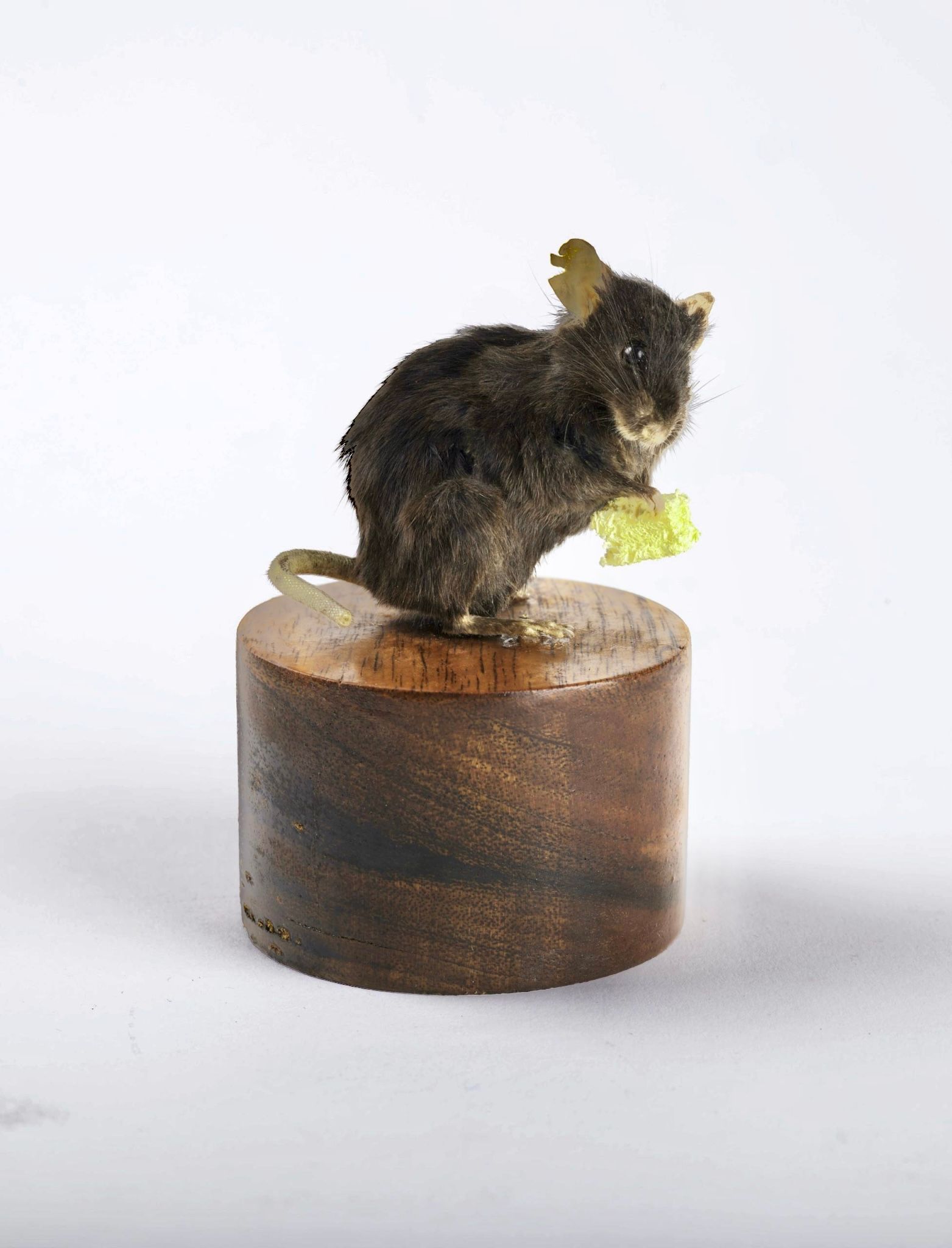
The Smithsonian’s National Museum of American History has acquired the taxidermied remains of Cumulina (pictured above), the world’s first successfully cloned mouse, who was created in a laboratory at the University of Hawaii in 1997 and who died in her sleep in 2000 at the advanced age of two years and seven months — the equivalent of 95 in human years. The museum has also acquired a set of Cumulina’s footprints made on her second birthday.


Puzzle Solution

Solution: Five. Suppose there are k knights and s serfs altogether, and suppose there are d damsels who lied to the first question. In answer to the first question, the people who answered Yes were the knights (truthfully), the serfs (untruthfully) and the damsels who lied to the first question they were asked. This gives the equation k + s + d = 17. In answer to the second question, the people who answered Yes were the serfs (untruthfully) and the damsels who lied to the first question they were asked but who then answered truthfully. This gives the equation s + d = 12. Subtract the second equation from the second to give k = 5. Hence the number of knights in the group is 5.

from The Ultimate Mathematical Challenge by The UK Mathematics Trust


The Browser Sunday edition is a smorgasbord of delights. If you enjoyed this taster, subscribe for puzzles, crosswords, art, charts, articles and more each Sunday - plus five articles daily, in your inbox:

Free 1 min read

Evolution And Archaeology

Sarah Constantin | Rough Diamonds | 16th June 2022

When and why did Homo Sapiens become so smart? This is part one of a three-part series, so we will have to await the final answer, but it all kicks off promisingly with an overview of life on Earth, and scenarios showing how a modest early uptick in the human skill-set might have triggered positive feedback loops which briskly (by geological time) elevated humans into a league of their own (1,200 words)


Nightmares

Scott Alexander | Astral Codex Ten | 15th June 2022

Scott Alexander, a psychiatrist in offline life, shares for comment a draft article on treating nightmares. Nightmares happen "when the process of dream generation is biased by ambient stress" — so anything that reduces stress may help. Therapies include Image Rehearsal, Systematic Desensitization, and Lucid Dreaming. The "standard anti-nightmare drug" is Prazosin. Many good comments (2,100 words)


We might have evolved to be smart
But interestingness is an art.
Our full Browser choices
Of interesting voices
Will give you a mighty head start...

Join 150,000+ curious readers who grow with us every day

No spam. No nonsense. Unsubscribe anytime.

Great! Check your inbox and click the link to confirm your subscription
Please enter a valid email address!
You've successfully subscribed to The Browser
Welcome back! You've successfully signed in
Could not sign in! Login link expired. Click here to retry
Cookies must be enabled in your browser to sign in
search