Free 1 min read

Tragedy Has Never Left Us

Florent Guénard | Books & Ideas | 18th April 2022

Interview with historian Bruno Cabanes about what lies behind the way media outlets have portrayed the war in Ukraine as part of the narrative of Europe during WW2. This ignores the fact that the conflict is part of "a repertoire of violence" from the recent past, seen in places like Yugoslavia, Chechnya and Syria. Be wary of confusing history with strategy or geopolitical analysis, he warns (3,588 words)


My Scream Is Famous

Ashley Peldon | Guardian | 8th April 2022

First person piece from a professional scream artist. Her shrieks are used in film and TV when the onscreen actors can't, or won't, give a character's terror the vocal oomph that the director requires. It's a niche skill. "I probably scream more on average than the normal person would. There’s something really relaxing about it. After a big day of screaming I feel lighter and brighter" (810 words)


Browser classified:

Get smarter every day. Every day Refind picks 7 links from around the web for you, tailored to your interests. Subscribe for free today

No time to scream? A day with The Browser can you leave you lighter and brighter too. We'd love to send you five article recommendations, a podcast and a video tonight:
Free 1 min read

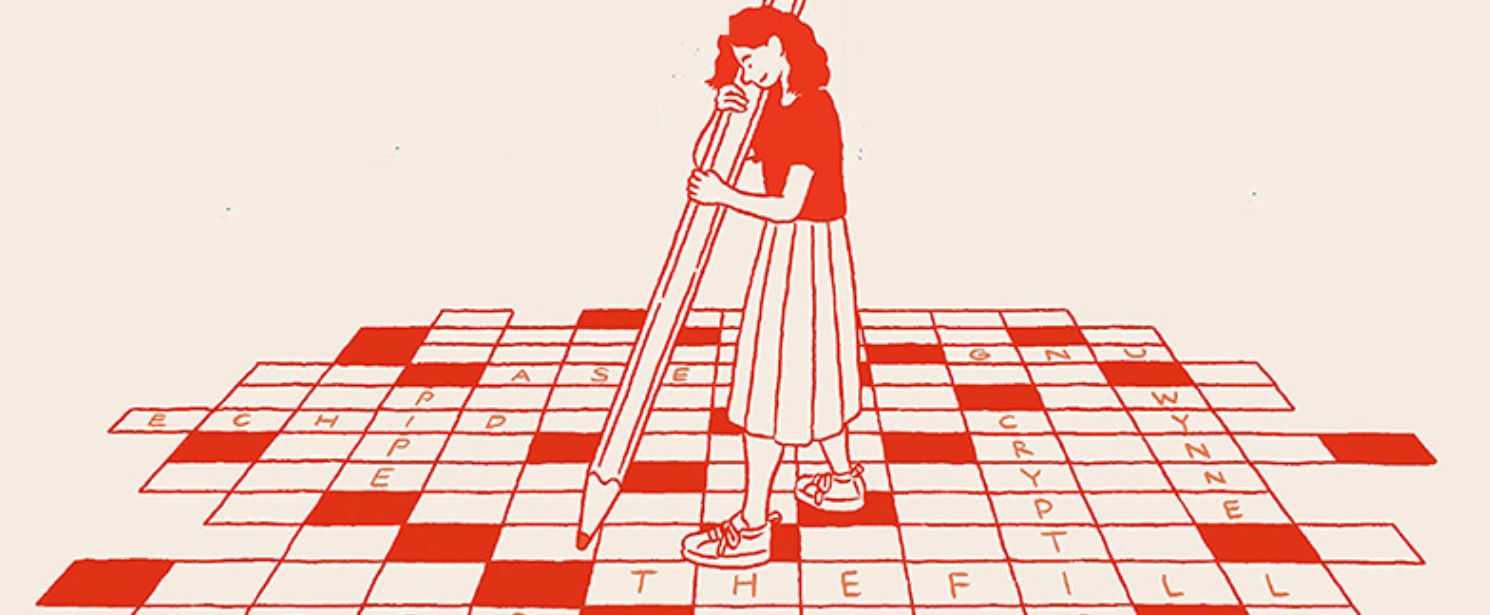
Interview Of The Week: Adrienne Raphel On Crosswords

Uri Bram talks crosswords and poetry with Adrienne Raphel, author of Thinking Inside the Box, a cultural and personal history of crosswords.

Adrienne on cryptic clues:

The cryptic answer has everything you need inside it, but there is this learning curve too. I pulled this cryptic clue from my book, and it’s one that I think about a lot: The clue is "pretty girl in crimson rose". "Pretty girl" is a "belle", and then "in crimson" — the "in" means it’s going to be encasing on either side, and crimson is "red" — it’s "r-e" on one side, "d" on the other side. So it’s re-belle-d. Then "rose" means an uprising: "rebelled".

read the whole interview


Should We Get Rid Of The Scientific Paper?

Stuart Ritchie | Guardian | 11th April 2022

The answer in this case is Yes. (Betteridge's Law may need amending for op-ed pieces.) Publishing a scientific paper is a slow process, especially with peer-review. Journals prefer positive findings, and the more positive the better, encouraging sensationalism and exaggeration among researchers. Editors resist corrections when their reputation is at stake. Better to publish directly online (1,200 words)


Browser classified:

Are you the kind of person who digs deep questions? Us too. At the John Templeton Foundation, we feature the best ideas from the world’s top scientists, philosophers, and spiritual leaders in a free weekly email digest. Sign up now.

Should we get rid of these emails? We'd love you to swap them for the full Browser experience: five article recommendations, a podcast and a video, every night:

Free 1 min read

Ancient Gears

Scott Locklin | Locklin On Science | 10th April 2022

Who invented gears? The ancient Greeks had the technology, and used it in intricate ways, as we know from Antikythera Mechanism. Aristotle and others wrote about gears. But surviving Greek sources make no reference to the novelty or invention of gears, suggesting that their origins may lie much further in the past — perhaps in the Bronze Age, with the Sumerians or the Egyptians (1,530 words)


Dunbar’s Number And Picking Fleas

Matt Webb | Interconnected | 5th April 2022

The evolutionary biologist Robin Dunbar conjectured in 1993 that the average person could maintain meaningful relationships with a maximum of 150 people, and that conversation was difficult in groups of more than four. Big data has been busy proving him right ever since. Most restaurant reservations are for groups of four. The average mobile phone user has 130 recurrent contacts (1,600 words)


Got 149 acquaintances? Room for one more. We'd love to send you five article recommendations, a podcast and a video tonight:

Free 1 min read

What Lies Beneath

Laura Maw | Real Life | 7th March 2022

The contents of the internet is largely dead; most sites are not updated. A dead link is "a sign of ruin in an otherwise living space". This has caused "a crisis of concealment", in which designers work to hide what is aesthetically displeasing. "Navigating a landscape of dead sites changes the way we look at living ones; clean, minimalist design only cloaks the evidence of inevitable decay"(2,602 words)


The Beauty Of The Magnolia

Ben Dark | House & Garden | 13th April 2022

The magnolia tree owes its "robust and architectural" flowers to the fact that it evolved to attract beetles as pollinators rather than bees. The latter are so efficient that plants can have much smaller, frailer flowers, whereas beetles must be lured in with huge petals and buds that emit heat. The magnolia's glory develops slowly, over decades. The trees are "wedded to the place they have grown" (1,931 words)


We can't lure you in with huge petals or buds that emit heat. But we'd love to entice you with five article recommendations, a podcast and a video, sent to your inbox daily:

Free 1 min read

Inside The Tow Truck Mafia

Rob Stumpf | The Drive | 23rd March 2022

In Ontario, Canada, organised crime is focused on the towing industry. A lack of regulation and a highway authority keen to see obstructions cleared quickly has created an ecosystem of "chasers", in which the first recovery vehicle to reach an accident gets the job. Rival companies battle for territory, resulting in firebombs, shootings and extortion rackets. Try not to break down in Toronto (2,539 words)


Creating A Literary Life In Prison

Deirdre Sugiuchi | Electric Lit | 24th February 2022

Those at risk of incarceration have been known to joke that time inside will give them the leisure to write a bestselling novel. The reality, as this editor of a writing handbook for prisoners reveals, is very different. "Alone time and quiet is non-existent in prison — imagine writing on a tiny bunk with the toilet next to you and potentially your roommate going to the bathroom as you try to type" (2,179 words)


Browser Classified:

Are you the kind of person who digs deep questions? Us too. At the John Templeton Foundation, we feature the best ideas from the world’s top scientists, philosophers, and spiritual leaders in a free weekly email digest. Sign up now.

We're not saying we're the literary mafia - but we are responsible for a lot of Organised Reading. We'd love to send you five article recommendations, a podcast and a video tonight:

Free 1 min read

Circus And Philosophy

Meg Wallace | Aesthetics For Birds | 2nd December 2021

Account of an unusual university course, in which the professor uses circus skills like juggling to illuminate the study of philosophy. The purpose of this is to make the learning process "tactile" and to demonstrate the benefits of narrowing the "participation/theorising gap" that is common in disciplines like philosophy of art or of science. Those who think are not usually those who do (2,596 words)


How Dictionaries Define Us

Ilan Stavans & Margaret Boyle | LARB | 30th March 2022

Conversation about the different dictionary traditions in the English and Spanish speaking worlds. It's customary to think of dictionaries as both immutable and objective, but they are neither. Each definition and edition bears the imprint of the people and the time that created it. A shadow "double" dictionary exists comprising all the words that were excluded from the tangible tome (4,085 words)


A shadow "double" Browser exists, recommending five articles, a podcast and a video daily. Step into the shadows:

Free 1 min read

The Last Great War

Richard Overy | Literary Hub | 8th April 2022

Historian argues for a more expansive view of the causes and effects of the Second World War, giving more weight to events in Asia. "The warfare between 1939 and 1945 may provide the heart of the narrative, but the history goes back at least to the Japanese occupation of Manchuria in 1931, and forward to the insurgencies and civil wars prompted by the war, but unresolved in 1945" (1,100 words)


Unfollow

Tom Stafford | Reasonable People | 4th April 2022

Thought-provoking account of Unfollow, Megan Phelps-Roper's memoir of growing up in her family's fanatically conservative Westboro Baptist Church. "They were so confident in their rightness that they didn’t see any need to ban Hollywood movies or pop music. Elton John’s Candle In The Wind was rewritten as Harlot Full Of Sin so they could celebrate the death of Princess Diana" (2,500 words)


Unfollow war, but follow us. Get five article recommendations, a podcast and a video, in your inbox:

Free 1 min read

Planning For Desert Storm

William Sayers | Mystics & Statistics | 6th April 2022

Retired Pentagon analyst recounts how much work went into war-gaming and computer-modelling the US invasion of Iraq in 1991, and how little weight those exercises carried in the heat of battle. "Lord knows we threw enough time and money at the problem, but in the end, Schwarzkopf just had to pray that we had enough combat power when our troops rolled across the line" (1,100 words)


Daddy Of Them All

Richard Roud | Guardian | 6th April 1972

The Guardian bravely republishes its review of The Godfather from 1972, a time when critics saw all Hollywood films as commodities, and failed to recognise The Godfather as a turning-point: "It’s your big commercial film which, without advancing the art of the cinema a millimetre, without a real directorial presence behind it, is nonetheless an extremely satisfying three hours" (1,045 words)


We're gonna make you an offer you can't refuse: five article recommendations, a podcast and a video in your inbox, when you subscribe to The Browser.

Free 1 min read

Forgiving Someone Who Isn’t Sorry

Rachel Wilkerson Miller | Vox | 25th March 2022

Advice from experts in reconciliation on how to move past a conflict when the other party isn't willing or able to apologise. Redefining forgiveness as a moral virtue can help; being "good to the one who was not good to you" can take the sting out of fruitless resentment. The act of forgiving can be a justifiably selfish one. Being free of anger towards others is a worthy goal in and of itself (2,245 words)


Tripping The Late Capitalist Sublime

Ed Simon | Millions | 28th January 2022

The boundary between literature and advertising copy is porous: we judge fictional characters by their consumerist choices, and some of the 20C's greatest authors — F. Scott Fitzgerald, Salman Rushdie, Don DeLillo — worked as copy writers. Even when actively trying to break away from the cycle of consumption, we define ourselves through the products we select or don't select (4,982 words)


We'd love to send you tonight's edition of The Browser, with five article recommendations, a podcast and a video. (Is this literature or advertising copy? History shall judge.)

Free 1 min read

Thucydides Was A Realist

Patrick Porter | Engelsberg Ideas | 1st April 2022

Modern scholarship has "nuanced" the work of Athenian historian Thucydides to death. Attention to detail has obscured the bigger picture, which is that "he was one of the founders of a pessimistic intellectual tradition that believes the world, like the one he endured, is inherently a cold, harsh, dangerous place in which power and its acquisition is paramount" (2,725 words)


Cell Death And Vomiting

Lorenzo Seneci, Timothy Patrick Jenkins, Shirin Ahmadi & Christoffer V. Sørensen | Science Nordic | 31st March 2022

What happens to the body during mushroom poisoning. One major group of toxins, the amanitins, prevent protein synthesis — killing cells one by one in a domino effect that takes down major organs. Muscarine toxins, meanwhile, attack neurons and slow down involuntary muscle contractions, including those in the heart. The conclusion? Be very, very sure of the mushrooms you eat (1,545 words)


Be very, very sure of the writing you read. Let us find the choicest morsels for you - enjoy five article recommendations, a podcast and a video tonight:

Free 1 min read

The West Will Decide On Putin's Bankruptcy

Peter Littger | Der Spiegel | 31st March 2022

Interview with ex-Goldman Sachs economist Jim O'Neill, who coined the acronym BRICs to designate Brazil, Russia, India and China as an emergent economic elite. So why did Russia go sideways? "It’s the corruption and the terrible demographics – in particular, the low life expectancy among men. Productivity is a huge issue. Profound reforms and reliable institutions are necessary" (2,200 words)  


The Lives Of Houses

Hermione Lee | Princeton University Press | 31st March 2022

Notes on the part played by houses and homes (the distinction is important) in the lives and works of writers including Virginia Woolf and Henry James. "How a house is lived in can tell you everything you need to know about people, whether it’s the choice of wallpaper, the mess in the kitchen, the silence or shouting over meals, doors left open or closed, a fire burning in the hearth" (1,200 words)


Banish silence over meals. Have something new to talk about, every day. Get five article recommendations, a podcast and a video with a subscription to The Browser:

Join 150,000+ curious readers who grow with us every day

No spam. No nonsense. Unsubscribe anytime.

Great! Check your inbox and click the link to confirm your subscription
Please enter a valid email address!
You've successfully subscribed to The Browser
Welcome back! You've successfully signed in
Could not sign in! Login link expired. Click here to retry
Cookies must be enabled in your browser to sign in
search